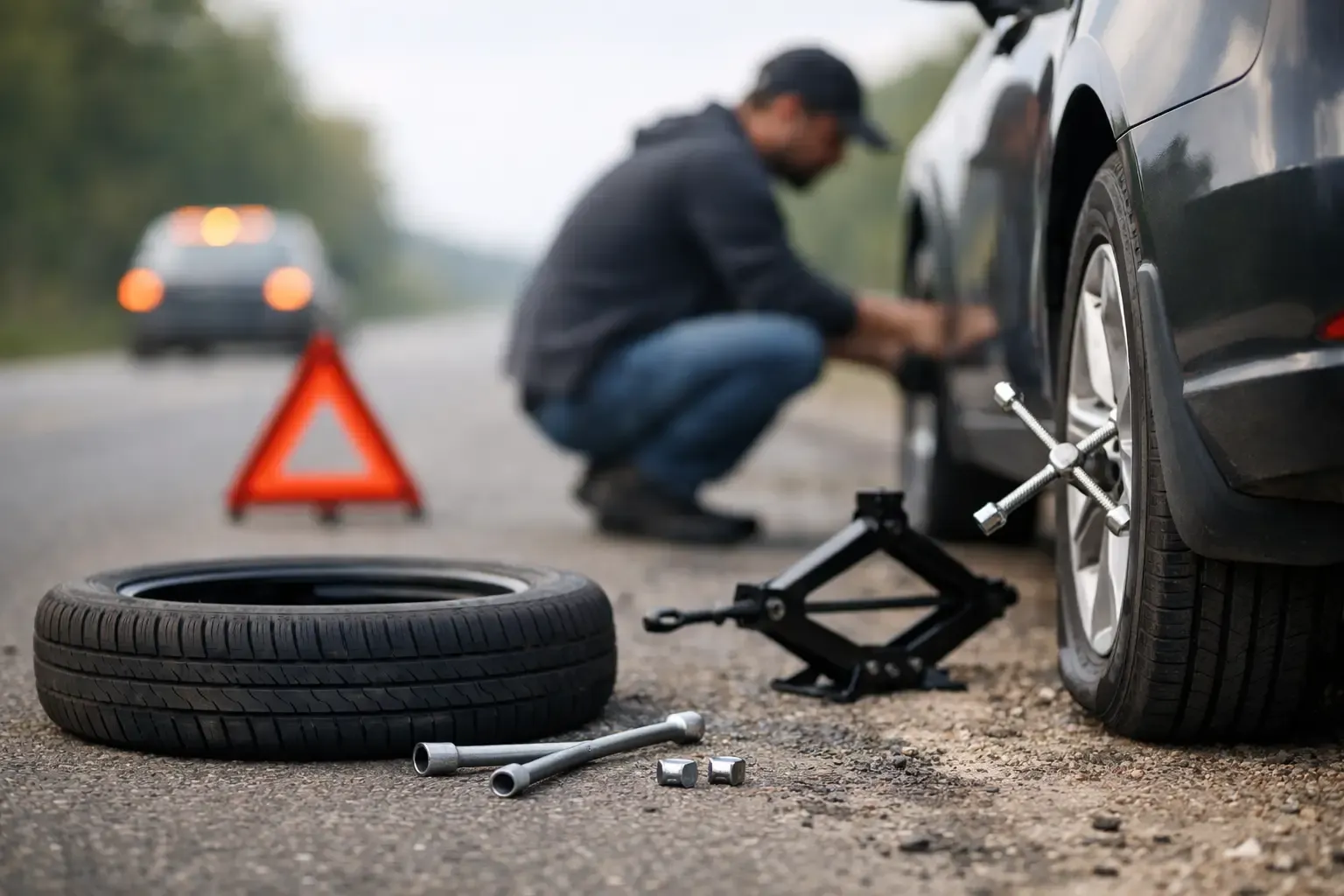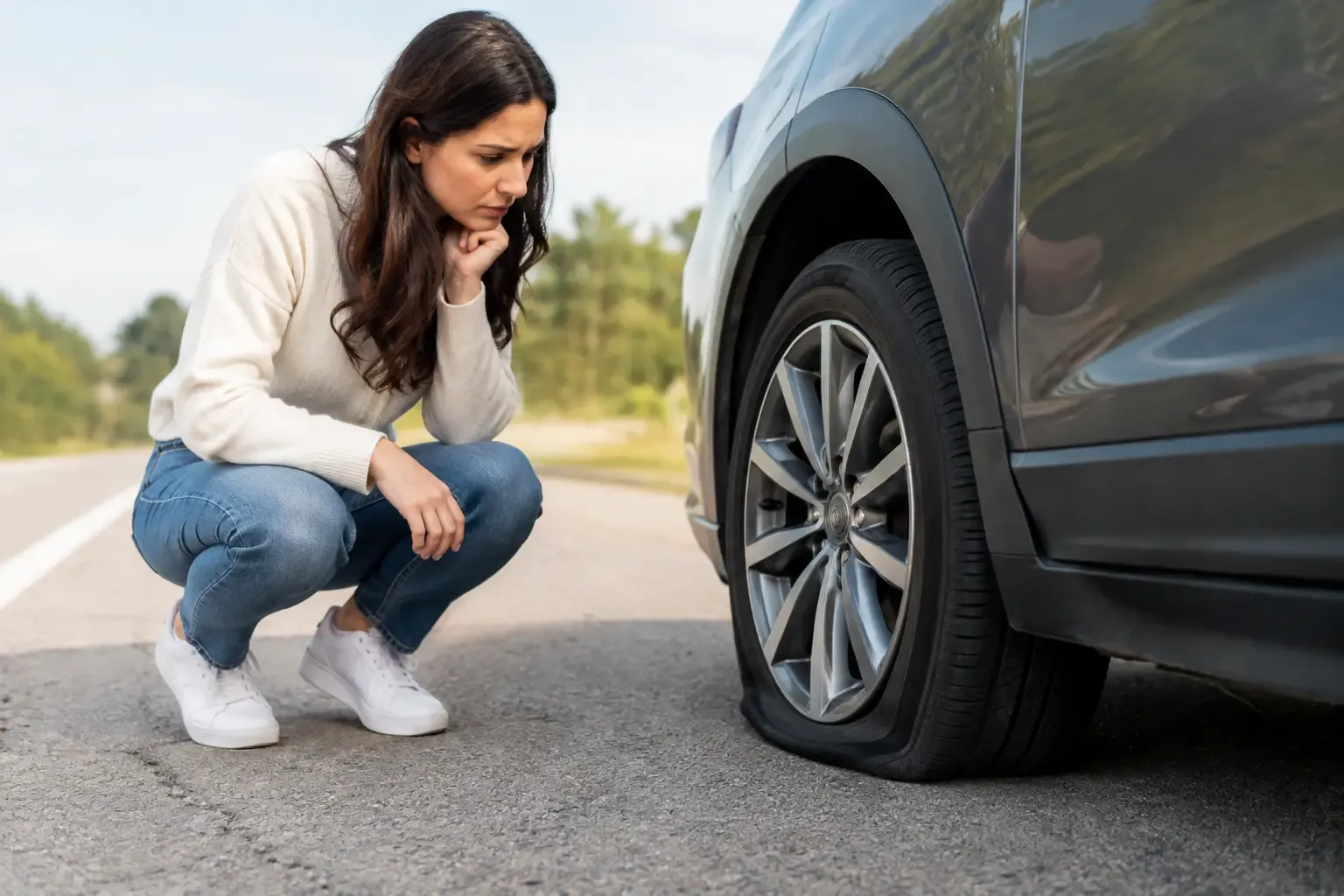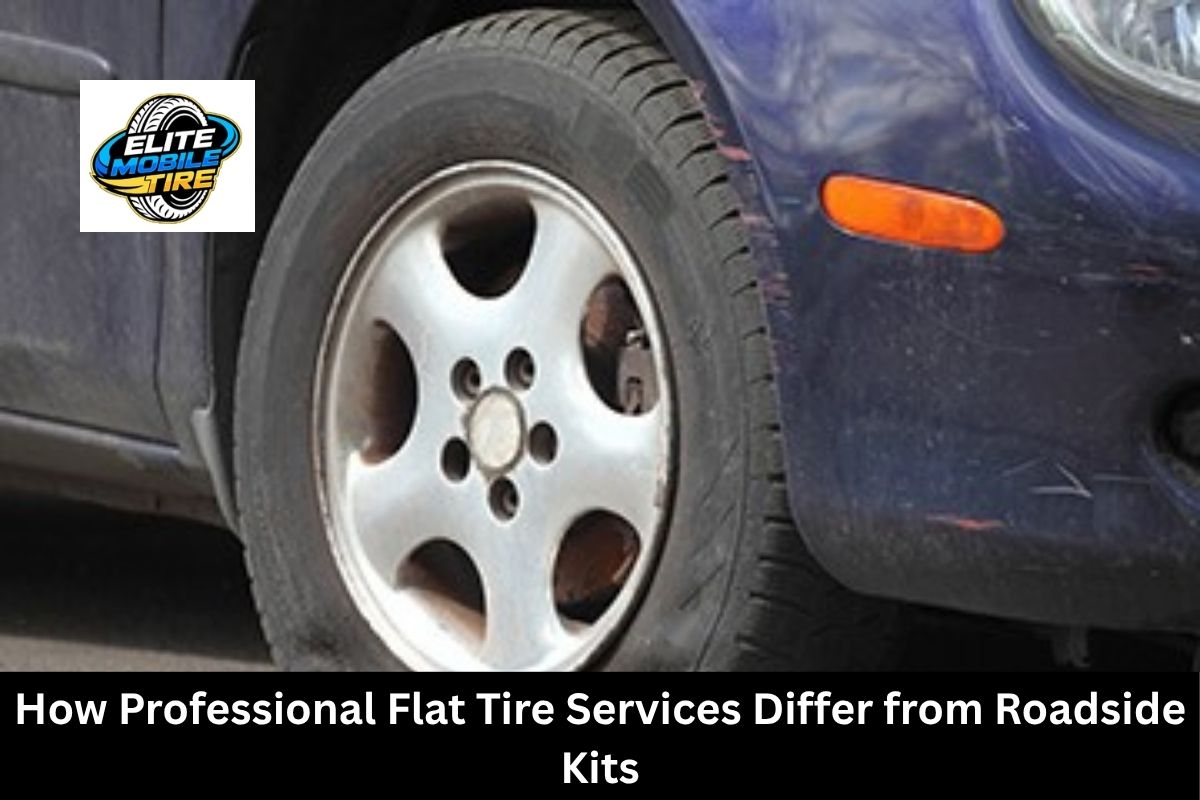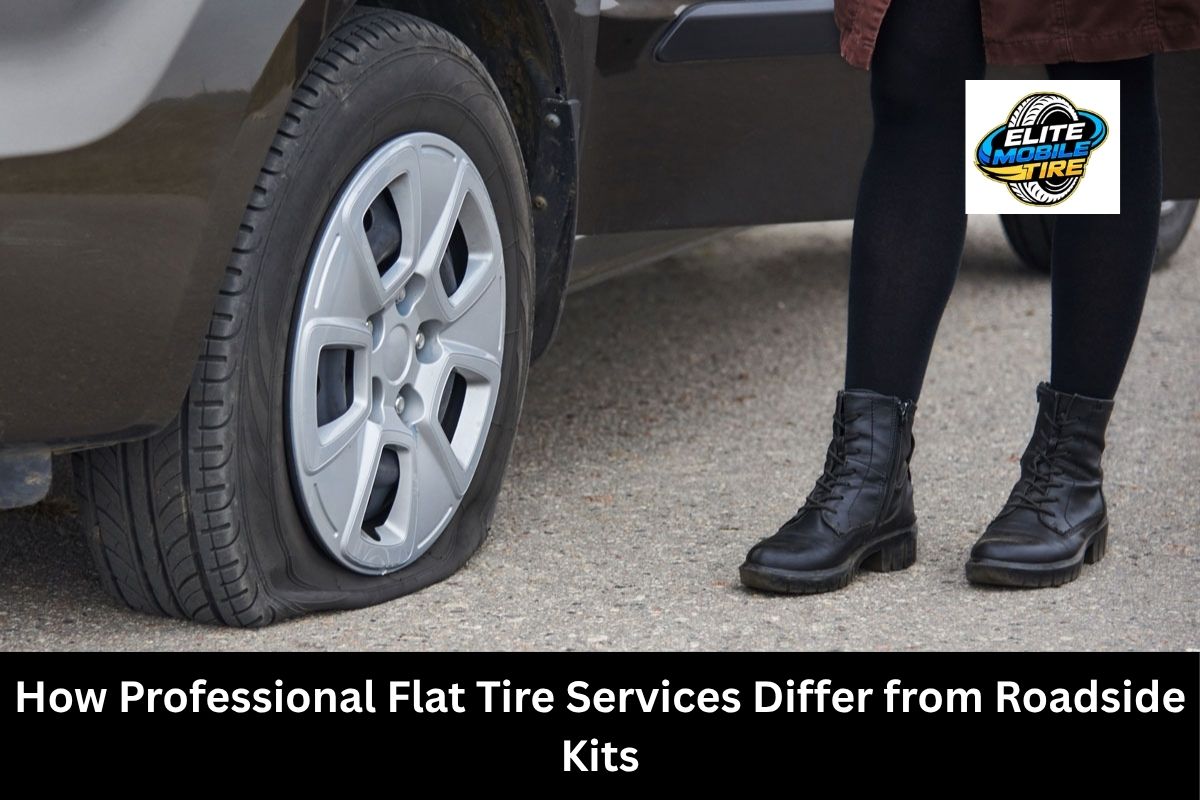
A flat tire can turn an ordinary commute into a stressful roadside decision in minutes. Knowing how to fix a roadside flat safely starts with recognizing that changing the tire is not always the right move. Your first job is to protect yourself, your passengers, and other drivers. The tire can wait if the location is unsafe.
Decide Whether It Is Safe to Stop
The safest place to deal with a flat is a level, firm area well away from traffic, such as a parking lot, wide paved shoulder, rest area, or side street. If you notice a tire going flat while driving, do not brake hard or jerk the steering wheel. Ease off the accelerator, keep both hands on the wheel, and gradually move toward a safe stopping point.
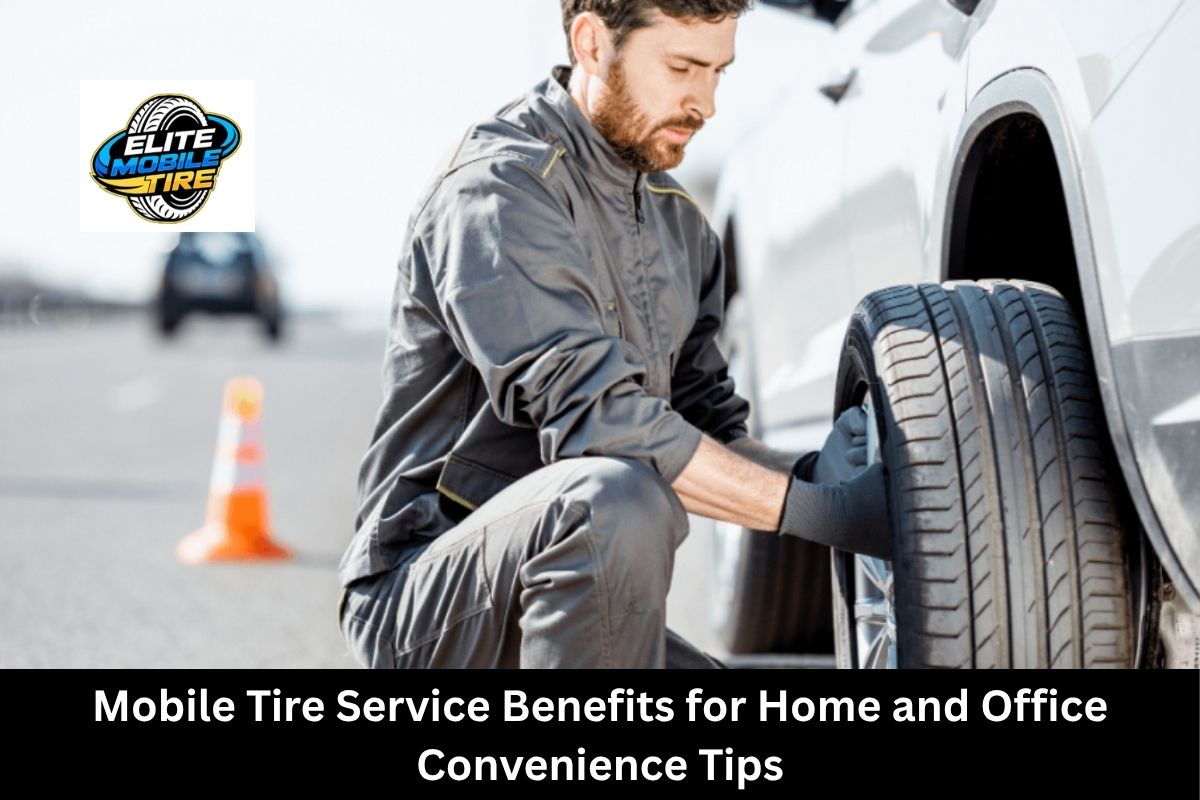
Avoid stopping on a narrow shoulder, around a blind curve, near the crest of a hill, or where passing traffic is moving quickly. Wet pavement, snow, ice, soft ground, and uneven gravel can also make jacking up a vehicle unsafe. In those situations, it is better to call for professional roadside help than to take chances beside traffic or under an unstable vehicle.
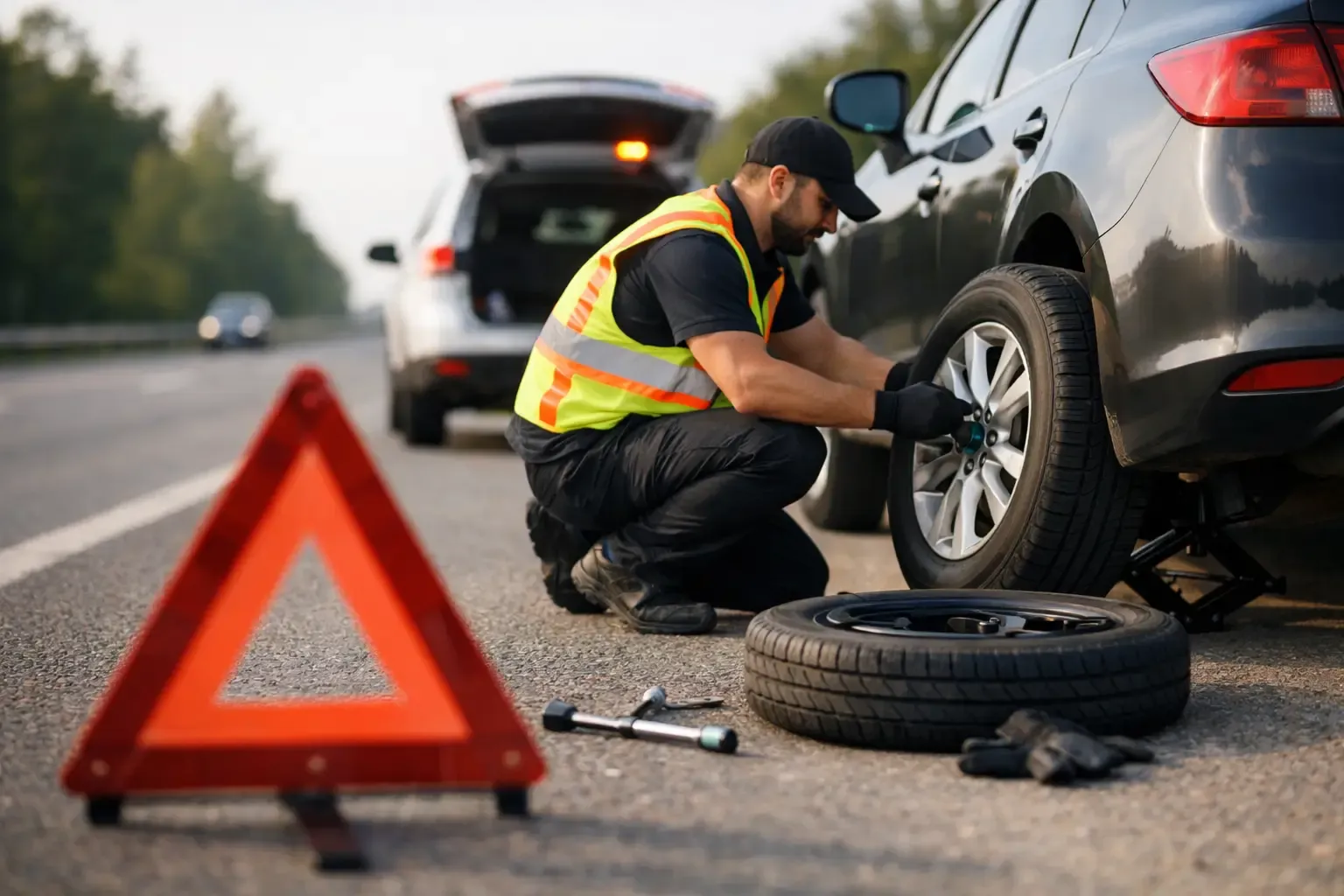
Once you are stopped, turn on your hazard lights immediately. Put the vehicle in Park, set the parking brake, and keep passengers inside the vehicle if they can remain safely away from traffic. If everyone must exit, do so from the side away from moving vehicles.
How to Fix a Roadside Flat Safely Step by Step
Before touching the jack, check your owner’s manual. It identifies the approved jacking points and any vehicle-specific steps. A jack placed in the wrong location can damage the vehicle or slip unexpectedly.
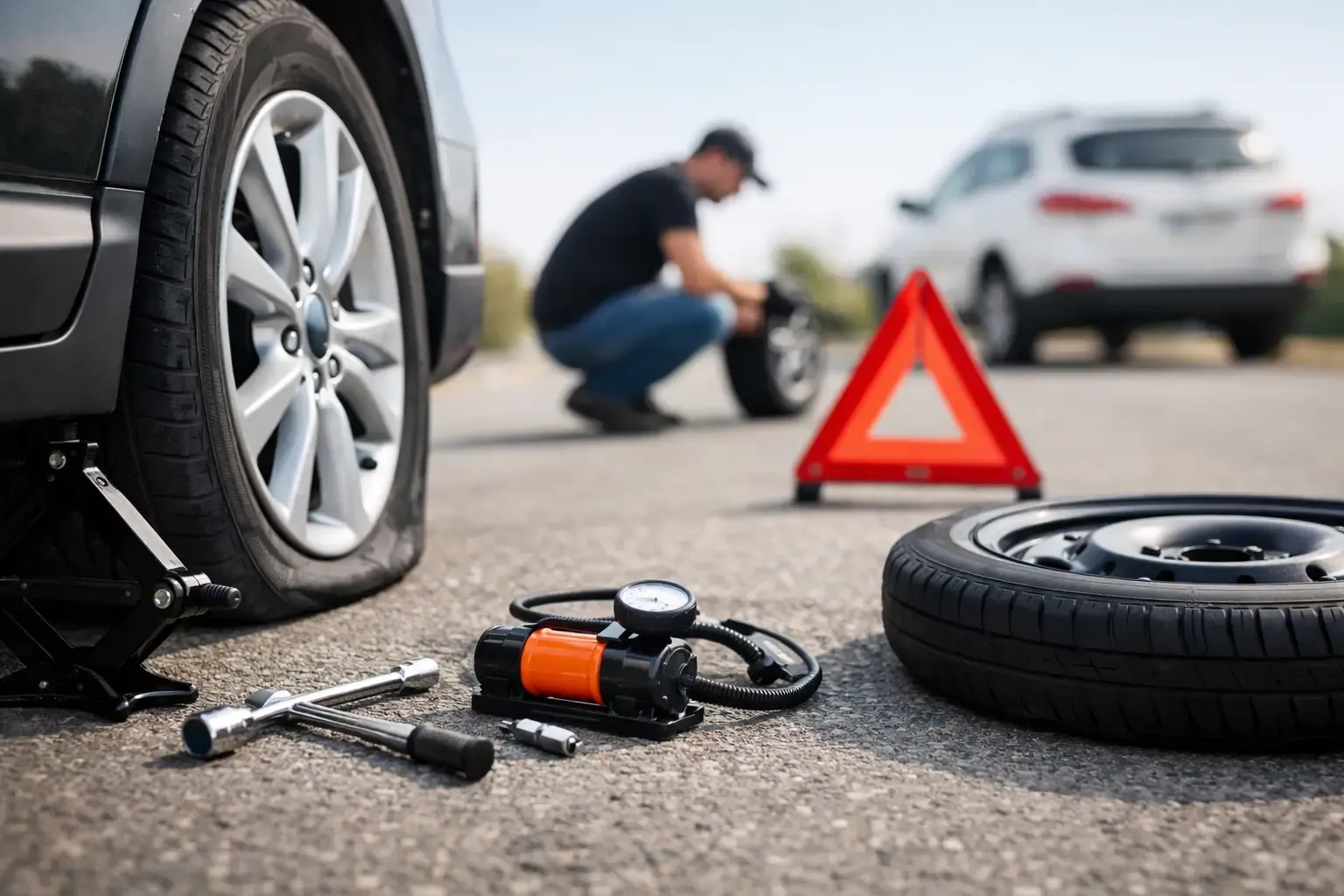
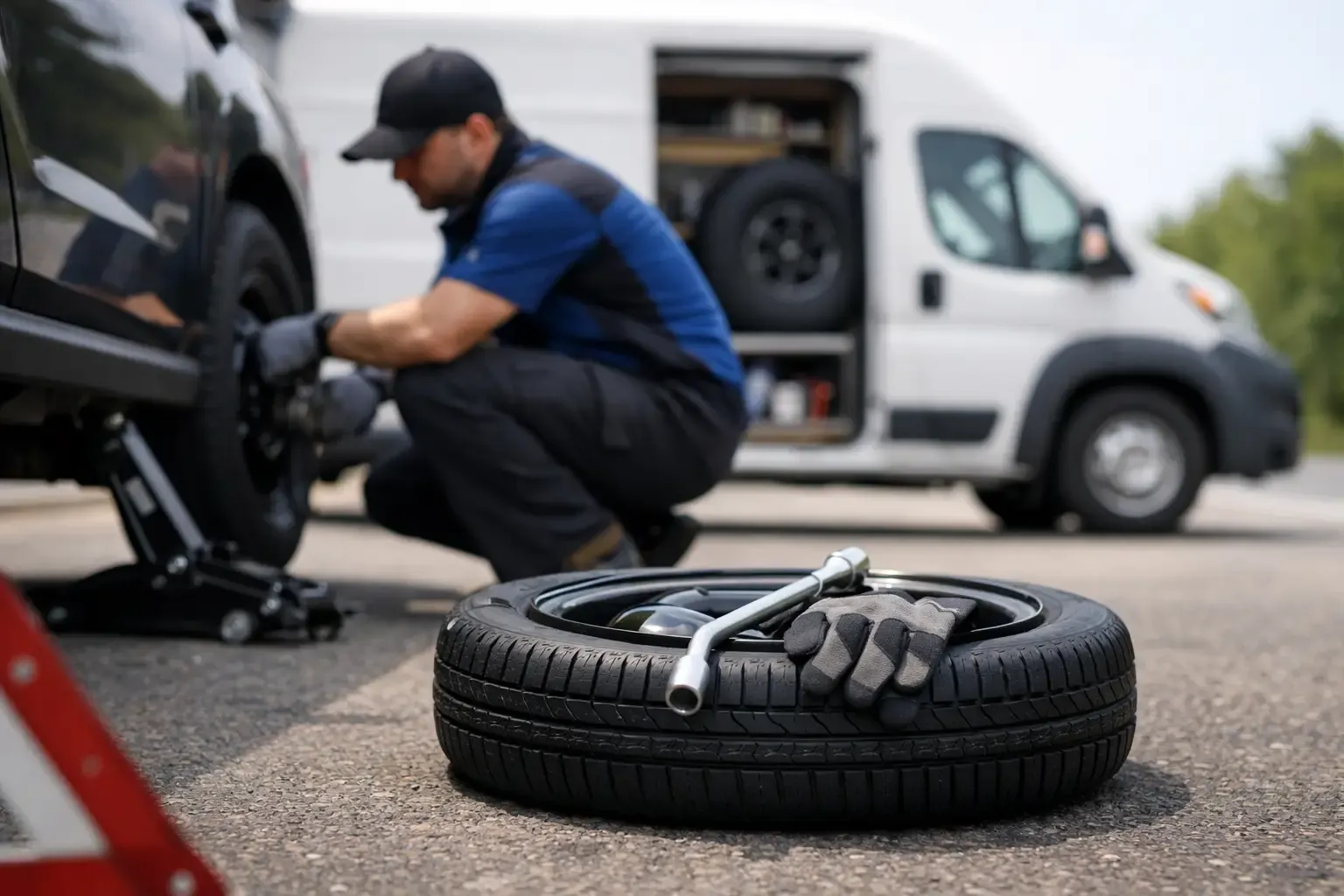
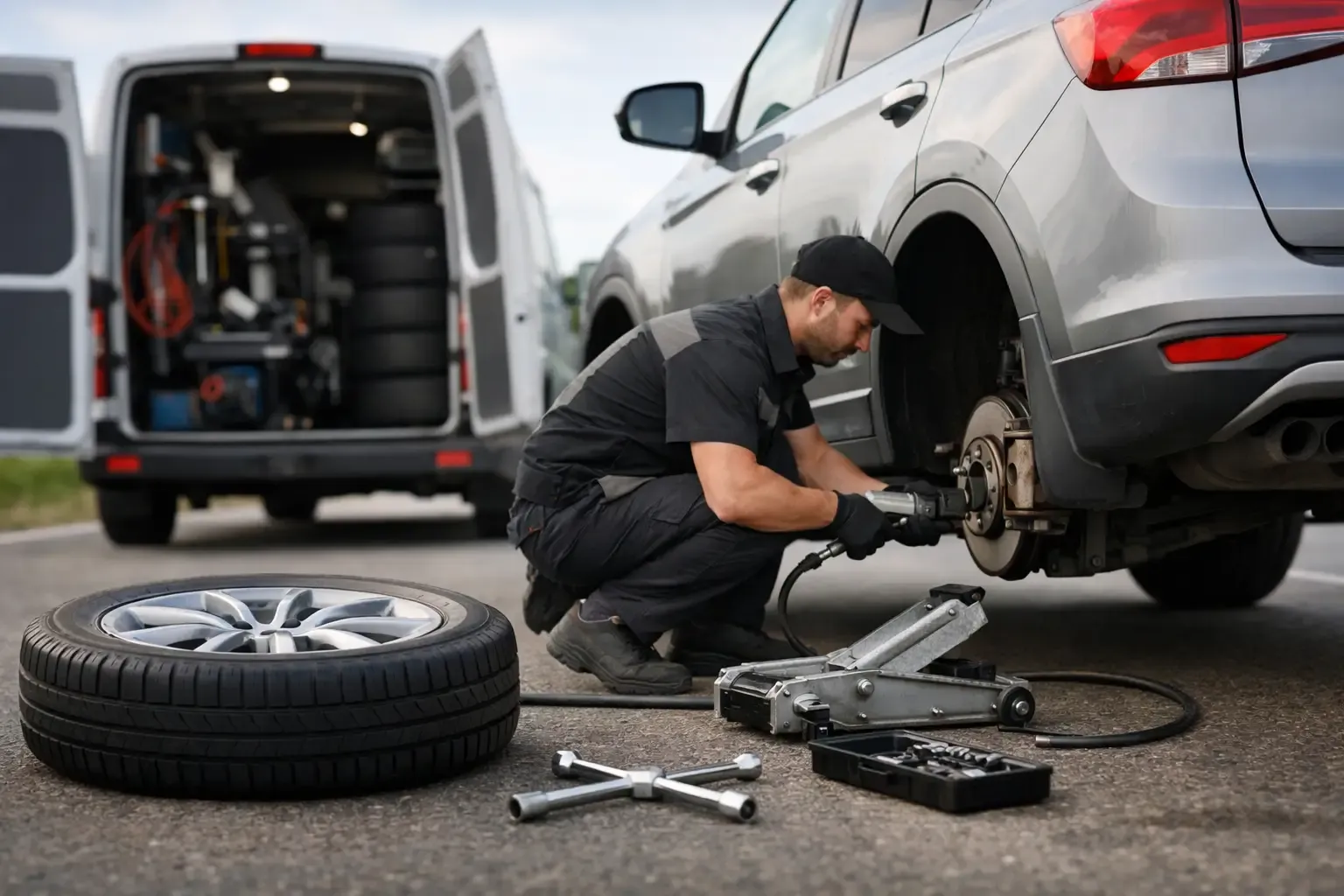
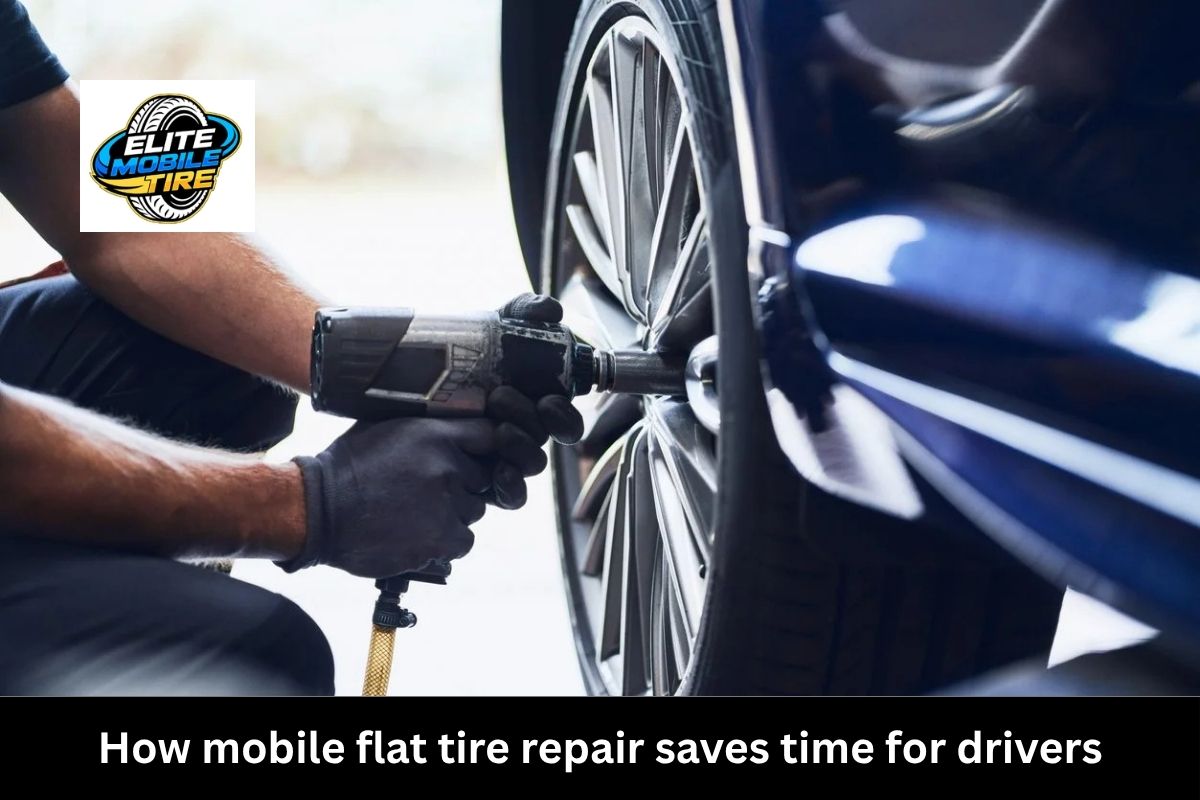
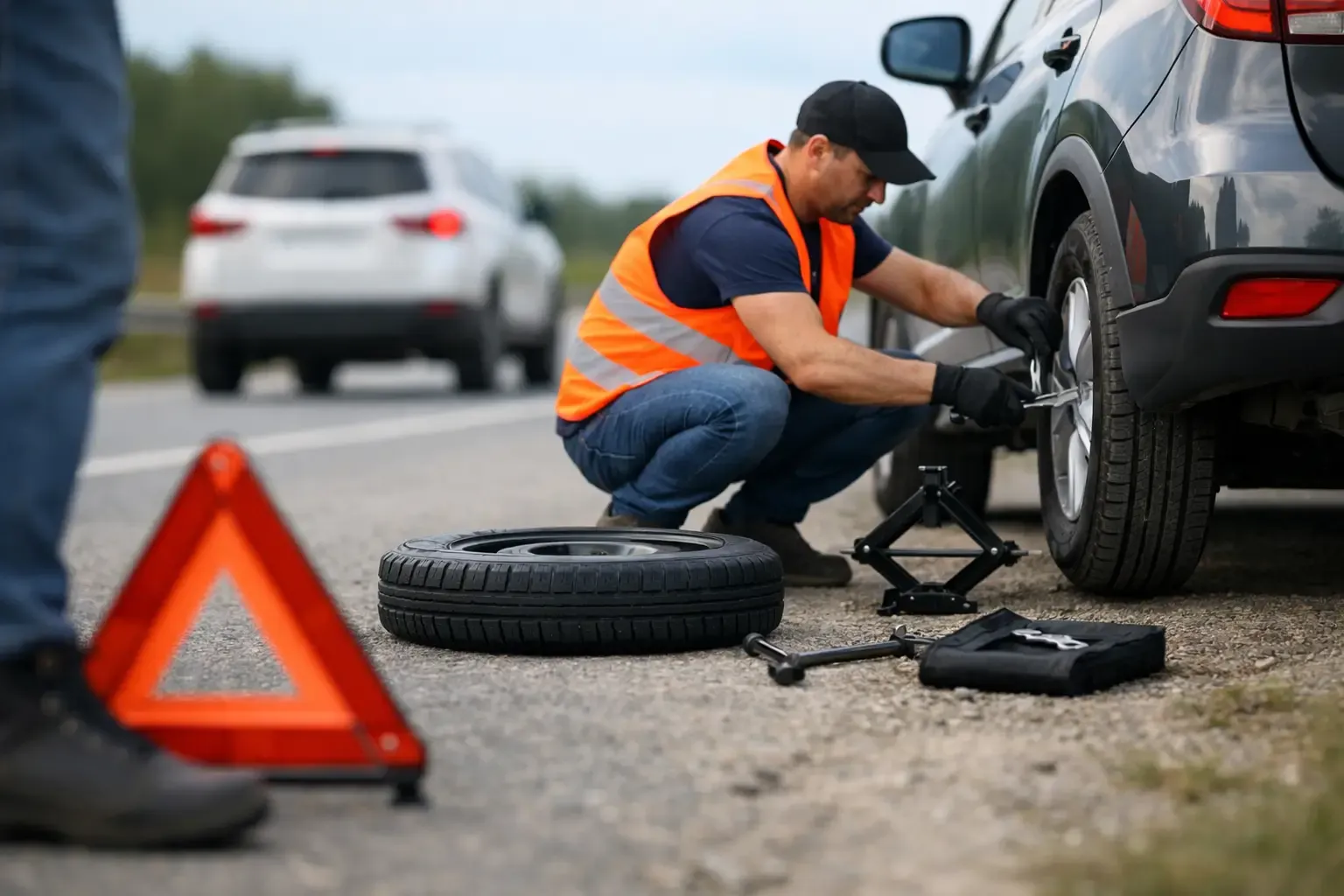
Gather your spare tire, jack, lug wrench, wheel lock key if your vehicle uses one, and a flashlight if visibility is limited. If you have wheel chocks, place them behind or in front of a tire on the opposite end of the vehicle. Never place any part of your body under a vehicle supported only by a roadside jack.
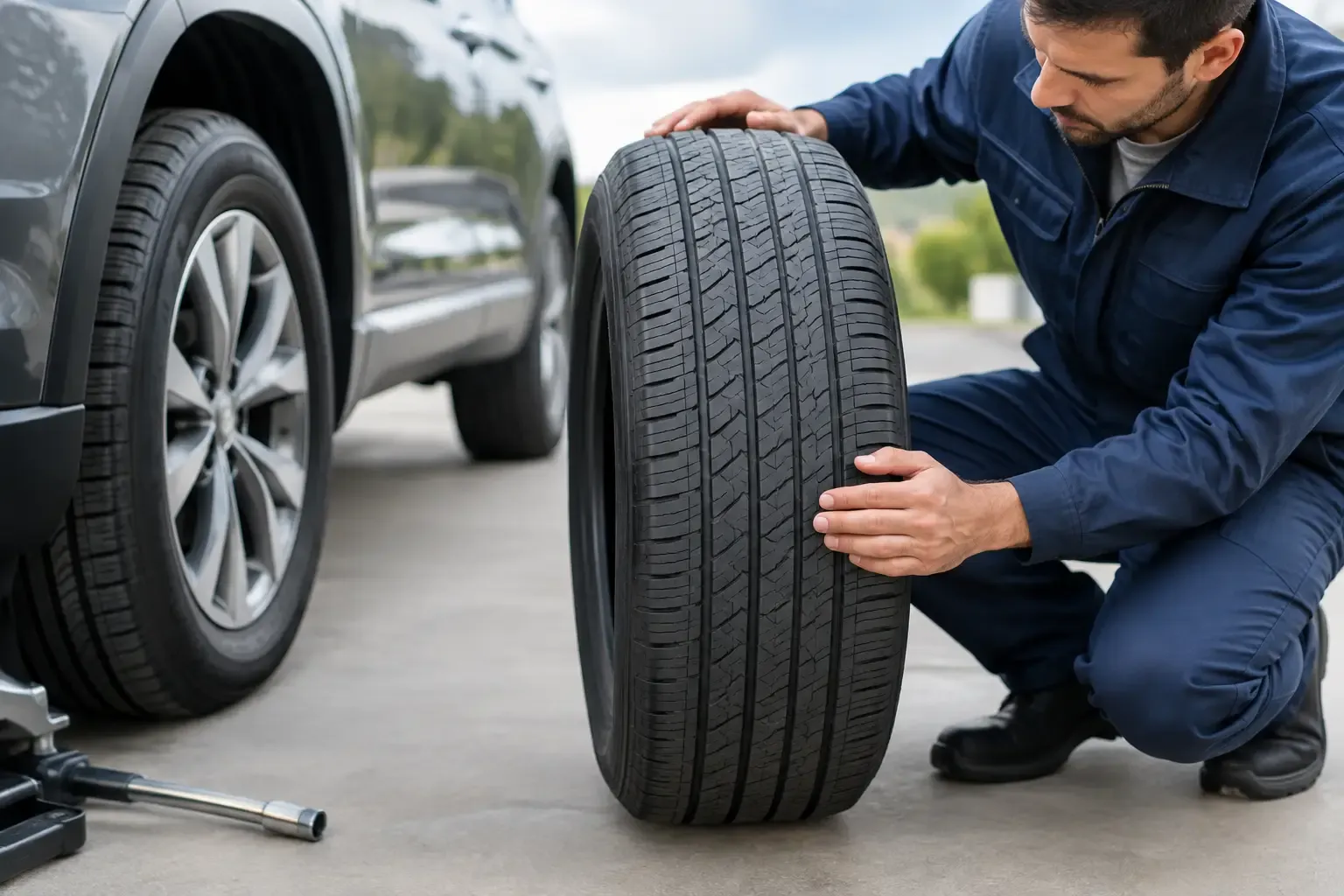
Inspect the spare before you start
A spare only helps if it is inflated and in usable condition. Check for obvious cracking, damage, or very low pressure before you remove the flat tire. Many compact temporary spares require higher air pressure than standard tires, often around 60 psi, but the specification on the tire or vehicle label is what matters.
If the spare is flat, damaged, missing, or you do not have the correct tools, do not attempt to drive on the wheel without a tire. Contact mobile roadside service instead. Driving on a bare rim can cause much more expensive damage and may leave you stranded in a less safe location.
Loosen the lug nuts while the tire is on the ground
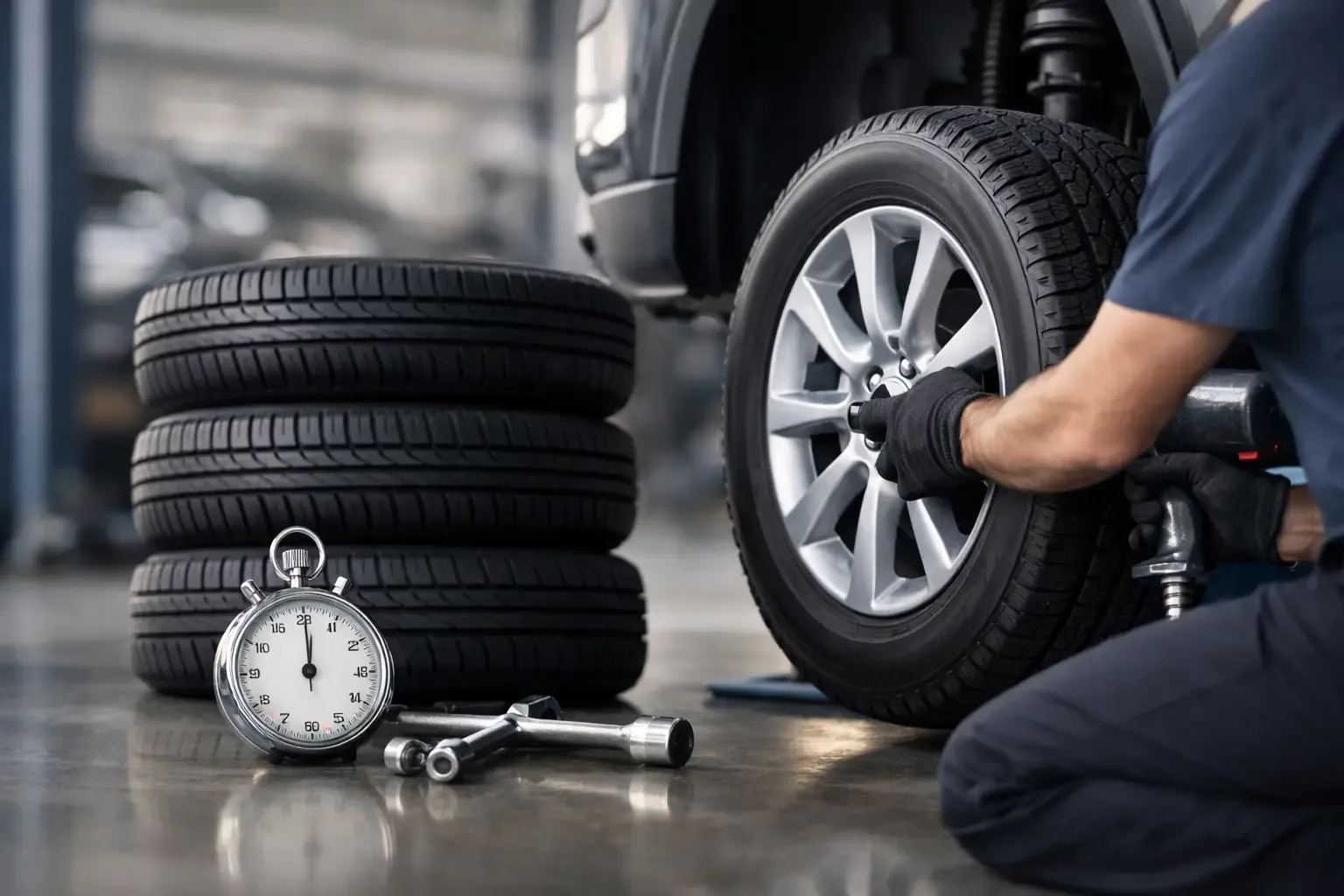
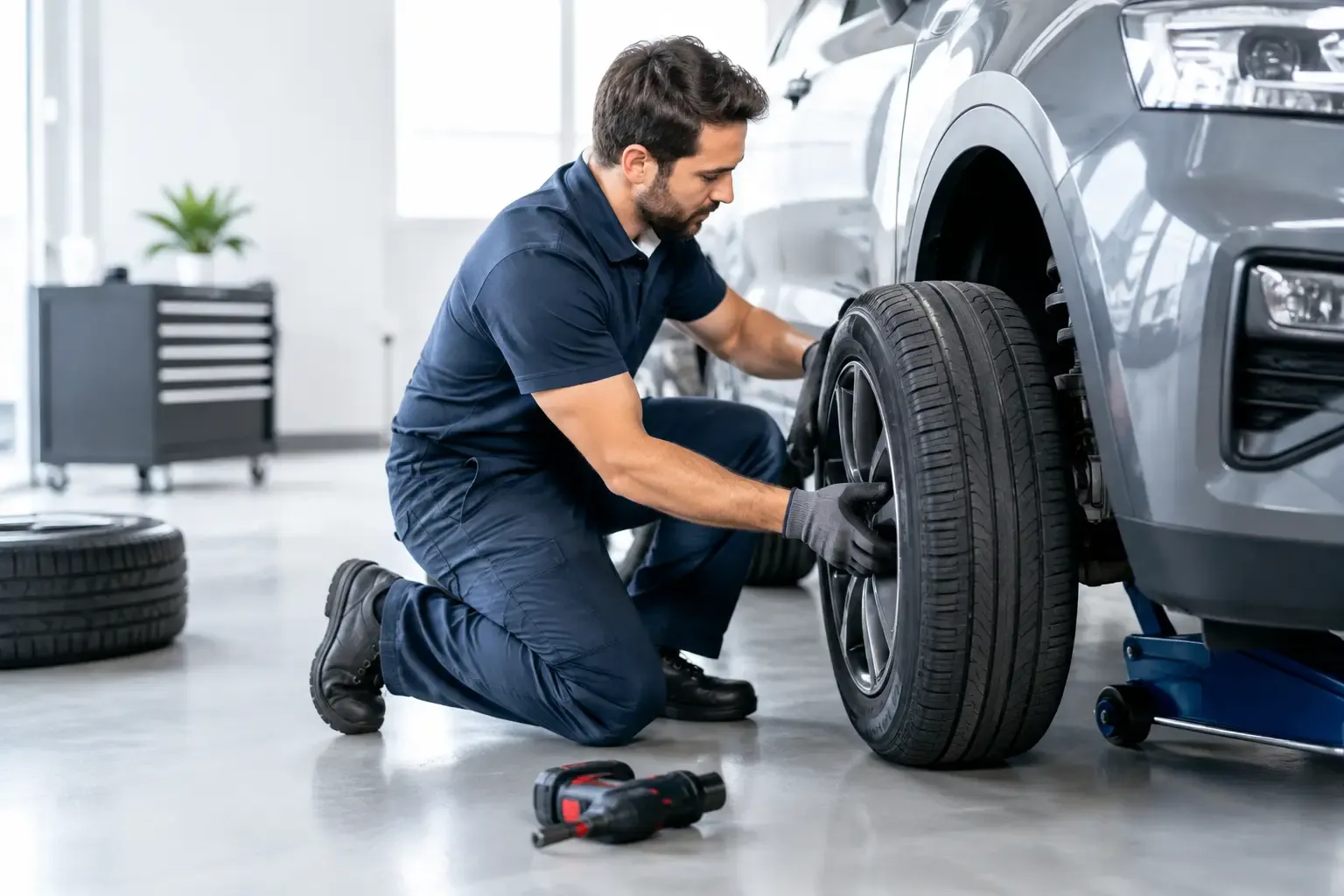
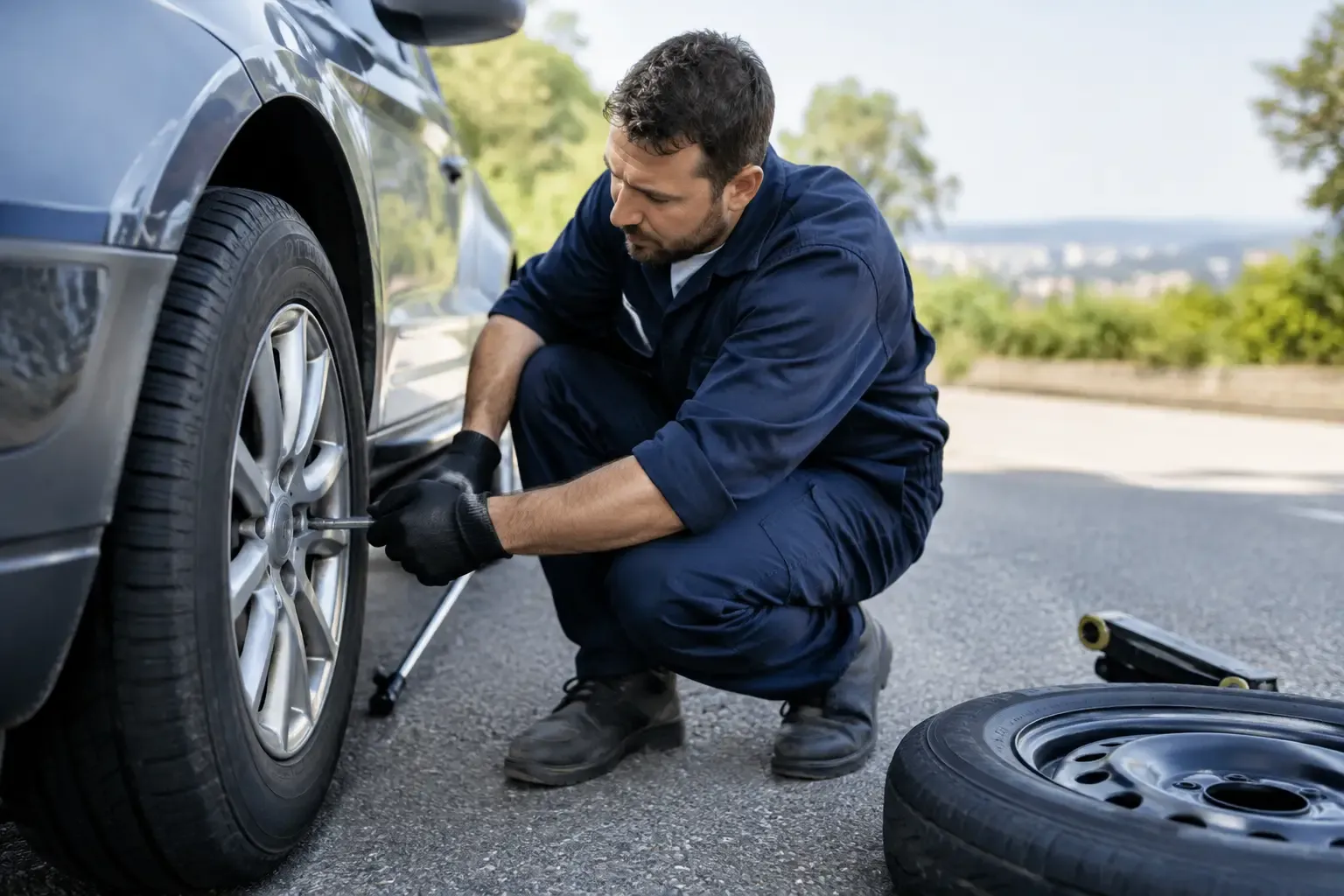
Remove the hubcap or wheel cover if necessary, then loosen each lug nut about one-quarter to one-half turn. Turn counterclockwise. The tire should remain on the pavement while you do this, because it prevents the wheel from spinning.
Use steady pressure rather than jumping on the lug wrench. If a lug nut will not move, do not use an extension pipe or excessive force on roadside equipment. A broken stud or damaged lug nut can turn a simple spare-tire change into a larger repair.
Lift the vehicle only at the designated point
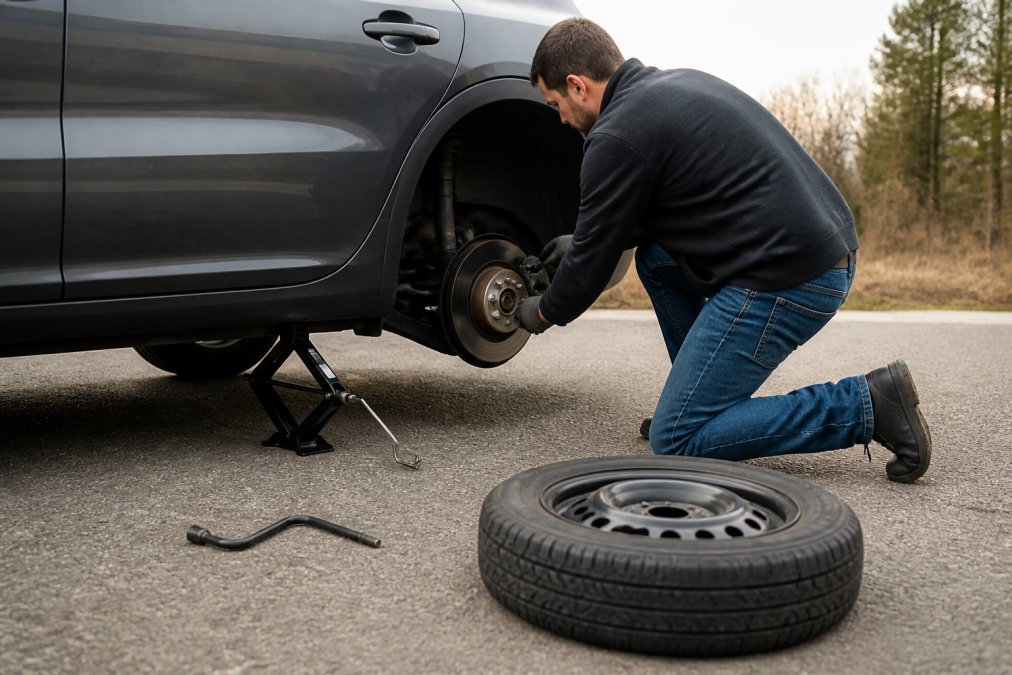
Position the jack exactly where the owner’s manual directs. Raise the vehicle just enough for the flat tire to clear the ground. There is no reason to lift it higher than necessary.
Keep your hands and feet clear of the area beneath the vehicle. If the jack begins to lean, sink, or shift, lower the vehicle carefully and stop. Soft asphalt on a hot day and loose ground can fail under a jack, even when the surface looks solid at first glance.
Install the spare and tighten the wheel correctly
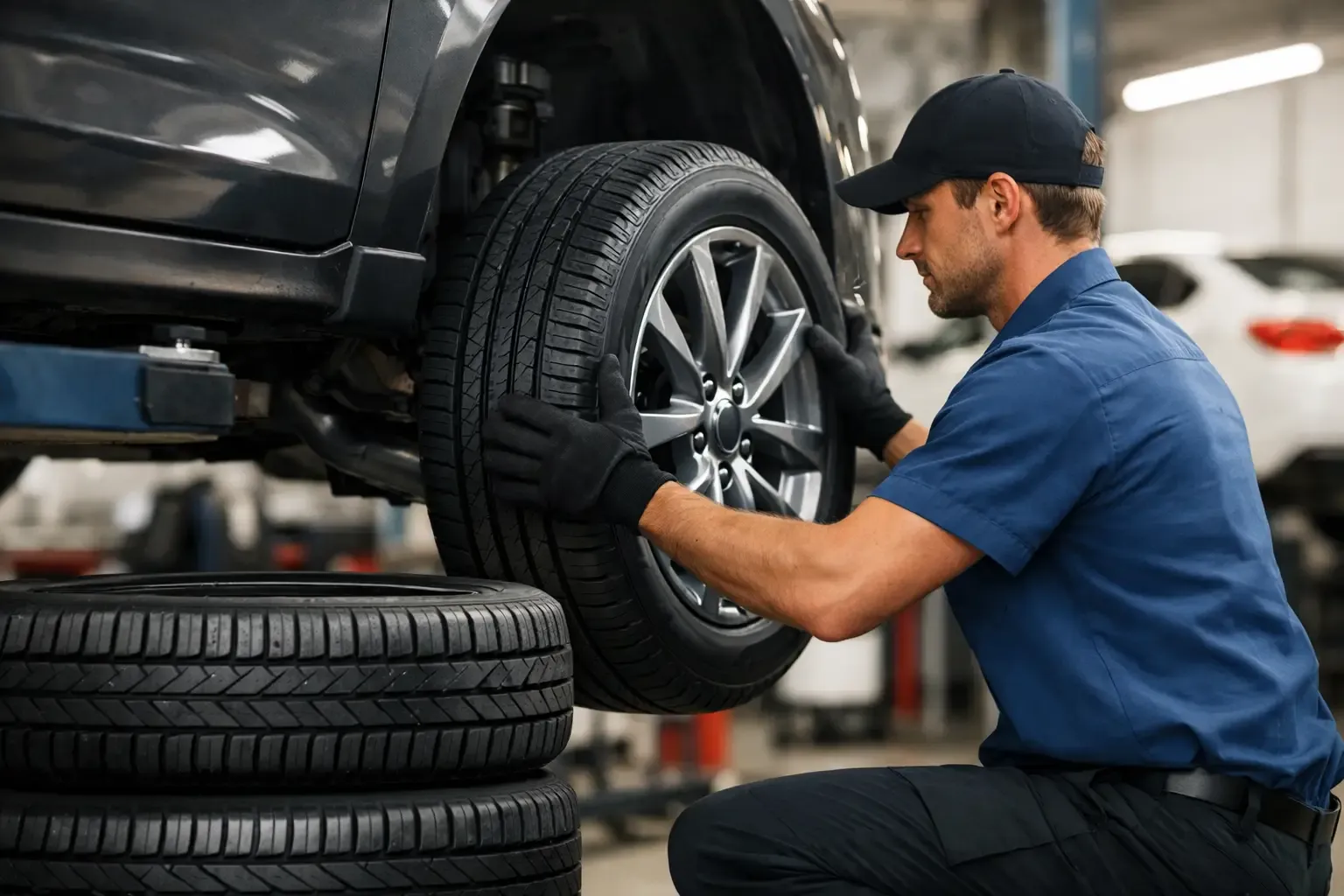
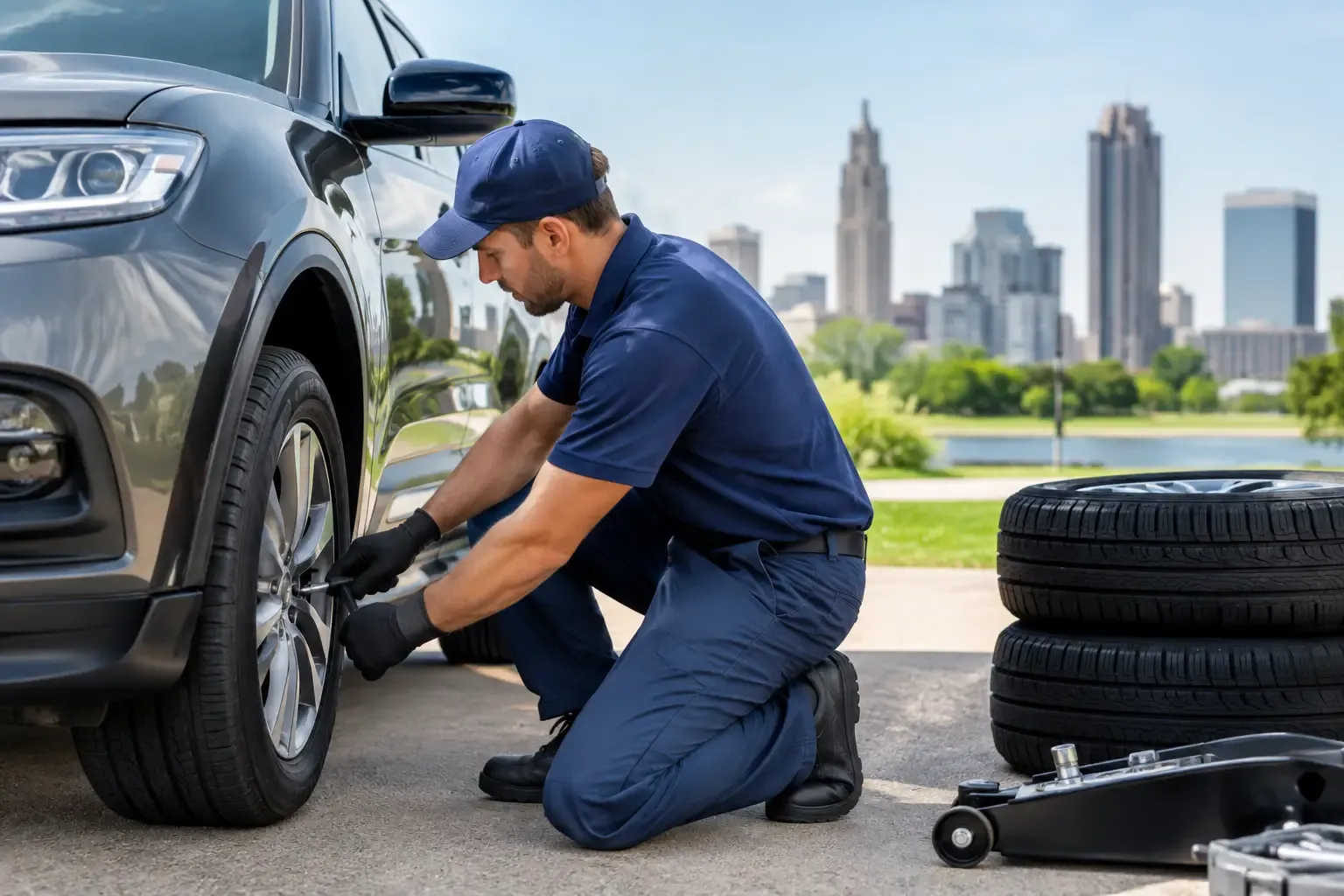
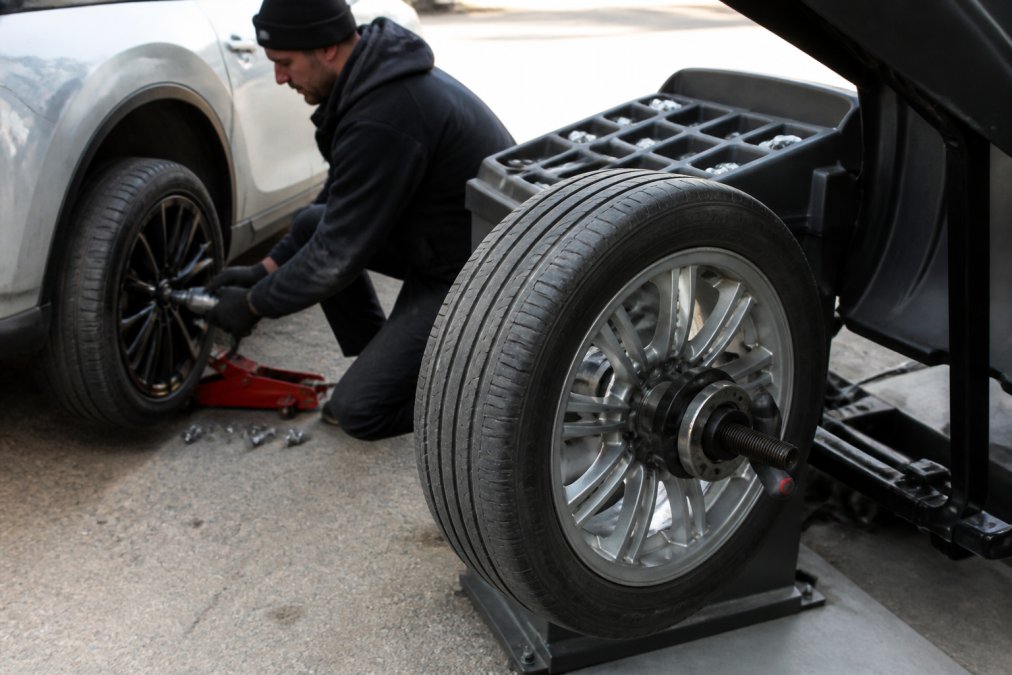
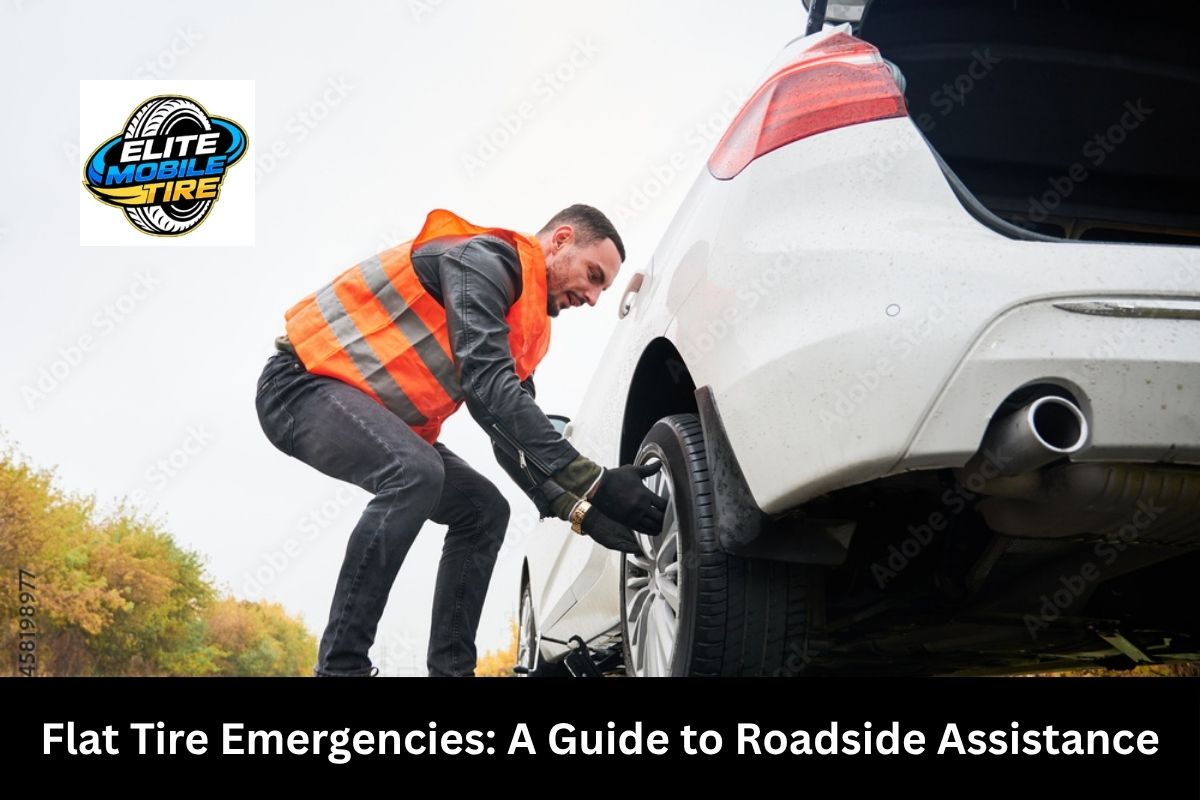
Remove the lug nuts and pull the wheel straight toward you. Set the flat tire on its side so it cannot roll into traffic. Line up the spare with the wheel studs, push it fully onto the hub, and hand-thread each lug nut before tightening any of them.
Tighten the lug nuts in a star pattern, moving across the wheel rather than around it in a circle. Lower the vehicle until the tire touches the pavement, then tighten the nuts again in the same pattern. Once the vehicle is fully lowered, use the lug wrench to make them secure. Your vehicle’s owner manual will provide the proper torque specification, and a technician should verify it with a torque wrench as soon as practical.
Put the flat tire and all tools back in the vehicle before pulling away. Do one more walk-around to make sure nothing is left on the roadside.
Drive Carefully on a Temporary Spare
A compact spare is designed to get you to service, not to handle normal driving for days or weeks. Follow the speed limit printed on the spare tire, which is commonly no more than 50 mph. Avoid aggressive turns, sudden stops, long highway trips, and heavy cargo until a proper replacement or repair is completed.
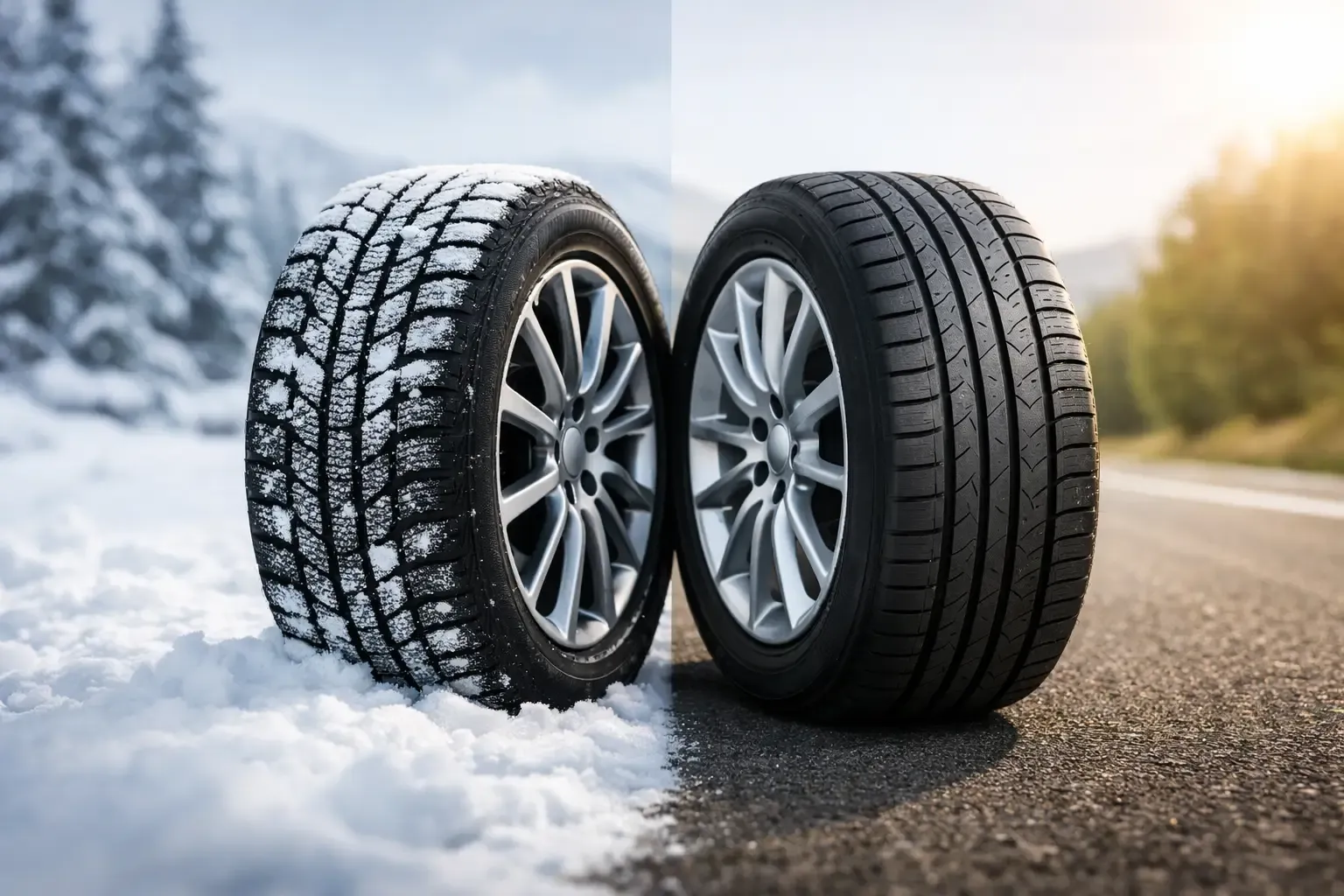
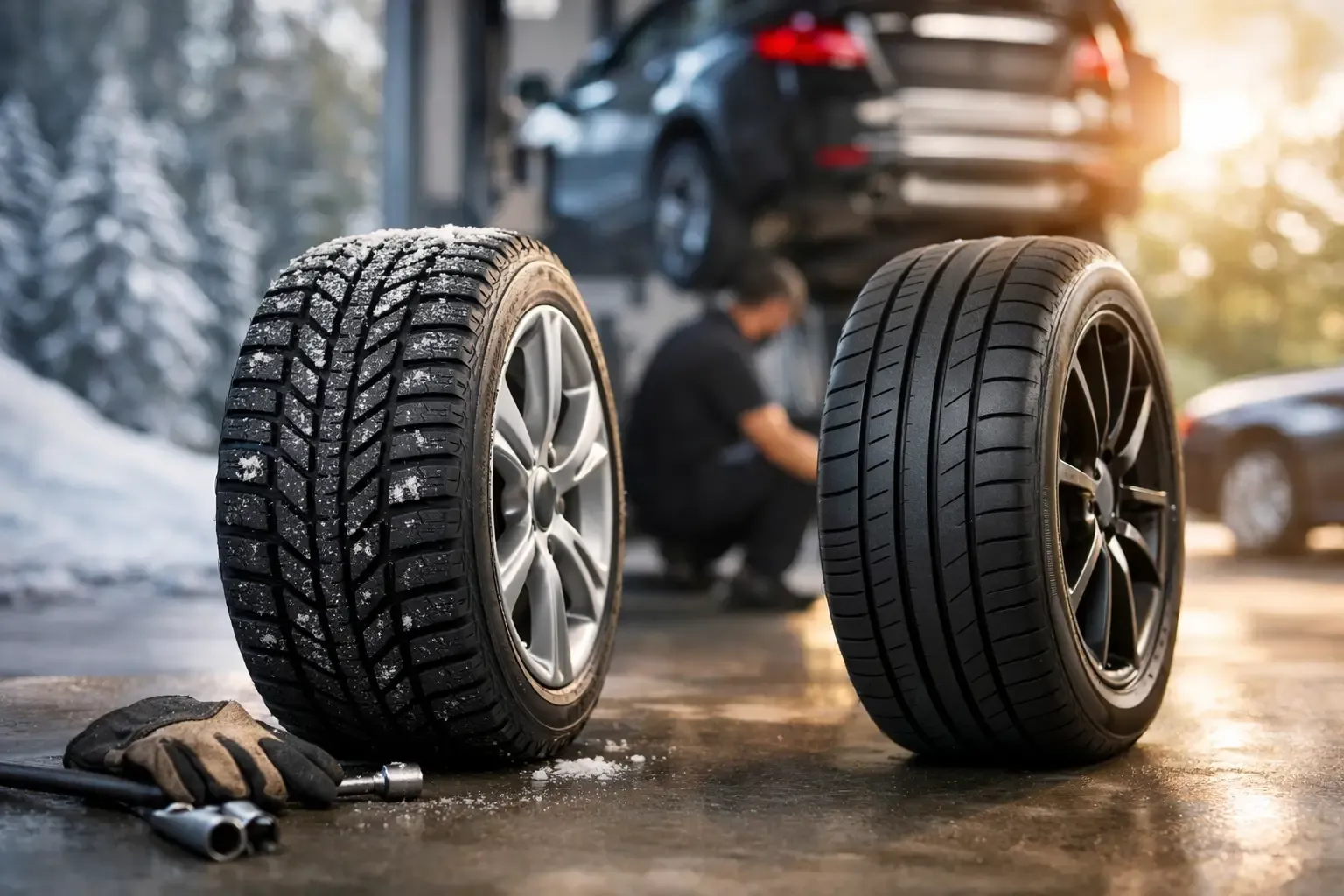
Your vehicle may handle differently with a temporary spare, especially in rain or during Ohio winter weather. Braking and traction can be reduced, and all-wheel-drive vehicles may have additional restrictions because of tire-size differences. If you drive an all-wheel-drive vehicle, consult the owner’s manual or call a tire professional before traveling farther than necessary.
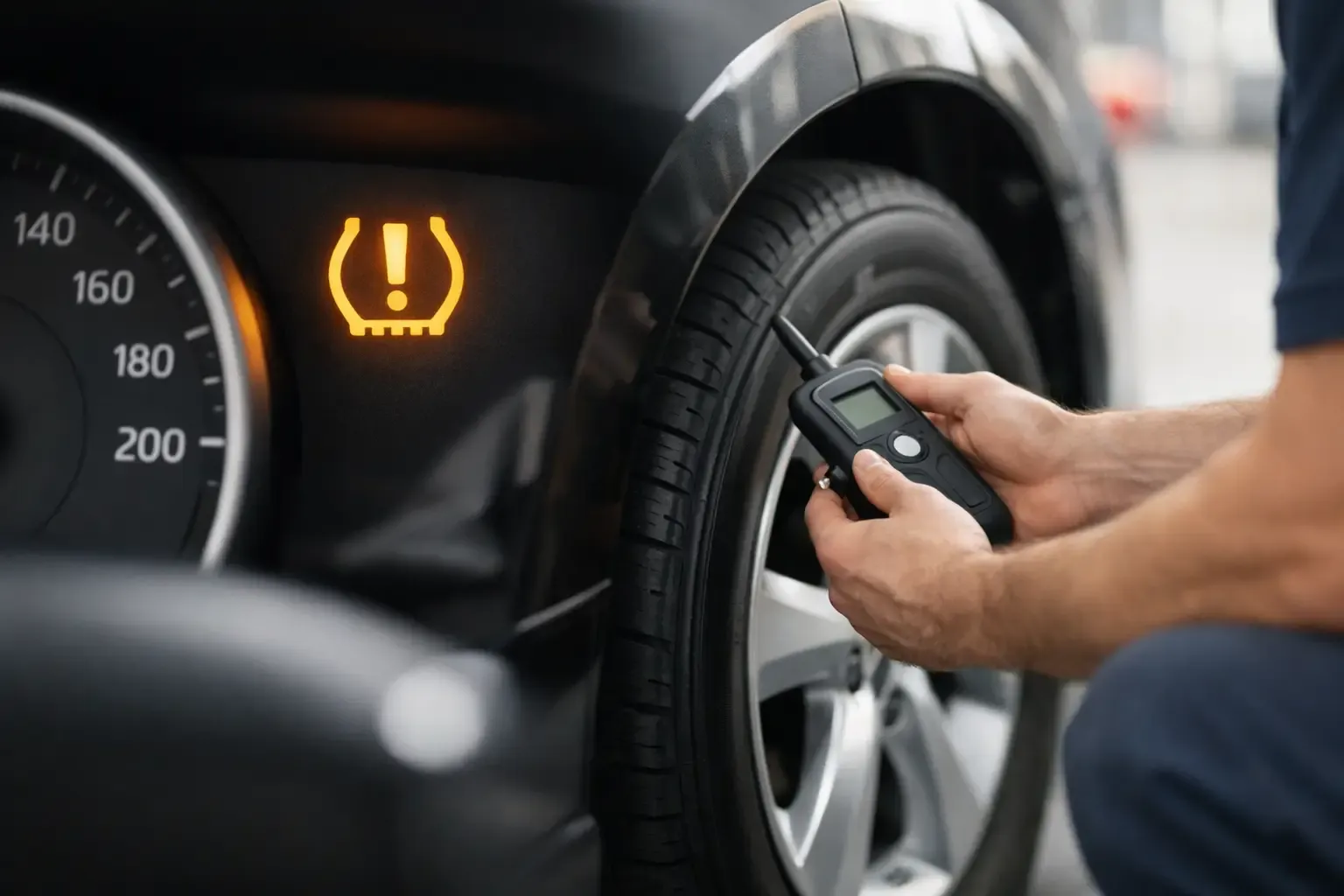
A tire pressure warning light may remain on after you install a spare. That does not necessarily mean the spare is failing, but it does mean the system may need attention after the repaired or replacement tire is installed. Do not ignore the light long term.
When a Flat Tire Should Not Be Repaired
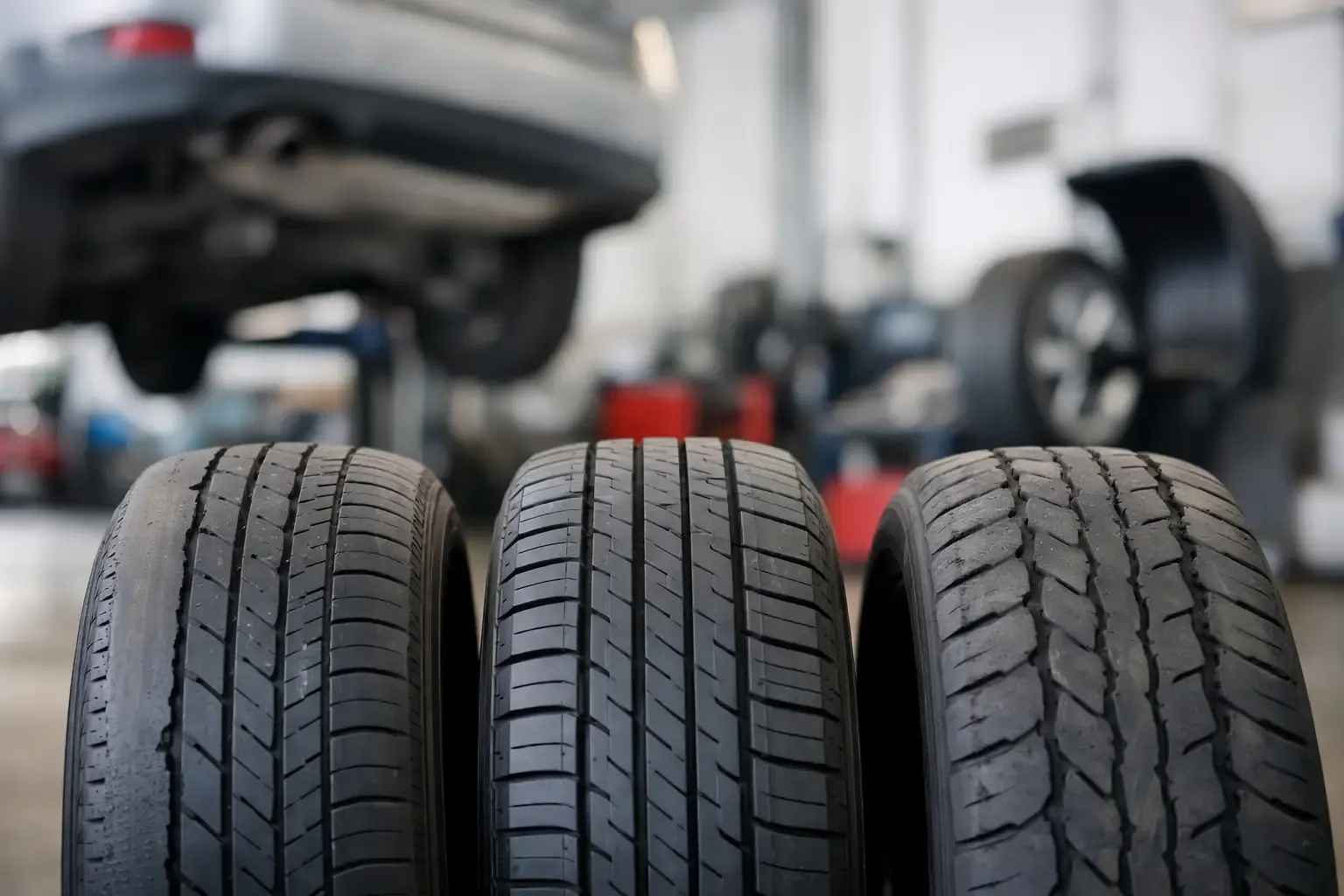
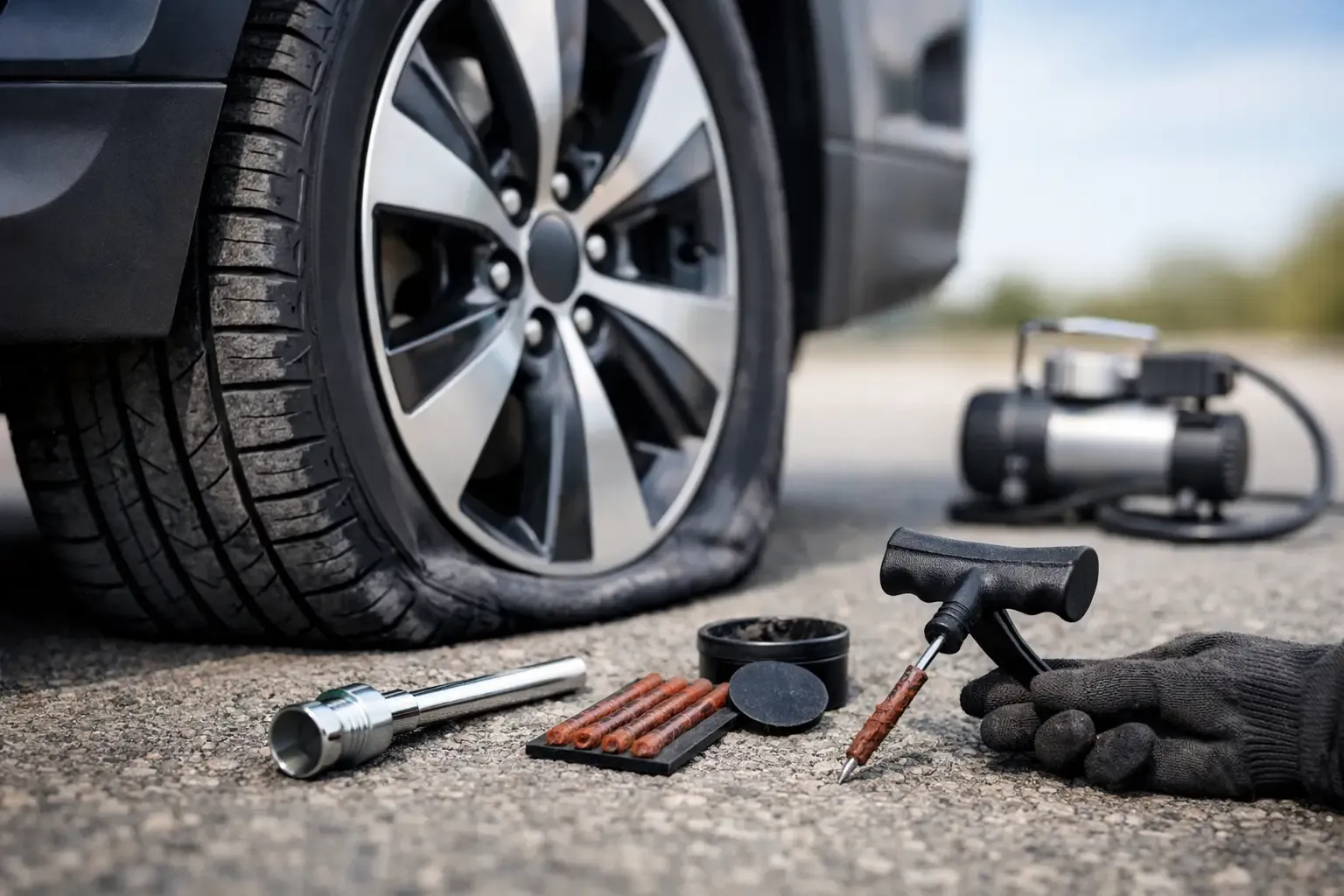
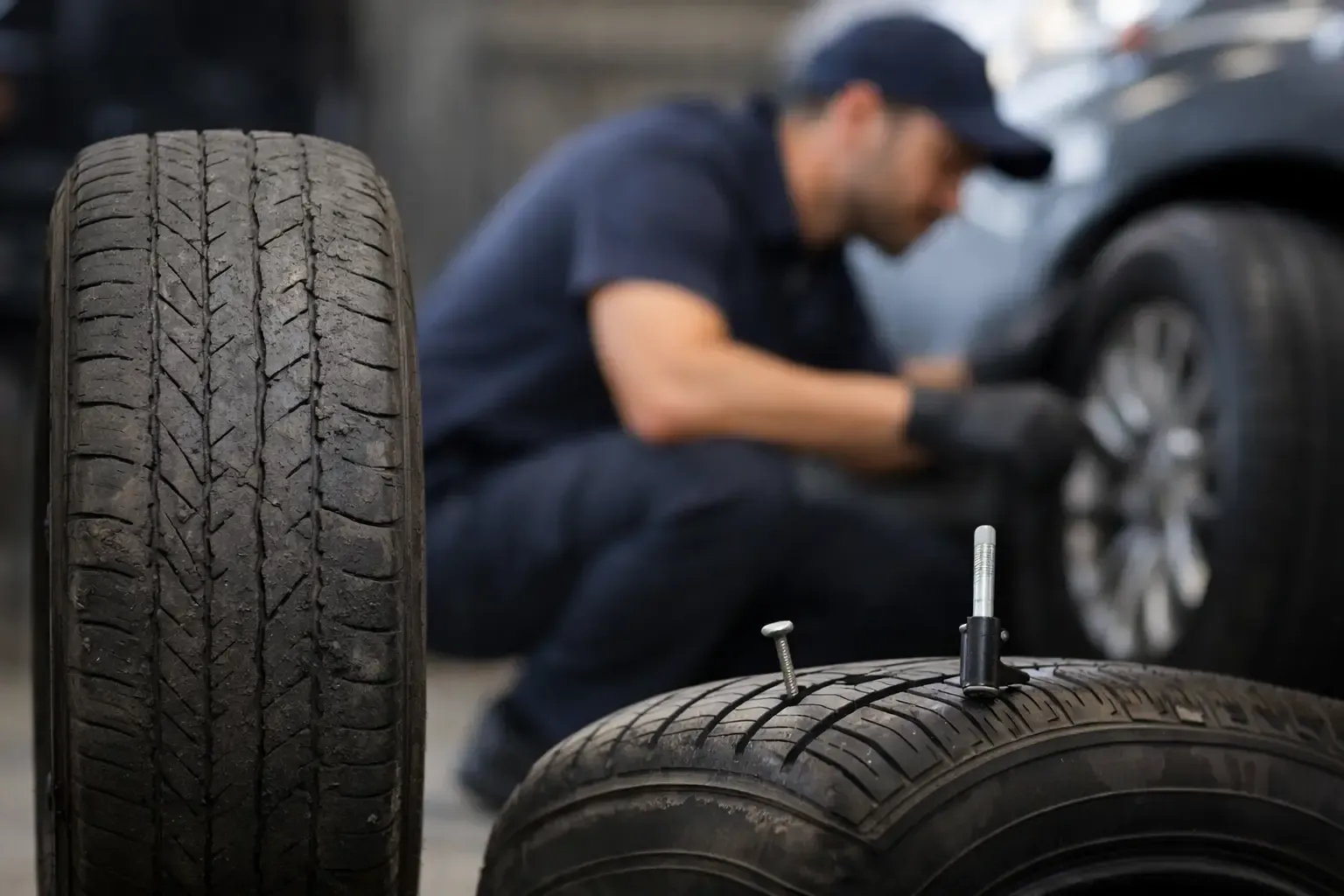
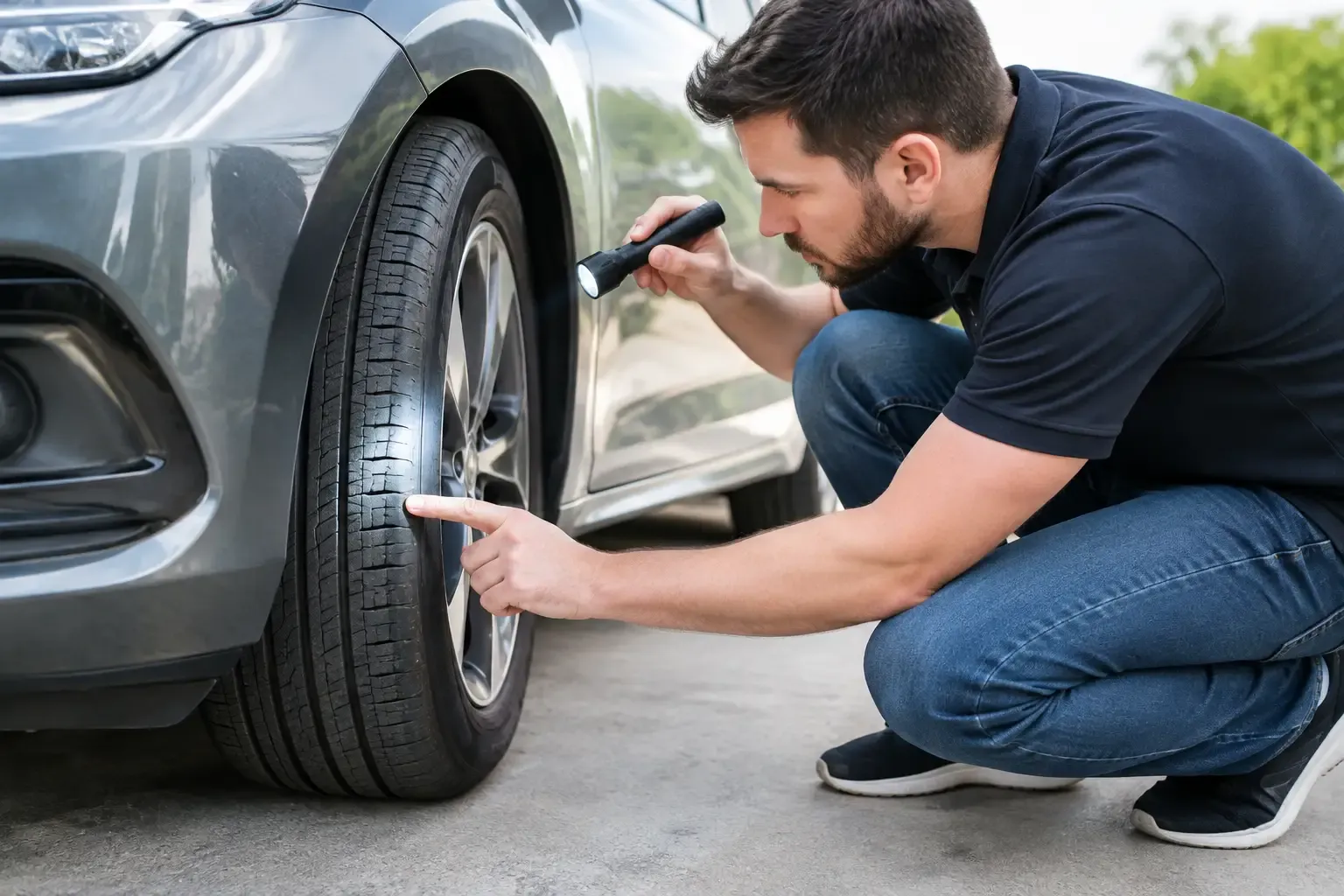
Not every puncture qualifies for a safe repair. A small puncture in the center portion of the tread may be repairable after a professional inspection. Damage in the sidewall or shoulder area usually requires tire replacement because those sections flex heavily while driving.
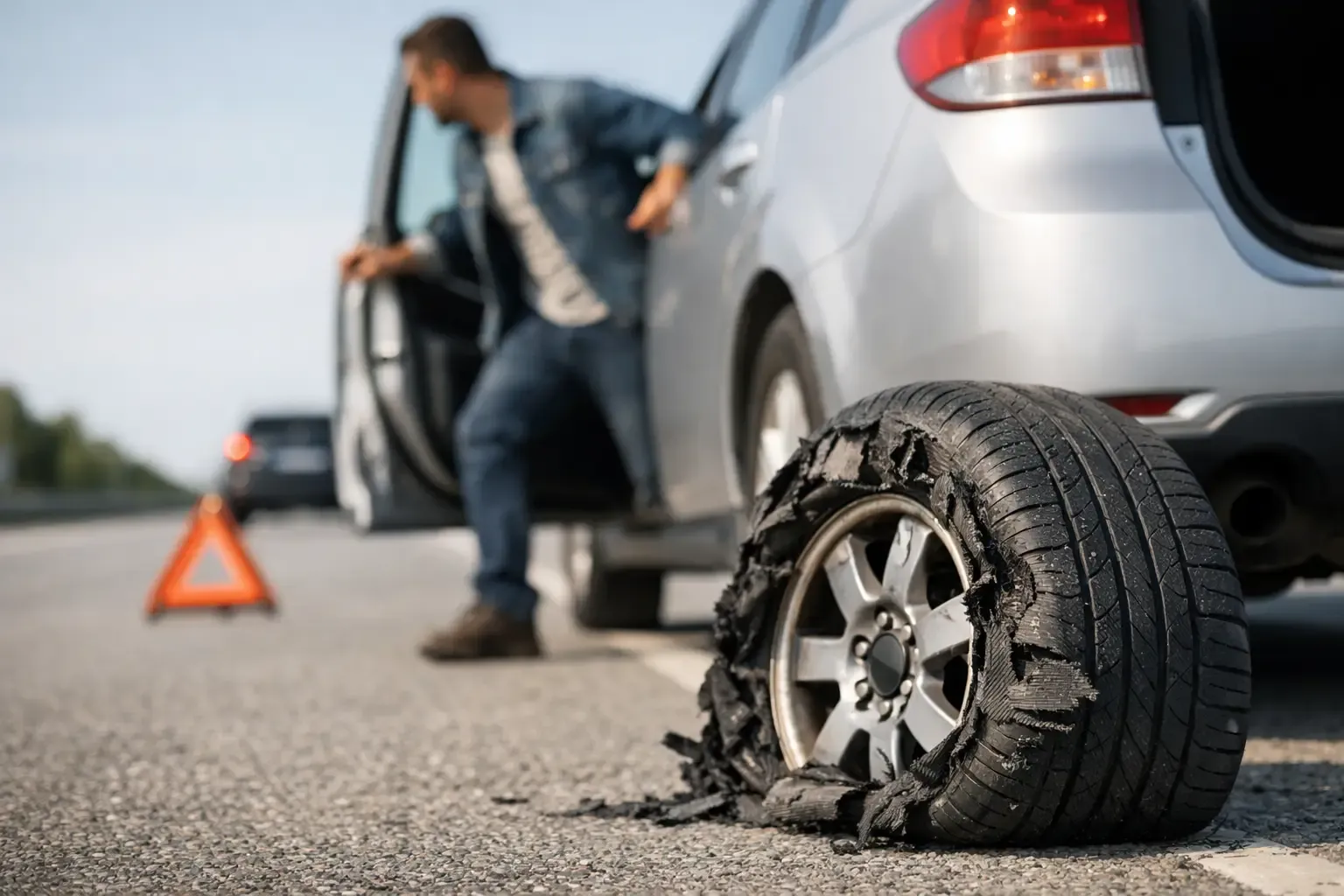
A tire may also need replacement if it was driven while severely underinflated, has a large cut, shows exposed cords, has multiple closely spaced punctures, or has visible internal damage. A sealant can occasionally provide a short-term emergency measure, but it is not a reliable substitute for a proper inspection and may complicate some tire repairs or TPMS service.
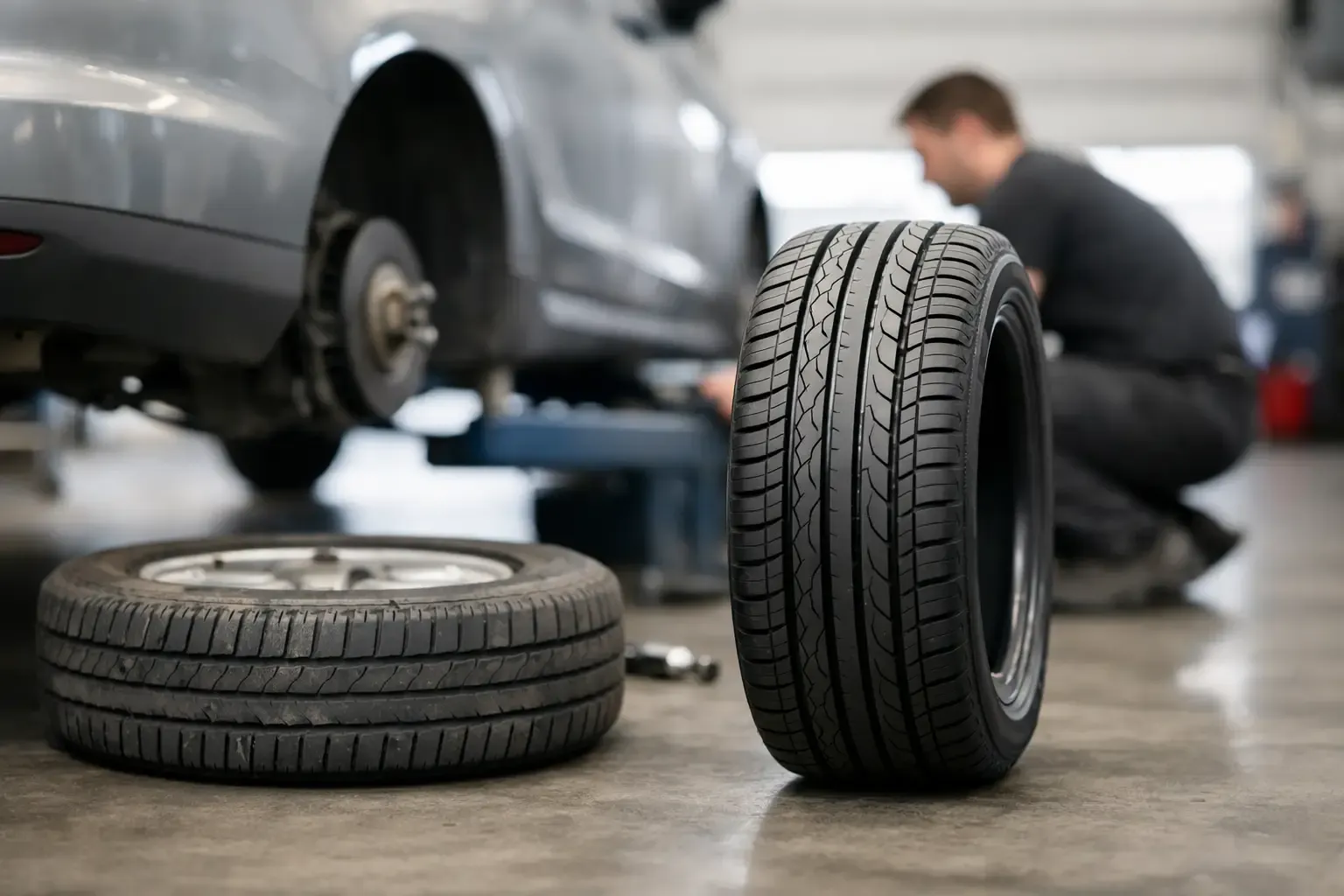
This is why a visual check from the outside is not enough. A technician needs to remove the tire from the wheel and inspect the inside before deciding whether repair is appropriate.
When to Call Roadside Tire Help Instead
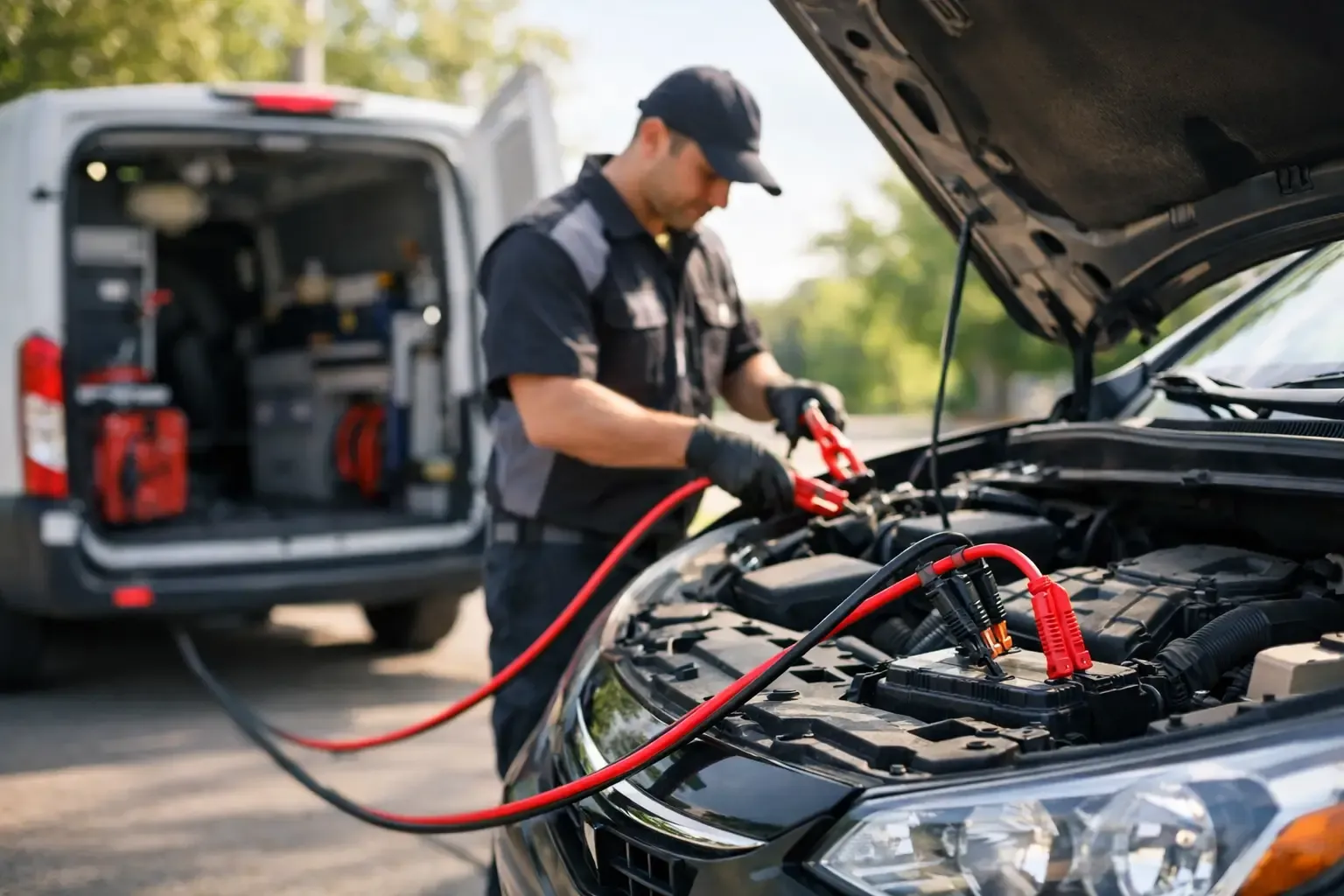
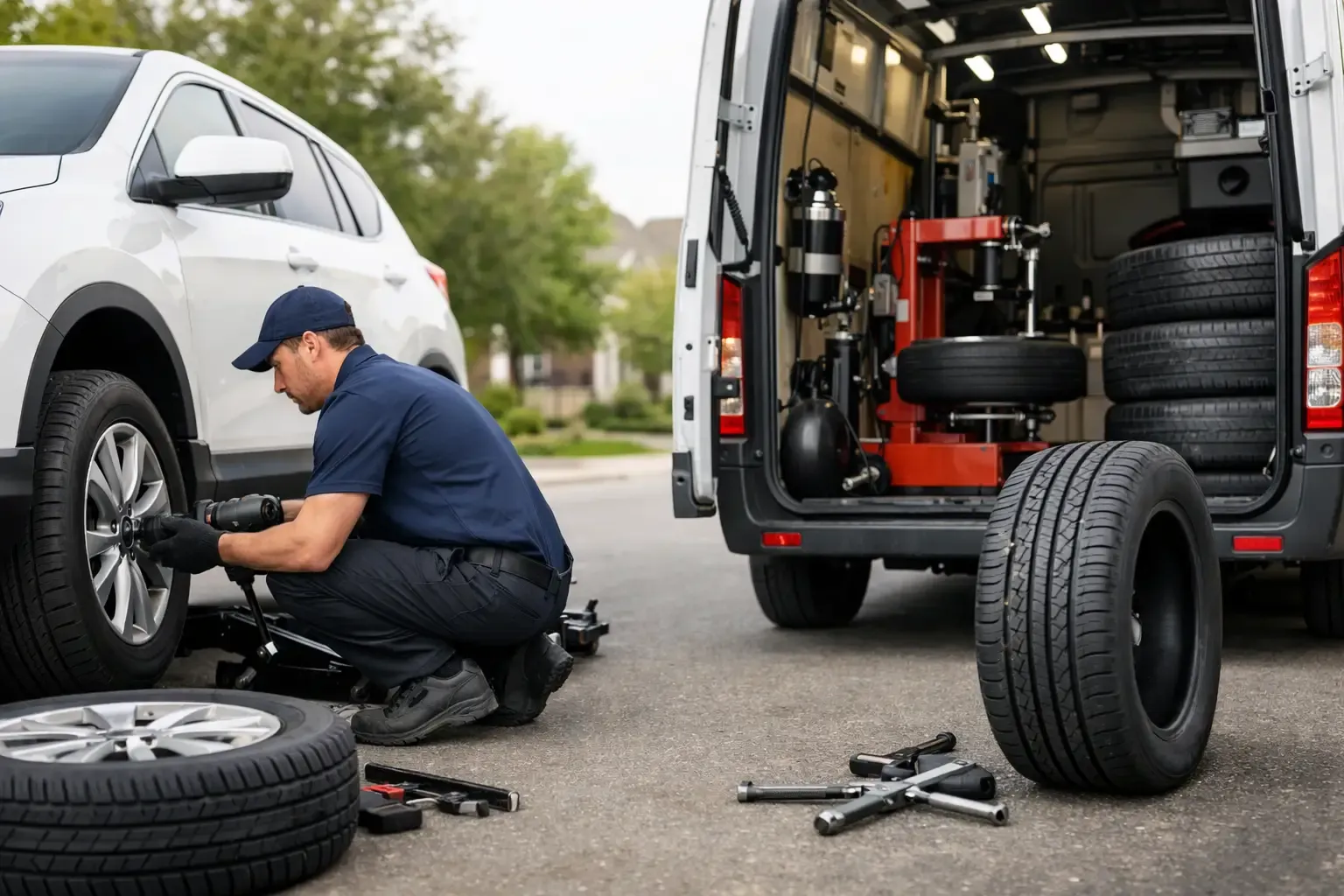
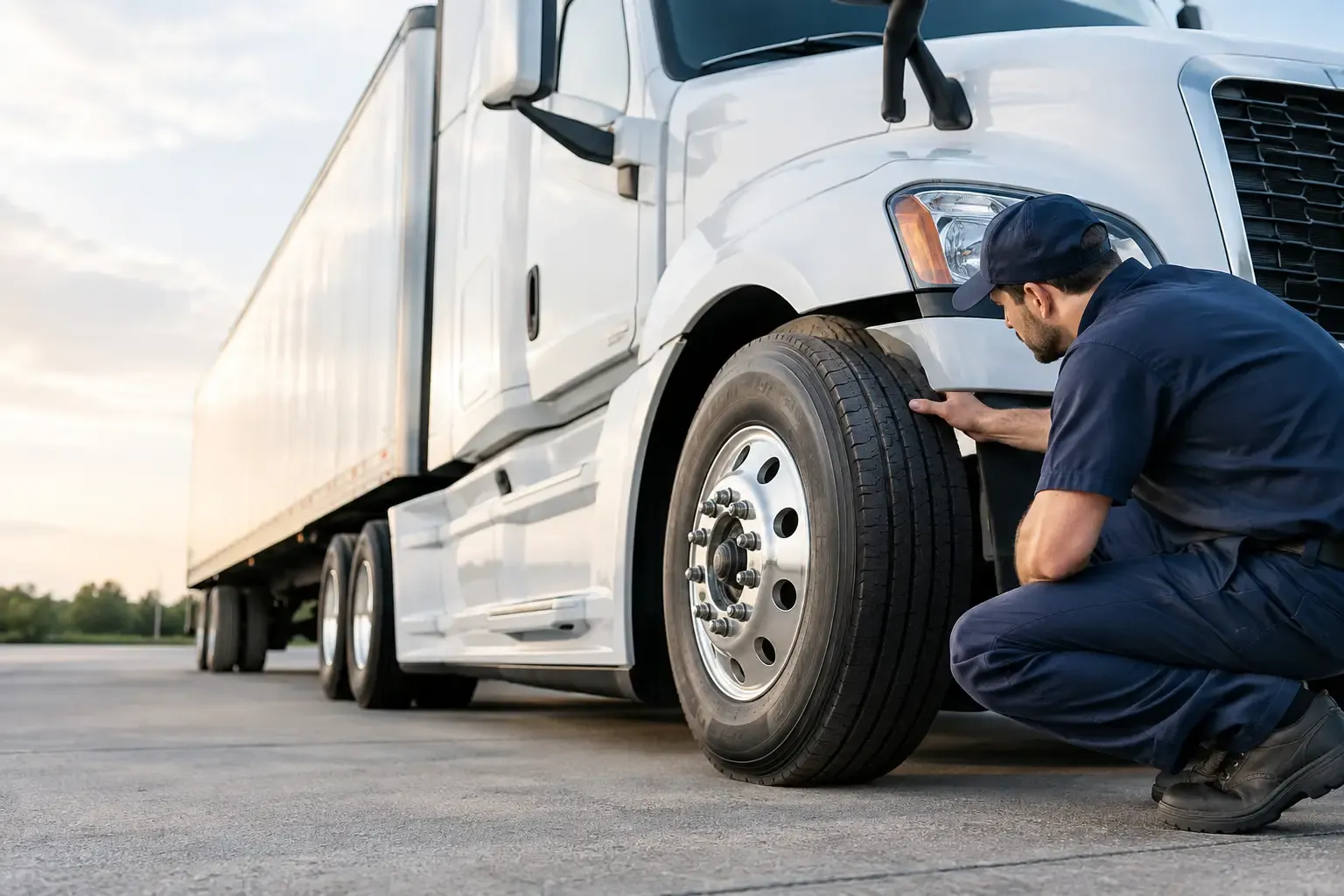
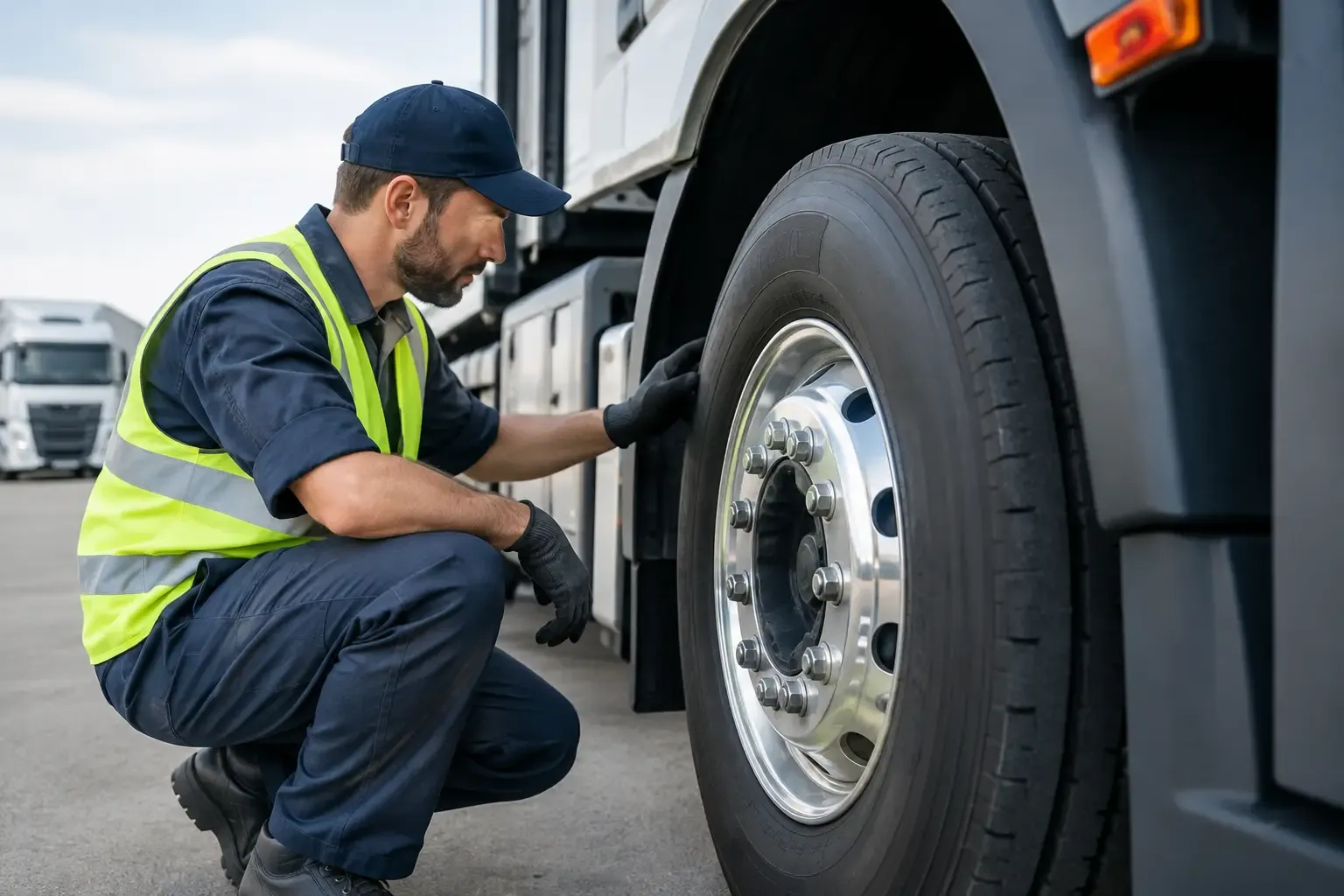
Calling for help is the safer, more efficient choice when traffic is close, the shoulder is narrow, the weather is severe, or you are not comfortable using a jack. It also makes sense when you have no spare, no lug wrench, locked lug nuts without the key, a damaged wheel, or a flat on a commercial vehicle.
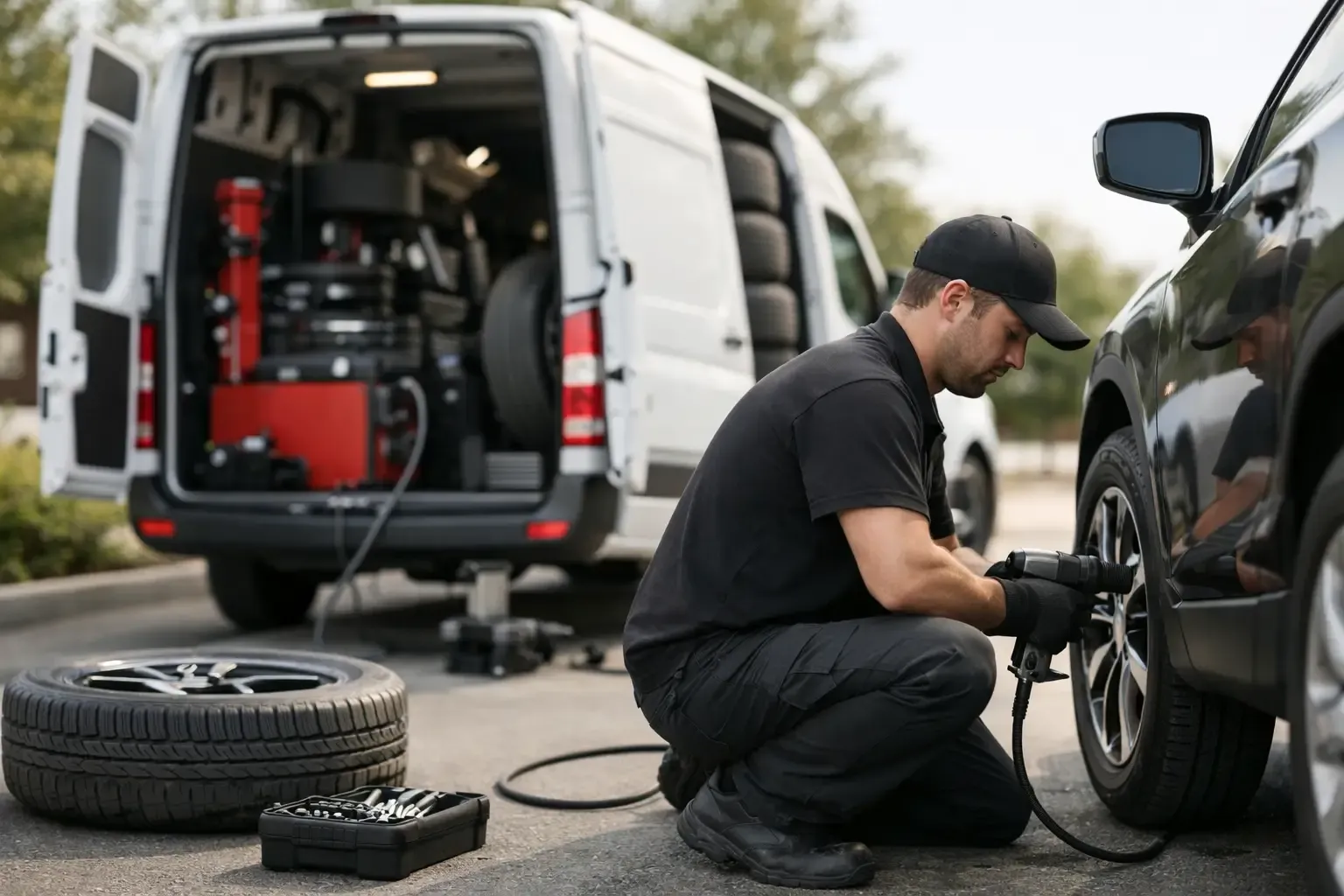
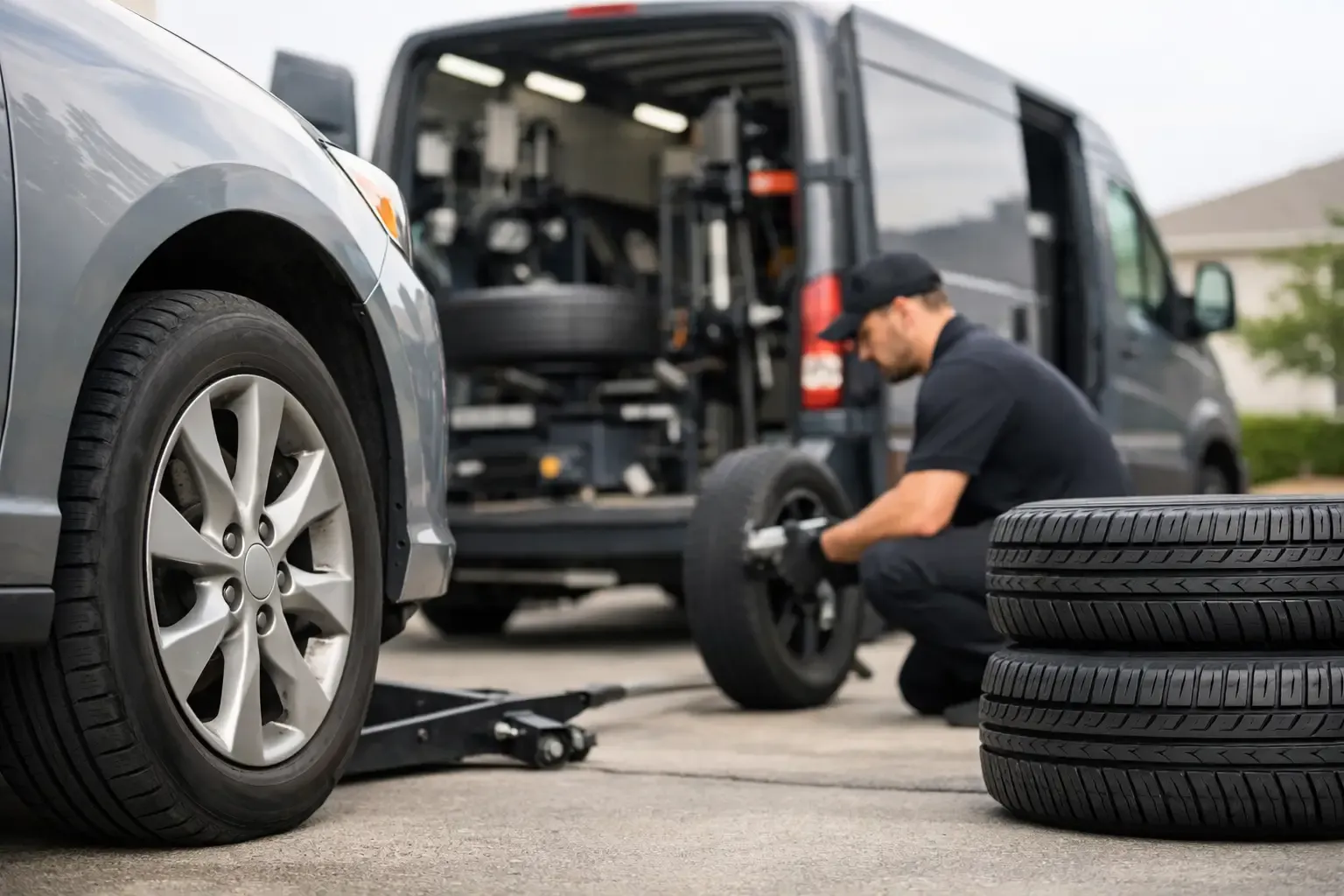
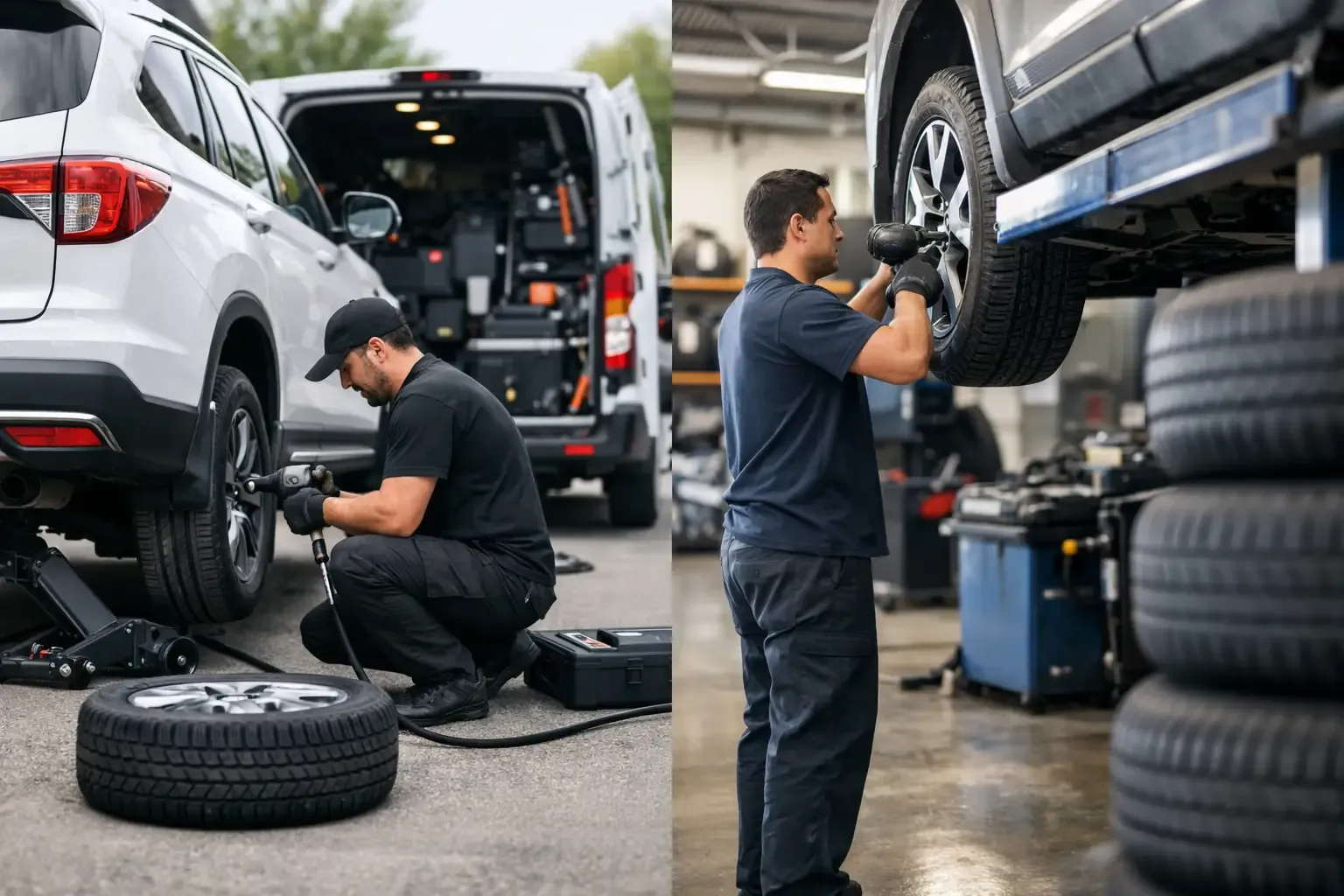
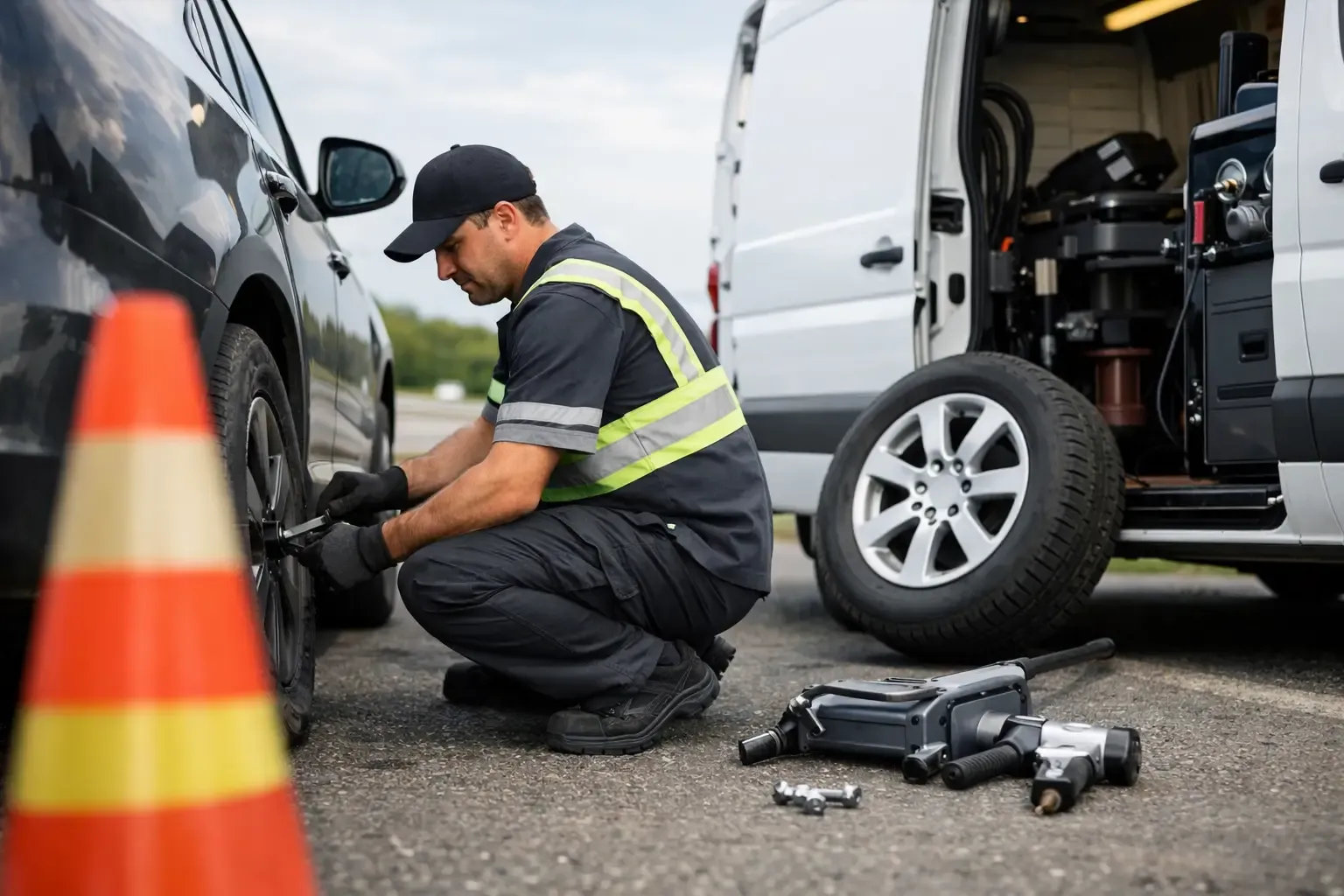
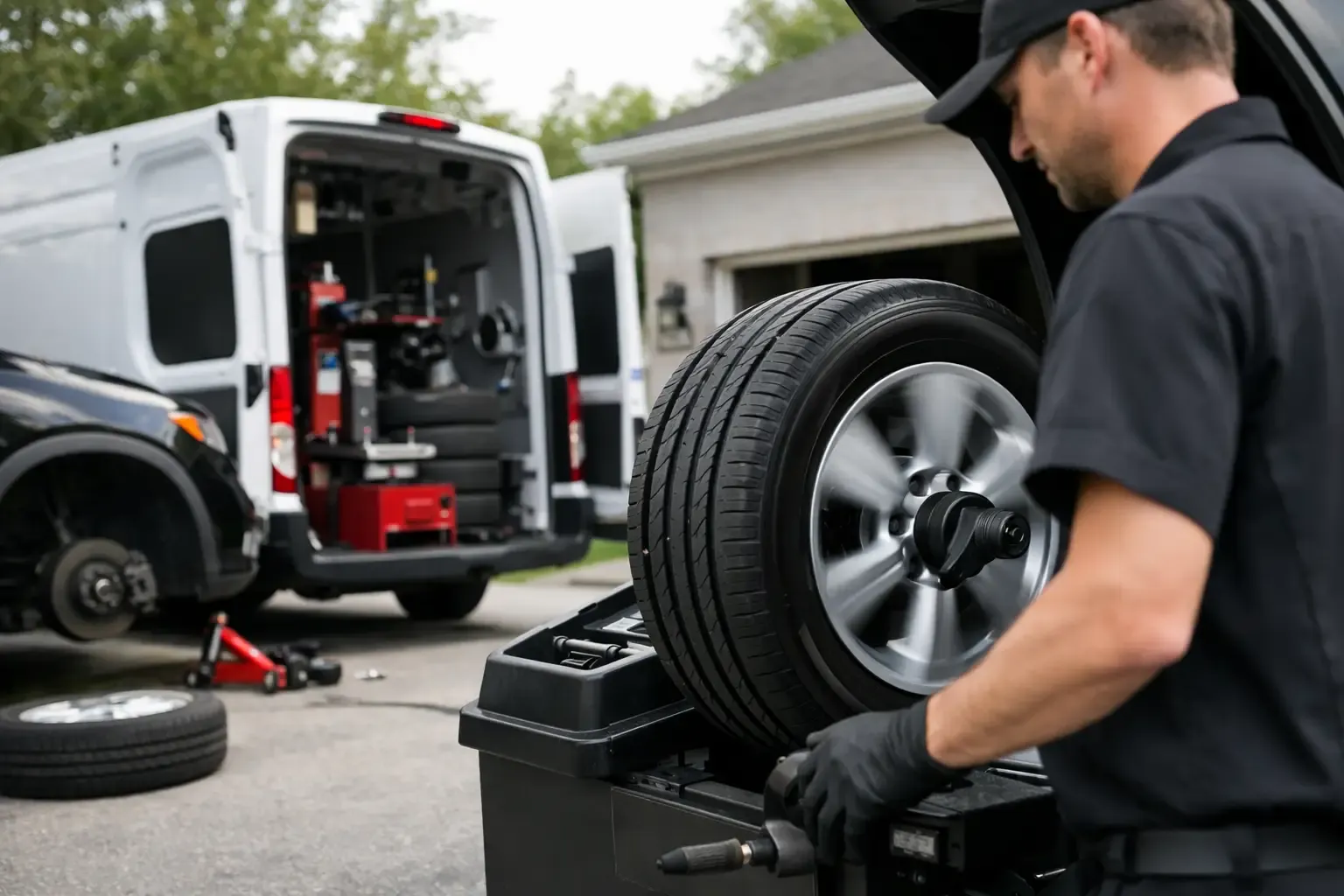
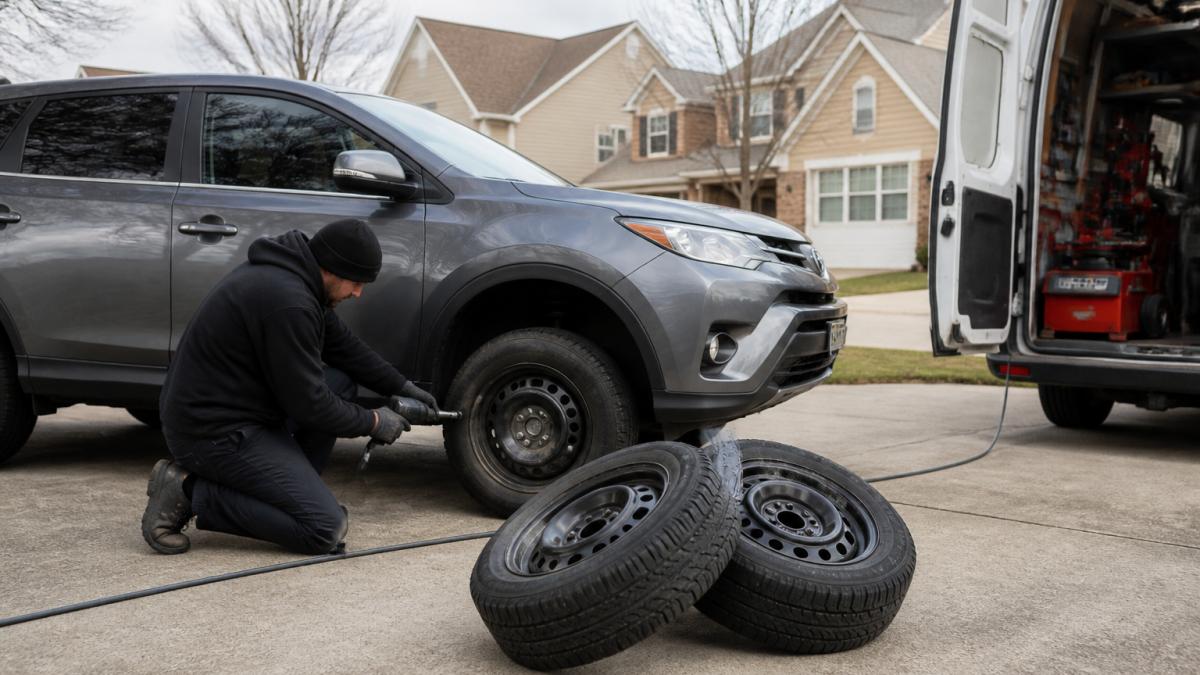
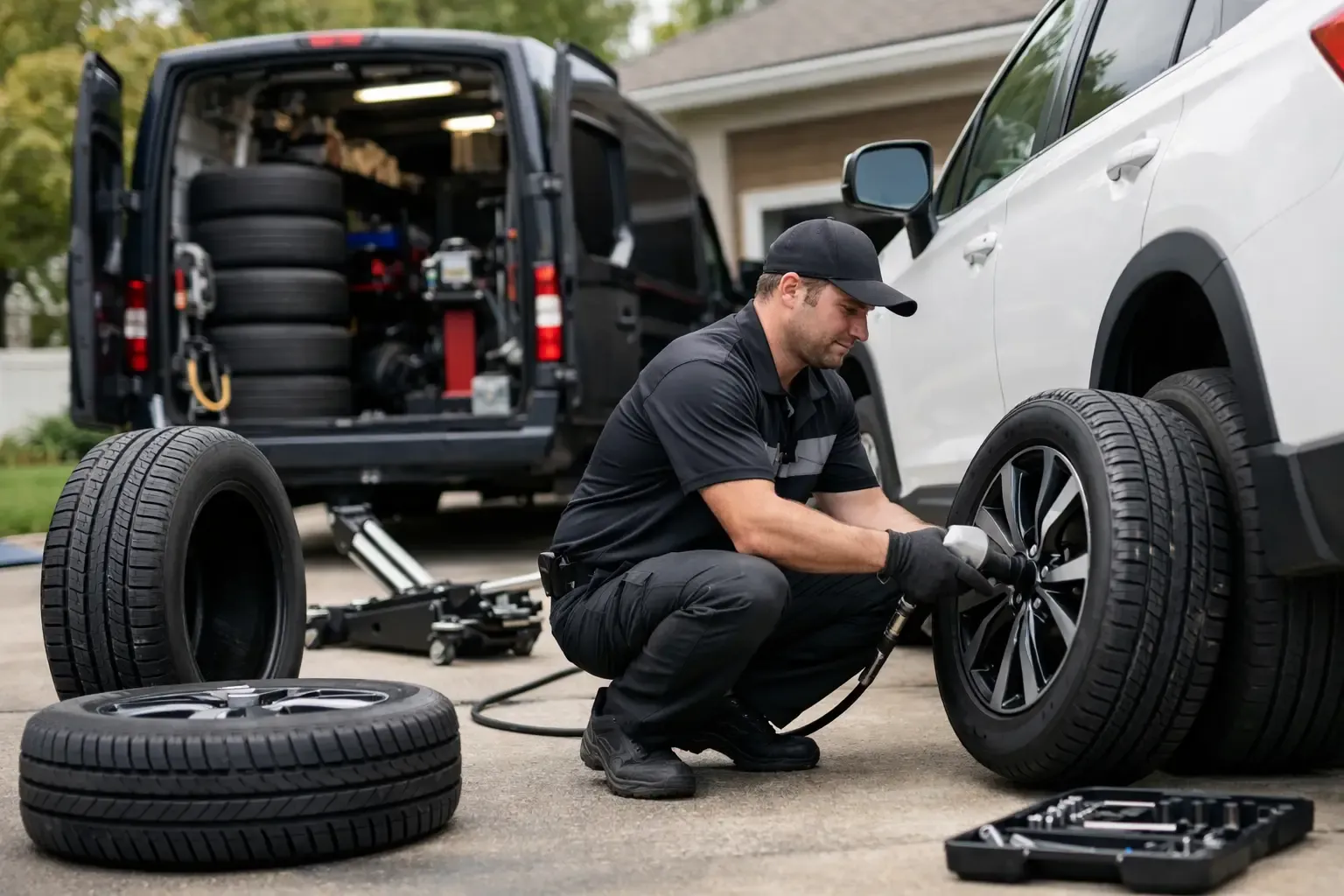
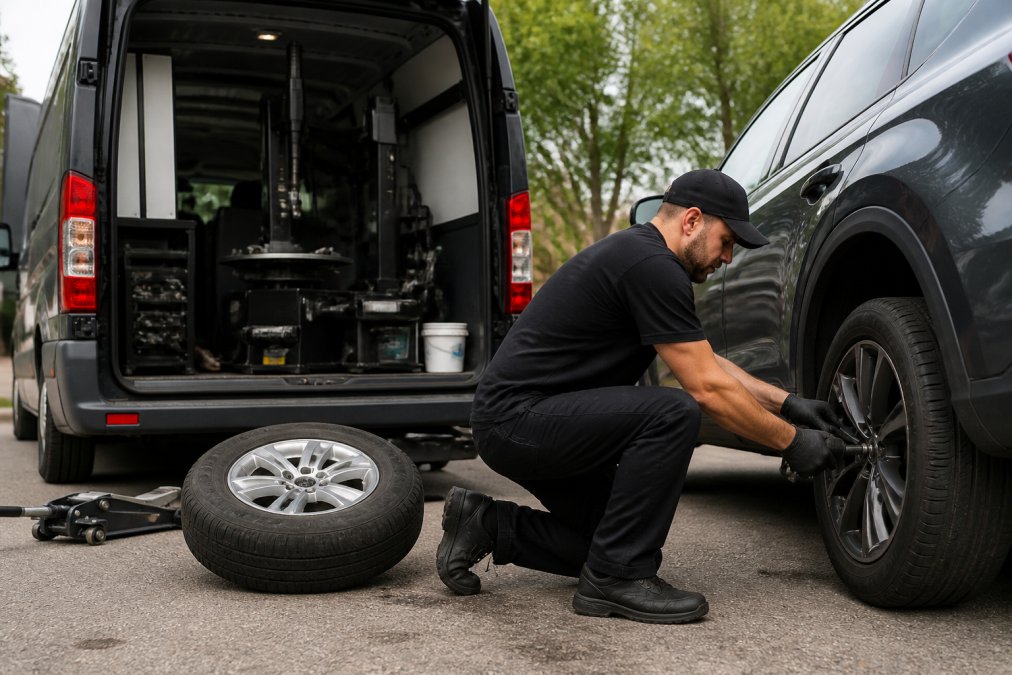
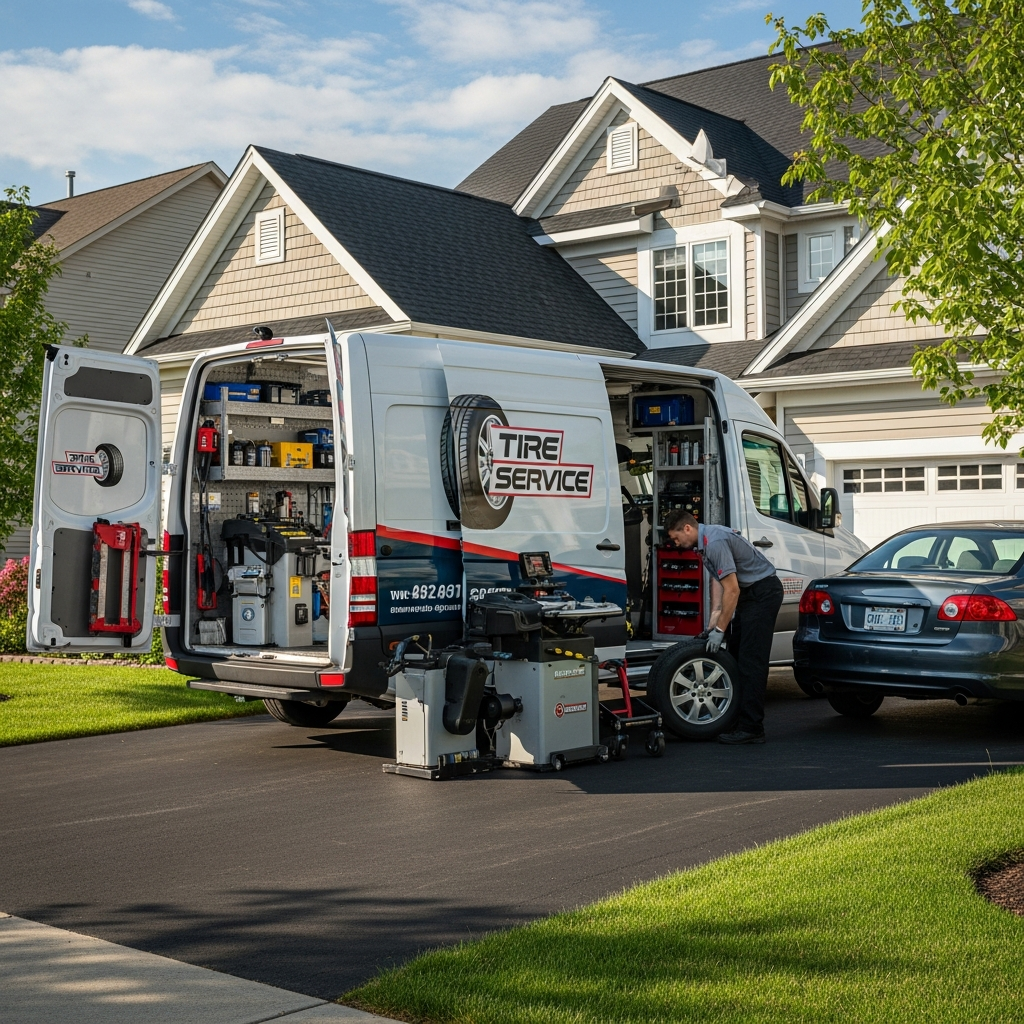
For Columbus-area drivers, mobile tire service can often eliminate the need for a tow or a trip to a tire shop. Elite Mobile Tire can come to a home, workplace, or safe roadside location to assess the tire, install a spare, repair an eligible puncture, or replace a tire when needed. That gives you a practical option when a roadside tire change would put you too close to traffic or disrupt your entire day.
A Few Habits That Make the Next Flat Easier
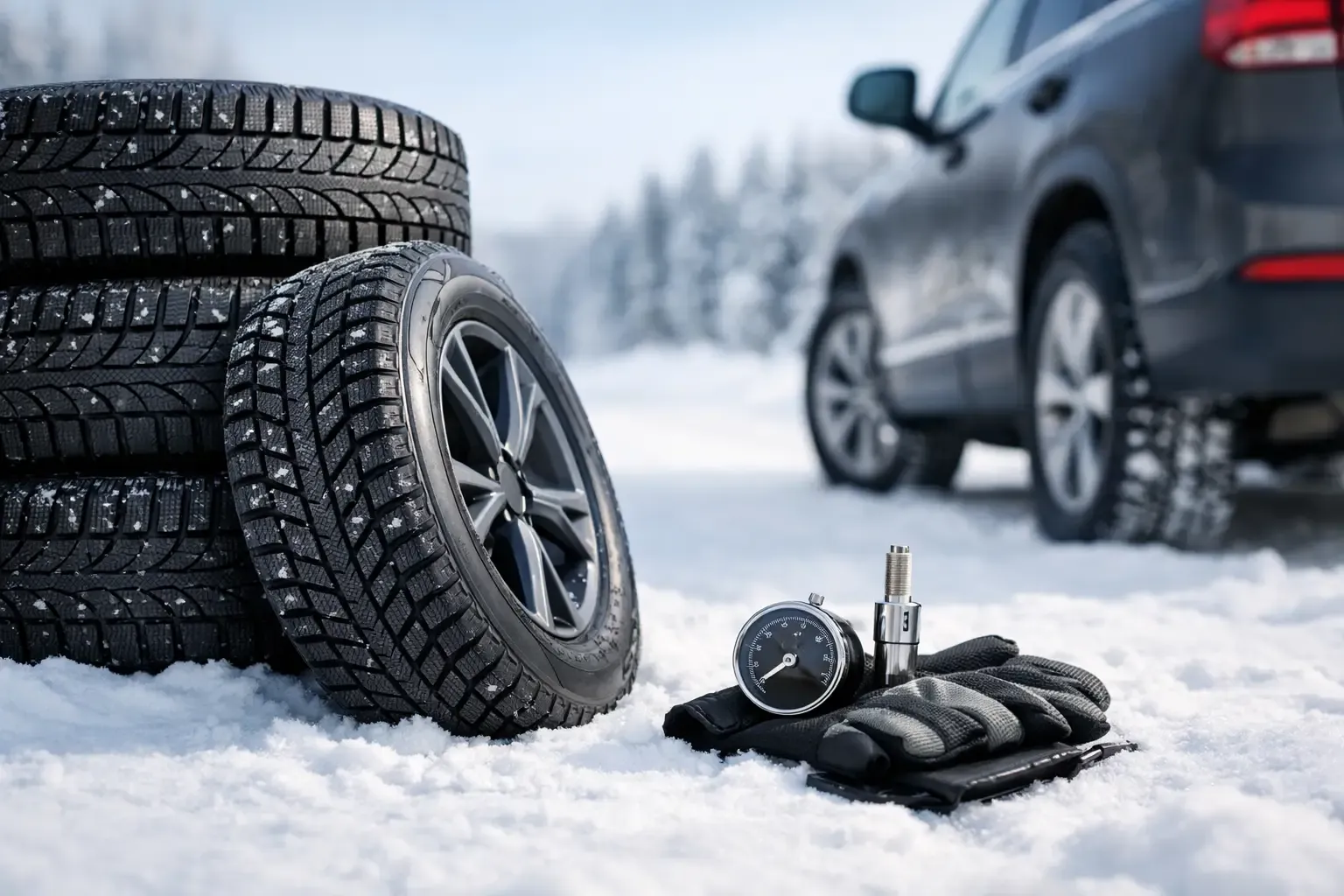
Check your tire pressure monthly and before longer drives. Include the spare in that routine, because it is easy to forget until the day you need it. Keep your vehicle’s jack, lug wrench, wheel lock key, flashlight, gloves, and reflective safety gear together in the cargo area.
Pay attention to steering vibration, repeated pressure loss, bulges, cuts, and uneven tread wear. Addressing those signs early can reduce the odds of discovering a flat during a busy morning commute or while traveling with family.
A roadside flat is frustrating, but it does not need to become dangerous. Choose safety over speed, use the spare only as intended, and let a trained technician take over whenever the location or repair conditions are not right.
Ready for a new set? Elite Mobile Tire installs 2 or 4 new tires right in your driveway or parking lot anywhere around Columbus, Obetz, Groveport, Grove City, and Reynoldsburg. Financing is available through Afterpay and Acima with up to 24-month payment plans. Call 614-344-5010 or visit elitemobiletire.com to book.