
Why Verifying Tire Technician Certification Matters
When a mobile tire technician pulls into your driveway, you're trusting them with the only four points of contact between your vehicle and the road. A poorly mounted tire or botched repair can turn a routine service call into a safety hazard. Knowing how to verify tire technician certification isn't a nice-to-have, it's essential.
Tire technician certification is a formal credential that confirms a technician has completed approved training in tire mounting, balancing, repair, and safety procedures.
Tire Industry Association (TIA) Certification Explained
The Tire Industry Association (TIA) is the primary body that certifies tire service professionals in the United States. Its certification program covers passenger, commercial, and earthmover tire service.
TIA offers several certification levels:
- Automotive Tire Service (ATS): For passenger cars and light trucks
- Commercial Tire Service (CTS): For medium and heavy-duty trucks
- Earthmover Tire Service (ETS): For off-the-road and heavy equipment
- Advanced Instructor: For those who train other technicians
How to Verify Tire Technician Certification in 4 Steps
Verifying a technician's certification takes about five minutes. The process is the same whether you're checking a mobile tech in your driveway or a shop employee before you hand over your keys, but the details matter.
Step 1: Ask for the Certification Number, and the Name It's Registered Under
Every certified technician receives a unique certification number tied to their legal name and certification level. Ask for all three: the number, the name on the credential, and the level (ATS, CTS, ETS, or Instructor).
Step 2: Run the Number Through the Official Credential Lookup
Use the issuing body's own tools to confirm the credential. The Tire Industry Association is the authoritative source; if you can't confirm a credential online, contact TIA directly. Third-party "verification" sites are not connected to the issuing records and can't confirm anything.
A proper confirmation should tell you:
- Status, active, expired, or not found
- Certification level, which of the TIA programs the technician completed
- Name on record, the name the credential was issued under
- Expiration date, the date the credential lapses if not renewed
If you're checking a technician in person, ask them to pull up the credential in the portal themselves. A legitimate tech can do it in seconds. Someone working from a counterfeit card usually can't, and the hesitation is your answer.
Step 3: Confirm Recertification Status and Read the Expiration Date
Certification isn't permanent. TIA requires periodic recertification to stay current with updated procedures and safety standards, and each credential carries a defined expiration date.
An expired certification is one of the most common issues we see. A technician may have been certified years ago and never renewed. Always check the expiration date, not just whether a number exists in the system.
Step 4: Match the Certification Level to the Job
A technician certified for automotive tire service may not be qualified for commercial truck tires. For an RV, fleet vehicle, or heavy equipment, confirm they hold the right certification level for that job, not just any TIA credential. Matching specific equipment requirements with the correct technician expertise remains a critical step when scheduling fleet maintenance to ensure operational safety and compliance.
Here's how certification levels map to common jobs:
Job Type | Required Certification | Best For
Passenger car tires | Automotive Tire Service (ATS) | Daily drivers, sedans
Light truck tires | Automotive Tire Service (ATS) | Pickups, SUVs
Commercial trucks | Commercial Tire Service (CTS) | Fleets, box trucks
Heavy equipment | Earthmover Tire Service (ETS) | Construction, agriculture
What to Do When Verification Fails
If the lookup returns no result, a mismatched name, or an expired date, you have three reasonable options:
- Ask for a second credential. Some technicians hold multiple certifications at different levels. A lapsed ATS credential doesn't rule out a current CTS one.
- Request a different technician. Reputable shops and mobile providers will reassign without argument. Pushback tells you how they staff jobs.
- Walk away. For commercial, fleet, or heavy-equipment work, an unverifiable credential is a liability issue, not just a safety one.
Tire Service Technician Requirements You Should Expect
A qualified tire service technician should meet several baseline requirements beyond certification, the foundation of safe, professional work.
Expect your technician to:
- Hold a current TIA certification for the type of tire being serviced
- Follow established safety standards, including proper lifting and torque procedures
- Use calibrated equipment for mounting, balancing, and TPMS work
- Carry proper insurance and follow compliance rules for mobile service
- Complete ongoing professional development to stay current
How to Check Tire Tread Depth With a Penny (and Why It Matters)
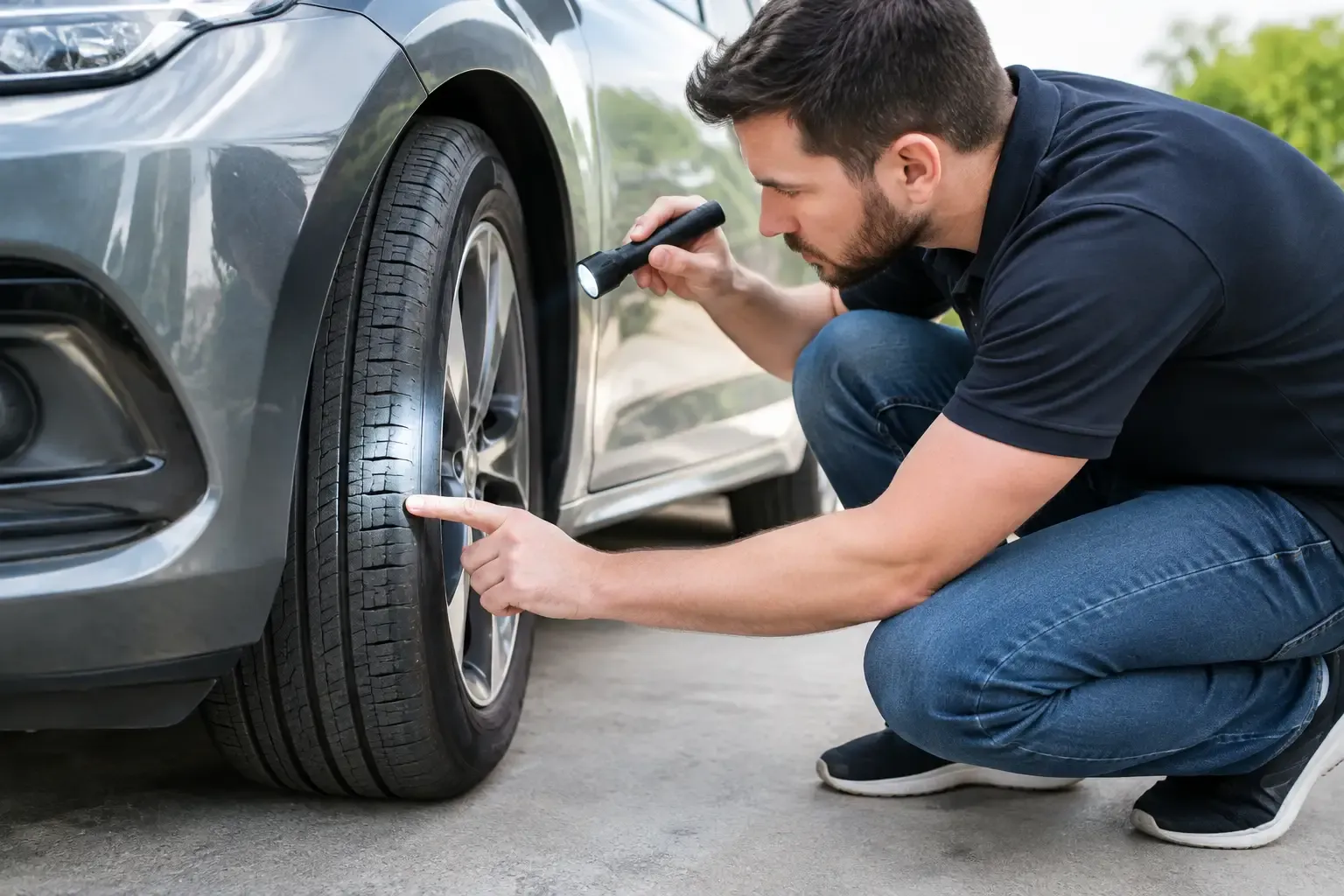
A penny is one of the simplest tools for a quick tread check. It won't replace a technician's gauge, but it gives a fast read on whether your tires need attention.
Here's how to do it:
- Insert a penny into the tread groove with Lincoln's head upside down.
- Push it in until the coin meets the tread edge.
- Look at where Lincoln's head sits. If you can see all of his head, the tread is too shallow.
- Check at least three spots across each tire, since wear isn't always even.
Verification for Consumers vs. Employers: What Changes
Consumers and employers verify credentials for different reasons.
For consumers, verification is about personal safety, knowing the person working on your car is trained and current. A credential lookup and a glance at the uniform patch usually suffice.
For employers and fleet managers, verification is about liability and compliance across every technician on the roster:
- Keep certification numbers and expiration dates on file
- Schedule recertification before credentials lapse
- Match certification levels to fleet vehicles
- Audit credentials on a regular schedule
Fraud Prevention and Digital Verification Portals
Fake credentials exist, and they're more common than most vehicle owners realize. Some technicians claim certification they never earned; a smaller number produce counterfeit cards, laminated lookalikes with plausible numbers, copied logos, and realistic expiration dates. Here's what to look for.
What a Counterfeit Credential Usually Gets Wrong
A forged card is easy to produce and easy to disprove, because the issuing body's database is the only thing that matters. Common tells:
- A number that returns no result. The single most reliable fraud check. If the official portal doesn't recognize the number, the card is decorative.
- A name that doesn't match. Counterfeiters often reuse a real number from someone else. The status reads "active," but the name on record isn't the person in front of you.
- A level that doesn't exist. TIA issues credentials at defined levels (ATS, CTS, ETS, Instructor). A card claiming a level outside that list is fabricated.
- No expiration date, or a suspiciously distant one. Real credentials carry a defined renewal cycle. A card with no date or a date years out is a warning sign.
- A third-party "verification" website. If a technician directs you to a site that isn't the issuing body's own portal, that site can't verify anything, it can only display whatever it was built to display.
How to Navigate a Digital Verification Portal
Digital portals exist so you never have to trust a physical card:
- Go to the issuing body's official website directly, type the address yourself rather than clicking a link a technician sends.
- Locate the credential lookup tool, usually a single search field on the certification page.
- Enter the certification number exactly as it appears on the card or digital record.
- Read the result against four fields: status, level, name on record, and expiration date.
- Compare the name on record to the technician's ID or the work order.
The fastest fraud check is also the simplest: ask the technician to pull up their credential in the official portal themselves, on their own device, in front of you. A legitimate tech can do it in seconds. Someone working from a fake card usually can't, and the hesitation is your answer.
Why This Matters More for Fleets Than for Consumers
A consumer hiring a mobile tech for a single tire swap has one vehicle at risk. A fleet manager has liability, insurance, and compliance exposure that scales with every technician on the payroll.
- Verify at hire. Run every certification number through the official portal before the technician's first shift.
- Re-verify on a schedule. A technician certified at hire may not be certified a year later.
- Keep documentation. Store each technician's certification number, level, expiration date, and last-verified date.
- Audit randomly. Spot-check a percentage of your roster each quarter rather than trusting one annual review.
Where Mobile Service Fits In
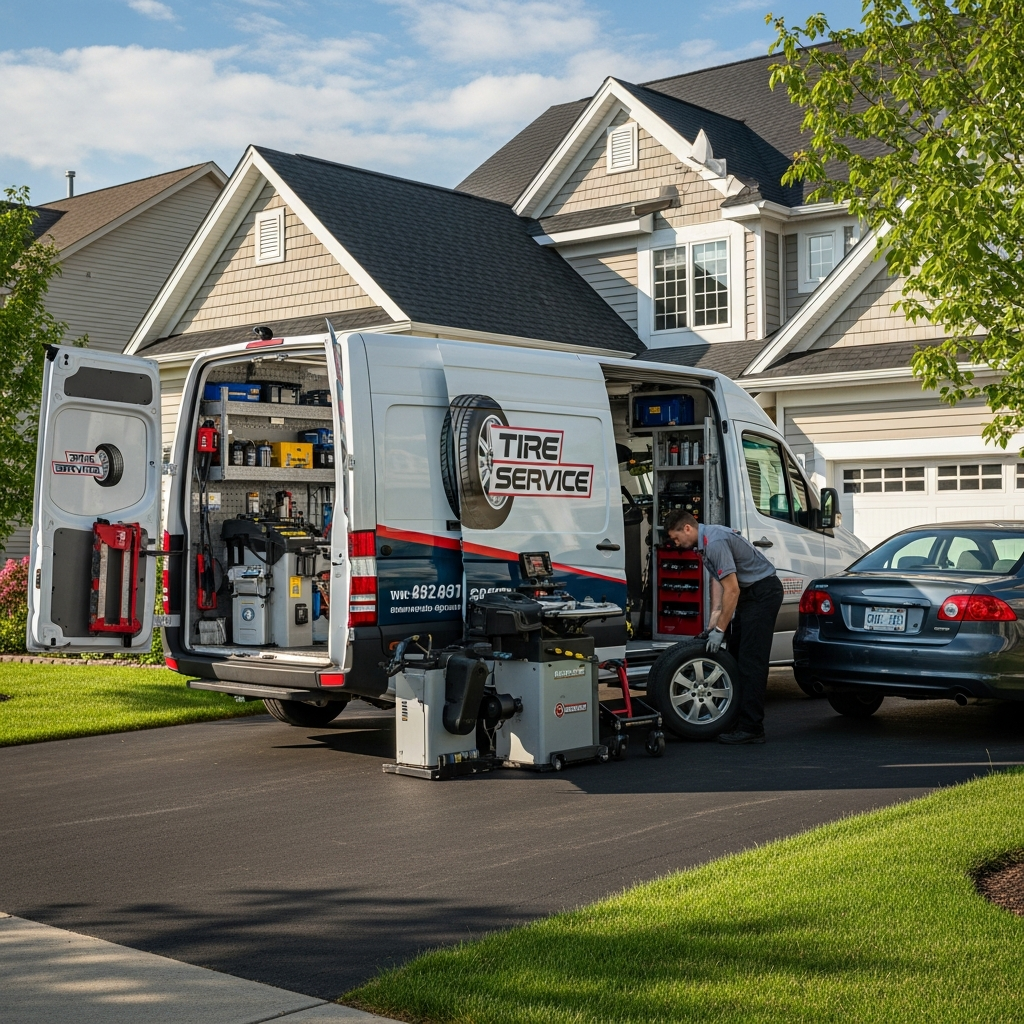
Mobile service can make verification easier. A reputable mobile provider builds its reputation on certified technicians, so credentials are part of the pitch, not something you dig for. A provider willing to show you the credential and let you check it yourself is a stronger signal than any logo on a van.
Frequently Asked Questions
Do you need a certification to be a tire technician?
Tire technicians generally are not state-licensed, so industry certification is the standard employers and customers use to judge competence. The Tire Industry Association (TIA) offers the most recognized credential, covering tire service, repair, rims, TPMS, and safety standards. Many shops and mobile services, including Elite Mobile Tire, only hire technicians who hold current certification because it verifies hands-on training and technical proficiency.
How can I tell if a tire shop employs certified technicians?
Ask for the technician's certification number and confirm it through the TIA credential lookup tool. Legitimate technicians carry a card or digital record showing their name, certification number, and expiration date. You can also look for uniform patches or ask the shop directly about its training program. If a provider cannot produce a verifiable number, treat that as a red flag and consider another option.
Why is TIA certification important for tire safety?
TIA certification confirms a technician passed an online exam and hands-on training covering tire repair, rims, TPMS, and industry safety standards. Certified technicians follow correct service procedures, which reduces the risk of improper mounting, bead damage, or missed sidewall issues. For consumers and fleet managers, that translates to safer tires and fewer comebacks.
How long does it take to learn tire tech?
Most entry-level tire service technician requirements can be met in a few weeks of hands-on training, while full TIA certification typically takes a few months depending on the program. Recertification is required every few years to keep credentials current. Advanced instructor and commercial tire service certifications take longer because they cover earthmover tires and more complex service procedures.
Ready for a new set? Elite Mobile Tire installs 2 or 4 new tires right in your driveway or parking lot anywhere around Columbus, Obetz, Groveport, Grove City, and Reynoldsburg. Financing is available through Afterpay and Acima with up to 24-month payment plans. Call 614-344-5010 or visit elitemobiletire.com to book.