
Quick Summary
GVWR is the maximum total weight your RV can carry fully loaded, while axle weight is how that load is split between the front and rear wheels. An RV can be under its total GVWR yet still overload one axle, so you need to check both numbers.
- Find GVWR and each axle's GAWR on the certification label, usually inside a door frame or near the driver's seat.
- Each axle must pass its own GAWR limit, even when the total weight is under GVWR.
- Add the front and rear GAWR values together; the total usually exceeds GVWR, so you cannot max out both axles.
- Weigh the RV loaded as you travel, including water, fuel, gear and passengers, for an accurate axle reading.
- If one axle is overloaded, redistribute weight first, then remove items; airbags or helper springs do not raise the rating.
Why RV Axle Weight and Gross Vehicle Weight Are Not the Same
If you own an RV, you have probably seen two weight numbers on the sticker or in the owner's manual: the total weight the RV can carry, and the weight each axle can carry. They sound similar, but they measure different things, and mixing them up can leave you overloaded before you ever leave the driveway. Gross vehicle weight rating (GVWR) is the maximum your RV can weigh fully loaded.
Here is why it matters. An RV can be under its total GVWR and still have one axle carrying more than it should. A heavy water tank in the back, a generator mounted over the rear axle, or a bike rack loaded on one side can push one axle past its limit while the total still looks fine.
Many manufacturers recommend checking both numbers before a trip. We recommend reading both ratings on your RV's certification label and comparing them against a real weighed load.
GVWR vs. GAWR: Reading the Ratings on Your RV Label
Gross Vehicle Weight Rating (GVWR) is the maximum allowed weight of the RV when fully loaded, including the vehicle itself, fluids, cargo, passengers and supplies.
Gross Axle Weight Rating (GAWR) is the maximum weight a single axle is designed to support. Most RVs list a GAWR for the front axle and for the rear axle, and the two numbers are usually different.
You will usually find these ratings on the certification label, typically inside a door frame or in a cabinet near the driver's seat.
A simple way to read the label: add the two GAWR values together. That total will often exceed the GVWR, which is why you cannot max out both axles at once. The GVWR is the real ceiling for the whole rig.
For details on reading tire load markings and axle capacity, see our guide on How to Read RV Tire Load Ratings and Weight Capacity.
RV Axle Weight versus Gross Vehicle Weight Chart: A Side-by-Side Comparison
Term | What It Measures | Where to Find It | Why It Matters
GVWR | Maximum total weight of the loaded RV | Certification label | Sets the overall limit
GAWR (front) | Max weight the front axle can carry | Certification label | Limits front load and steering
GAWR (rear) | Max weight the rear axle can carry | Certification label | Limits rear load and braking
Actual axle weight | What the axle carries now | Measured on a scale | Shows real distribution
Unloaded vehicle weight | RV with no cargo or passengers | Manufacturer spec | Starting point for payload
The key takeaway: GVWR describes the whole vehicle, while GAWR describes each axle. An RV can pass one check and fail the other.
Using an RV Weight Calculator for GVWR and Axle Weight
Online weight calculators can help you estimate whether your planned load fits within GVWR and GAWR. Several free online GVWR and payload calculators can help you compare vehicle and axle limits before you load up.
To use one effectively, enter your RV's listed GVWR and GAWR values, your unloaded weight, and an honest estimate of your cargo, water and passengers. Be generous with estimates. Water is heavy, and a full freshwater tank can add a significant amount of weight, often over the rear axle.
Calculators give estimates, not measurements. Treat the result as a planning tool, then confirm with a real weighing if you are close to any limit.
How to Weigh an RV by Axle, Step by Step
Weighing your RV turns guesses into numbers you can act on. The goal is two readings per axle, ideally per wheel position, so you can compare each one against its GAWR and the total against GVWR. Here is a practical process you can run near Columbus.
- Gather your ratings first. Write down the GVWR, front GAWR and rear GAWR from the certification label, plus the load range and load index on each tire sidewall. You cannot interpret a scale ticket without these.
- Load the RV as you would travel. Water, fuel, propane, gear, passengers and pets all count. A half-full freshwater tank gives you a false reading, so fill it the way you actually run.
- Pick the right scale type. A certified public truck scale gives axle-group readings and a total. A portable pad system that reads each wheel position separately gives you left/right splits, which matter on RVs with slides, generators or storage on one side.
- Position the RV correctly. Pull fully onto the scale so only the front axle is on the platform for the first reading, then roll forward so only the rear axle is on it. Keep tires centered on the pads and stay off the brakes so the suspension settles naturally.
- Record front axle, rear axle and total. If you tow a trailer or dinghy, weigh it separately so you can see the tongue or hitch load added to the rear axle.
- Note the conditions. Record fuel level, water level and passenger count so a later weighing is comparable.
- Repeat after any big load change. A trip with a full water tank and a trip without one are two different weight profiles.
Watch out: many public scales only print a total and an axle-group split, not individual wheel weights. If one side of your RV is consistently heavier, ask the operator whether a wheel-position pad is available, or use a portable pad system.
Call ahead to any scale you plan to use to confirm it is open, certified and able to give you the axle split you need. The numbers you collect are the same ones a tire tech needs to match load range and pressure to your actual axle loads.
What to Do When Total Weight Is Safe but One Axle Is Overloaded
This is the most common surprise in RV weighing: the total is under GVWR, but the rear axle reads over its GAWR. Passing the total check does not clear you, each axle has to pass on its own. Work through this in order.
- Confirm the reading. Re-weigh with the RV loaded the way you travel. A single reading on a partially loaded rig can mislead you.
- Redistribute before you remove. Shift heavy items forward and toward the center, keeping the load balanced side to side. Water tanks, generators, toolboxes and gear stored behind the rear axle are the usual culprits. Re-weigh after moving things, small changes can move the numbers more than owners expect.
- Remove weight if redistribution is not enough. Take out what you do not need for the trip. Do not count on airbags, helper springs or a different tire to raise the axle rating, those change how the RV rides, not what the axle is rated to carry.
- Check the tires against the axle. Each tire's load index, multiplied by the number of tires on the axle, has to cover the GAWR. If the tires are rated below what the axle needs, the axle is not the only problem.
- Set pressure to the load, not the sidewall max. Many manufacturers publish a load-and-inflation table; use the pressure that matches your actual axle load, not the maximum printed on the tire. Overinflation wears the center tread and reduces grip; underinflation builds heat and is a common cause of RV tire failure. Read whether a damaged or overloaded tire can be safely repaired or must be replaced.
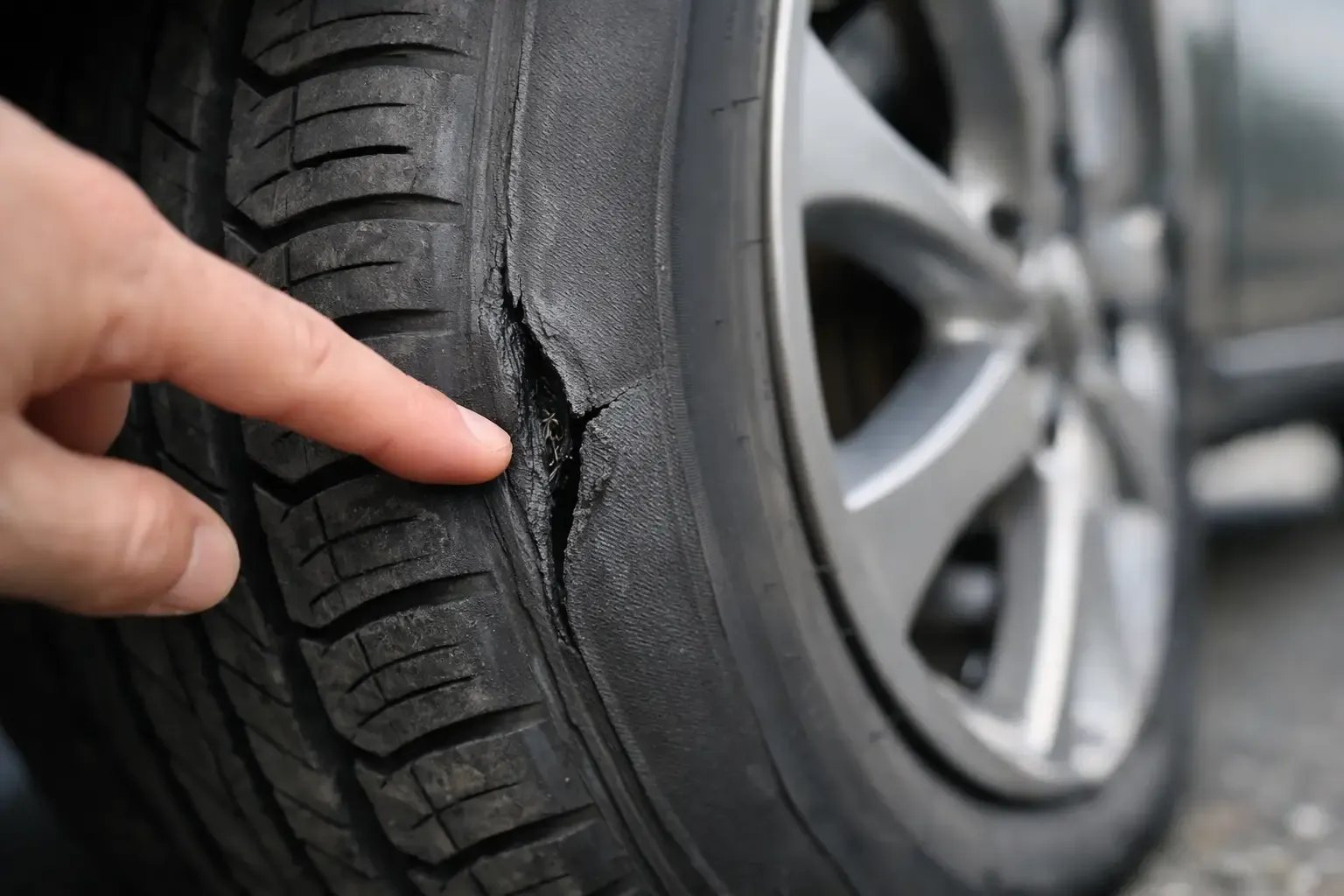
- Inspect for damage before the next trip. An overloaded axle runs its tires hotter and can cause uneven wear, sidewall stress or belt damage. Have the tires checked before you load up again.
Watch out: if the rear axle is over its GAWR and you cannot redistribute or remove enough weight, do not simply drive it. An overloaded axle stresses tires, brakes and suspension, and the failure mode is usually a tire, not a warning light.
If the weighing turns up worn, mismatched or overloaded tires, that is the moment to get them looked at. At Elite Mobile Tire we come to your driveway, RV park or roadside around Columbus and check all the tires on the rig, not just the one you are worried about. Our RV & camper tire service covers this kind of inspection, and if a tire has failed on the road, our same-day emergency flat repair can help.
Booking a Tire Check Before Your Next Trip
Your tires are the only part of your RV touching the road, so they deserve attention before a trip. At Elite Mobile Tire, we come to your driveway, RV park or roadside anywhere in the Columbus area and check all tires on the rig, not just the one you are worried about.
Our technicians check all four tires on every job so you can compare them against your axle ratings. Find same-day tire replacement anywhere in Columbus, including hard-to-find sizes, brought right to your location. Financing is available through Afterpay and Acima, with plans up to 24 months, so a full set of tires is easier to budget for. See how to book same day tire service fast and what details to have ready. Mobile tire balancing is around $50 per tire.
Call 614-344-5010 or book online at elitemobiletire.com to schedule your RV tire check. We are open 24/7, including weekends and overnight, so book whatever time suits you.
Quick takeaway: Check both GVWR and each axle's GAWR, weigh your RV loaded for travel, and fix any axle overload by redistributing weight before you hit the road.
Frequently Asked Questions
Is axle weight the same as GVWR?
No. GVWR, or gross vehicle weight rating, is the maximum total weight the RV can safely carry, including the vehicle itself, fluids, cargo, passengers and any hitch load. GAWR, or gross axle weight rating, is the maximum weight a single axle is designed to support. Your RV can be under its GVWR while one axle is still over its GAWR, because weight is not always spread evenly across the axles. Many manufacturers recommend checking both numbers before a trip, and the ratings are listed on the certification label inside the RV.
What is the difference between GVWR and GAWR on an RV?
GVWR limits the whole RV, while GAWR limits each axle separately. Think of GVWR as the total budget and GAWR as a per-axle budget. An RV with a GVWR of 14,000 pounds can still exceed the rating on its rear axle if most of the cargo sits in the back. Tire load ratings also matter, because the tires on an axle must support at least the weight that axle carries. Check the label on the RV and the tire sidewalls for these numbers.
How do I find the actual weight on each RV axle?
The most reliable way is to weigh the RV on a certified scale, either at a truck stop with a platform scale or with portable axle scale pads. Weigh the RV loaded as you would travel, then record the front axle and rear axle readings separately. Compare each reading with the GAWR listed on the certification label. If you have a trailer, weigh the tow vehicle and trailer separately as well. Many RV owners weigh once a season or after changing their cargo load.
What should I do if my RV axle is overloaded?
Start by moving cargo forward or backward to shift weight off the overloaded axle, then weigh again. Remove heavy items such as water tanks, tools or gear you do not need for the trip. Check tire pressure against the load rating, since underinflated tires can be overloaded even when the axle is not. If the axle remains over its rating after rebalancing, reduce the total load before travel. A mobile tire check can confirm your tires are rated for the load they carry. Call Elite Mobile Tire at 614-344-5010 to schedule a visit.
Ready for a new set? Elite Mobile Tire is open 24/7 and installs 2 or 4 new tires right in your driveway or parking lot anywhere around Columbus, Obetz, Groveport, Grove City, and Reynoldsburg. Financing is available through Afterpay and Acima with up to 24-month payment plans. Call 614-344-5010 or visit elitemobiletire.com to book.