
Quick Summary
Clean and dry your winter tires, then store them in a cool, dark, dry spot off bare concrete and away from sunlight, heat, and ozone sources. Bag and label each tire by wheel position, and check them every few months for cracks, flat spots, and pressure loss.
- Stand unmounted tires upright and store mounted tires flat or hung by the rim.
- Skip tire dressing, petroleum-based solvents, gasoline, and brake cleaner during cleaning.
- Keep tires off the ground on a rack or pallet and never store them outdoors.
- Check stored tires at the start of storage, midway through, and before reinstall.
- Many manufacturers suggest winter tires stay usable for several years from the manufacture date.
- Why Off-Season Tire Storage Matters in Columbus
- Step 1: Clean and Dry Your Tires Before StorageSoap, Water, and What to Skip
- Step 2: Pick a Cool, Dry Storage SpotStorage Alternatives Without a Garage
- Step 3: Bag, Cover, and Label Each Tire
- How to Store Car Tires Off RimMounted vs. Unmounted: A Quick Decision ChartSafe Handling and Stacking
- Tread Depth Requirements for AWD Vehicles and Winter Tires
- Inspection Schedule and Storage Duration
- Book Your Seasonal Tire Changeover
- Frequently Asked Questions
Why Off-Season Tire Storage Matters in Columbus
Proper storage tips for off-season winter tires start with one simple fact: rubber ages even when you are not driving on it. Heat, sunlight, and moisture all break down the compound in winter tires, and a tire that sat badly through an Ohio summer can be unsafe by the first freeze.
Tires stored in a hot shed can come back cracked, flat-spotted, or too old to trust. The good news is that a few hours of prep can protect your set.
Below, we walk through the full storage process, from washing to labeling. We also cover how long tires can sit, plus the one thing many drivers miss: checking the other three tires before the season starts.
Step 1: Clean and Dry Your Tires Before Storage
Dirt is the enemy here. Road grime, brake dust, and salt hold moisture against the rubber, and that moisture works its way into the sidewall over months.
Start with a bucket of soapy water and a stiff brush. Scrub the tread and the sidewall, then rinse well. Skip the tire dressing and shine products.
Then let them dry completely. Water trapped in the tread grooves or bead area can cause trouble in storage. A sunny afternoon in the driveway handles this well.
Soap, Water, and What to Skip
Keep your cleaning simple. Mild soap and water do the job.
Avoid these on stored tires:
- Petroleum-based solvents and harsh chemicals
- Gasoline or brake cleaner
Also keep tires away from electric motors, generators, and other equipment that gives off ozone. Ozone speeds up cracking in rubber.
Step 2: Pick a Cool, Dry Storage Spot
Where you store tires matters as much as how you clean them. The ideal spot is cool, dark, and dry, with steady temperatures and low humidity.
Columbus weather swings hard. A garage that bakes in July and freezes in January puts stress on rubber, and a damp basement corner can feed mold and rust on rims. Compare your options against a short checklist: out of direct sunlight, away from furnaces and space heaters, low humidity with no standing water, and away from solvents, chemicals, and ozone sources.
Storage Alternatives Without a Garage
No garage? You still have options, and the right one depends on how much space and climate control you have. Use this comparison to pick a spot before the season ends.
Option | What to verify first | Trade-offs
Attached garage | Door seals, no standing water, away from the water heater and furnace | Convenient, but can swing hot in summer and cold in winter
Basement | A dehumidifier or dry corner, tires off the bare floor | Cooler and steadier, but damp air can rust rims and feed mold
Unheated shed | Roof and floor stay dry, no leaks, tires off the ground | Cheap space, but the widest temperature swings of any option
Climate-controlled storage unit | Ask the facility how temperature and humidity are managed | Most stable, but you pay monthly and haul the set there
Spare closet or laundry corner | Away from heat vents and the dryer | Works for a short off-season, but tight for a full set
Whichever you choose, keep tires off the ground on a rack or pallet, and never store them outdoors. A tarp over a stack in the backyard traps moisture and does more harm than good.
If you are storing camper or RV tires, our guide to storing your RV for an Ohio winter covers the larger-vehicle details. And if hauling a set across town on the I-270 outerbelt sounds like more trouble than it is worth, Elite Mobile Tire can handle the seasonal changeover at your home in Columbus, Groveport, or Canal Winchester so you never load them up at all.
Step 3: Bag, Cover, and Label Each Tire
Bagging protects tires from moisture and ozone. Use an airtight plastic bag or a dedicated tire bag for each one. A heavy yard bag or leaf bag can work in a pinch.
Label every tire before it goes into storage. Write the wheel position on the bag or sidewall with a marker.
Why label? Because next season you want the same tire back on the same corner. That keeps wear patterns even and makes rotation simpler.
A simple labeling workflow:
- Note the position: front left, front right, rear left, rear right.
- Add the date the tire went into storage.
- Mark the tread depth if you measured it.
- Snap a photo of each label for your records.
How to Store Car Tires Off Rim
Tires without rims need different handling than mounted tires, and this is where most storage advice gets confusing. The short version: bare tires stand upright, mounted tires lie flat or hang. Here is the reasoning and a chart to settle it.
Standing unmounted tires helps keep their shape. Stacking bare tires flat puts weight on the sidewall and tread for months, which can leave flat spots and distort the bead area. Mounted tires are supported by the wheel, so they hold their shape better and can be stacked flat or hung by the rim.
Mounted vs. Unmounted: A Quick Decision Chart
Your situation | Store them | Avoid
Tires off the rims (bare rubber) | Standing upright, side by side, rotated slightly now and then | Laying them flat in a stack; leaving them flat on concrete
Tires on rims, stacked | Flat, one on top of another, with a note on which is which | Leaning a tall stack against a wall where it can tip
Tires on rims, hung | By the wheel or rim on a sturdy hook or rack | Hanging by the tread, which can distort it
Any tire | Off bare concrete on a pallet or rack, away from sunlight and heat | Direct sun, heat sources, ozone-producing equipment
Watch out: leaving unmounted tires flat on a concrete floor for months can leave flat spots, and a bare stack is easy to trip over in a dark garage.
Safe Handling and Stacking
A full set of tires is heavy and awkward, so plan the lift before you start. Carry one tire at a time with your legs, not your back, and get a second person for truck or RV sizes. Keep stacks low and stable, and never stack tires where kids or pets play or where someone could knock them over.
Label every tire before it goes into storage. Write the wheel position on the bag or sidewall with a marker, add the date it went in, and note the tread depth if you measured it. Next season you want the same tire back on the same corner, which keeps wear patterns even and makes rotation simpler.
When the set comes back out, our techs check all four tires on every job, not just the one you called about. If storage turned up a cracked sidewall or a tire too worn to trust, Elite Mobile Tire can install a matched set at your home or job site in the Columbus area, and financing through Afterpay or Acima can spread a full set over up to 24 months. Call 614-344-5010 for a quote on your set.
Tread Depth Requirements for AWD Vehicles and Winter Tires
If you drive an AWD vehicle, storage season is the time to think about tread matching. Many manufacturers recommend all four tires stay within a close tread depth of each other. Mismatched tires can strain the drivetrain.
Winter tires need grip, so depth matters more. Many tire makers suggest replacing winter tires before the tread gets too shallow for snow. Check depth with a tread gauge before the season starts.
This is where a full-set plan pays off. If two tires are worn and two are fresh, the mismatched depths can cause problems on an AWD vehicle. Our guide on whether to replace 2 tires or 4 explains when pairs work and when a full set is the safer call.
For cost, a full set can be spread out with financing through Afterpay or Acima, with plans up to 24 months.
Inspection Schedule and Storage Duration
How long can winter tires sit? Many manufacturers suggest tires stay usable for several years from the date of manufacture, and the date code on the sidewall tells you when a tire was made.
Check stored tires every few months. Look for:
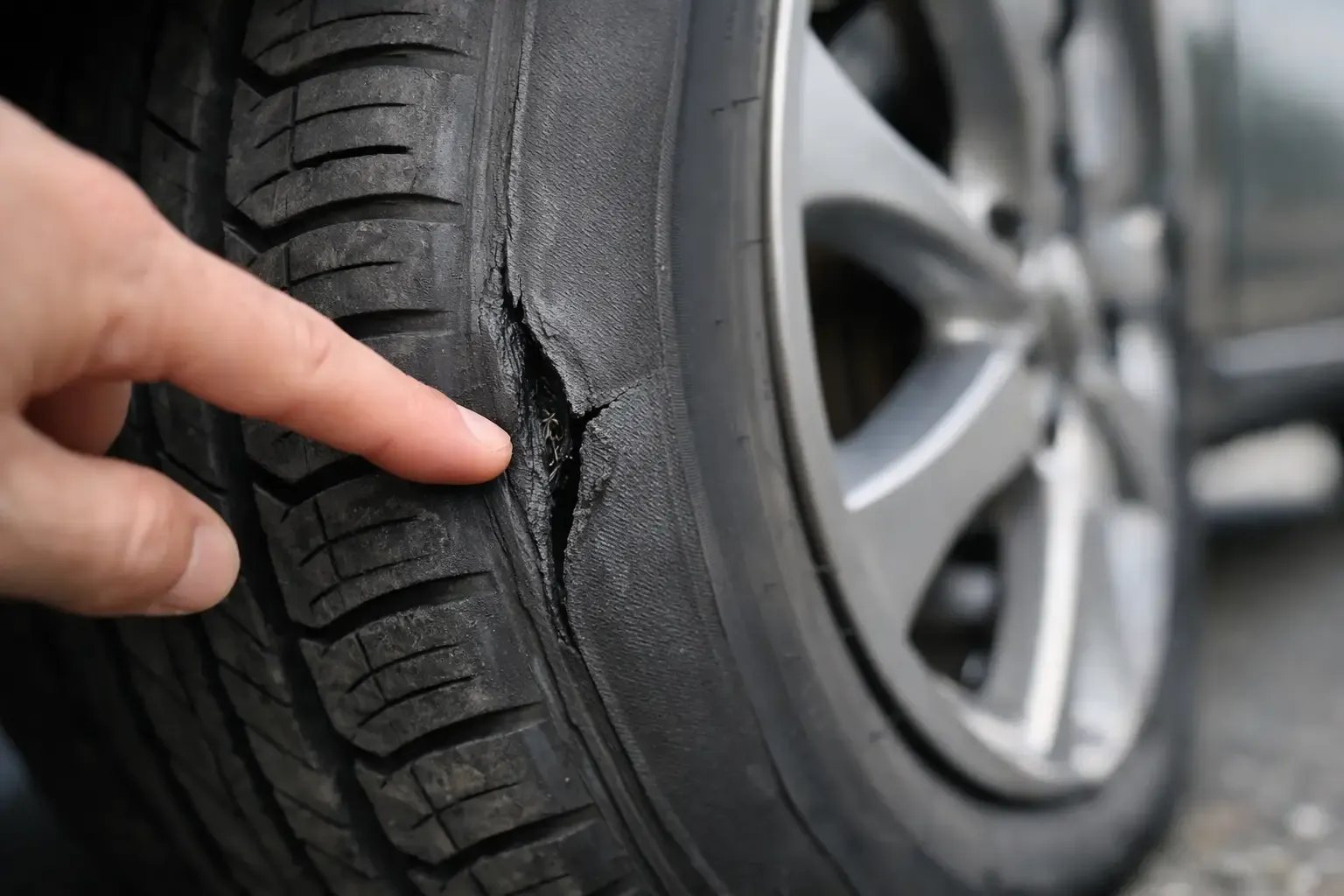
- Cracks in the sidewall
- Flat spots on the tread
- Low pressure or slow leaks
- Any bulges or soft spots
Keep a simple inspection schedule. Check pressure and condition at the start of storage, midway through, and before reinstall. If you rotate tires through the year, our guide on how often to rotate your tires helps you plan the timing.
Book Your Seasonal Tire Changeover
When the forecast turns cold, the swap should not wait. Book your seasonal tire changeover before the first freeze, and have your stored set checked before it goes back on.
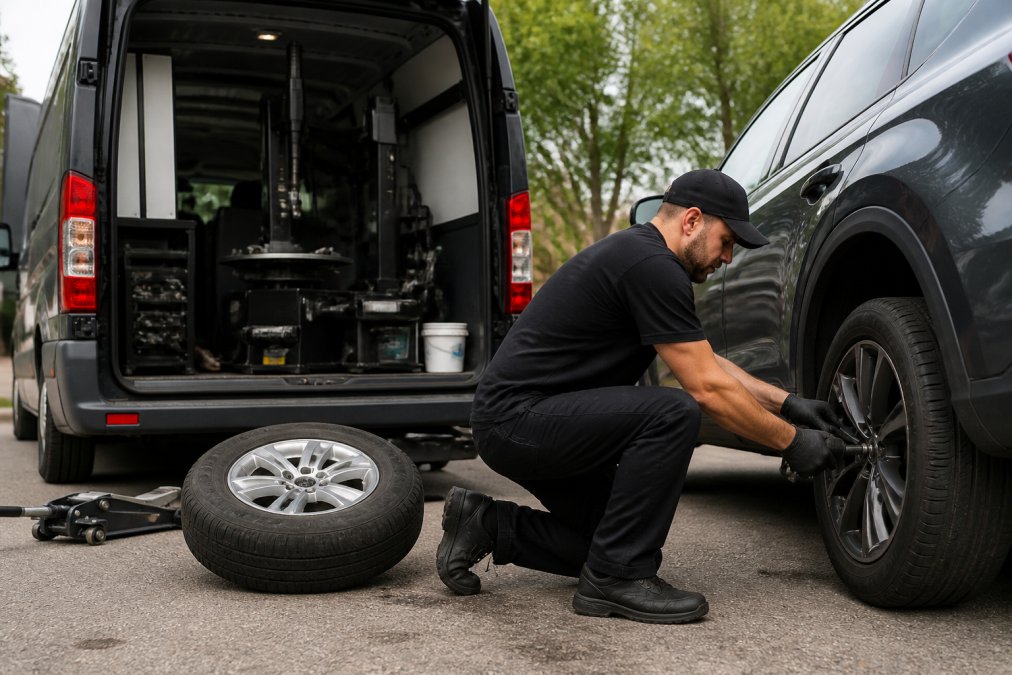
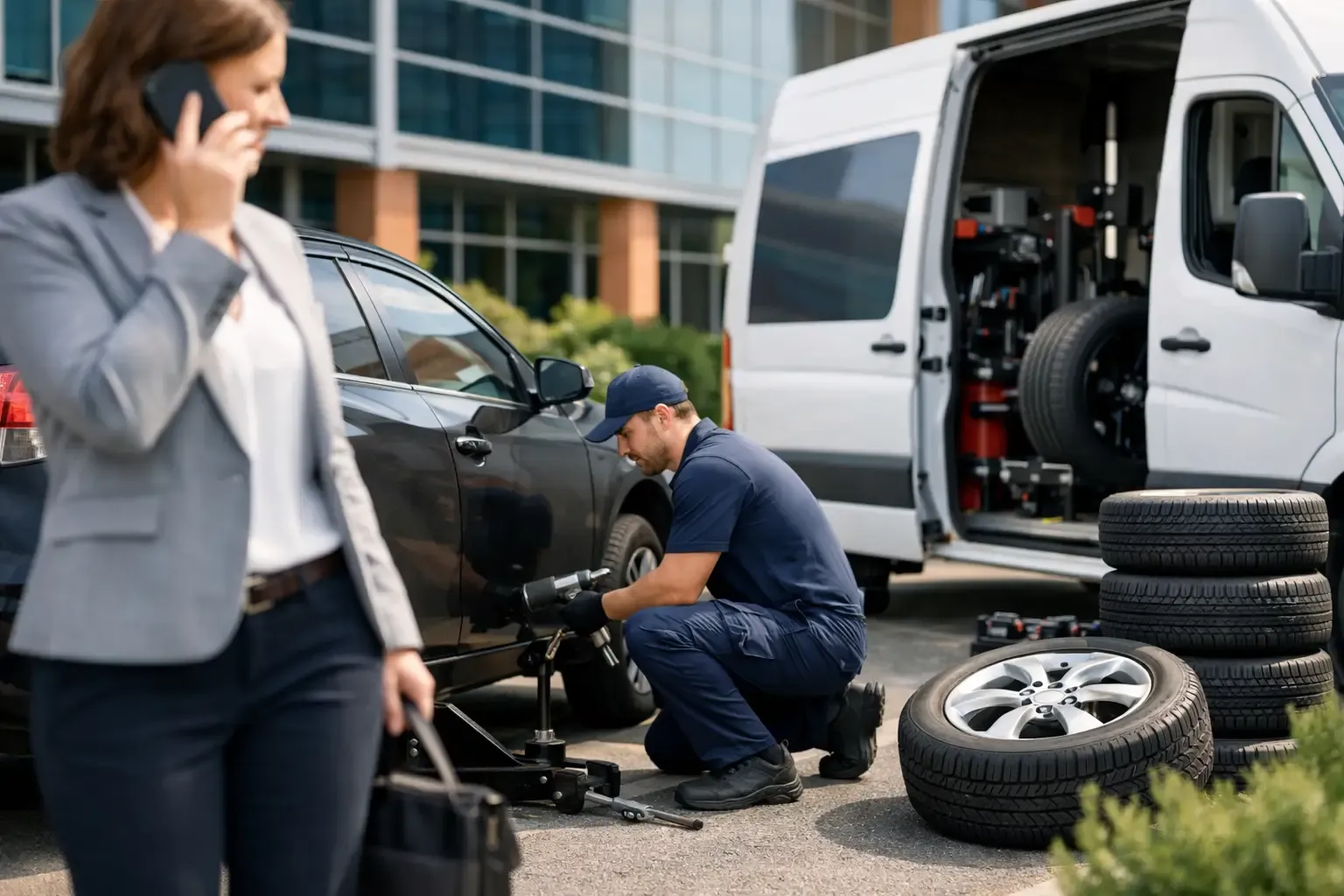
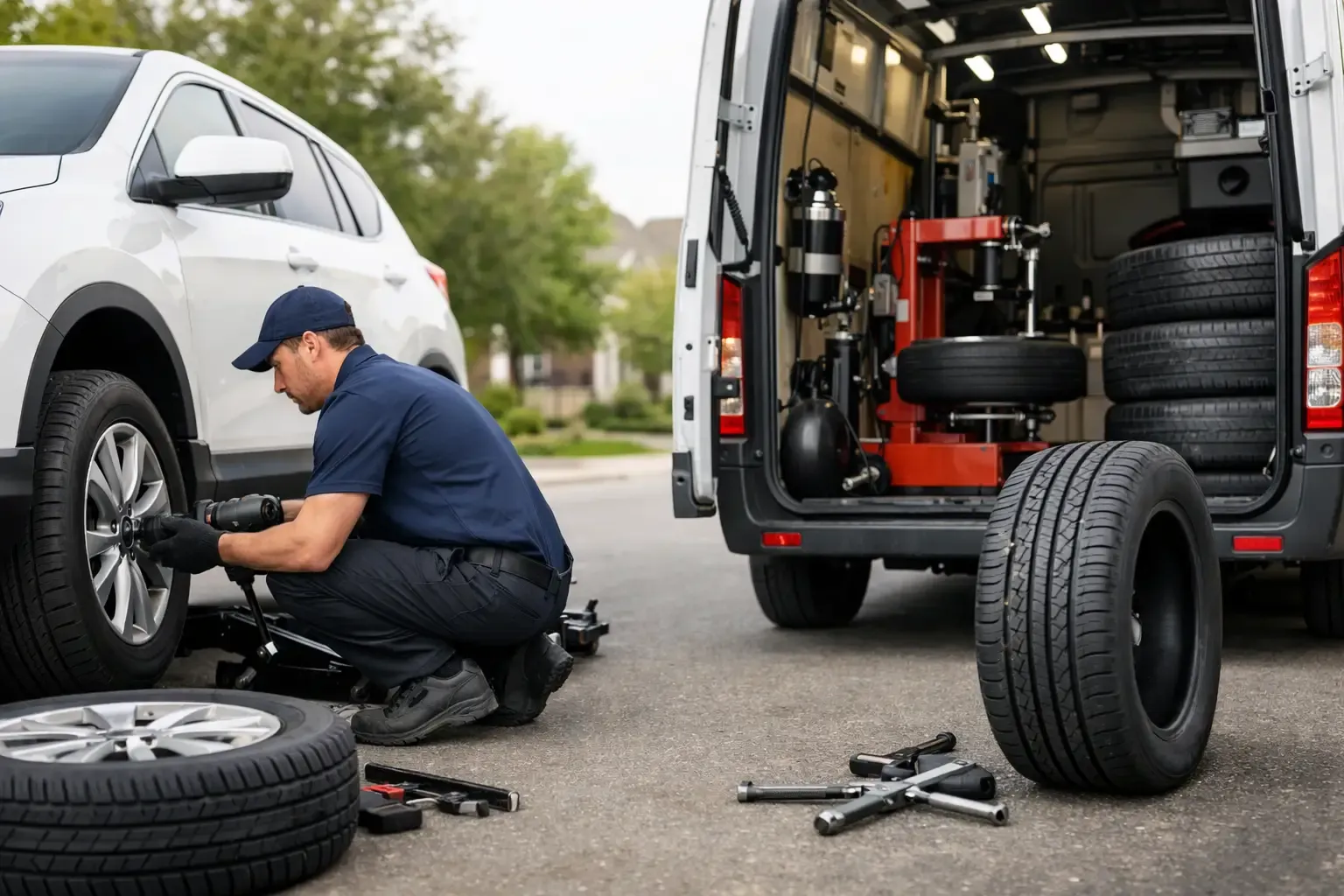
Elite Mobile Tire brings the service to you, anywhere in the Columbus area. We handle on-site tire installation for 2 or 4 tires at your home, office, or job site. Our techs check all four tires on every job, not just the one you called about.
We also offer RV and camper tire service and TPMS checks so your sensors are ready for winter. Mobile balancing runs around $50 per tire. Call for a quote on your set.
Before you book, our guide on maintaining tires for winter in Columbus covers the checks worth doing first.
Frequently Asked Questions
Should winter tires be stored flat or upright?
It depends on whether they are mounted. Tires on rims should be stacked flat, or hung if you have a rack, so the sidewalls don't take the weight. Tires without rims should stand upright and be rotated every few weeks to avoid flat spots. Never hang unmounted tires, and never store any tire on a concrete floor without a barrier underneath.
Can I store my winter tires in an unheated garage?
Yes, an unheated garage is usually fine as long as it stays dry. Winter tires are built for cold, but they still suffer from moisture, sunlight, and ozone. Keep them off the floor on a pallet or shelf, away from the garage door where rain blows in, and out of direct sun through windows. A stable, dry, cool spot beats a warm, humid one every time.
Do I need to clean my tires before storing them for the season?
Yes. Road salt, brake dust, and grime break down rubber over months of storage. Wash each tire with soap and water, rinse well, and let it dry completely before bagging. Skip tire dressing, since many products contain solvents that dry out the rubber. A clean, dry tire goes back on the car in better shape.
How do I protect my tires from ozone damage during storage?
Ozone attacks rubber and causes cracking. Keep tires away from electric motors, generators, welders, and anything with a spark, since these produce ozone. Avoid solvents, gasoline, and chemicals nearby too. An airtight plastic bag or tire bag adds a barrier, and storing tires in a dark, cool spot limits exposure. Check them monthly for new cracks.
Winter does not wait, and neither should your tire swap. If your stored set needs a look or you are ready to move up to a full set, Elite Mobile Tire can help. We come to you across Columbus and nearby towns like Groveport, Canal Winchester, and Pickerington, with same-day and scheduled service along I-270 and US-33. Call 614-344-5010 or book at elitemobiletire.com and get your vehicle winter-ready without a shop visit.
Ready for a new set? Elite Mobile Tire installs 2 or 4 new tires right in your driveway or parking lot anywhere around Columbus, Obetz, Groveport, Grove City, and Reynoldsburg. Financing is available through Afterpay and Acima with up to 24-month payment plans. Call 614-344-5010 or visit elitemobiletire.com to book.
Open 24/7: Elite Mobile Tire services customers 24 hours a day, 7 days a week, including nights and weekends. Call 614-344-5010 any time.