Should I Replace 2 Tires or 4? Start With the Decision
The short answer: if your tires are worn evenly across all four positions, replace all four. If one or two tires are damaged and the rest still have deep tread, replacing two on the same axle is often fine. This guide from Elite Mobile Tire breaks down how to tell which situation you're in, in plain terms, so you can book the right set the first time.
Tire wear is not a cosmetic issue. Worn tires lose grip in rain and take longer to stop. So the real question is not just how many tires to buy, but which set keeps your car safe and predictable on the road.
Here in Columbus, we see this decision come up constantly. A driver on I-270 hits a pothole near Groveport and suddenly needs one tire. A commuter in Reynoldsburg notices the rear tires are getting thin. The answer depends on tread depth, drivetrain, and how evenly the set has worn.
Below, we'll show you exactly how to measure your tread, when pairs make sense, and when a full set is the smarter call.
Key Takeaway
The number of tires you replace should match your tread measurements, not your budget alone. Measure first, then decide.
How to Measure Tire Tread Depth Before You Decide
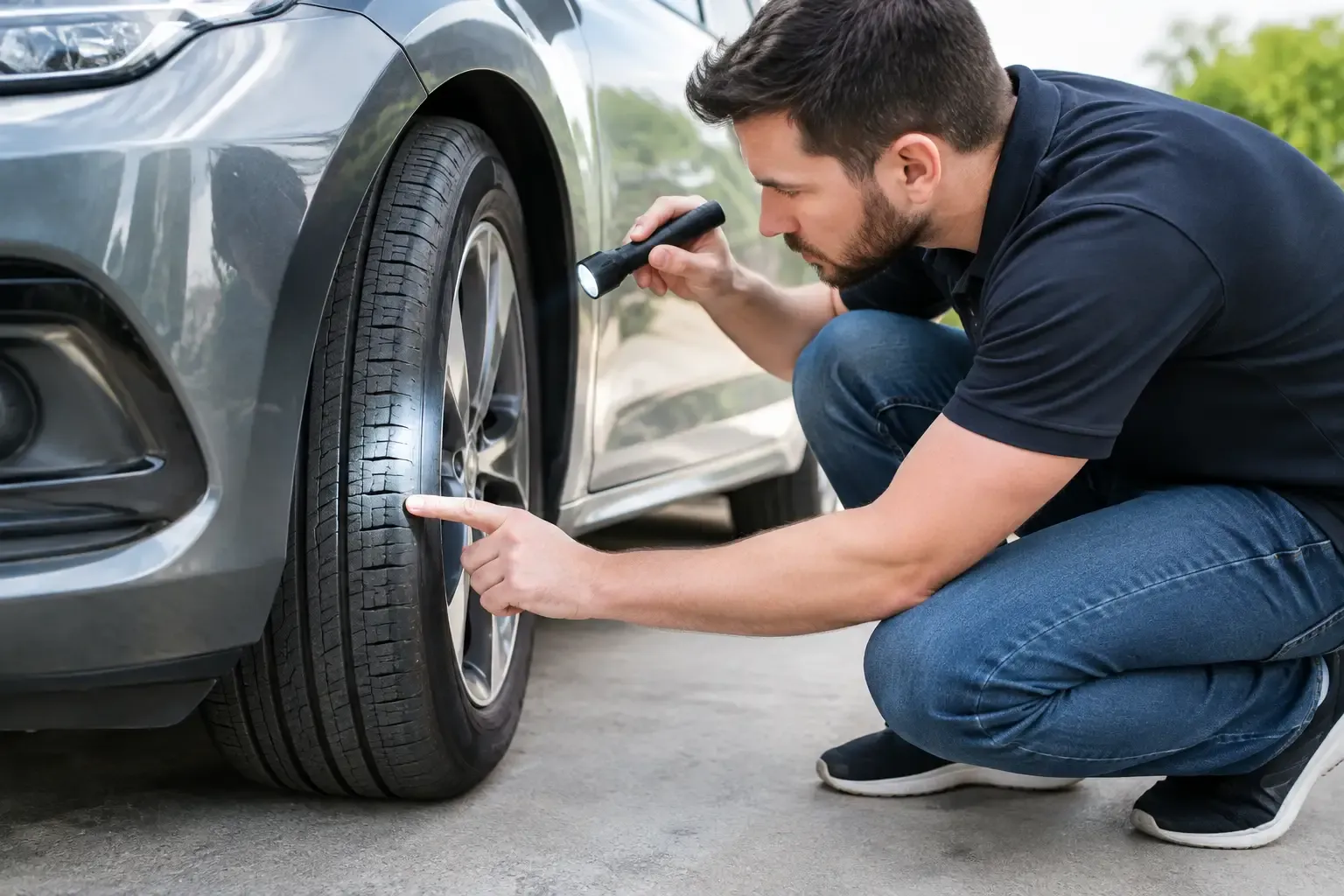
You can measure tread depth in about two minutes with a penny or a cheap tread gauge. The number you get tells you whether you're choosing between two tires or four.
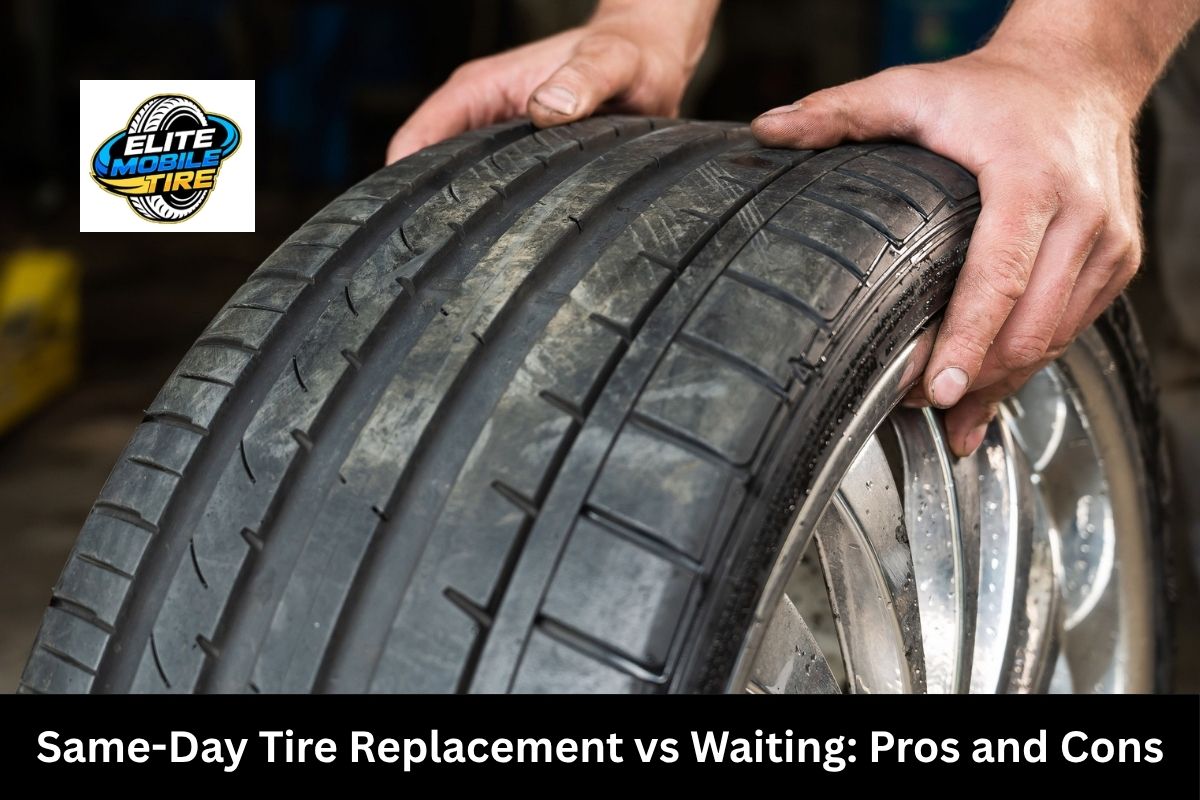
Tire tread depth is the distance from the top of the rubber block to the bottom of the groove. New tires usually start around 10/32 to 11/32 of an inch. The U.S. legal minimum is 2/32 of an inch in most states, but that is a safety floor, not a target.
National Highway Traffic Safety Administration tire safety information notes that tires worn to 2/32 of an inch have far less grip, especially in wet conditions.
Here is what the numbers mean in practice:
- 8/32 or more: Plenty of life left. No need to replace unless damaged.
- 5/32 to 7/32: Getting into the caution zone, especially for rain.
- 3/32 to 4/32: Time to plan a replacement soon.
- 2/32 or less: Legally worn out. Replace now.
The key is comparing all four tires. If one is at 3/32 and the others are at 9/32, you have a mismatch problem, not just a worn tire problem.
The Penny Test and a Cheap Tread Gauge
The penny test is the fastest check. Insert a penny into a tread groove with Lincoln's head upside down. If you can see the top of his head, the tread is at or below 2/32 of an inch and needs replacing.
A tread gauge is inexpensive and gives you an exact number. We recommend one because it removes the guesswork. Check each tire in three spots: inner edge, center, and outer edge. Uneven readings across one tire often point to an alignment or inflation issue.
Pro Tip
Check tread when the tires are cold and the car is parked on flat ground. Readings taken right after a long drive can be slightly off, and a sloped driveway can hide an uneven wear pattern.
Why You Should Replace Tires in Pairs on the Same Axle
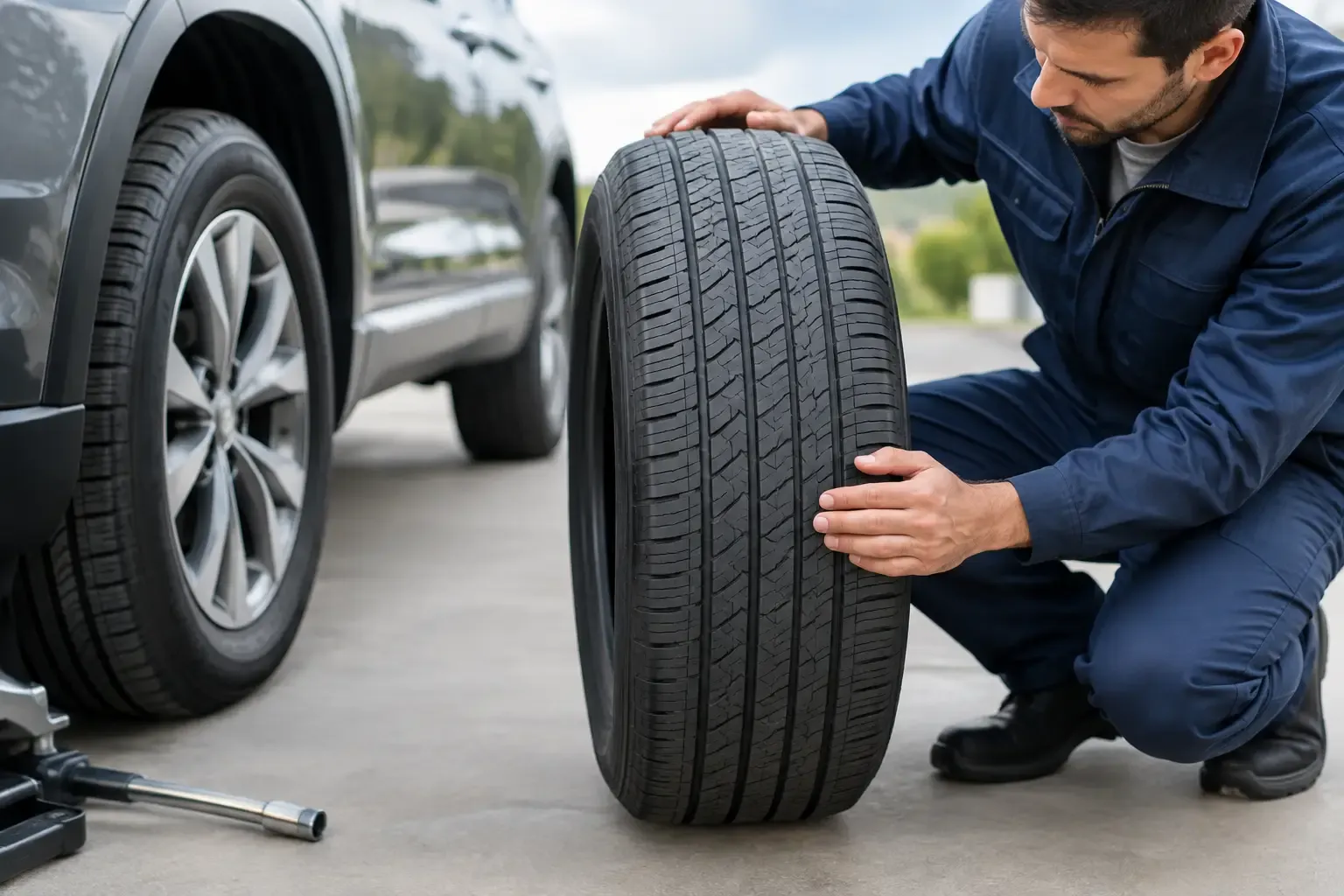
When you replace only some tires, the new ones should go on the same axle as a pair. Mixing a new tire with a worn one on the same axle causes uneven grip.
Think about what happens in a hard stop. The new tire bites while the worn tire slips. That difference can pull the car to one side. It also wears the new tire faster because it is doing more than its share of the work.
Many manufacturers recommend replacing tires in pairs for this reason. Two matched tires on the front or rear axle keep the car balanced.
So if you are asking yourself whether to replace 2 tires or 4, the pair rule is your starting point. If only one tire is damaged and the other three are healthy and close in tread, a pair on that axle is the minimum safe move.
New Tires Go on the Rear: What Tire Makers Recommend
Many tire makers recommend putting the new pair on the rear axle, even on a front-wheel-drive car. The reason is stability.
Rear tires keep the back of the car planted. If the rear loses grip first, the car can spin. That is harder to correct than front-wheel slip, which most drivers handle by easing off the gas.
So when you replace a pair, ask for the new tires on the rear and the older ones moved to the front. It sounds backward, but it is the safer setup in rain.
Watch Out
Never put two new tires on the front and leave worn tires on the rear, even on a front-wheel-drive car. In wet weather, a worn rear pair can cause the back end to slide out with little warning.
AWD Tire Replacement Tread Depth: Why All Four Often Matter
For all-wheel-drive vehicles, tread depth across all four tires usually needs to stay close. AWD systems send power to all four wheels, and they rely on all four turning at nearly the same rate.
When one tire is much smaller in diameter than the others, it spins faster. The system reads that as a slip and can fight itself. Over time, that mismatch can wear the drivetrain and cause expensive damage.
Many manufacturers recommend keeping all four AWD tires within a small tread difference, often around 2/32 to 3/32 of an inch. Check your owner's manual for the exact figure, because it varies by make and model.
Here is the practical takeaway for AWD owners:
- If all four tires are close in tread, replace all four at once.
- If one tire is damaged and the rest are nearly new, some shops can shave a new tire to match. Not every shop offers this.
- If the set is more than half worn, a full set is usually the cleaner, safer choice.
This is where the "2 or 4" question gets a clear answer. On AWD, four is often the right call because the system depends on matched tires.
When Replacing All Four Is the Smarter Call
Replacing all four is the smarter call when your tread is even across the set, when you drive an AWD or 4x4 vehicle, or when the tires are already past the halfway point.
Here is a simple way to decide:
Your Situation | Best Move | Why
One tire damaged, other three nearly new | Replace the pair on that axle | Keeps grip balanced on the axle
All four worn evenly and close in tread | Replace all four | Even wear, one matched set
AWD or 4x4, any tire much newer | Replace all four | Protects the drivetrain
Two tires at 3/32, two at 9/32 | Replace all four | Mismatch is too large to ignore
Rear tires worn, fronts still good | Replace the rear pair | New tires go on the rear
Even tread across all four tires also means simpler maintenance. You rotate on a normal schedule, and all four wear out together. That avoids the guesswork of tracking which tire is how old.
Cost, Financing, and Getting a Full Set Installed at Home
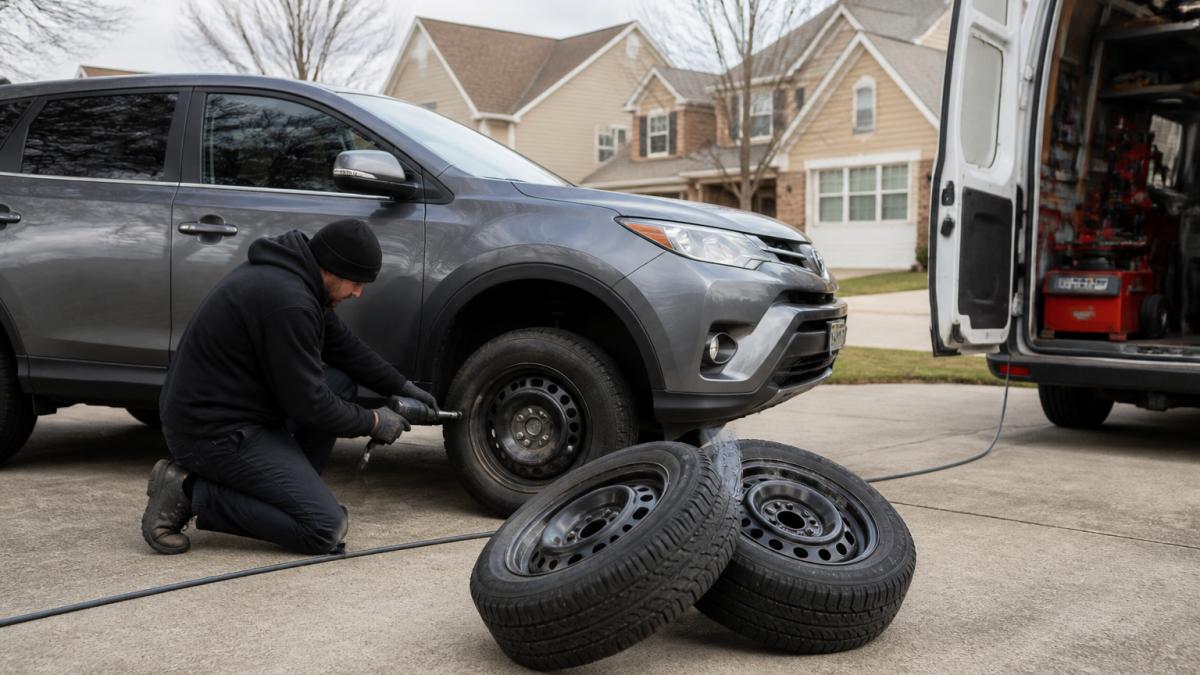
A full set spreads the cost over a longer life and avoids a second trip to a shop later. That matters for busy drivers in Columbus who do not want to lose a morning twice.
Financing helps close the gap. Elite Mobile Tire offers payment plans through Afterpay and Acima, with terms up to 24 months. That lets you spread the cost of a full set instead of settling for two tires now and paying again in six months.
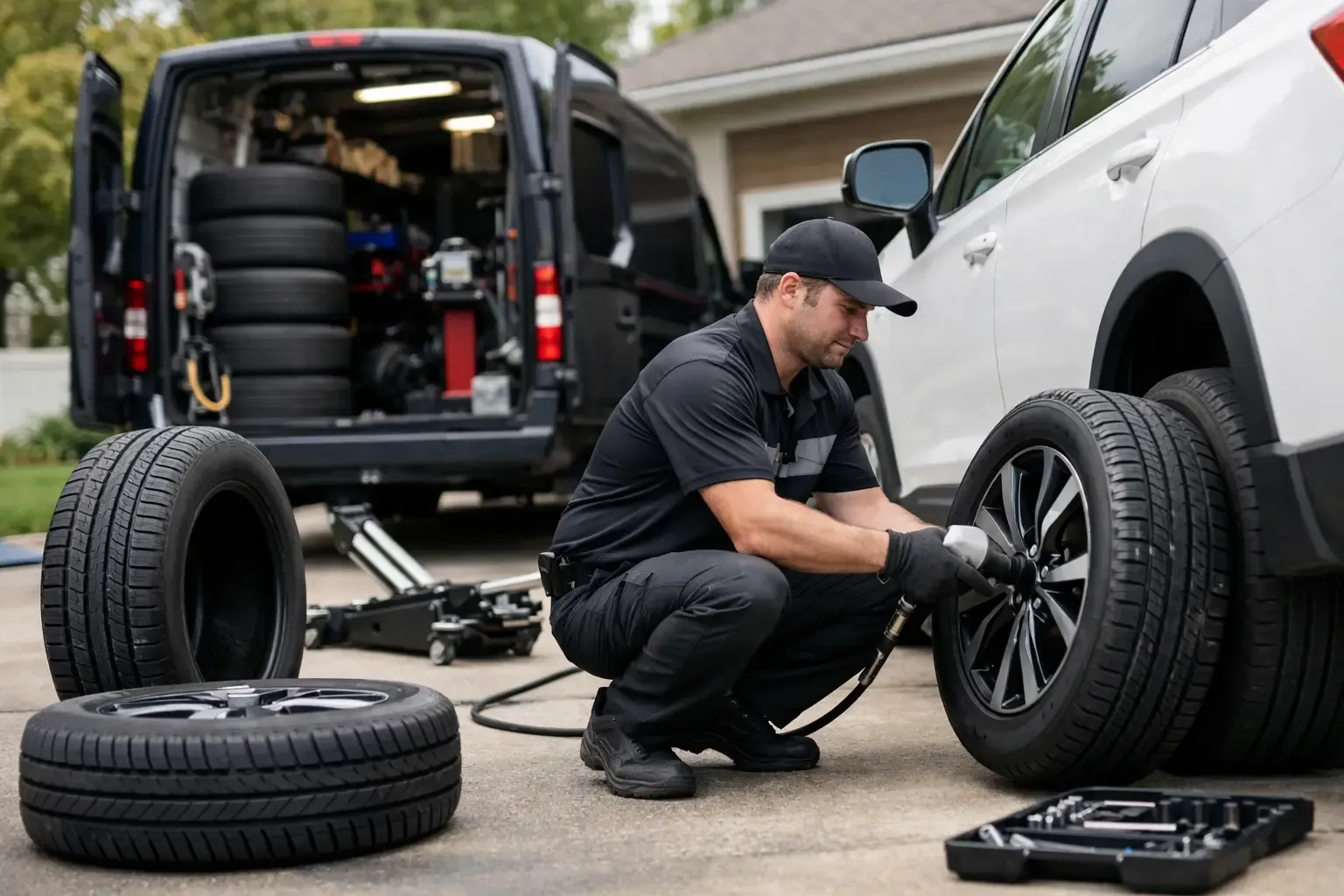
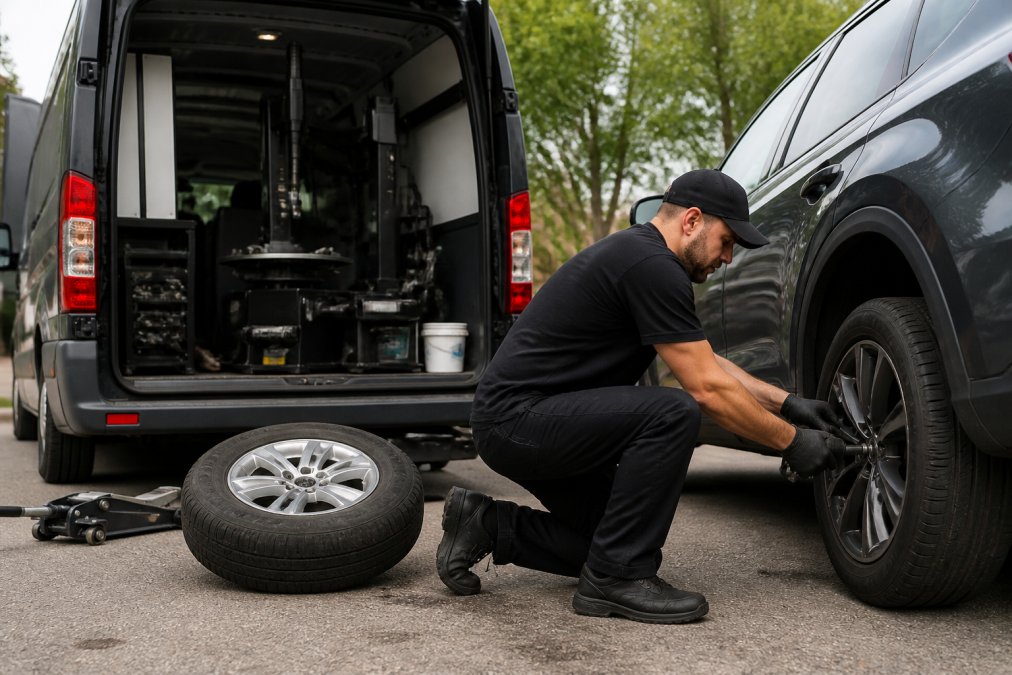
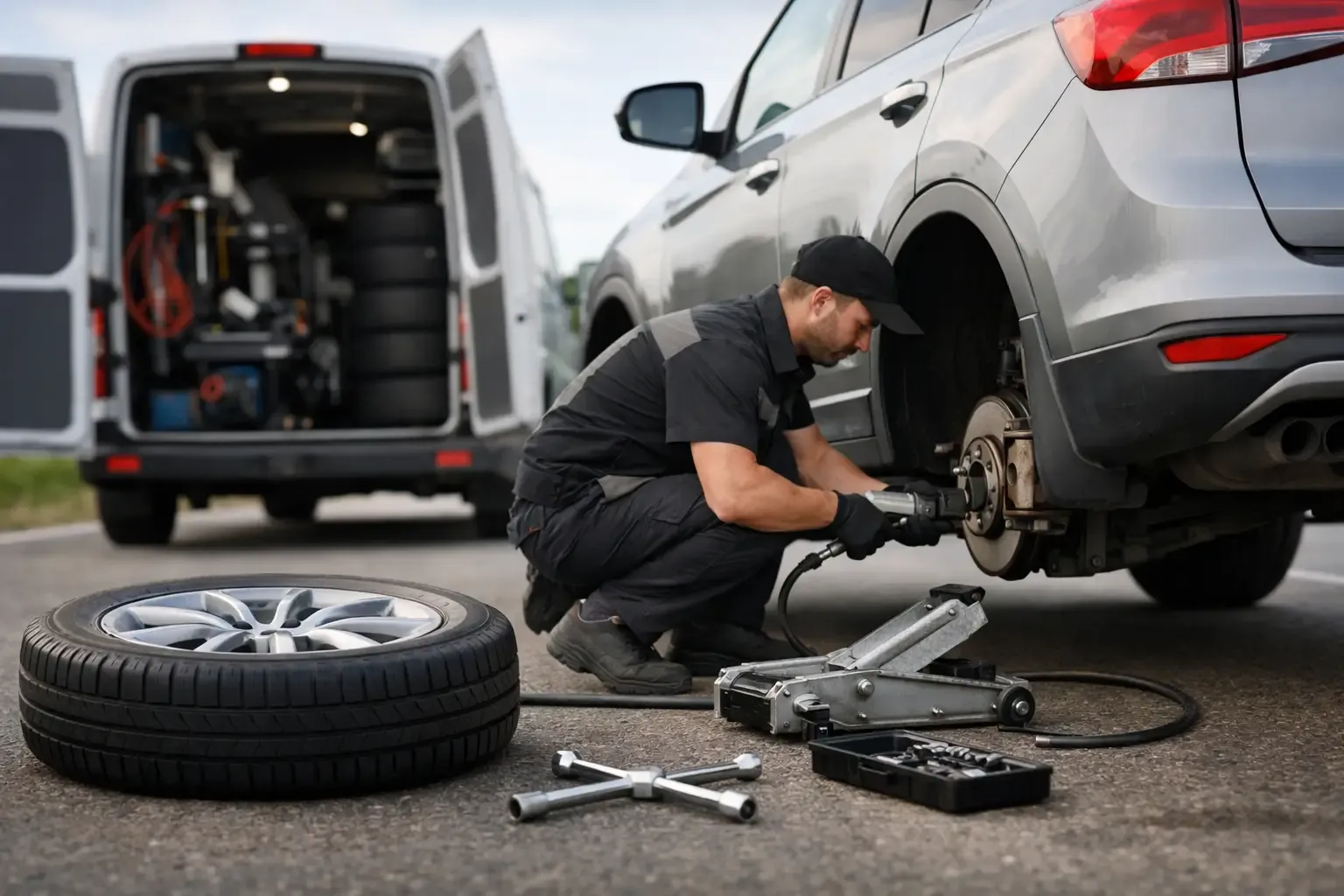
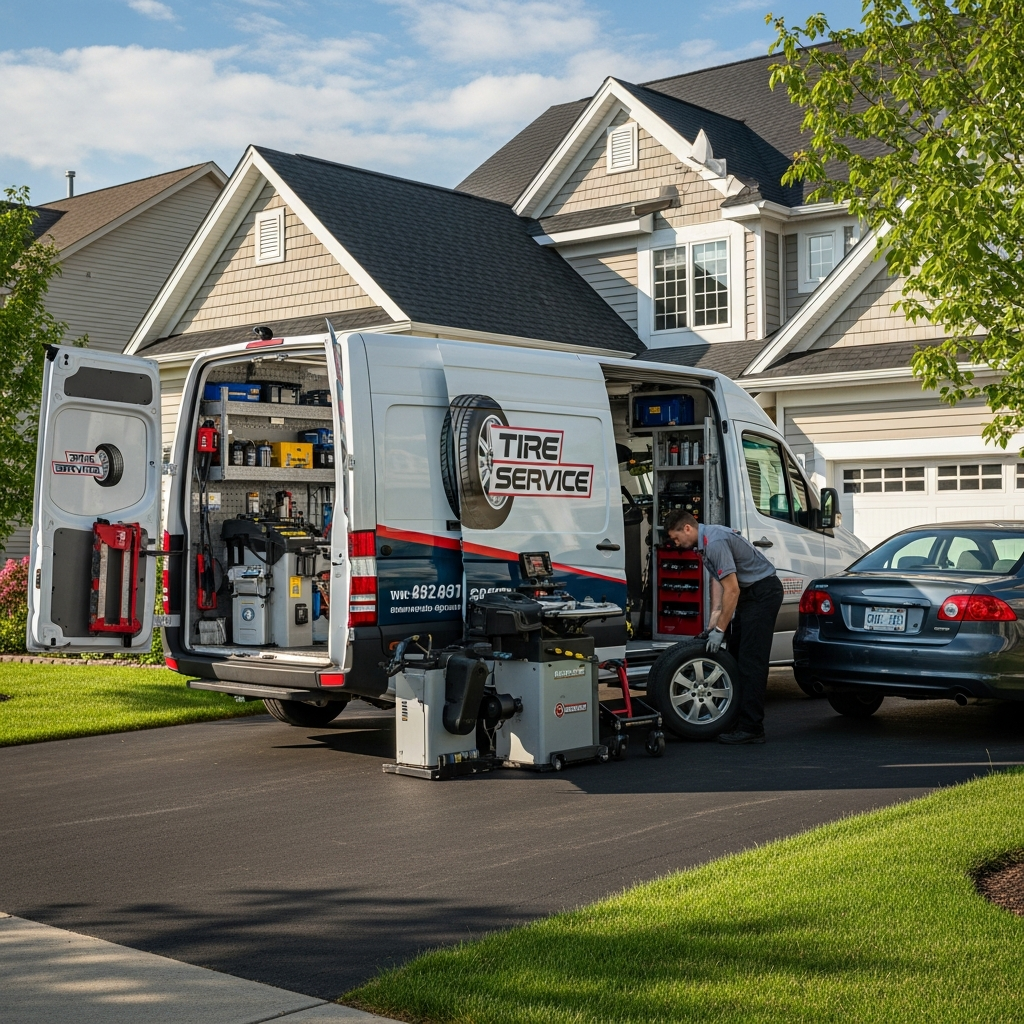
The other cost saver is convenience. We come to your home, office, or job site, so you skip the waiting room and the tow. Mobile tire balancing at Elite Mobile Tire runs around $50 per tire.
We serve drivers across the area, from Obetz and Groveport to Canal Winchester, Pickerington, and Gahanna. Whether you're near the Rickenbacker corridor off SR-317 or stuck on I-71, we can bring the service to you. Call us for a quote on your specific tire size.
Best For
Drivers who need a full set installed without losing a day, including AWD owners, commuters, and fleet managers across the Columbus area.
Conclusion: Check All Four, Then Book the Right Set
The "2 or 4" decision comes down to your measurements. Check all four tires with a gauge, compare the numbers, and let the tread tell you what to do. Pairs work when the rest of the set is healthy. A full set is smarter when the tread is even, when you drive an AWD, or when the tires are already worn.
A common mistake is replacing one tire and ignoring the other three. That is exactly why our techs check all four tires on every job, not just the one we came for.
If you're in Columbus, Obetz, Groveport, or anywhere nearby and not sure which set you need, call Elite Mobile Tire at 614-344-5010 or book at elitemobiletire.com. We'll measure, explain your options, and install the right set at your location.
Frequently Asked Questions
Is it OK to replace only two tires at a time?
Yes, on many two-wheel-drive vehicles, if the remaining two tires still have good tread and match each other. The new pair should go on the same axle, and many manufacturers recommend mounting the new tires on the rear for stability in wet conditions. If the other two tires are worn close to the legal limit, replacing all four is usually the better long-term move.
Do AWD vehicles need all four tires replaced at once?
Many manufacturers recommend it. AWD systems constantly compare wheel speeds, so a big tread depth gap between tires makes the system work harder and can wear out drivetrain parts. Some automakers publish a maximum allowed difference, often a few 32nds of an inch. If your other three tires are close to replacement anyway, doing all four at once is the safer choice.
How do I know whether my tires need replacing?
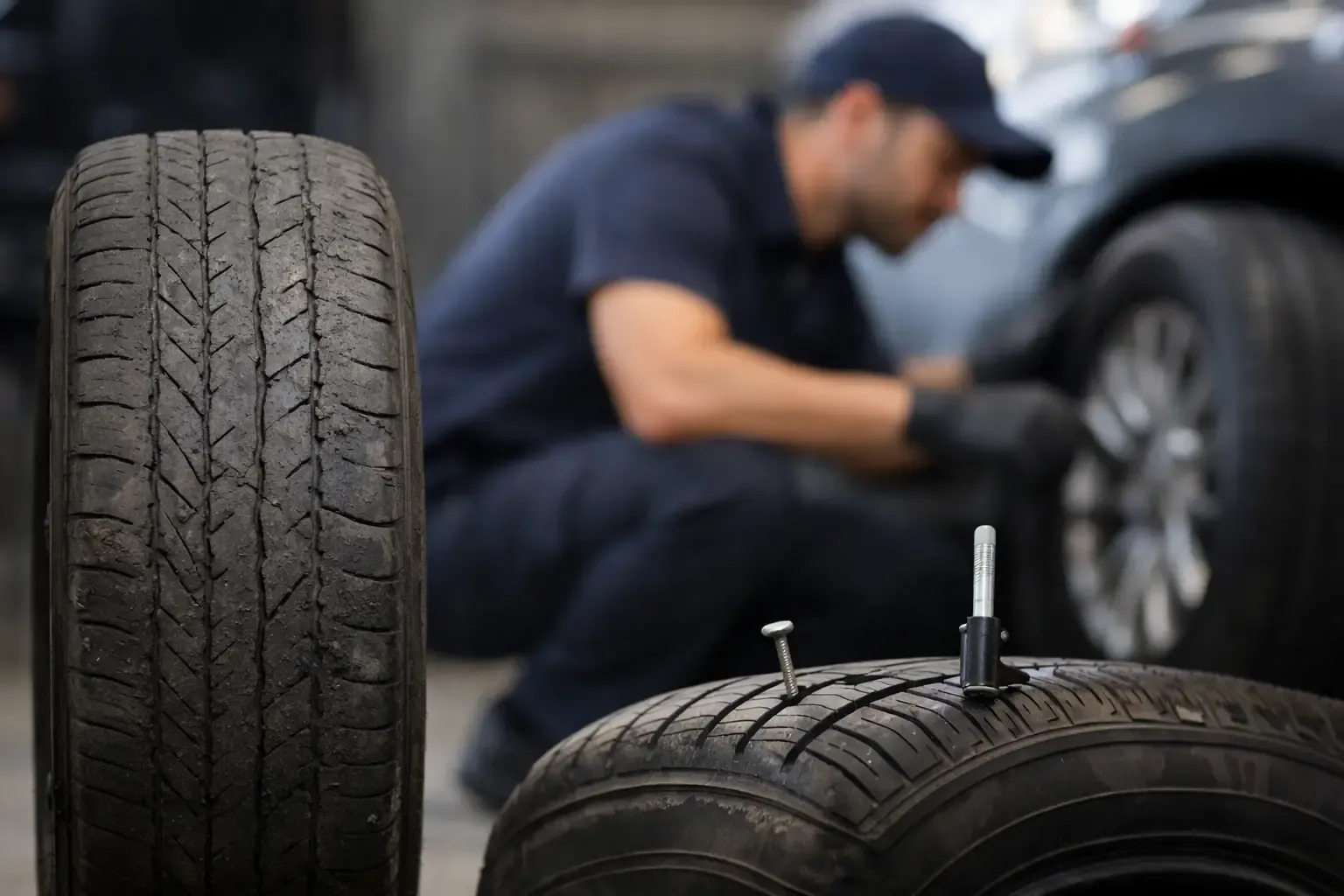
Measure tread depth in several grooves across each tire. Most states require at least 2/32 of an inch, and many manufacturers suggest replacing around 4/32 for wet-weather grip. Also look for uneven wear, sidewall cracks, bulges, or cords showing. If one tire is damaged and the rest are near the limit, replacing the set makes more sense than patching one.
Can a tire shop match new tires to my existing tires?
Often yes, if the same brand, model, and size are still available and your remaining tires have enough tread left. A technician can measure the tread on the old tires and compare it to the new ones. If the gap is too large, especially on an AWD vehicle, they may recommend replacing all four instead of mixing worn and new rubber.
Ready for a new set? Elite Mobile Tire installs 2 or 4 new tires right in your driveway or parking lot anywhere around Columbus, Obetz, Groveport, Grove City, and Reynoldsburg. Financing is available through Afterpay and Acima with up to 24-month payment plans. Call 614-344-5010 or visit elitemobiletire.com to book.