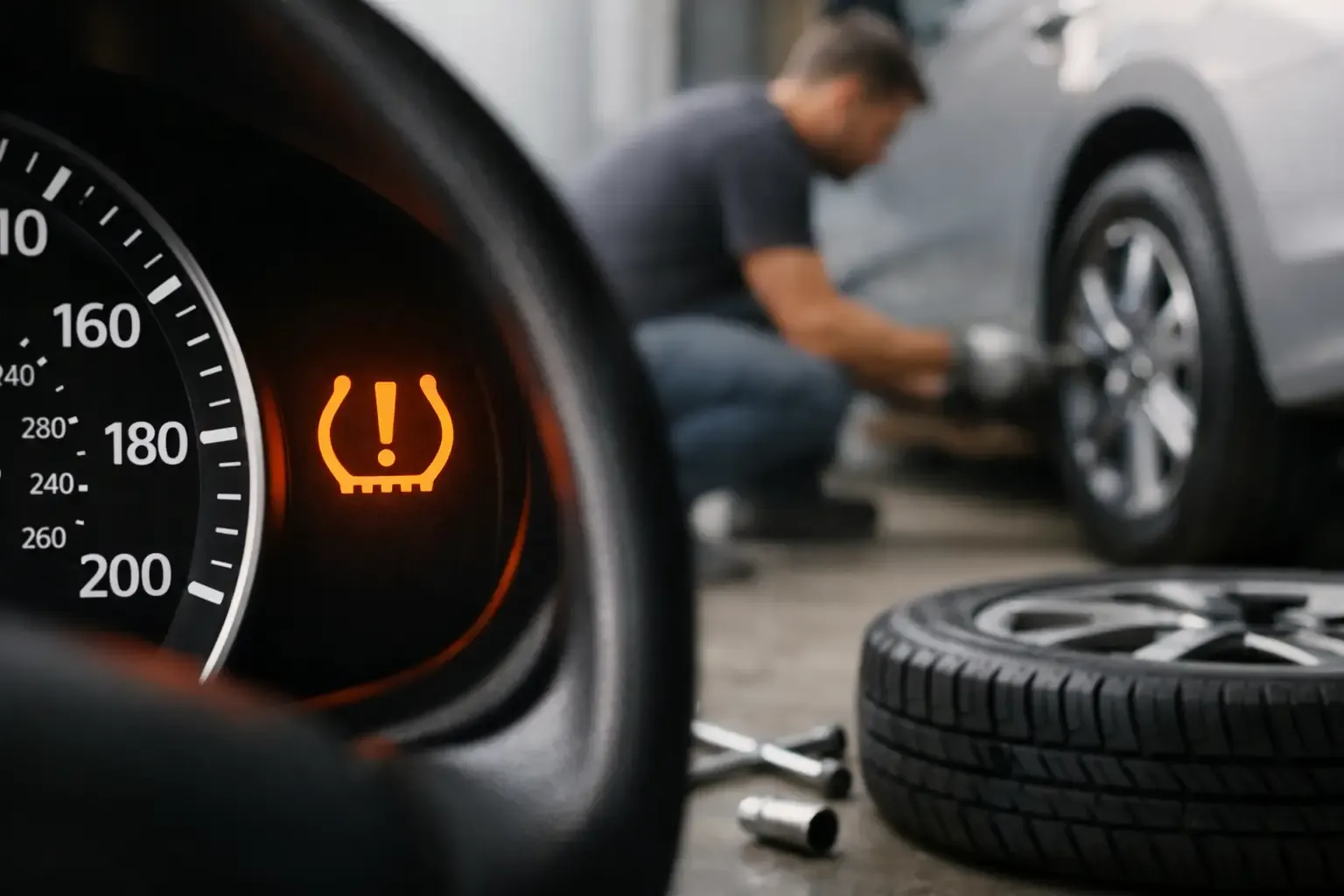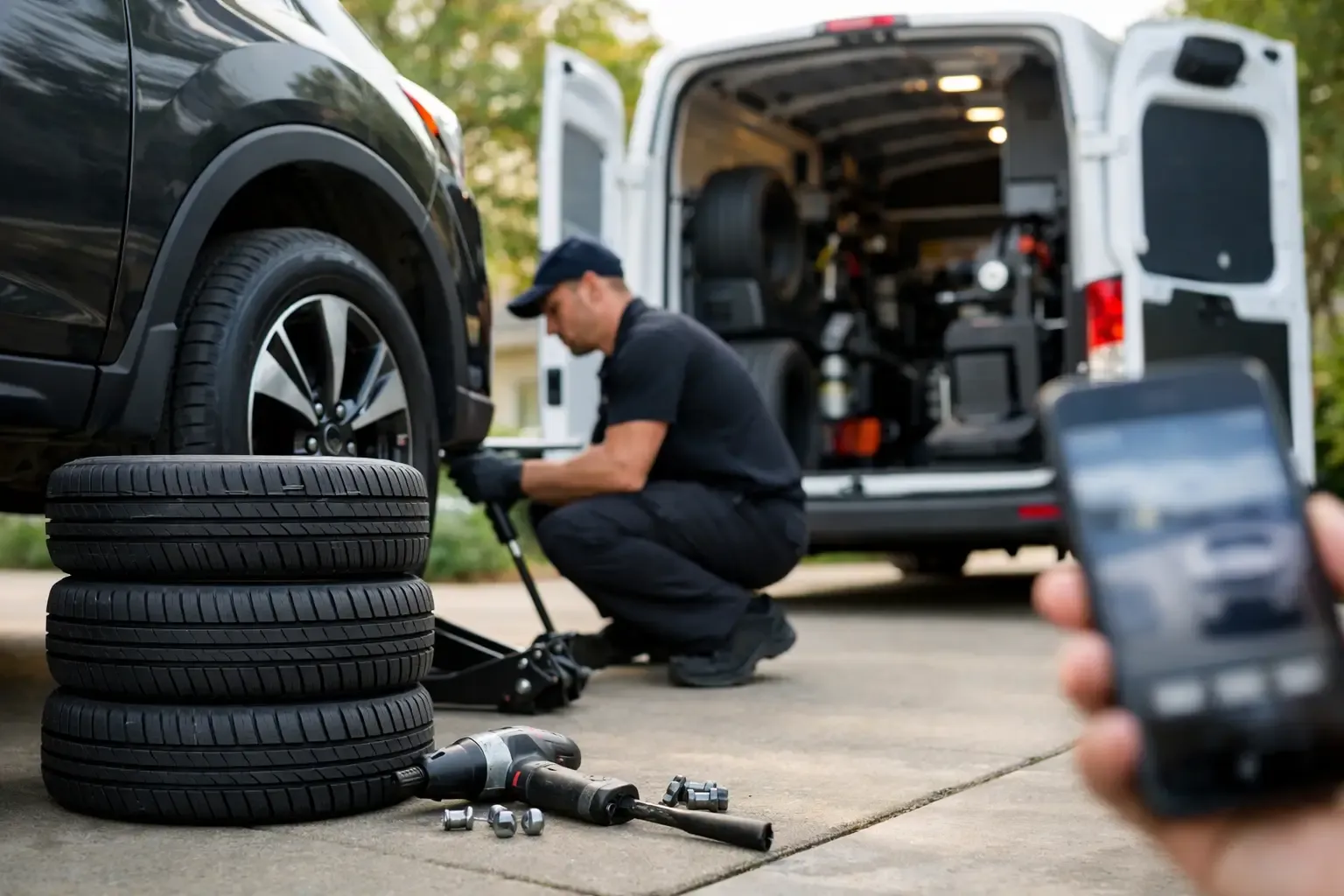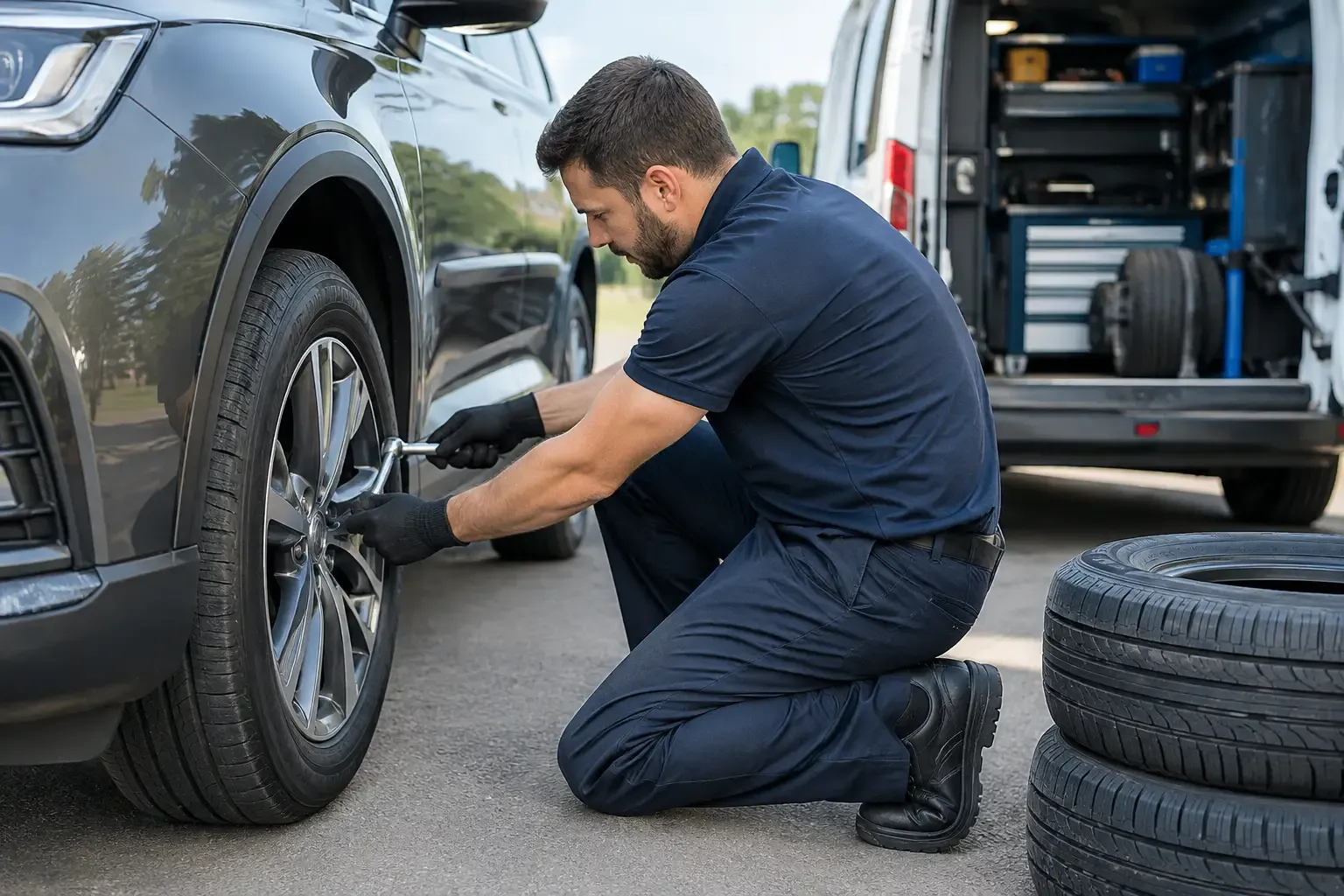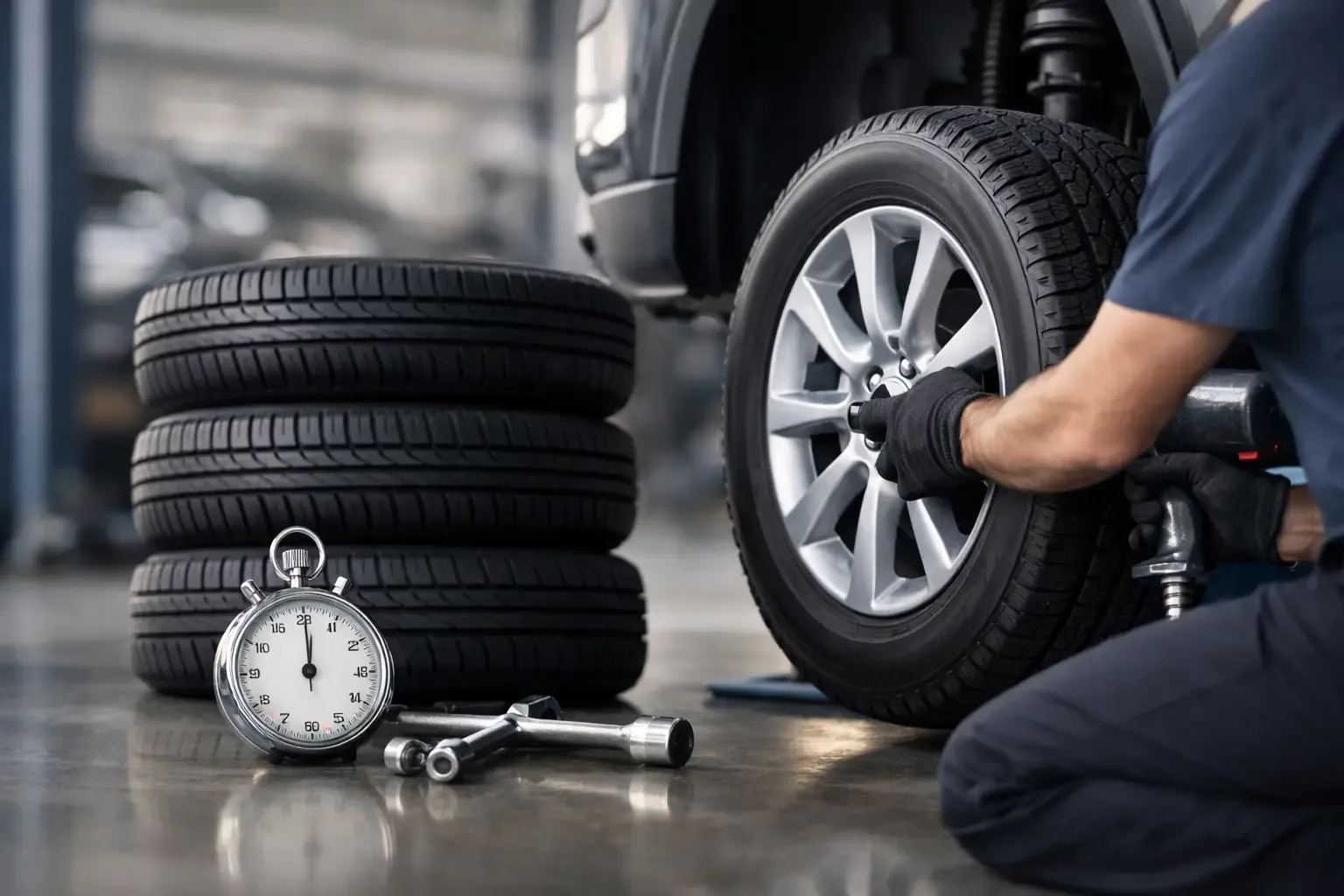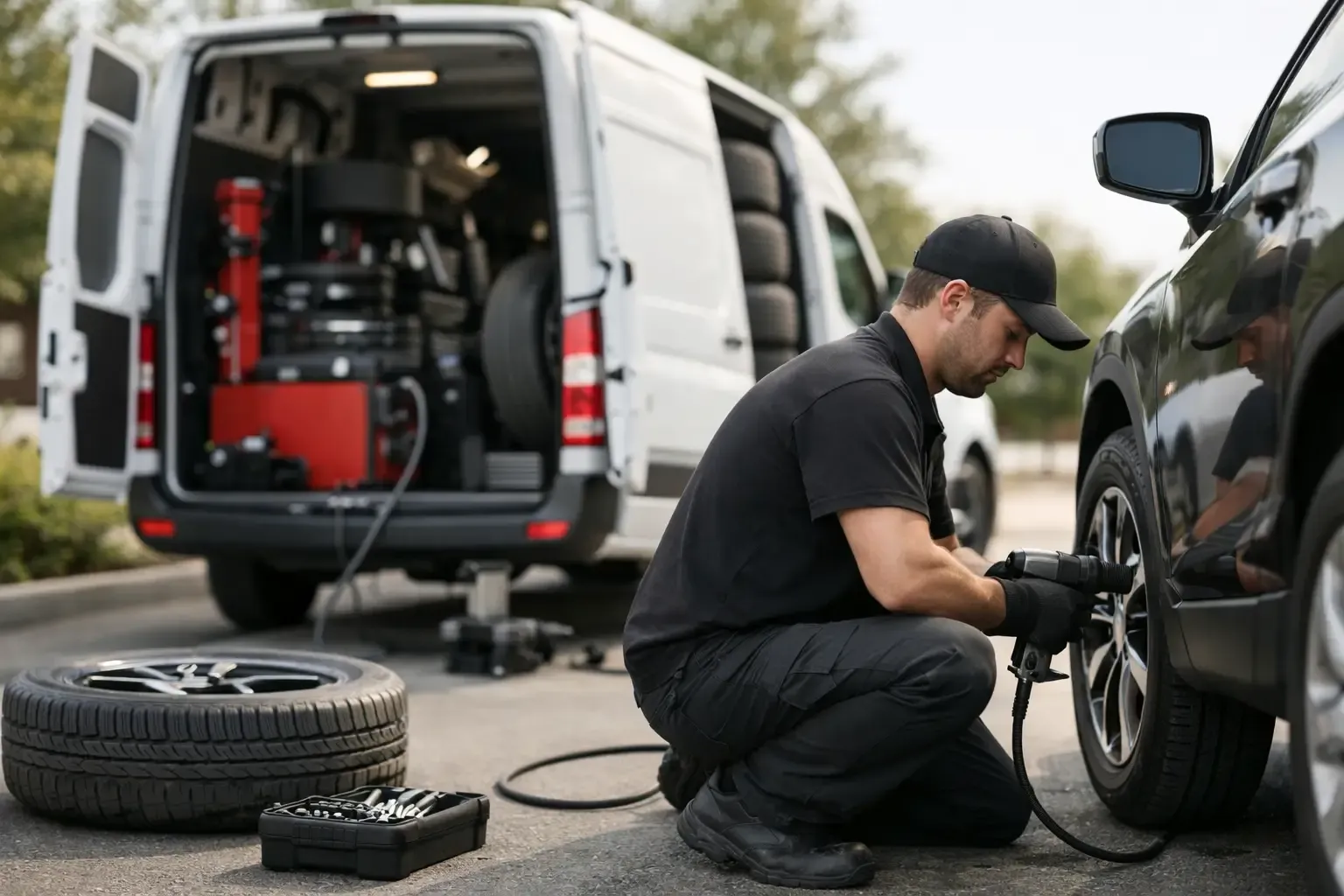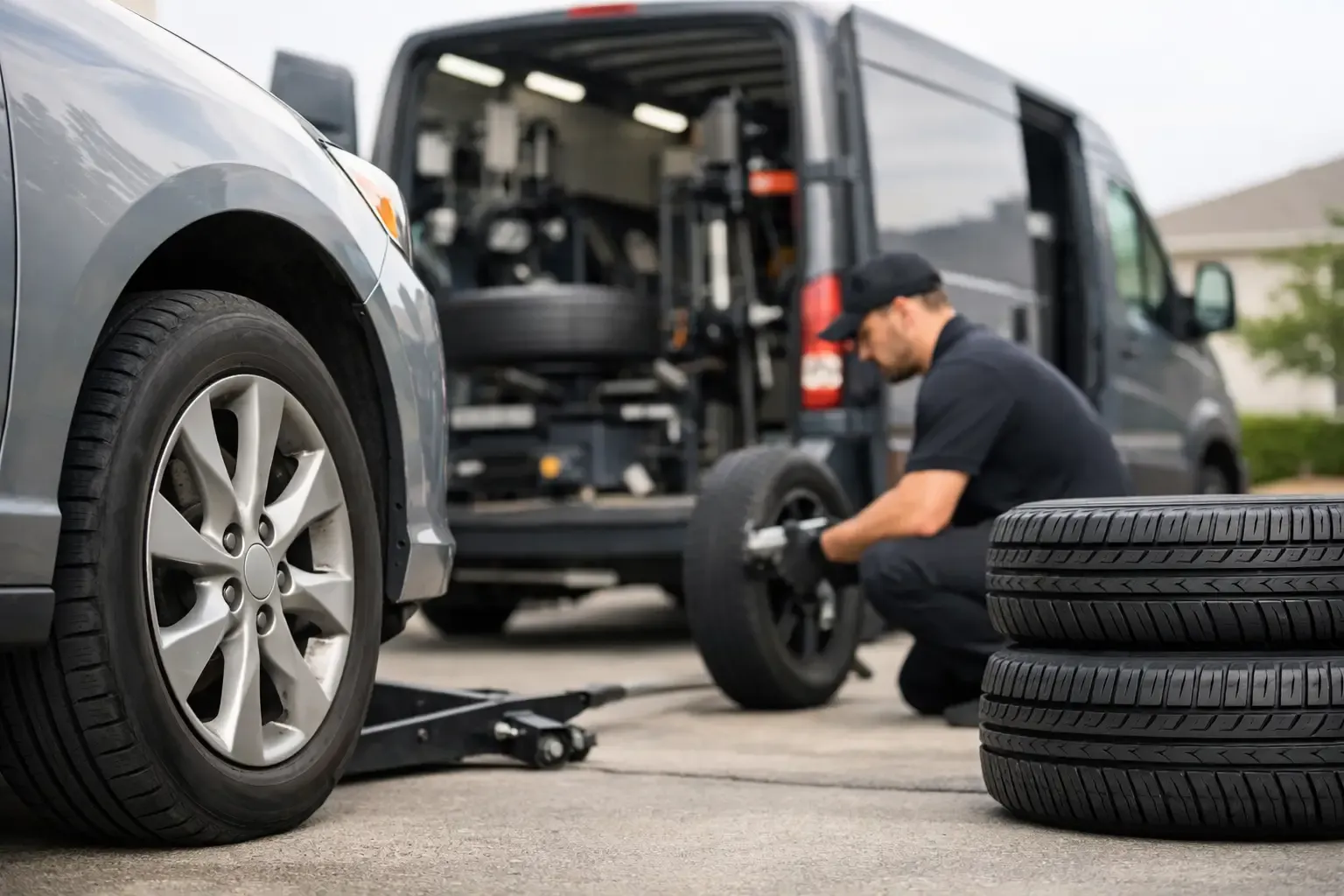
Tire rotation is one of the cheapest ways to get more life out of a set of tires, and one of the easiest to forget. If you put a lot of miles on I-270, US-33, or the side streets around town, here is what rotation actually does, how often to do it, and how it affects when you will need your next set.
What Tire Rotation Does
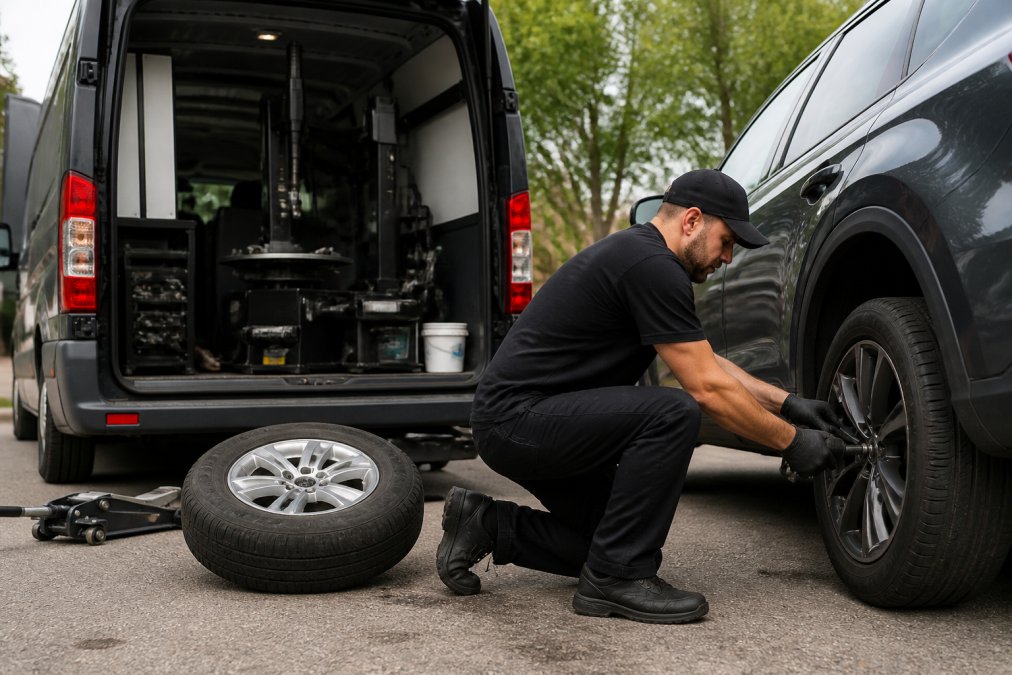
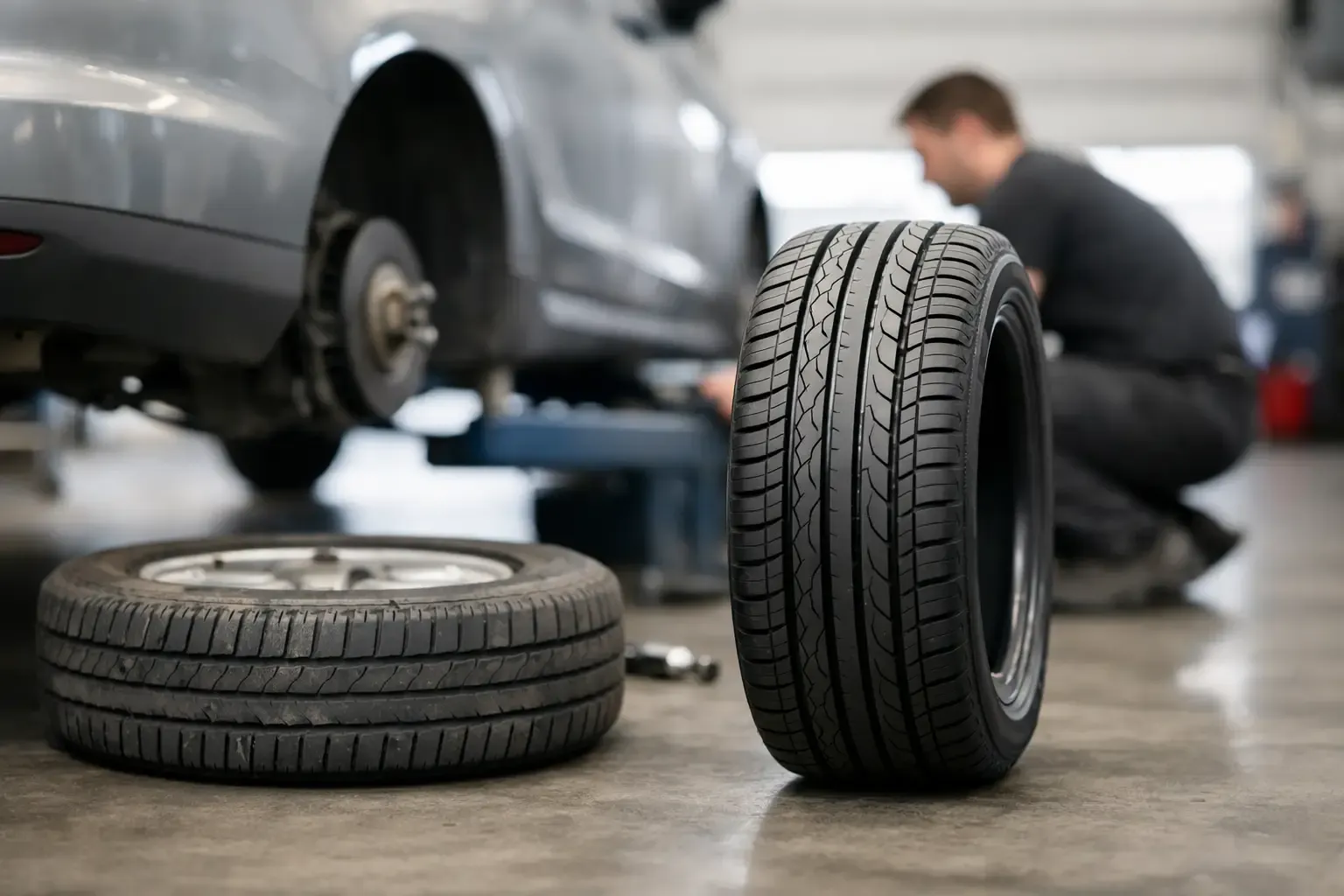
Your four tires do not wear at the same rate. The front tires handle steering, and on a front-wheel-drive car they also put the engine power to the road, so they usually wear faster than the rears. Rotating means moving the tires to different positions on the vehicle at regular intervals so each one spends time in the high-wear spots. The goal is simple: keep all four tires at about the same tread depth so they wear out together.
How Often Should You Rotate Your Tires?
The best answer is in your owner's manual. Many vehicle and tire manufacturers recommend rotating roughly every 5,000 to 7,500 miles, and a lot of drivers simply line it up with every oil change so it is easy to remember. Some tire warranties also expect regular rotation, so it is worth checking the paperwork that came with your tires.
Driving style matters too. Lots of stop-and-go traffic, frequent turning in parking lots, and towing a trailer all add wear, so drivers who commute daily from places like Pickerington into downtown Columbus may want to stay on the shorter end of that range.
Common Rotation Patterns
The right pattern depends on your drivetrain and your tires:
- Front-wheel drive: fronts usually move straight back, and rears cross to the opposite side as they move forward.
- Rear-wheel drive and AWD/4WD: rears usually move straight forward, and fronts cross to the opposite side as they move back.
- Directional tires: these are made to roll one way, so they normally swap front to back on the same side only.
- Staggered setups: if your front and rear tires are different sizes, front-to-back rotation is not possible. These sets often wear faster in back and get replaced in pairs.
Always follow the pattern in your owner's manual if it lists one.
Why Rotation Matters Even More on AWD Vehicles
All-wheel-drive systems work best when all four tires are close to the same size, and a worn tire is slightly smaller than a new one. Many AWD manufacturers set limits on how much tread depth difference is allowed between tires, because a big mismatch can put extra strain on the drivetrain. Regular rotation keeps the four tires matched, which is a big reason so many AWD owners end up replacing all four at once.
Signs You Waited Too Long
- The front tires are noticeably more worn than the rears (or the other way around)
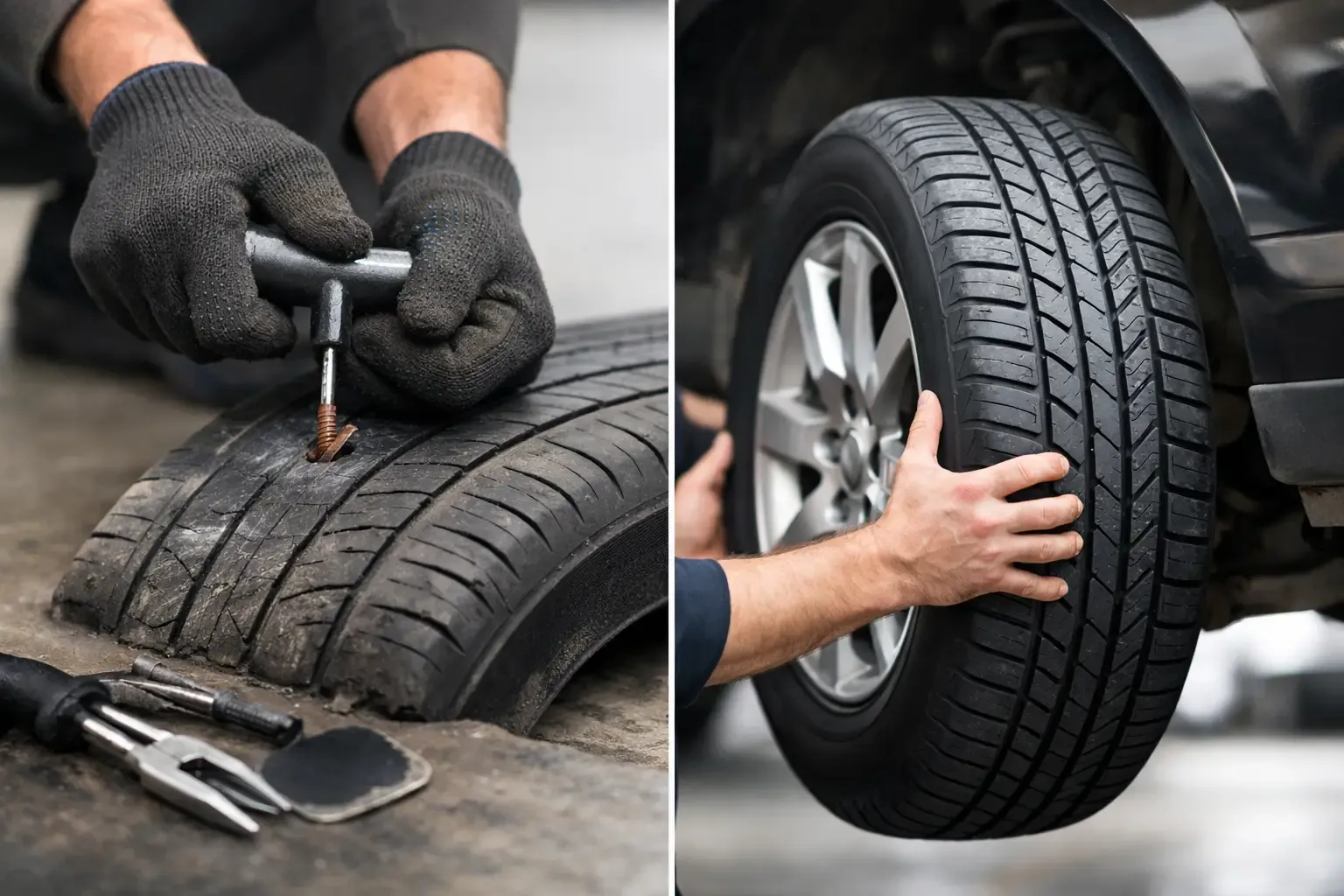
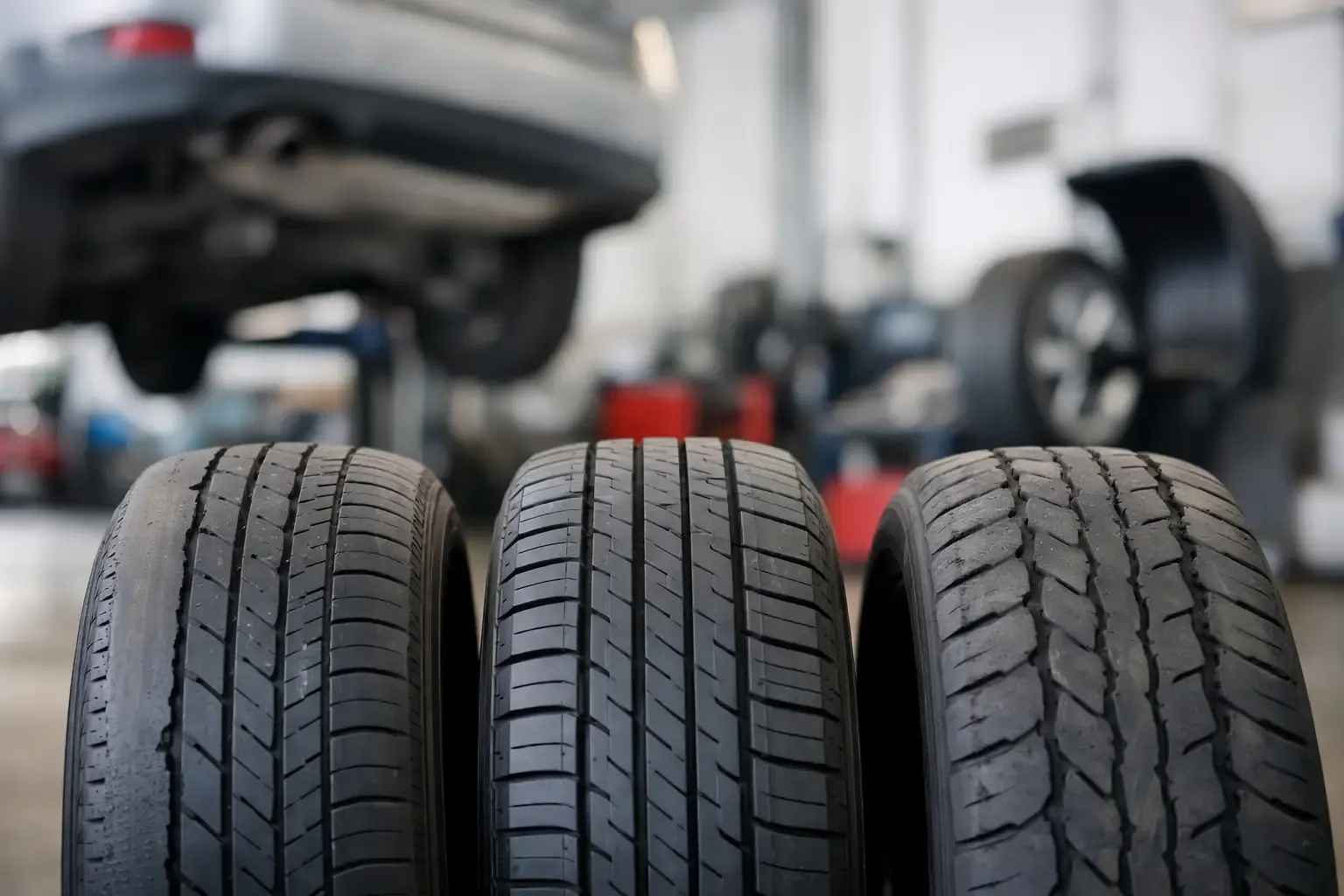
- Uneven wear patterns such as cupping or scalloped spots across the tread
- More road noise or a vibration that was not there before
- A tread depth check shows a big difference from one tire to the next
Wear that is heavy on just the inside or outside edge can point to an alignment or suspension problem rather than missed rotations, so have that looked at by a shop that does alignments. Rotating will not fix it.
How Rotation Affects Your Next Tire Purchase
Here is the part most people do not think about. When a set is rotated on schedule, all four tires reach the end of their life at about the same time, and replacing all four together is the cleanest option. It keeps handling balanced and is often required for AWD.
When a set is not rotated, the front tires on most cars wear out first. Then you are looking at replacing two. That works fine on many two-wheel-drive vehicles, and many tire manufacturers recommend putting the new pair on the rear axle for better stability in wet conditions. Either way, it helps to have someone measure all four tires before deciding, so you know whether two or four makes more sense.
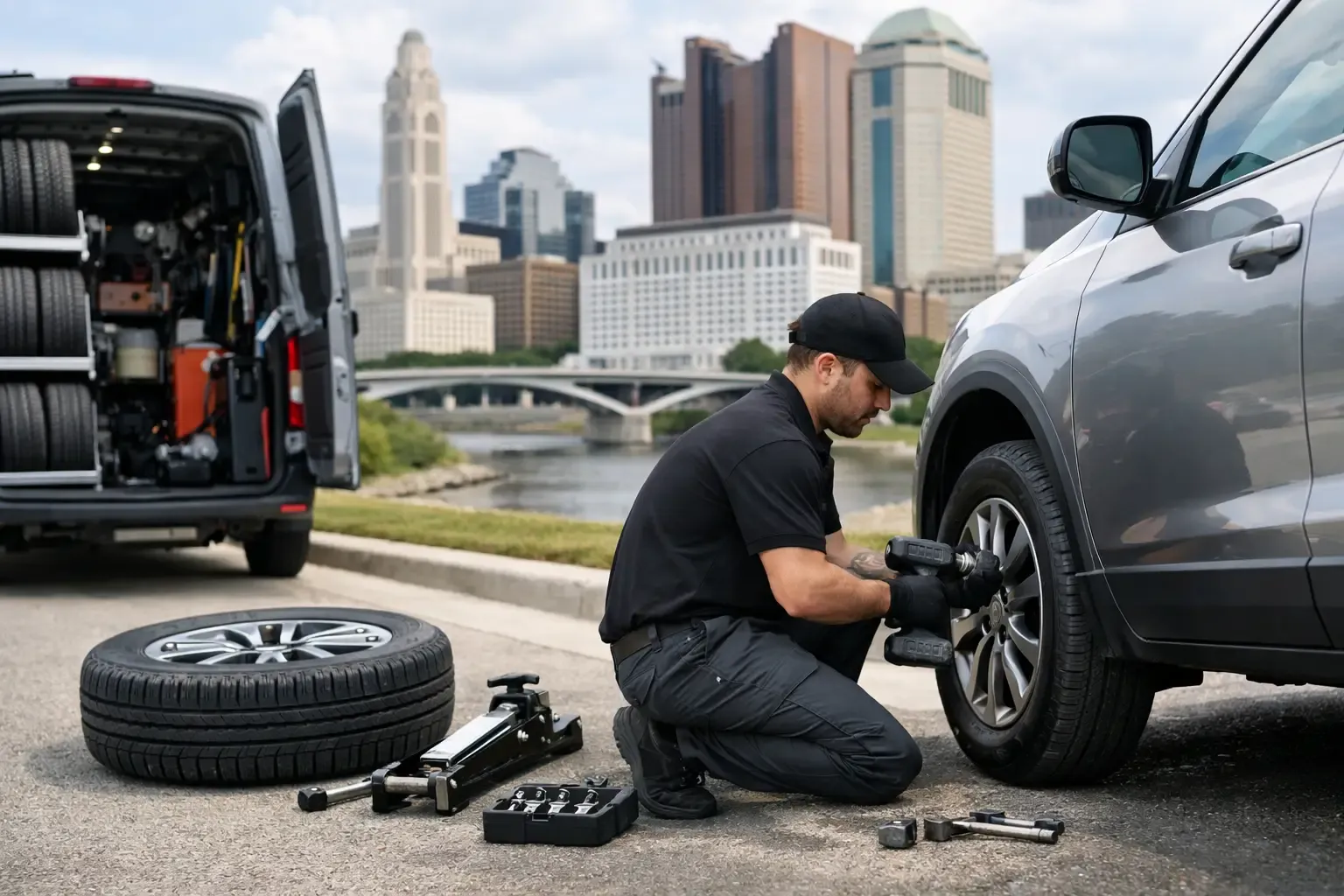
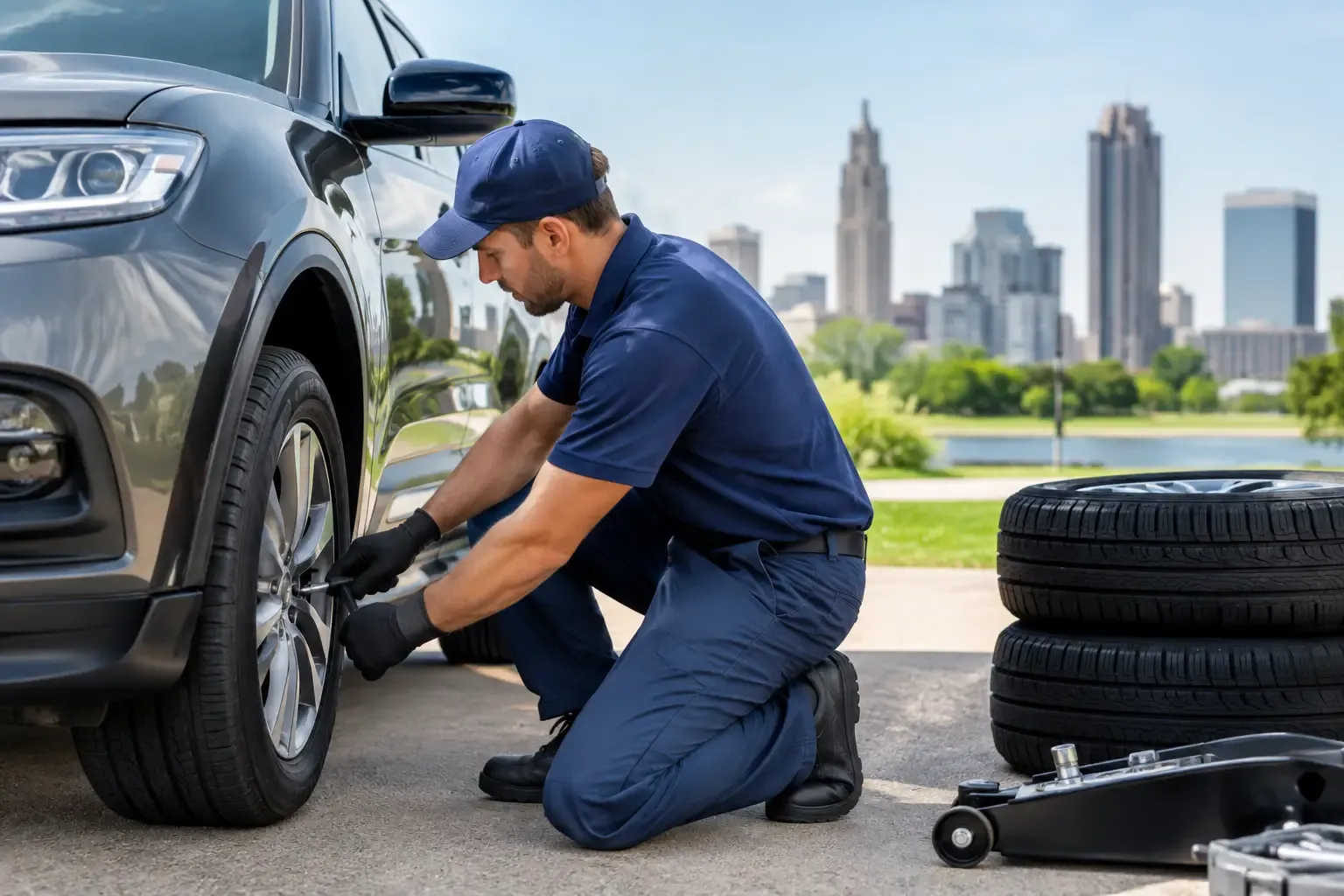
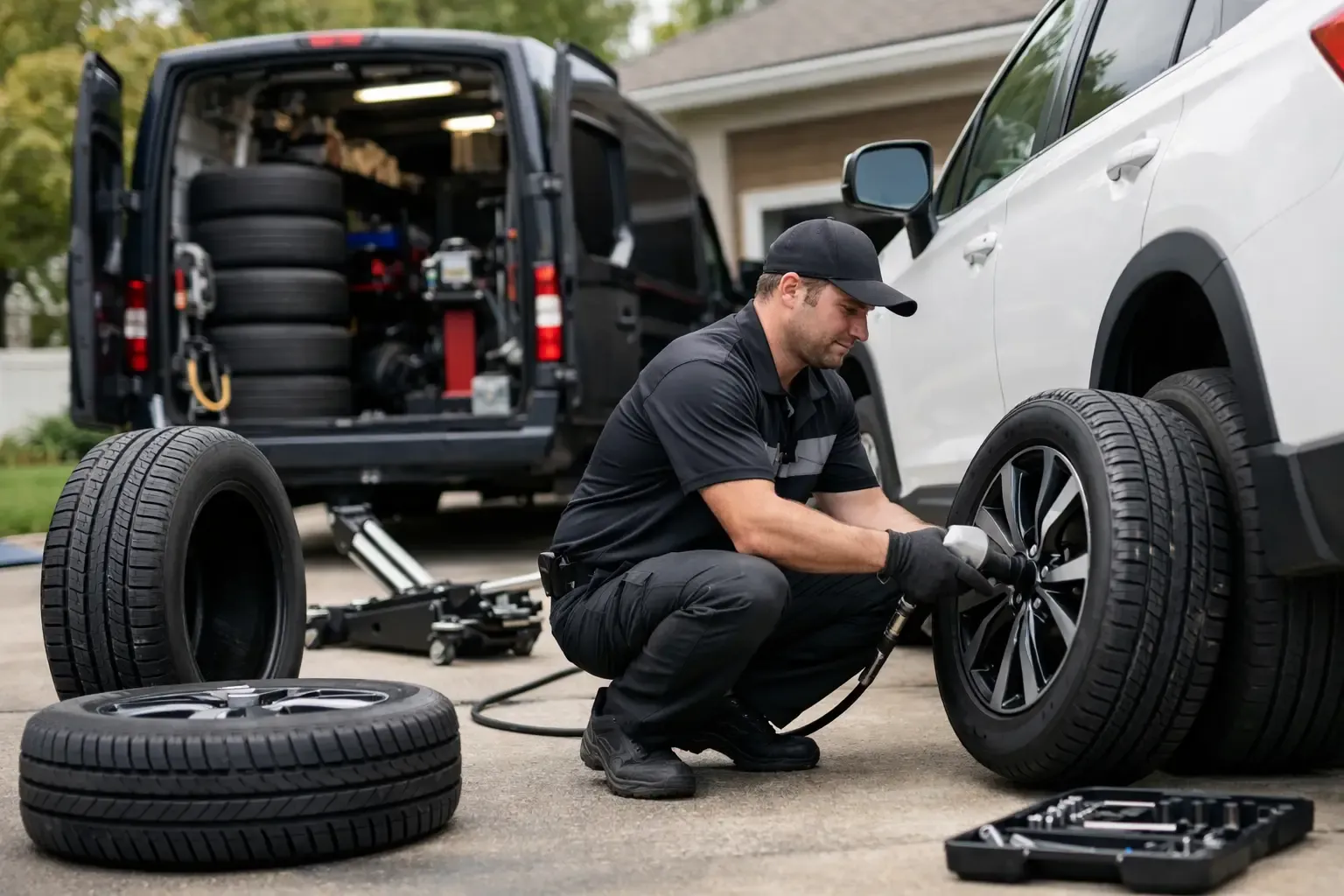
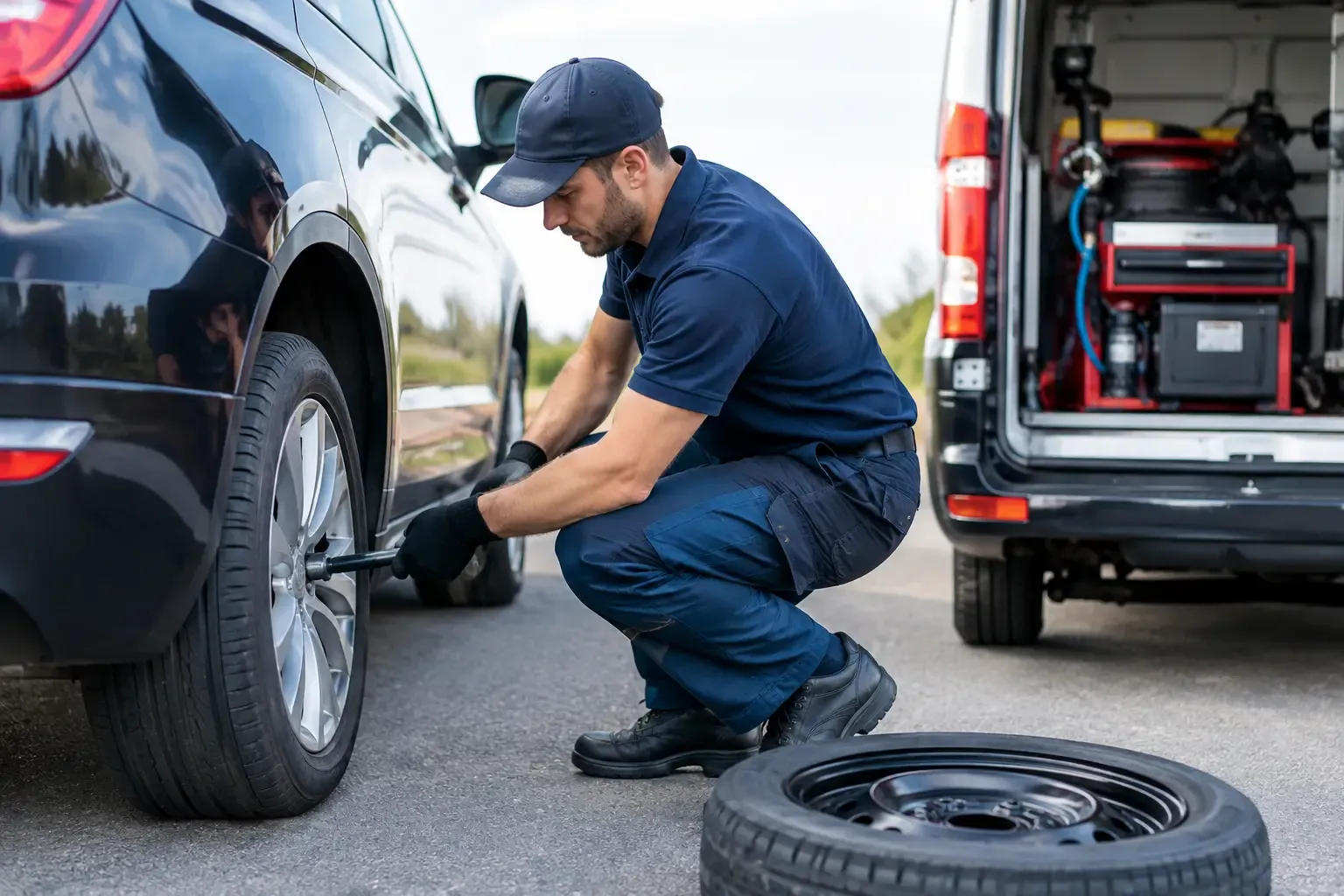
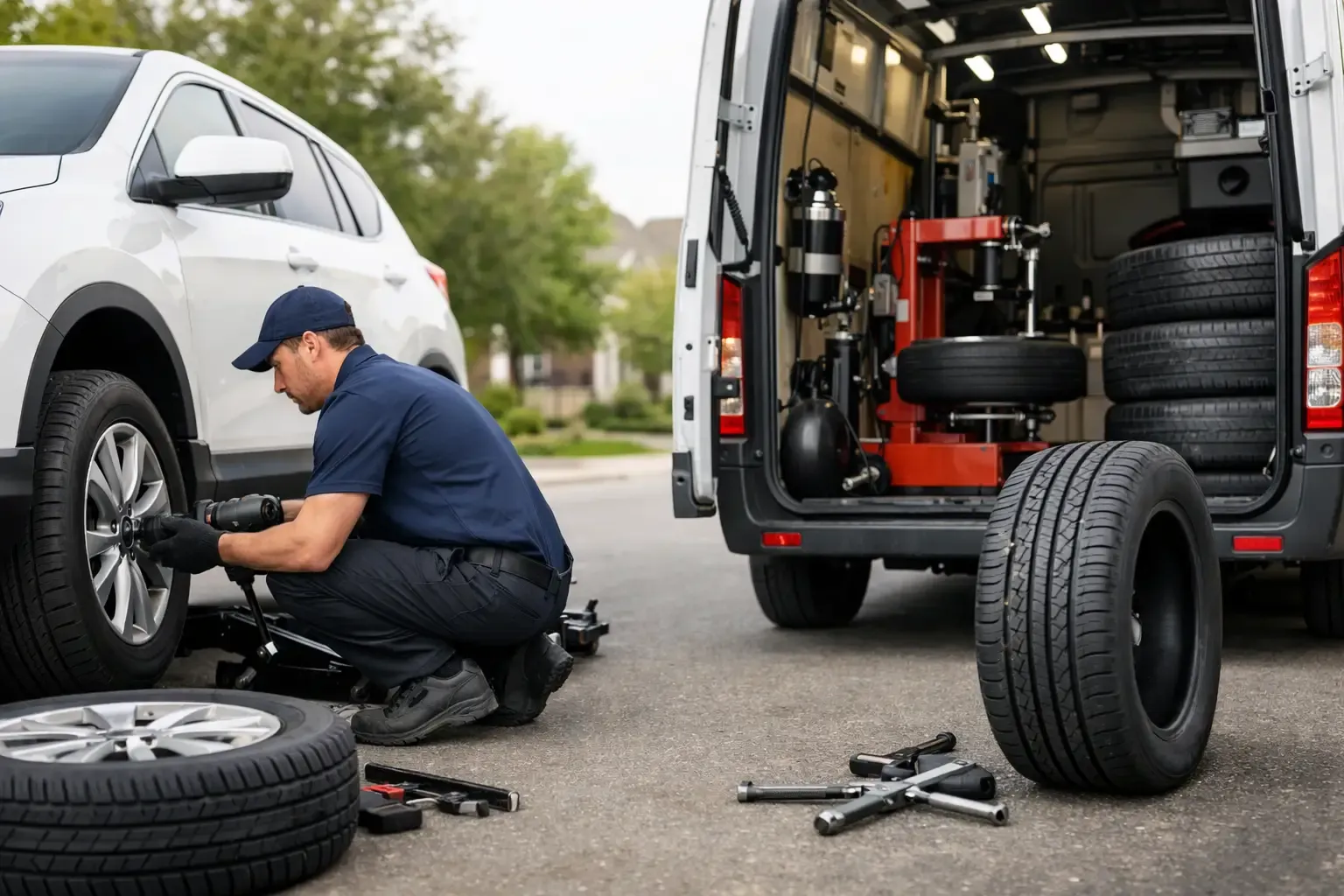
Drivers out in Upper Arlington and down by Groveport often find that a quick check of all four tires answers the two-or-four question right away, and that is easy to do when the installer comes to your driveway or work parking lot.
A Simple Rotation Routine
- Check your owner's manual for the recommended interval and pattern
- Pair rotations with oil changes so you do not forget
- Check tire pressure monthly and before long trips, since cold Ohio mornings can drop pressure
- Use a tread depth gauge or the penny test every few months on all four tires
For more on safe tire care, the NHTSA tire safety page and the U.S. Tire Manufacturers Association are both good, reliable resources.
Ready for a new set? Elite Mobile Tire installs 2 or 4 new tires right in your driveway or parking lot anywhere around Columbus, Obetz, Groveport, Grove City, and Reynoldsburg. Financing is available through Afterpay and Acima with up to 24-month payment plans. Call 614-344-5010 or visit elitemobiletire.com to book.