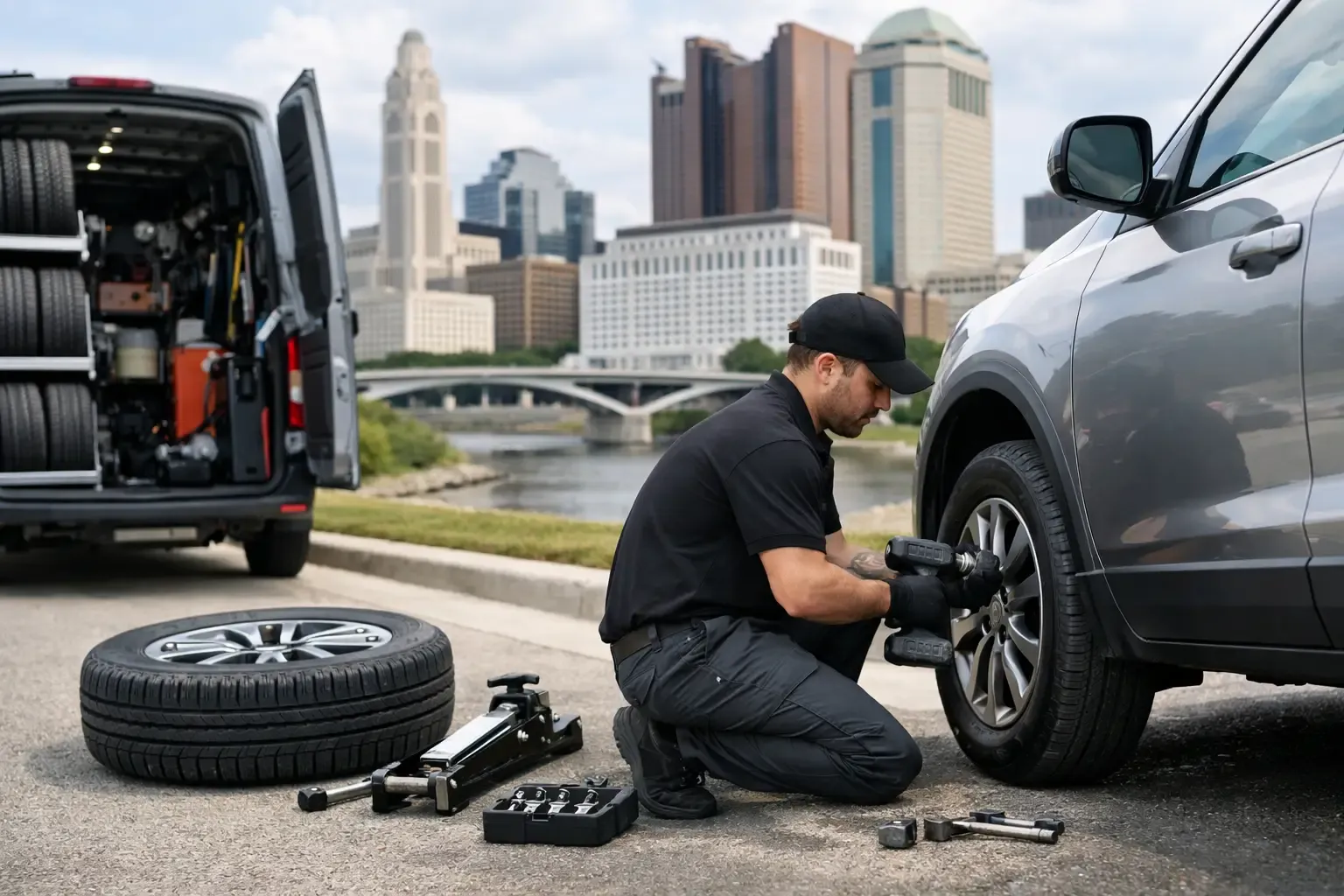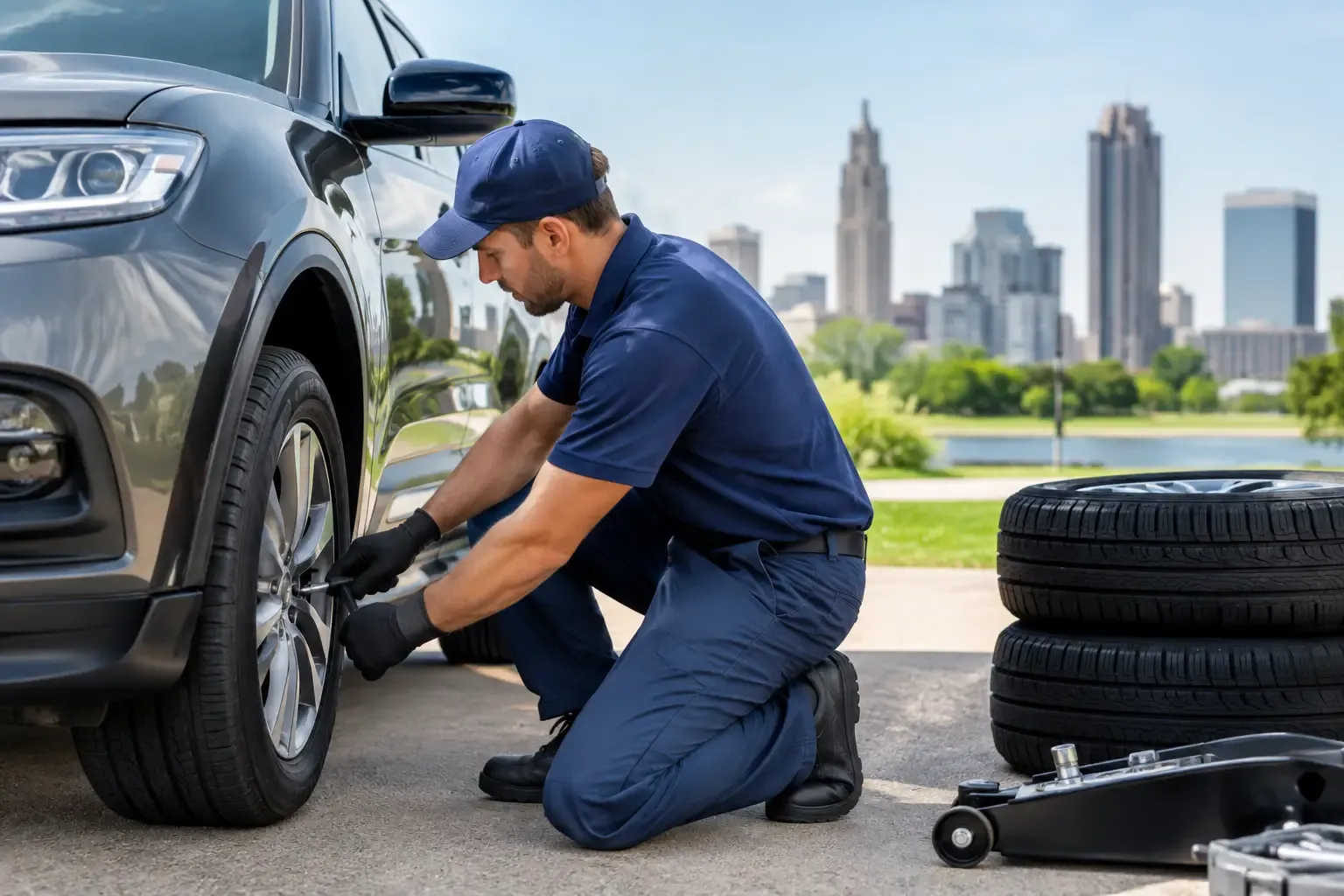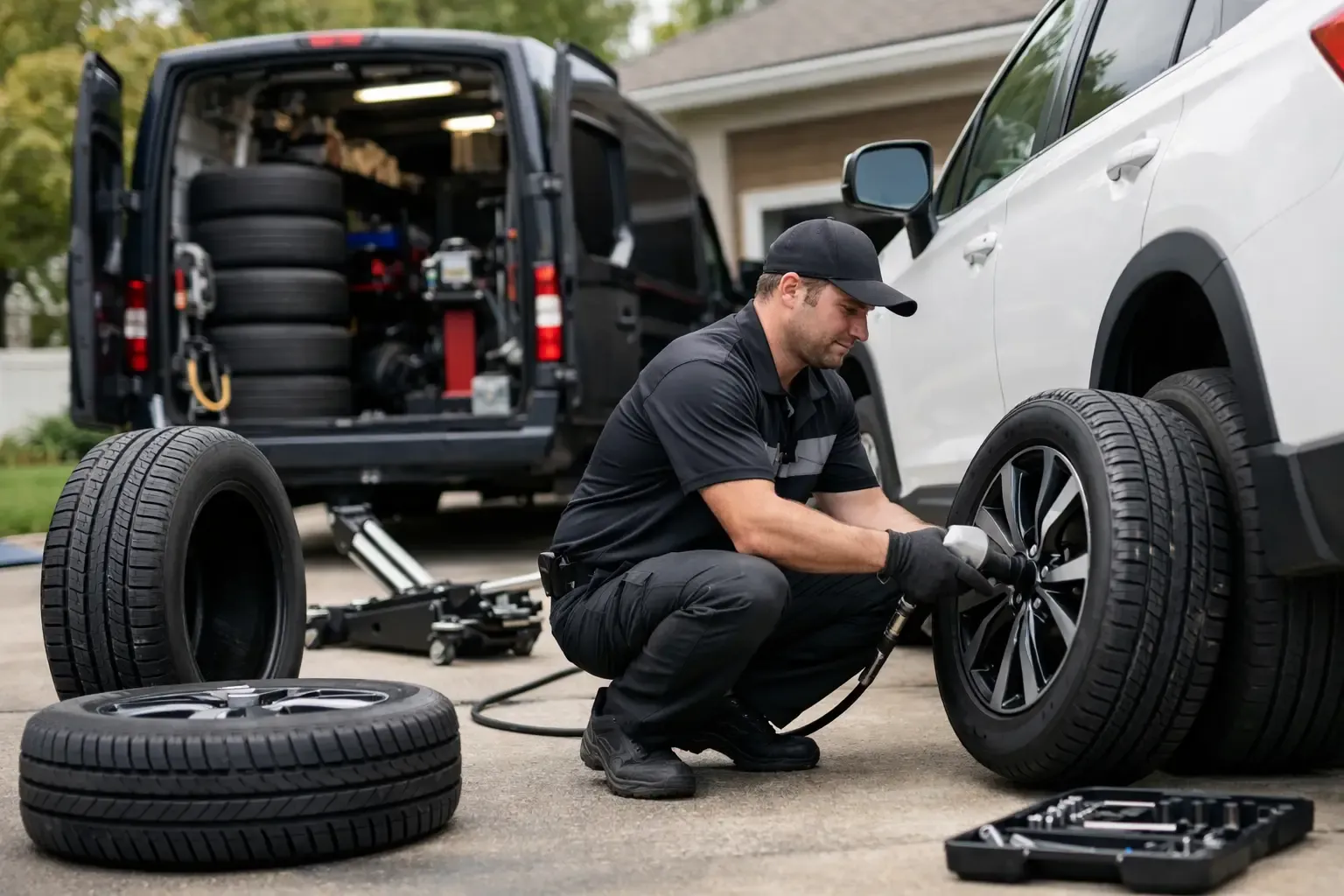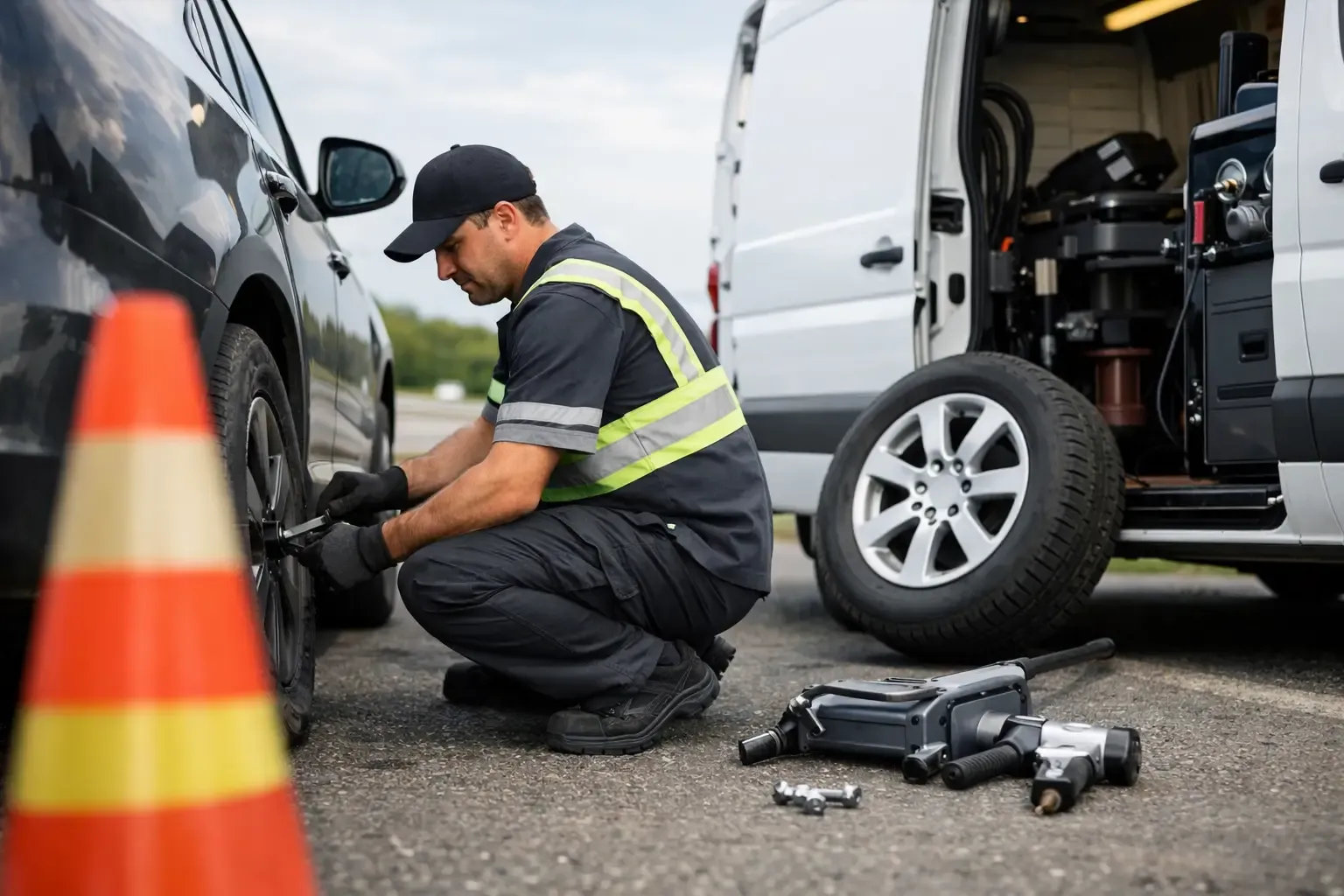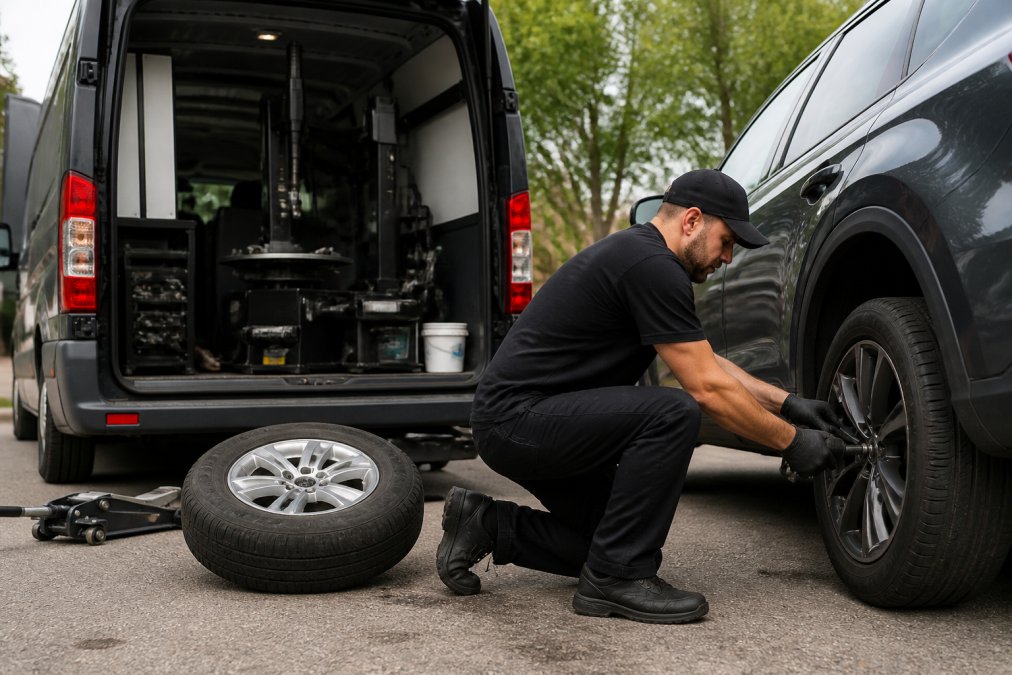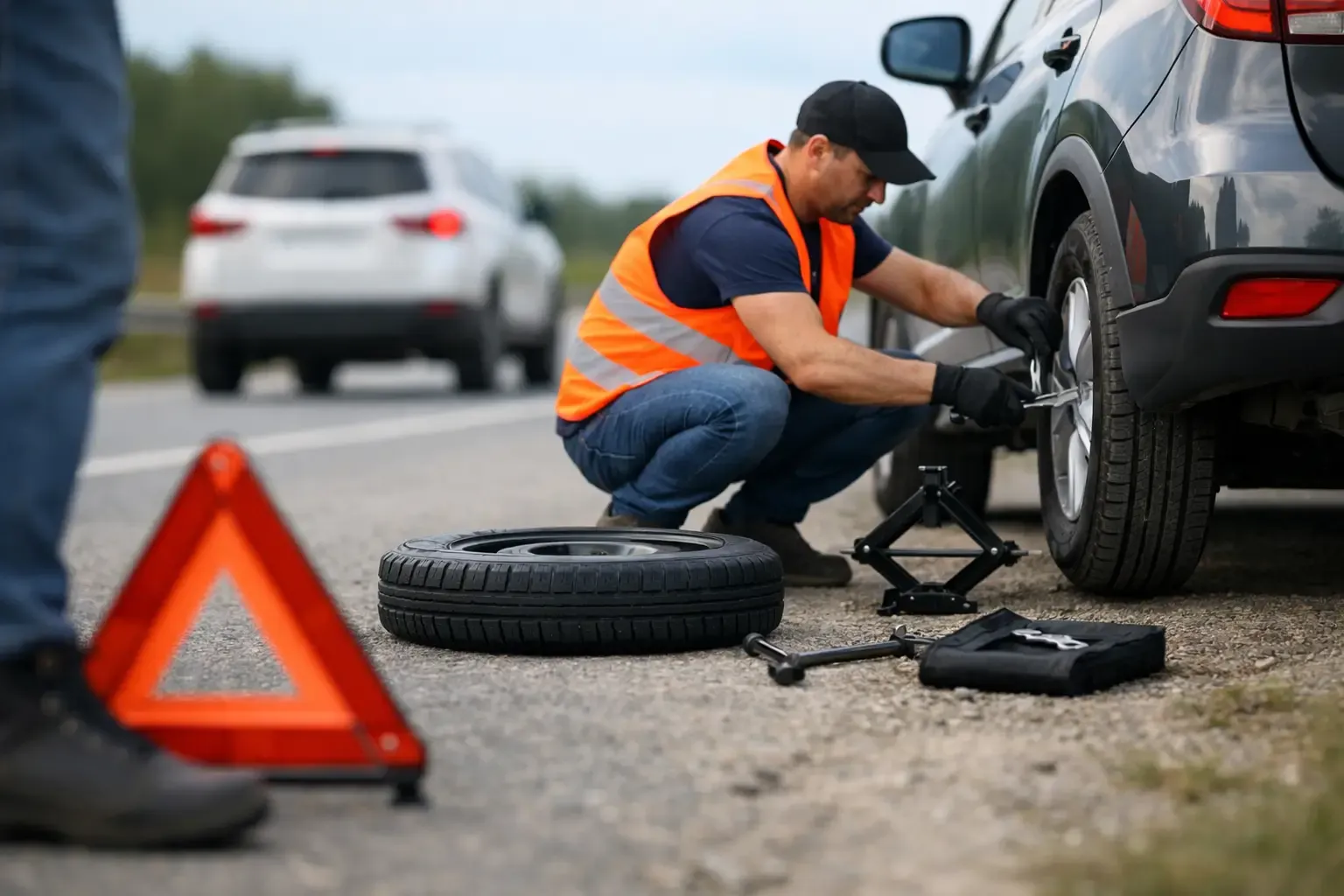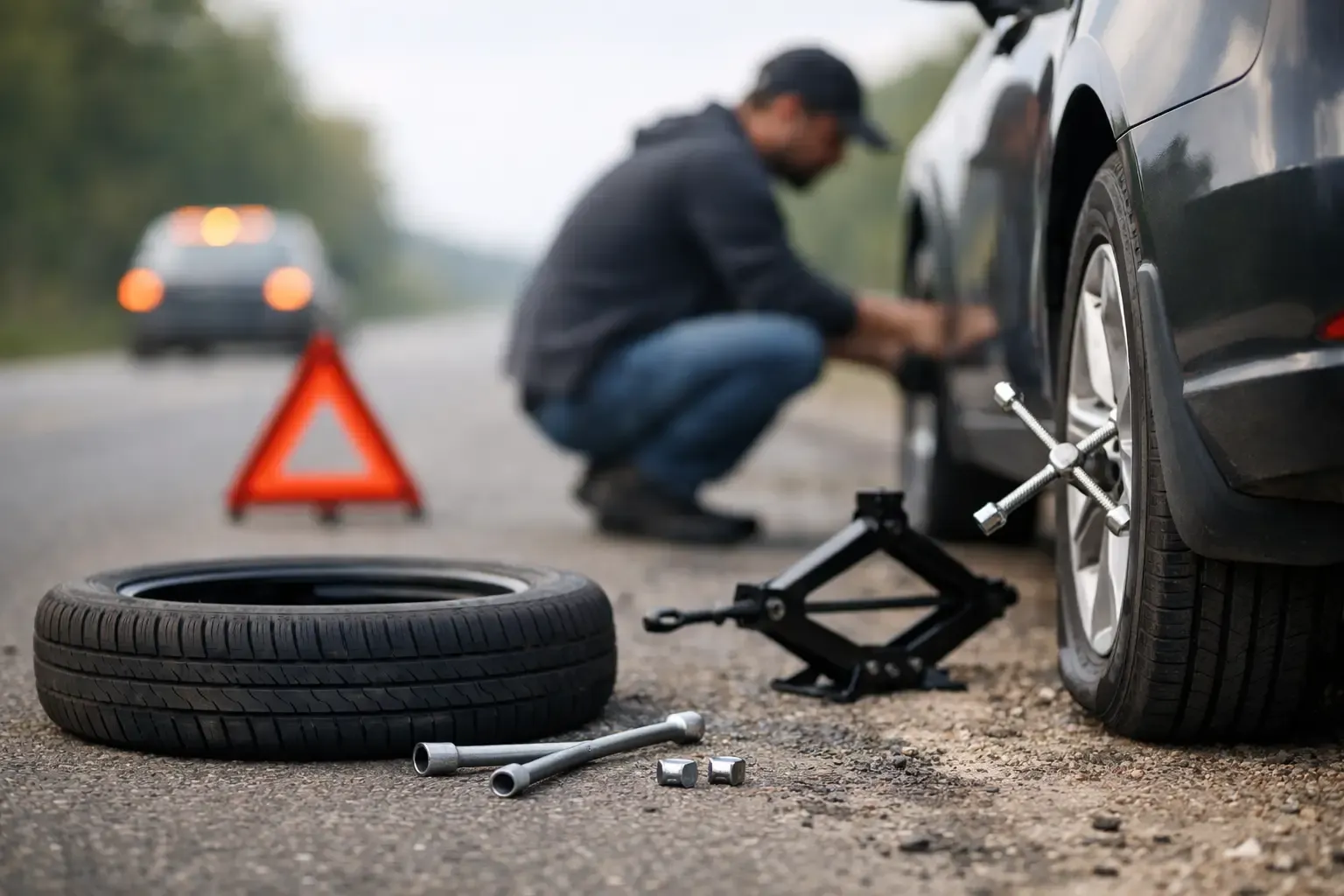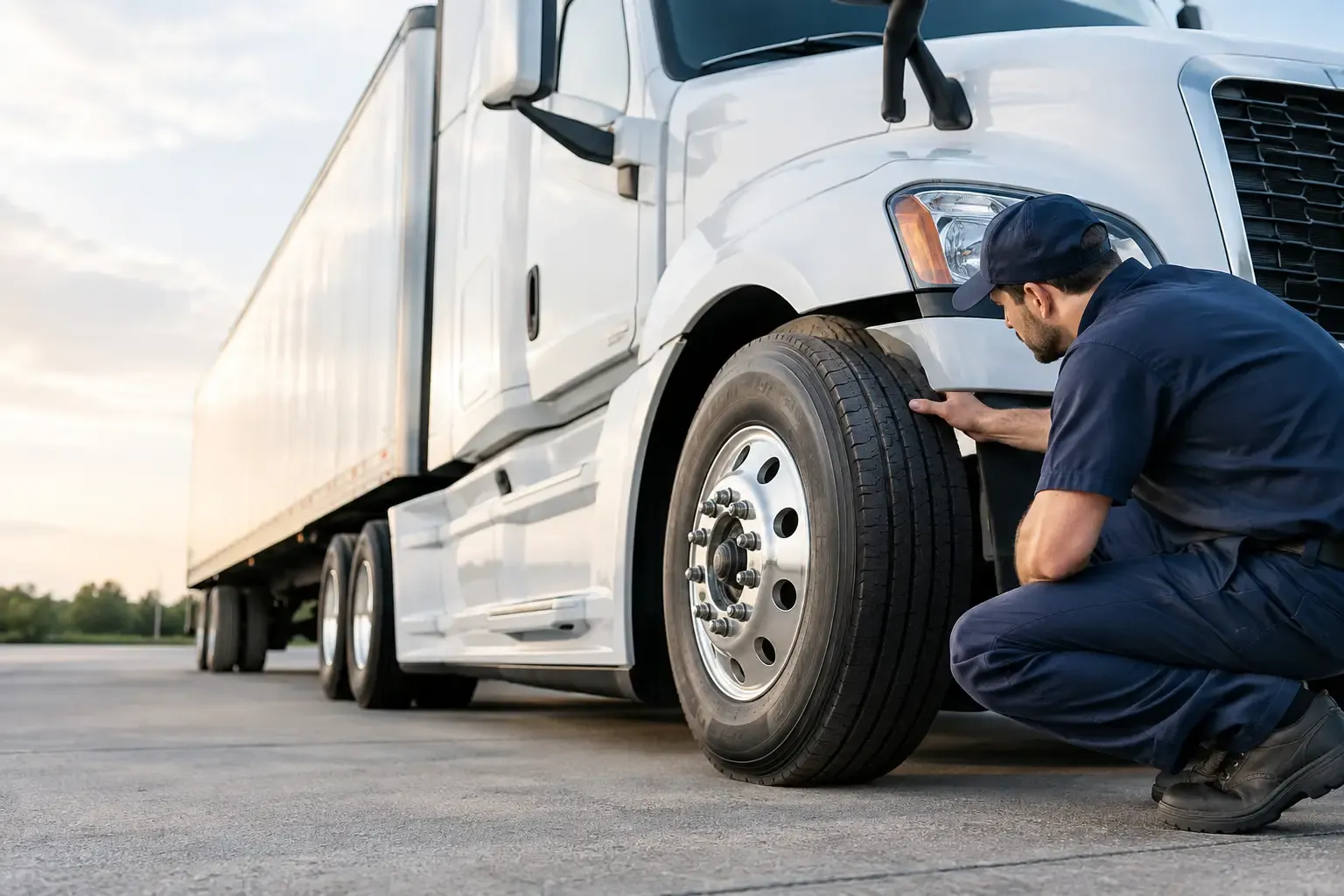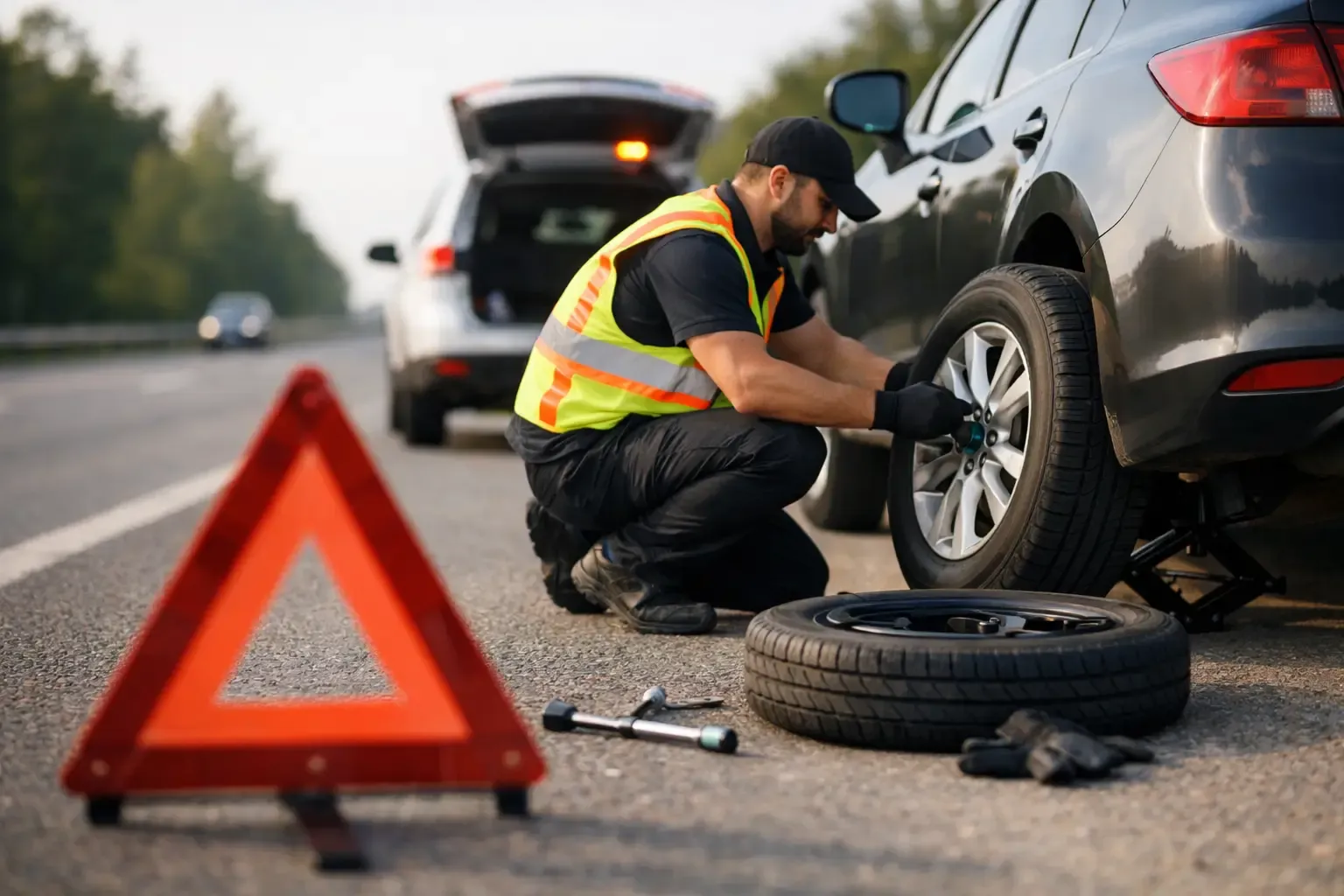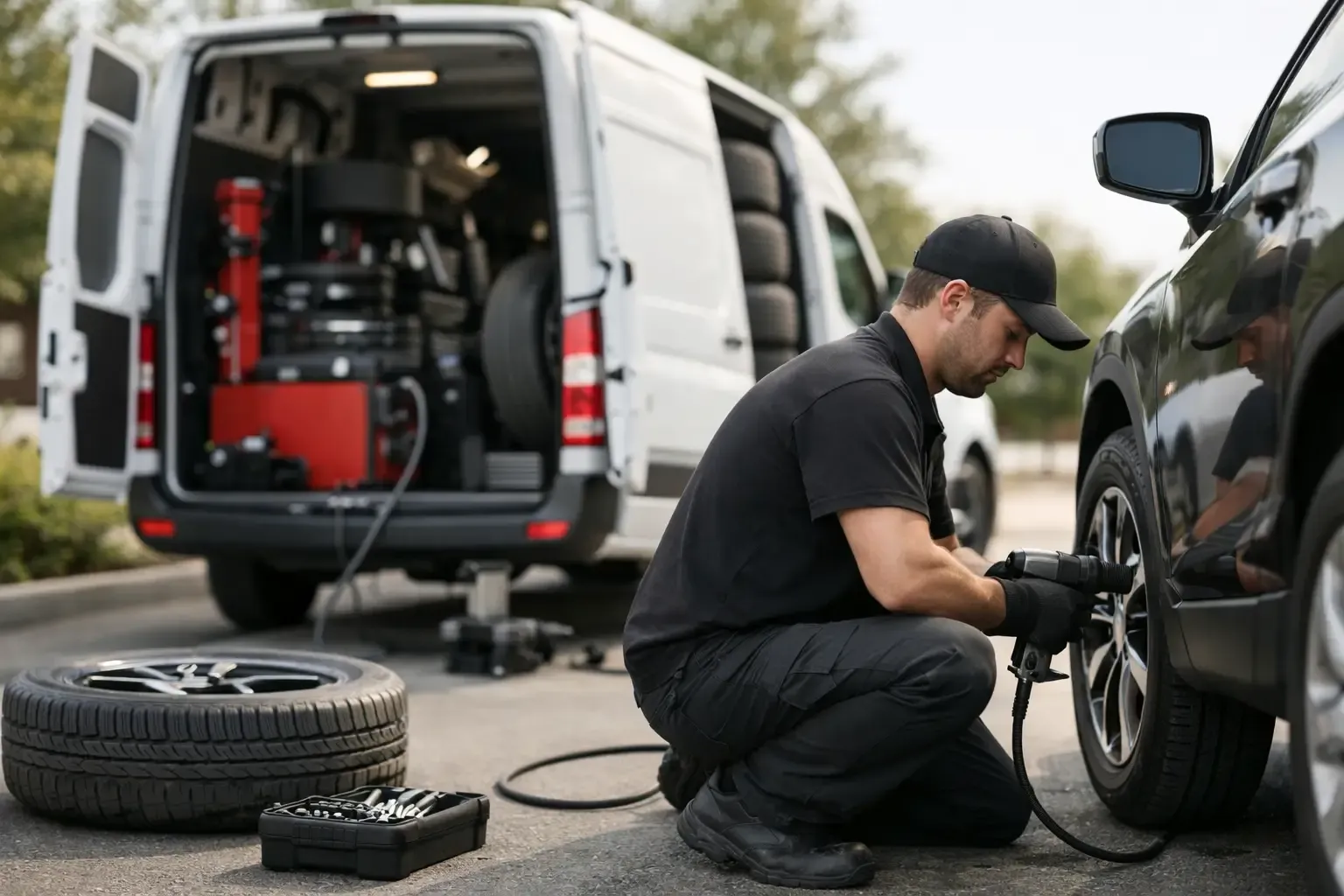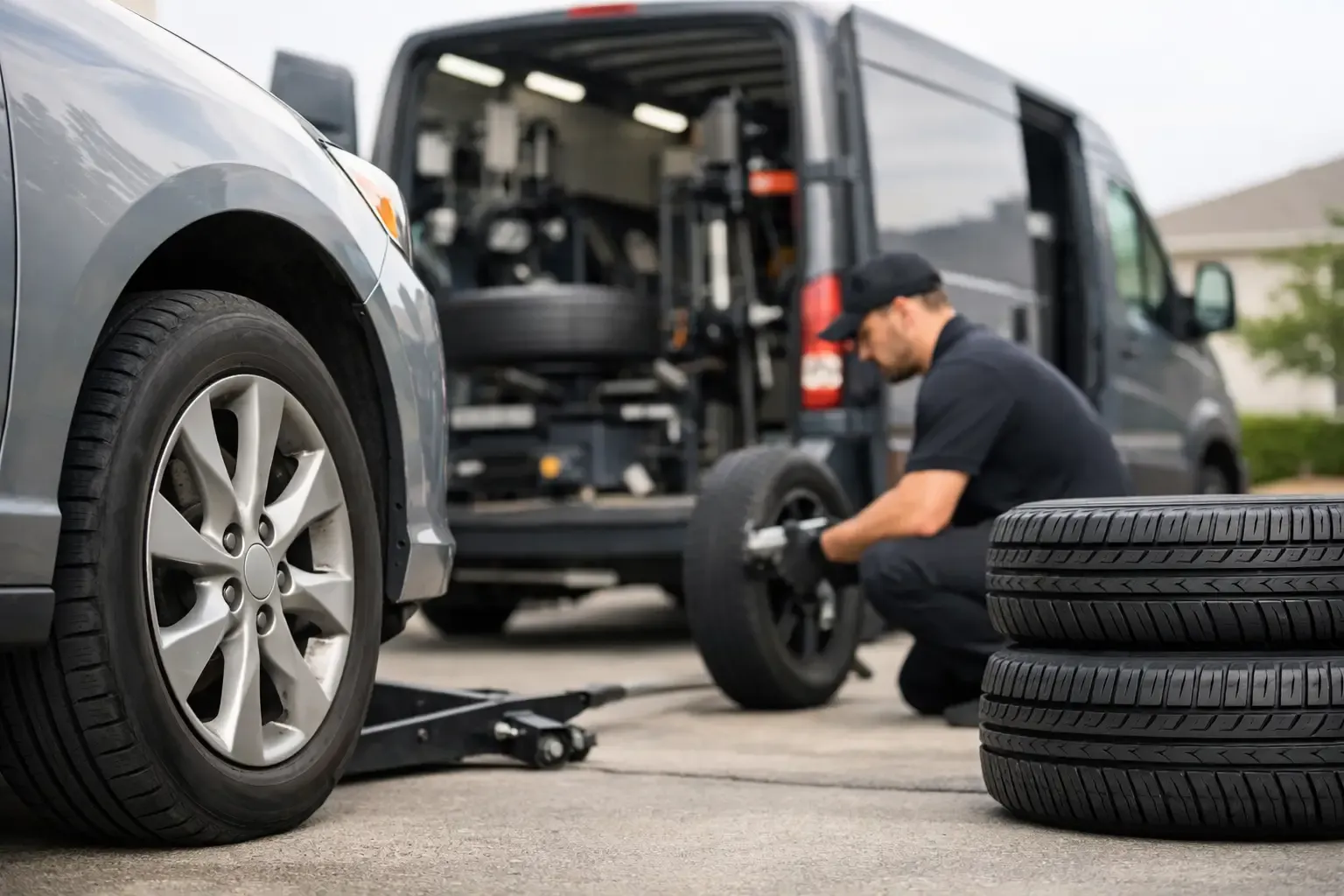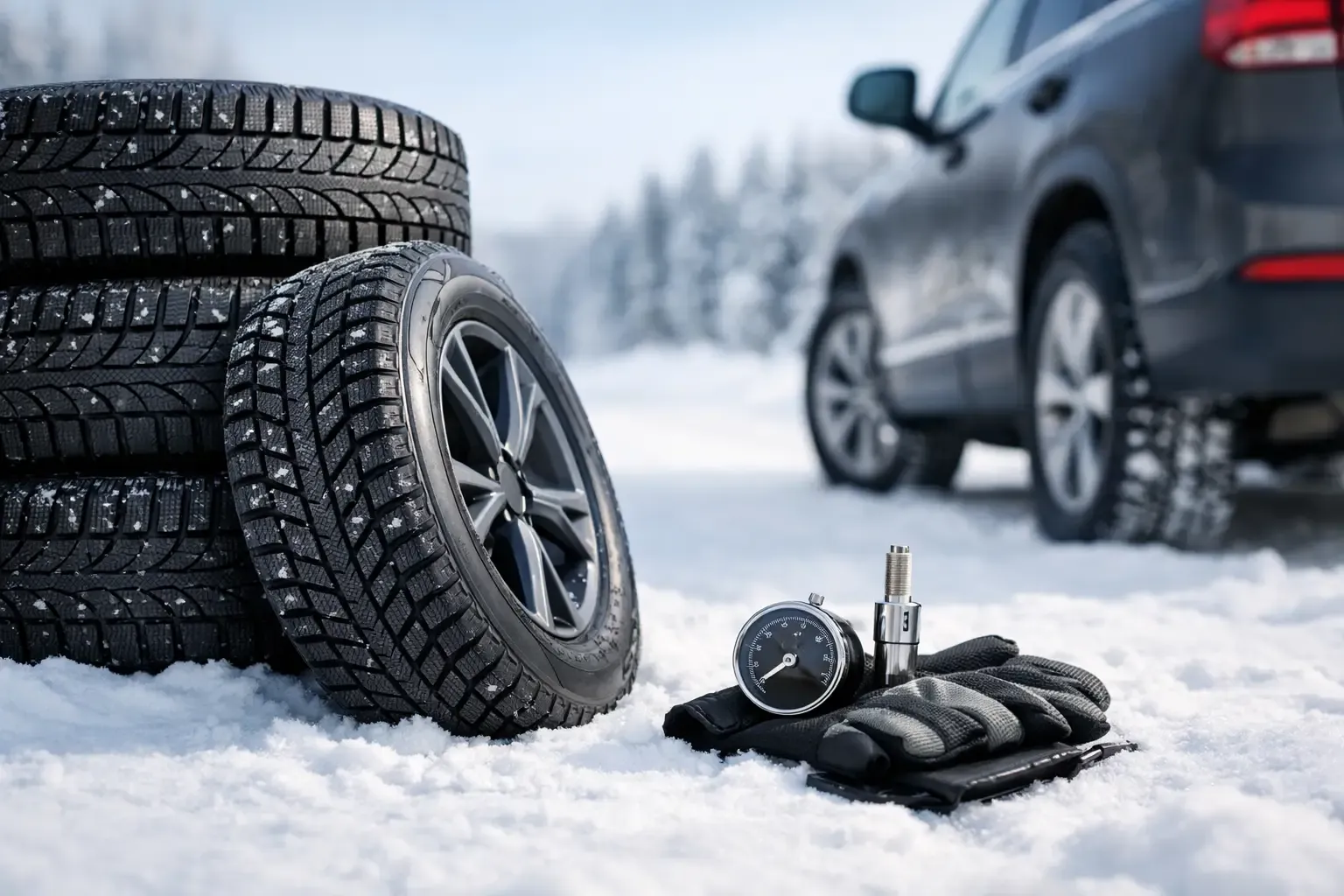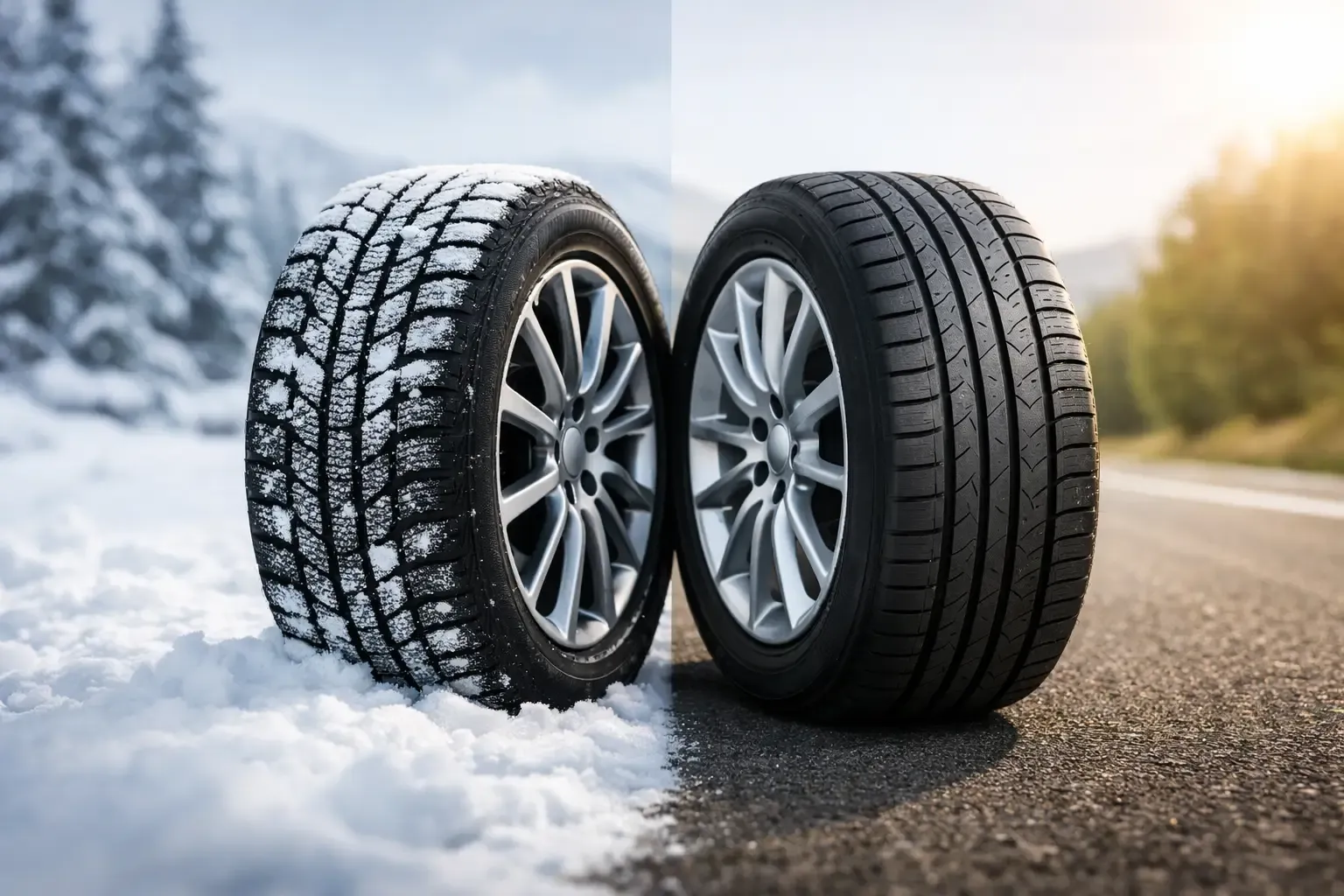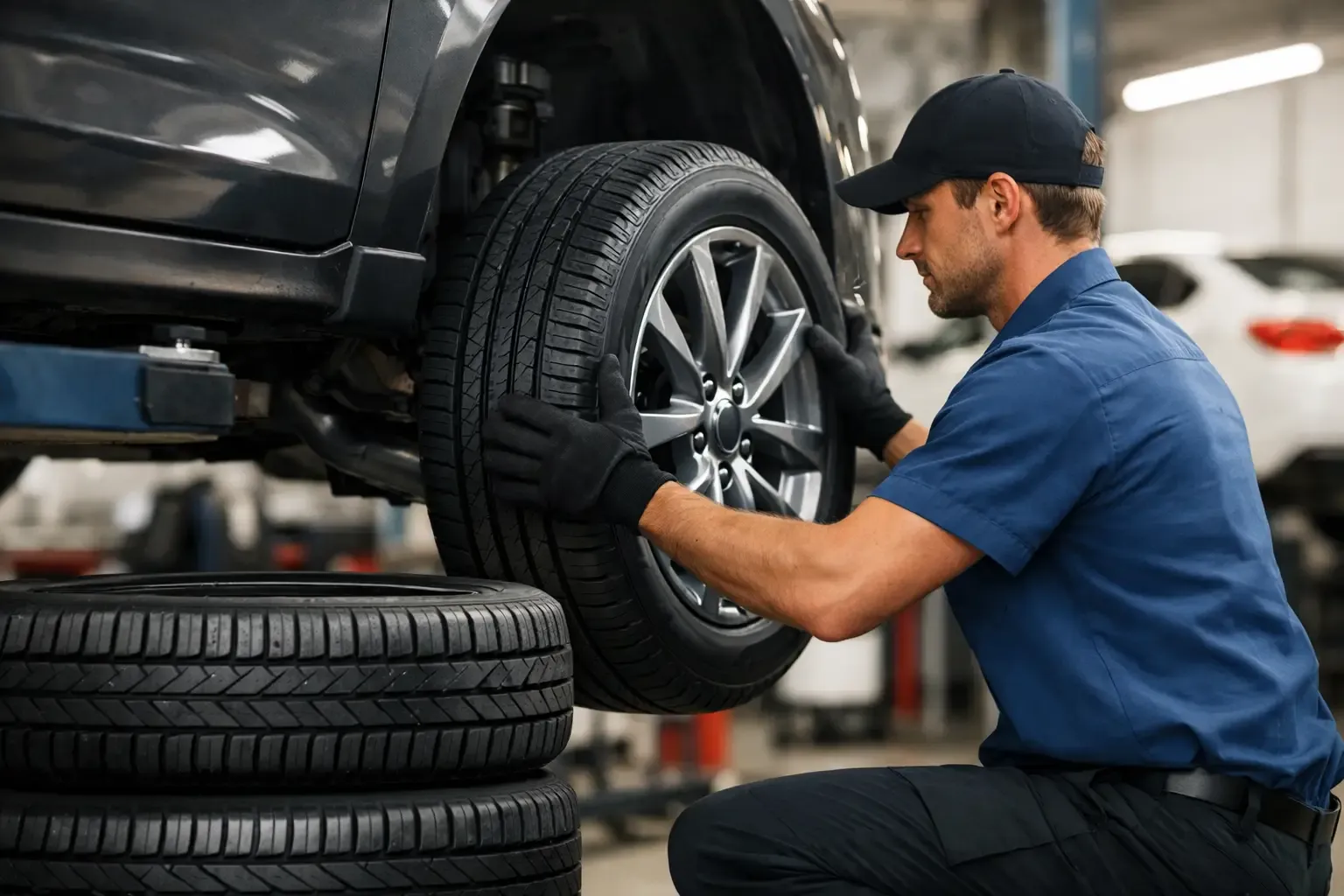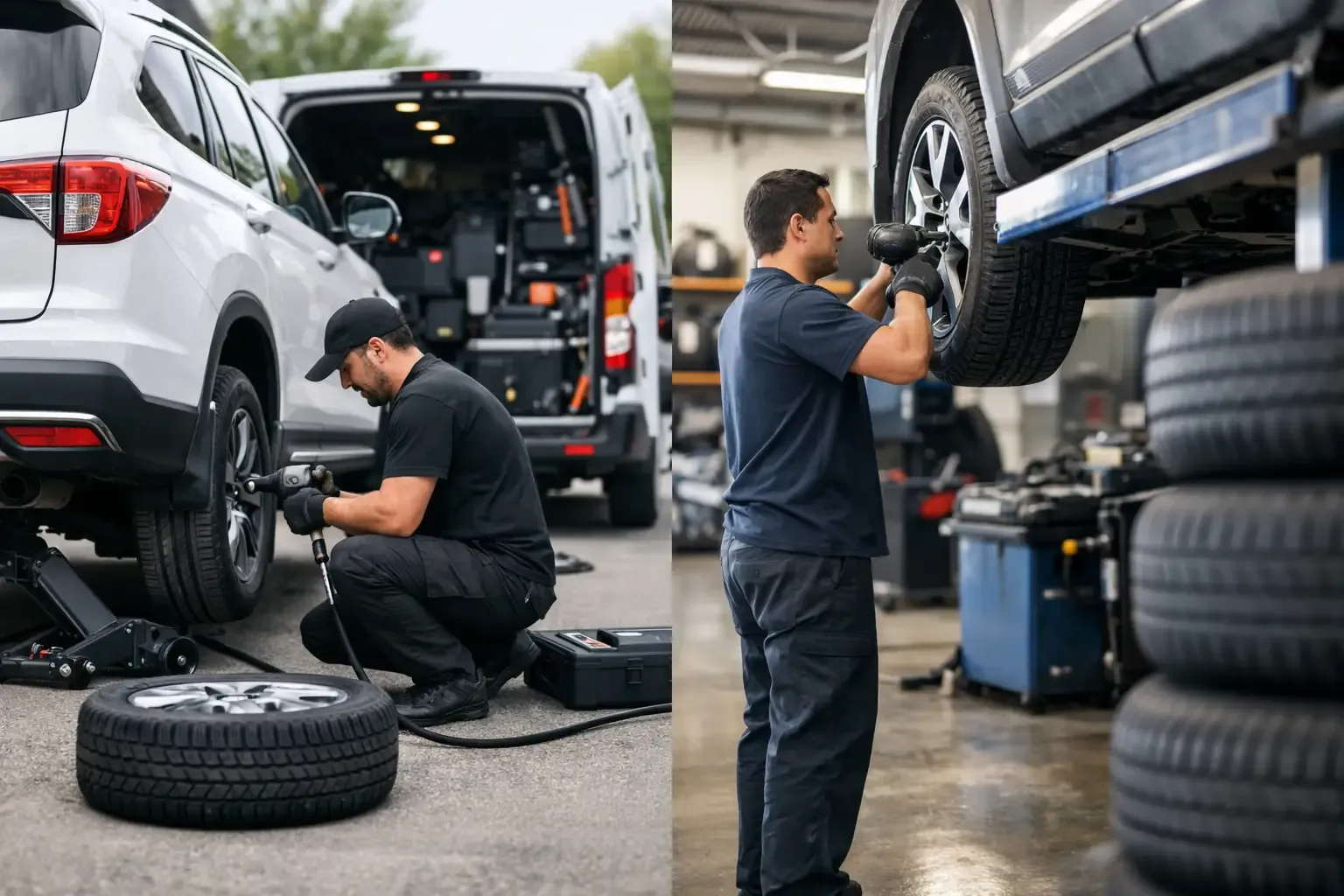

A flat tire on I-270, in an office parking lot, or in your own driveway creates the same immediate question: can this be fixed where the vehicle sits, or does it need a tow? In the roadside tire repair vs towing decision, the right answer depends on the tire damage, your location, and whether the vehicle can be made safe to drive.
For many common flats, mobile tire service is the faster, more practical option. A qualified technician can come to your location, inspect the tire, repair an eligible puncture or install a replacement, and help you get back on the road without spending hours waiting for a tow truck and then a tire shop. But some situations do require towing, and recognizing them protects both your vehicle and your safety.
When Roadside Tire Repair Is the Better Choice
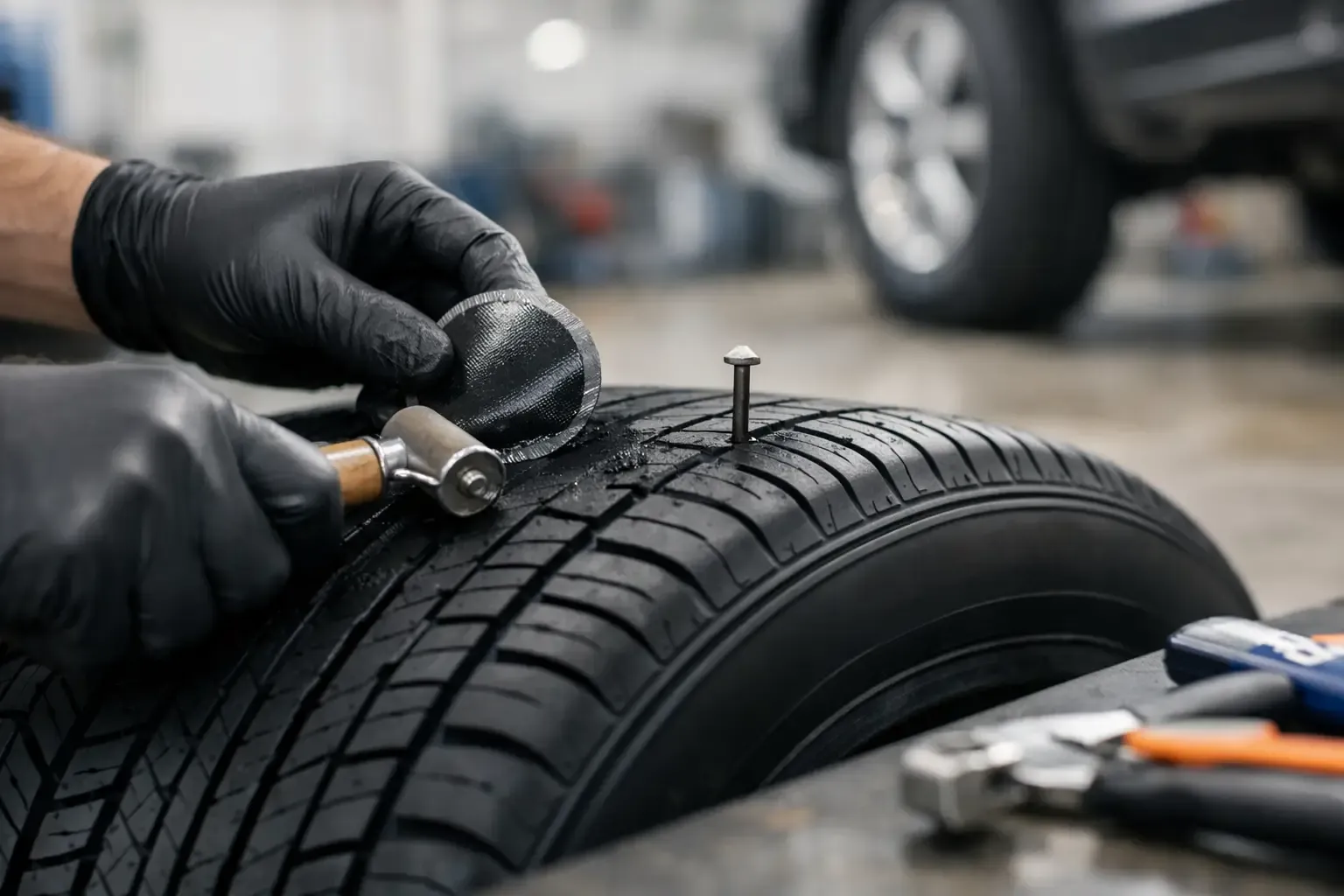
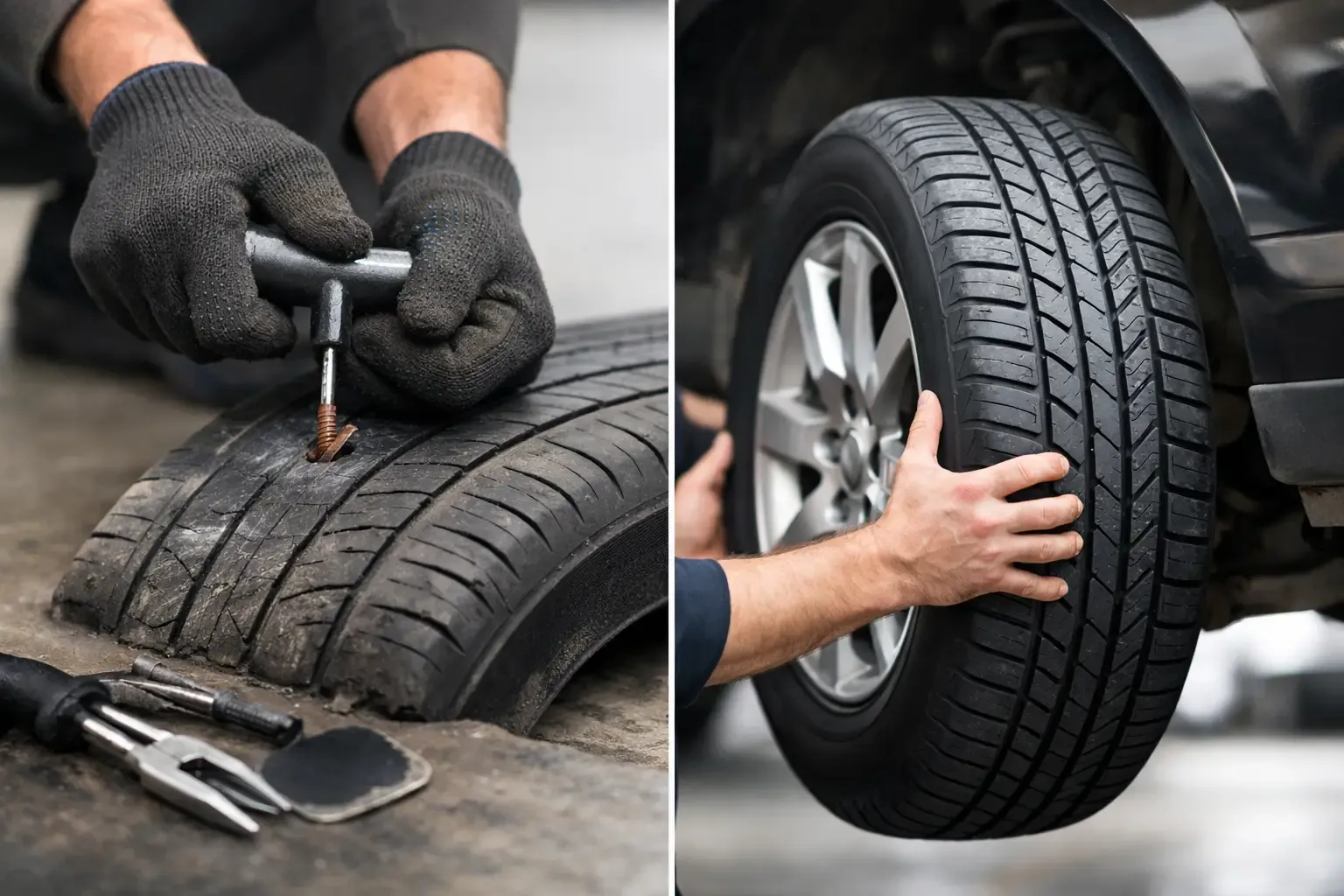
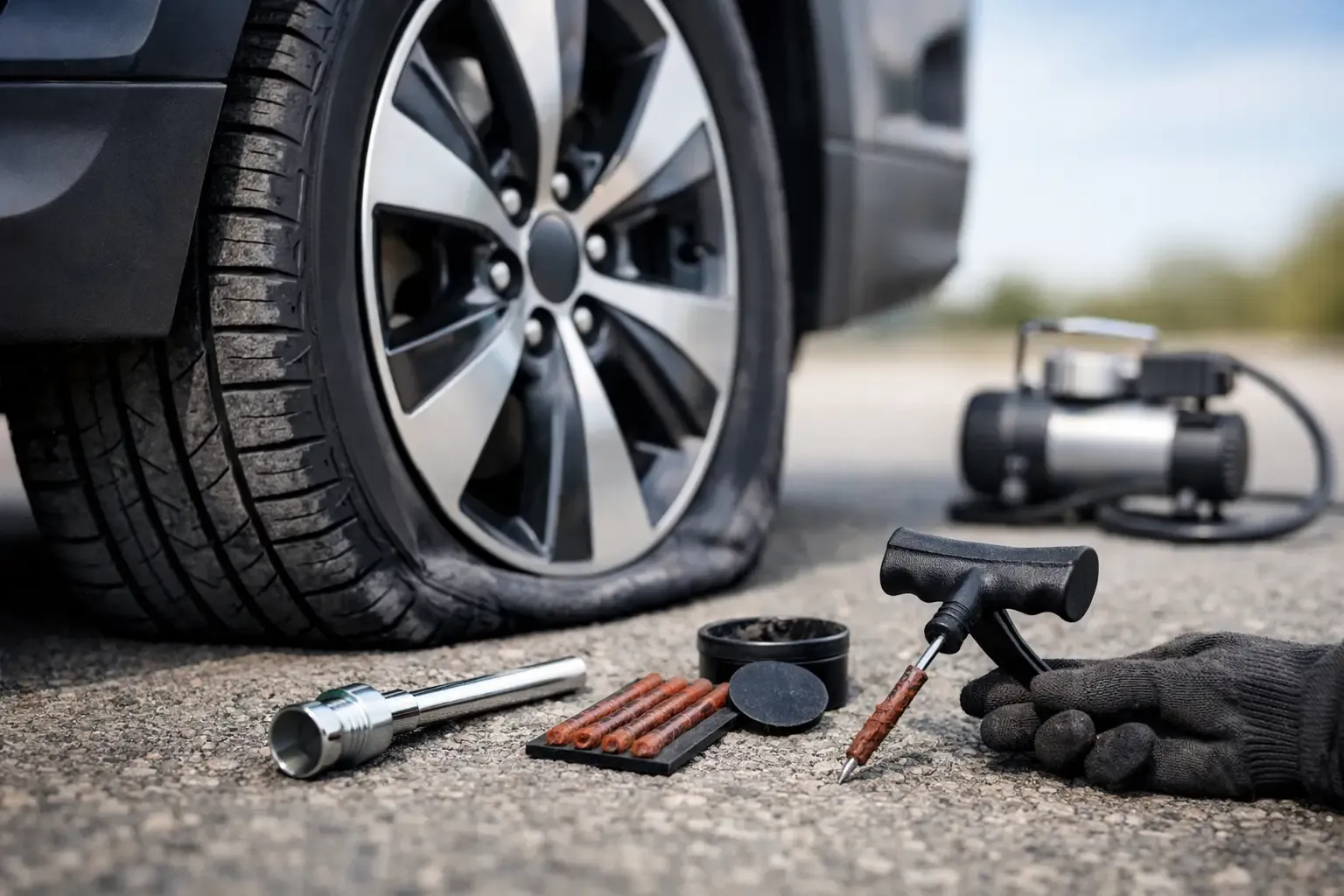
Roadside tire repair makes sense when the tire has a repairable puncture and the vehicle is parked or stopped in a reasonably safe location. The most common example is a nail or screw in the tread area. If the tire has not been driven flat for long, the internal structure may still be intact, allowing a technician to perform a proper repair after removing the tire and inspecting it from the inside.
A professional repair is more than putting a plug into the hole. The tire should be examined for hidden damage, then repaired with an industry-appropriate patch-and-plug method when it meets repair criteria. This helps seal the puncture path and supports a reliable return to service.
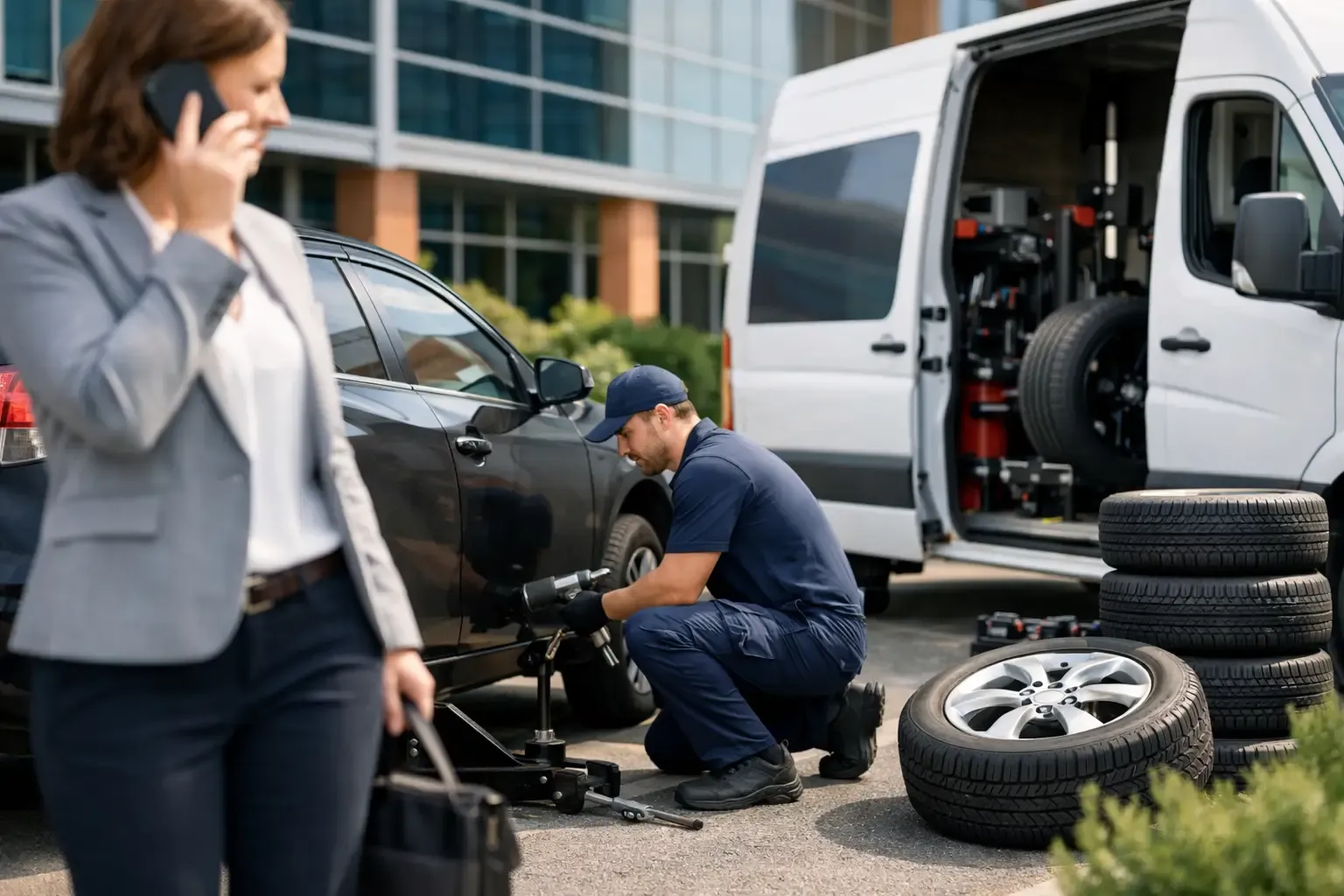
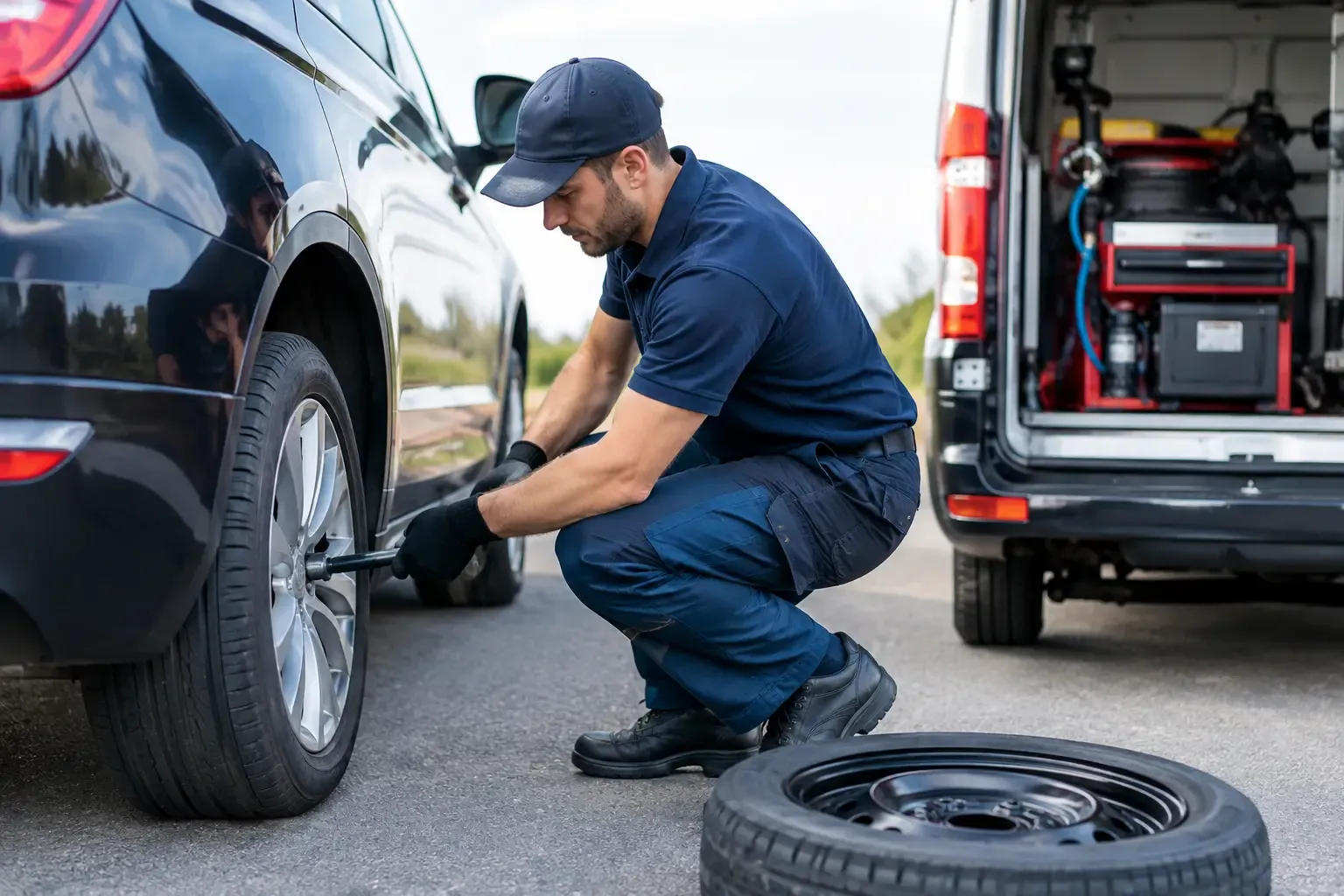
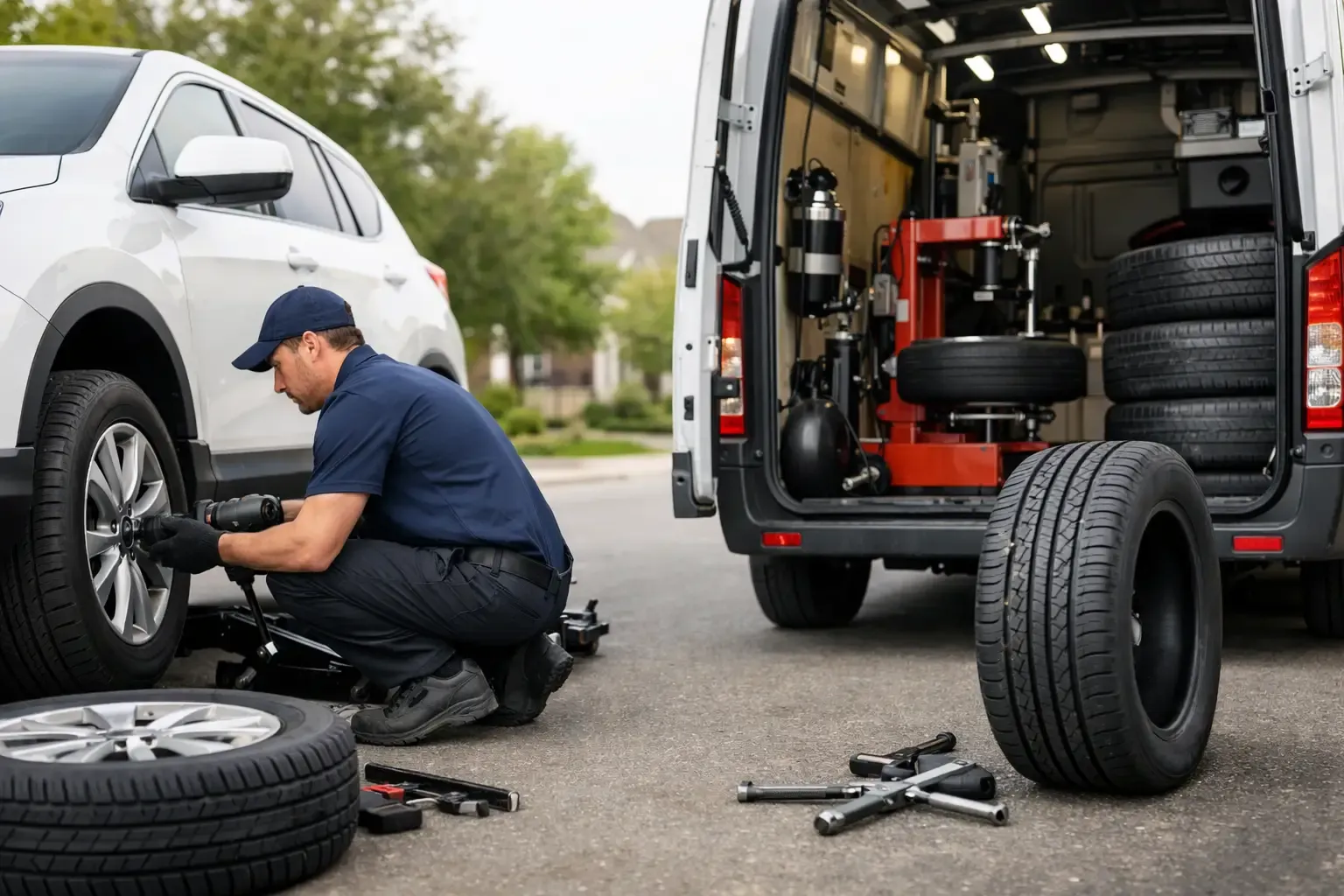
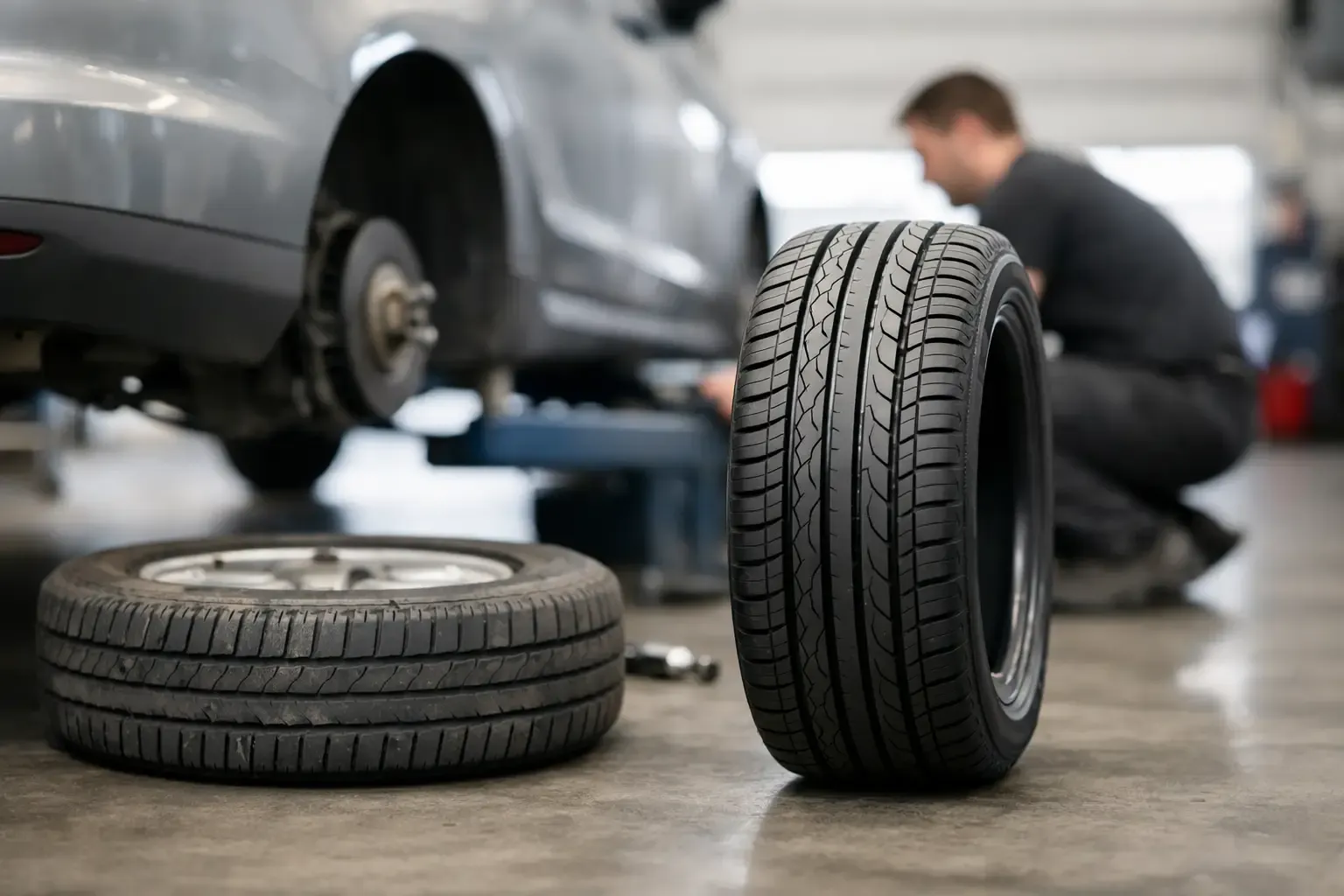
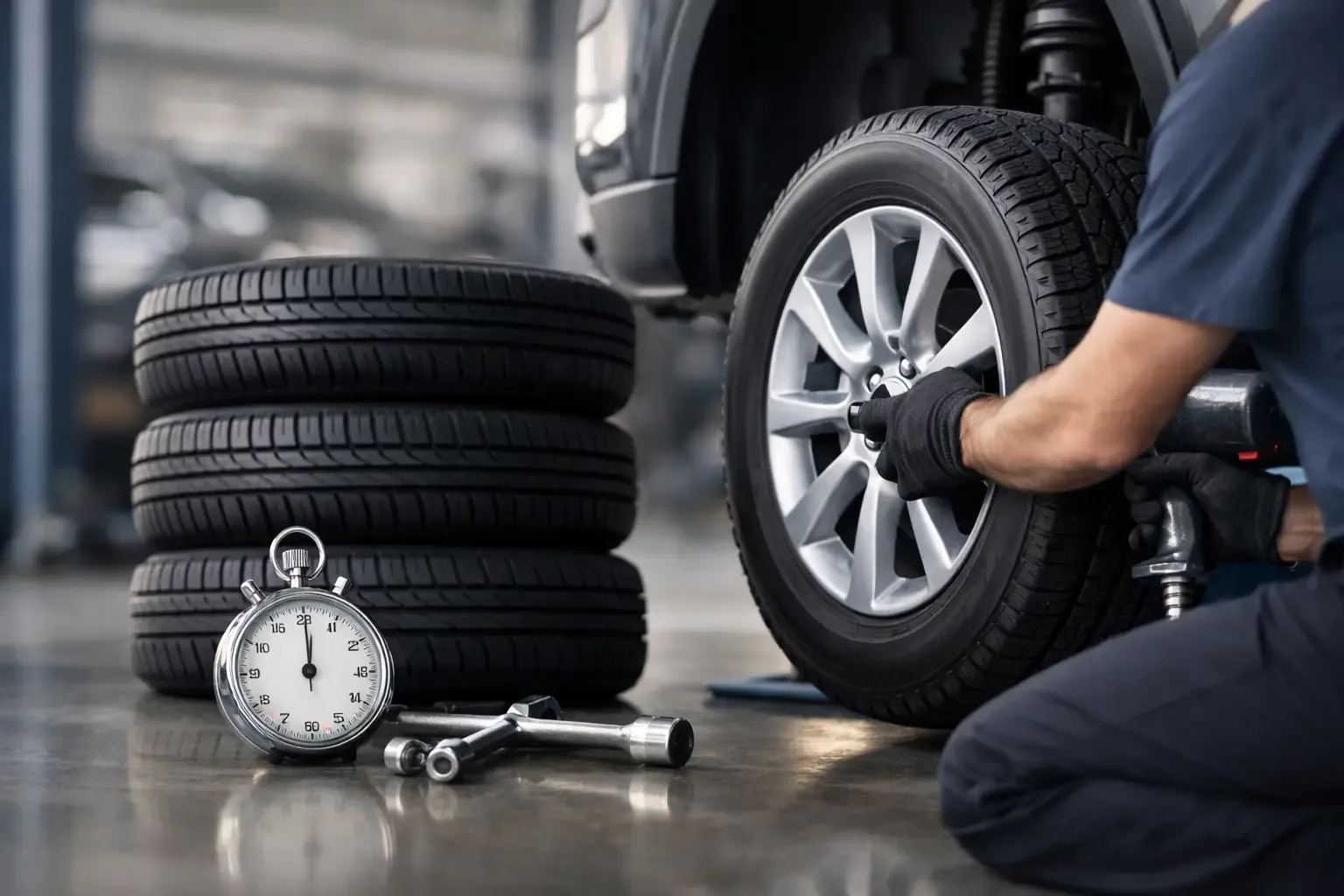
Mobile service is also a strong option when the tire cannot be repaired but the vehicle is otherwise in good condition. A technician can install a new tire at your home, workplace, or roadside location, balance it when appropriate, and reset the TPMS warning system if needed. That means your tire problem is handled where you already are, rather than becoming a tow, a ride home, and another appointment.
For busy Columbus-area drivers, that time savings is often the deciding factor. A flat before work does not always need to derail the entire day. If your vehicle is safely accessible, a mobile technician may be able to handle the issue while you work, manage the kids, or stay comfortably at home.
Signs Your Tire May Be Repairable
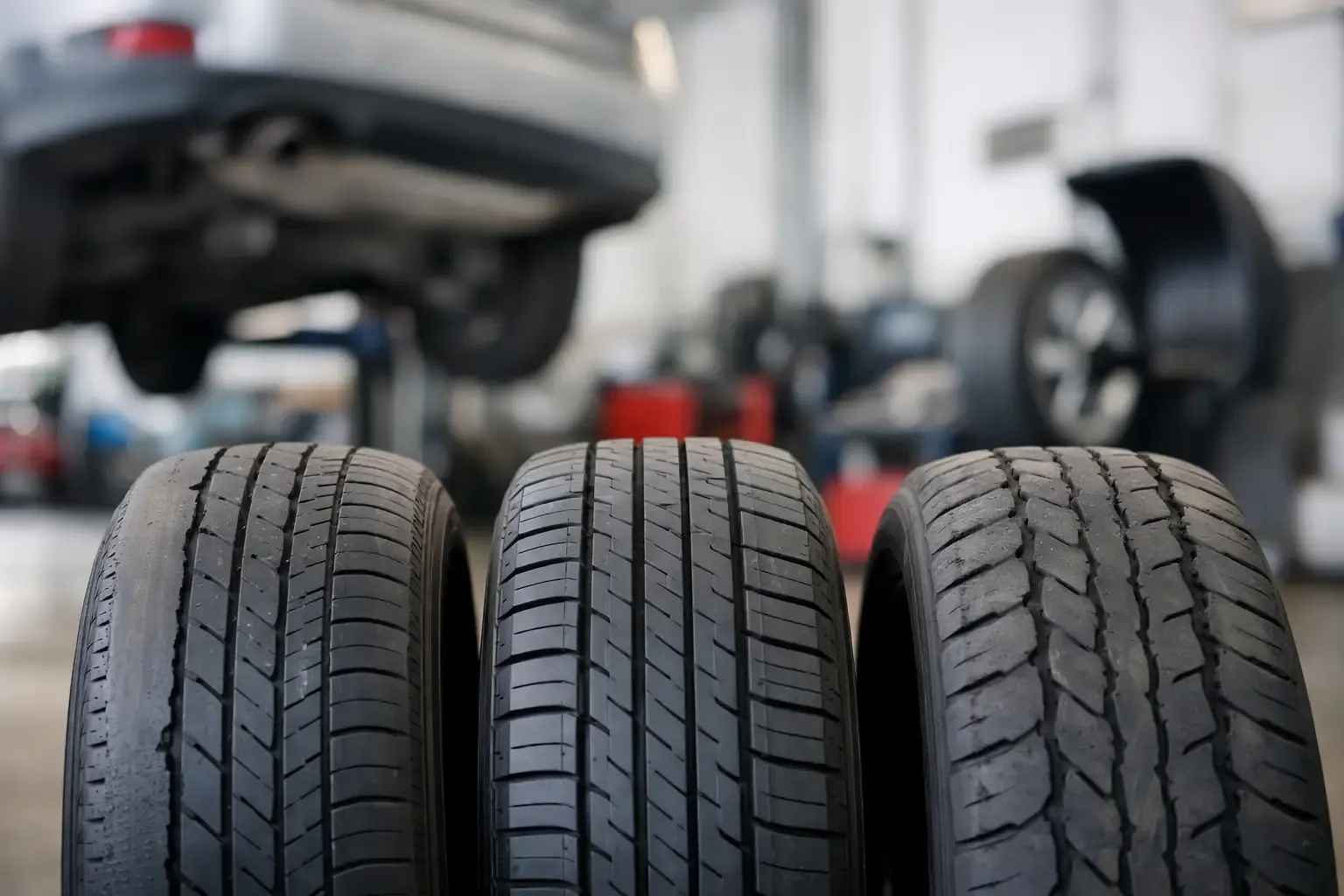
A tire is more likely to qualify for repair when the puncture is in the central tread, not in the sidewall or shoulder. The hole must be relatively small, and the tire should not show signs of being driven while severely underinflated. A technician will make the final call after inspection.
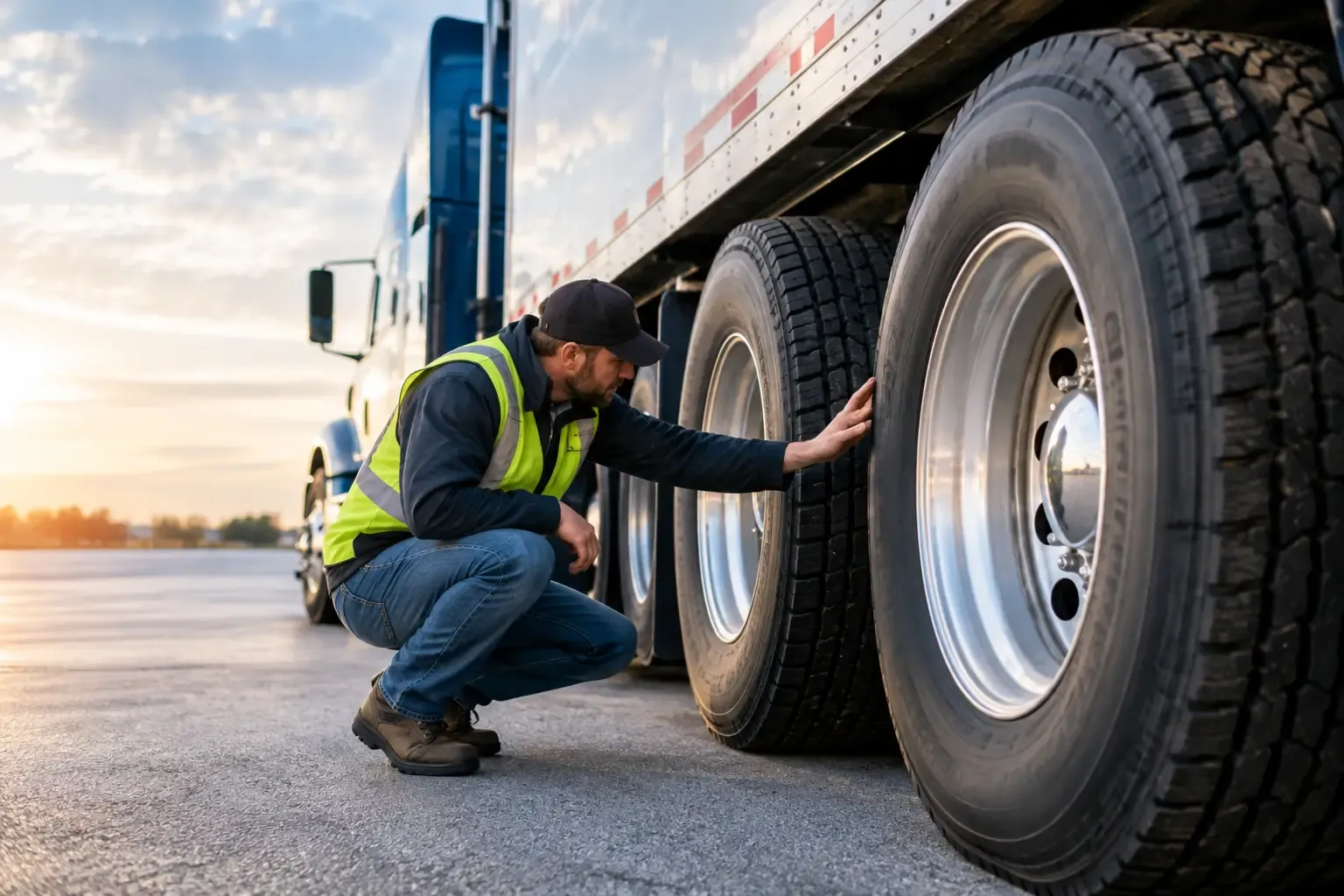
Do not assume a tire is safe simply because it holds air after being inflated. Slow leaks can worsen, and internal damage is not always visible from the outside. Prompt inspection gives you the best chance of preserving the tire and avoiding an unexpected failure later.
When Towing Is the Safer Decision
Towing is the better choice when driving the vehicle, even a short distance, could cause further damage or put people at risk. A tire with sidewall damage, a large tear, exposed cords, a damaged wheel, or evidence of extensive run-flat driving is not a roadside repair candidate.
Location matters just as much as tire condition. If your vehicle is stopped in an active traffic lane, on a narrow shoulder, around a blind curve, or in another hazardous spot, your first priority is getting to a safe place. Turn on your hazard lights, move away from traffic when it is safe to do so, and follow instructions from emergency responders or roadside assistance personnel. A mobile tire technician should not be expected to work in an unsafe traffic environment.
Towing may also be necessary if the vehicle has more than a flat tire. A collision, suspension damage, wheel bearing concern, steering issue, or engine problem changes the situation completely. Replacing the tire will not resolve a vehicle that cannot be safely operated.
If you are unsure whether you drove on a flat tire, be honest about it when you call for help. Driving even a short distance on a deflated tire can crush the sidewalls and damage the internal liner. In that case, replacement is often the safest recommendation, even when the original puncture appears minor.
Roadside Tire Repair vs Towing: Cost, Time, and Convenience
The roadside tire repair vs towing comparison is not only about the immediate service charge. It is about the full interruption to your day. Towing usually involves a wait for transport, a trip to a shop, possible time in a waiting room, and another plan for getting home or back to work if the shop cannot complete the repair right away.
Mobile tire service can eliminate several of those steps. When the repair or replacement can be done on-site, the vehicle stays where it is and you avoid coordinating a tow. That is particularly helpful for a flat in a driveway, apartment complex, office lot, or fleet yard.
Still, convenience should never outweigh safety. A reputable mobile service provider will tell you when a tire is not repairable or when the location is not safe for on-site work. Clear recommendations are better than a quick fix that leaves you with a bigger problem down the road.
What a Mobile Tire Technician Can Usually Handle
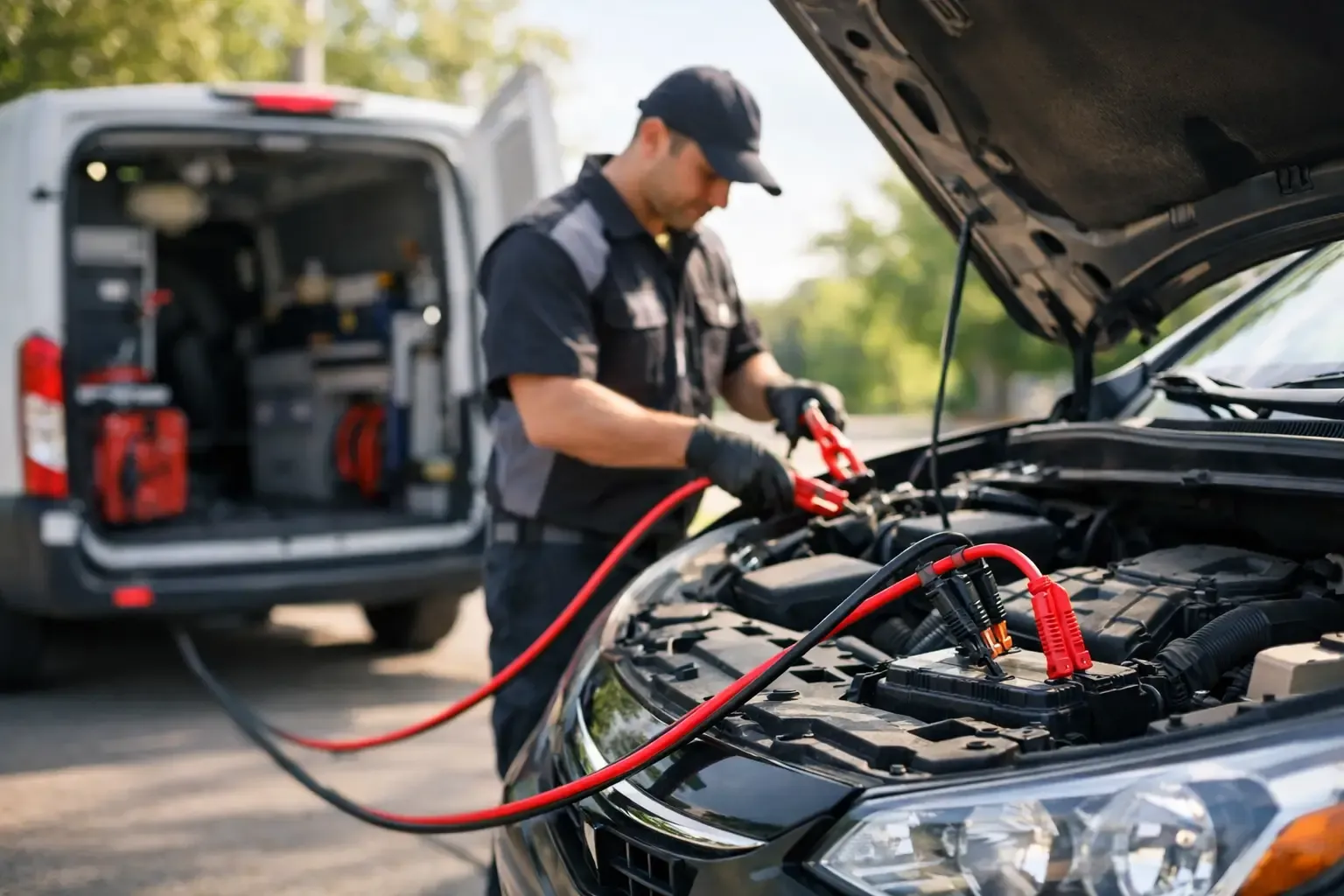
Depending on the condition of the vehicle and the service location, mobile tire professionals can address a range of common tire needs. This includes eligible flat repairs, spare tire installation, new tire installation, tire balancing, TPMS resets, and basic tire inspections. Some providers also offer battery jumpstarts, which can be useful when a vehicle has been sitting with a flat and a weak battery.
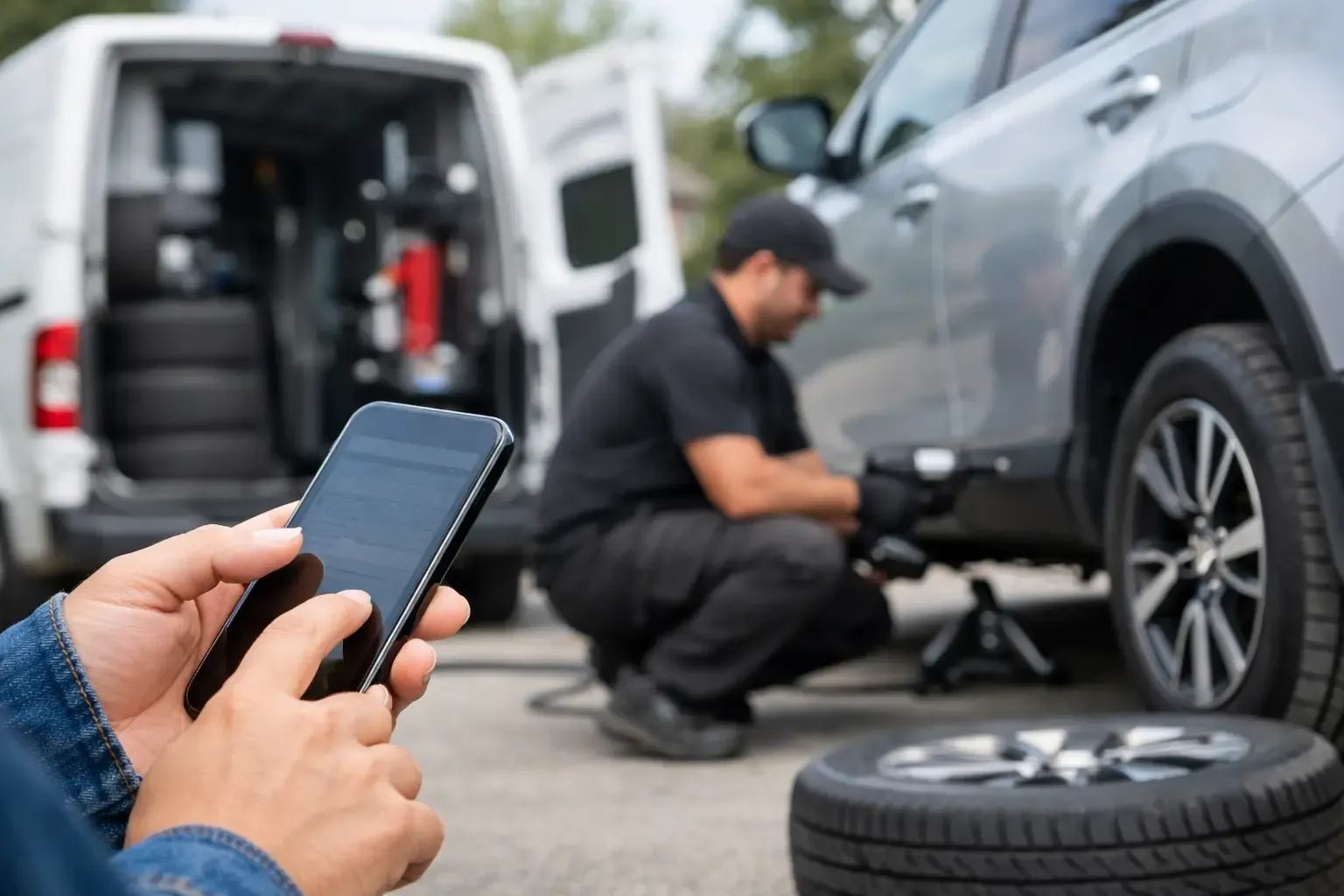
Before dispatching service, a technician or service coordinator will typically need your vehicle year, make, model, tire size, current location, and a description of the damage. Sharing photos of the tire can help, but photos do not replace an in-person inspection.
What to Do While You Wait for Help
If you notice a flat while driving, reduce speed gradually and avoid sharp steering or hard braking. Pull into a parking lot, side street, or other safe area if possible. Continuing to drive on a flat can turn a repairable tread puncture into a tire replacement.
Once stopped, turn on hazard lights and check your surroundings before leaving the vehicle. If you are on a busy roadway and cannot safely stand outside, remain inside with your seat belt fastened when conditions allow. Do not attempt to change a tire near fast-moving traffic unless the area is clearly safe and you are confident using the proper equipment.
Avoid using aerosol sealants unless there is no safer alternative and you understand the limitations. These products may provide a temporary solution, but they can complicate professional repairs and may not work on larger punctures or sidewall damage. A proper inspection remains the best next step.
A Simple Way to Make the Call
Choose roadside tire service when the vehicle is in a safe, accessible place and the issue appears limited to a flat or damaged tire. Choose towing when the vehicle is unsafe to drive, the tire or wheel has major damage, traffic conditions are dangerous, or another mechanical issue is involved.
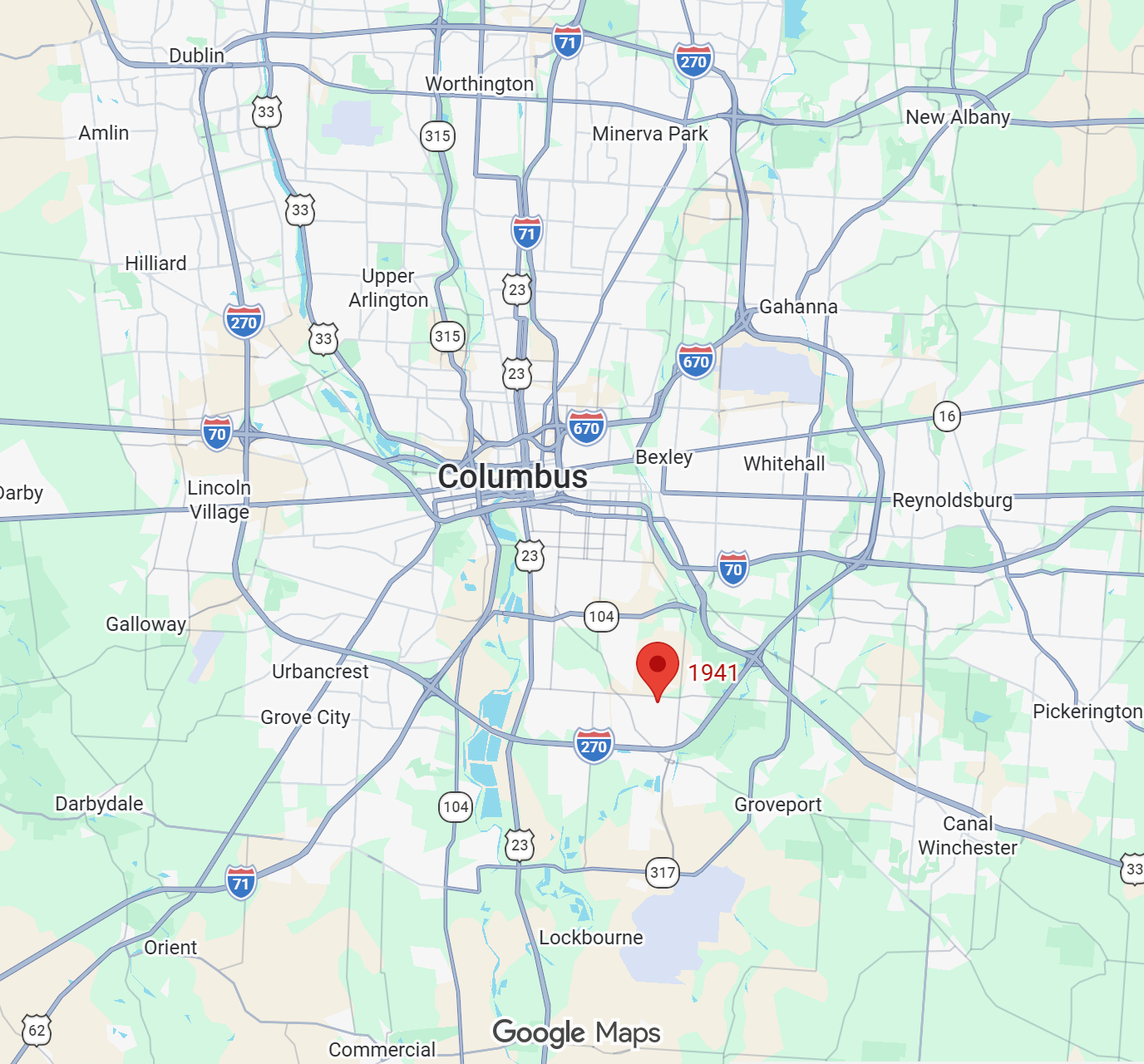
Elite Mobile Tire helps drivers throughout Columbus and nearby communities make that decision without guesswork. A professional assessment can determine whether an on-site repair, a replacement tire, a spare tire change, or a tow is the responsible next move.
A flat tire is frustrating, but it does not have to become an all-day disruption. Get the vehicle to a safe position, describe what happened clearly, and choose the service that gets you moving again without compromising safety.
Ready for a new set? Elite Mobile Tire installs 2 or 4 new tires right in your driveway or parking lot anywhere around Columbus, Obetz, Groveport, Grove City, and Reynoldsburg. Financing is available through Afterpay and Acima with up to 24-month payment plans. Call 614-344-5010 or visit elitemobiletire.com to book.