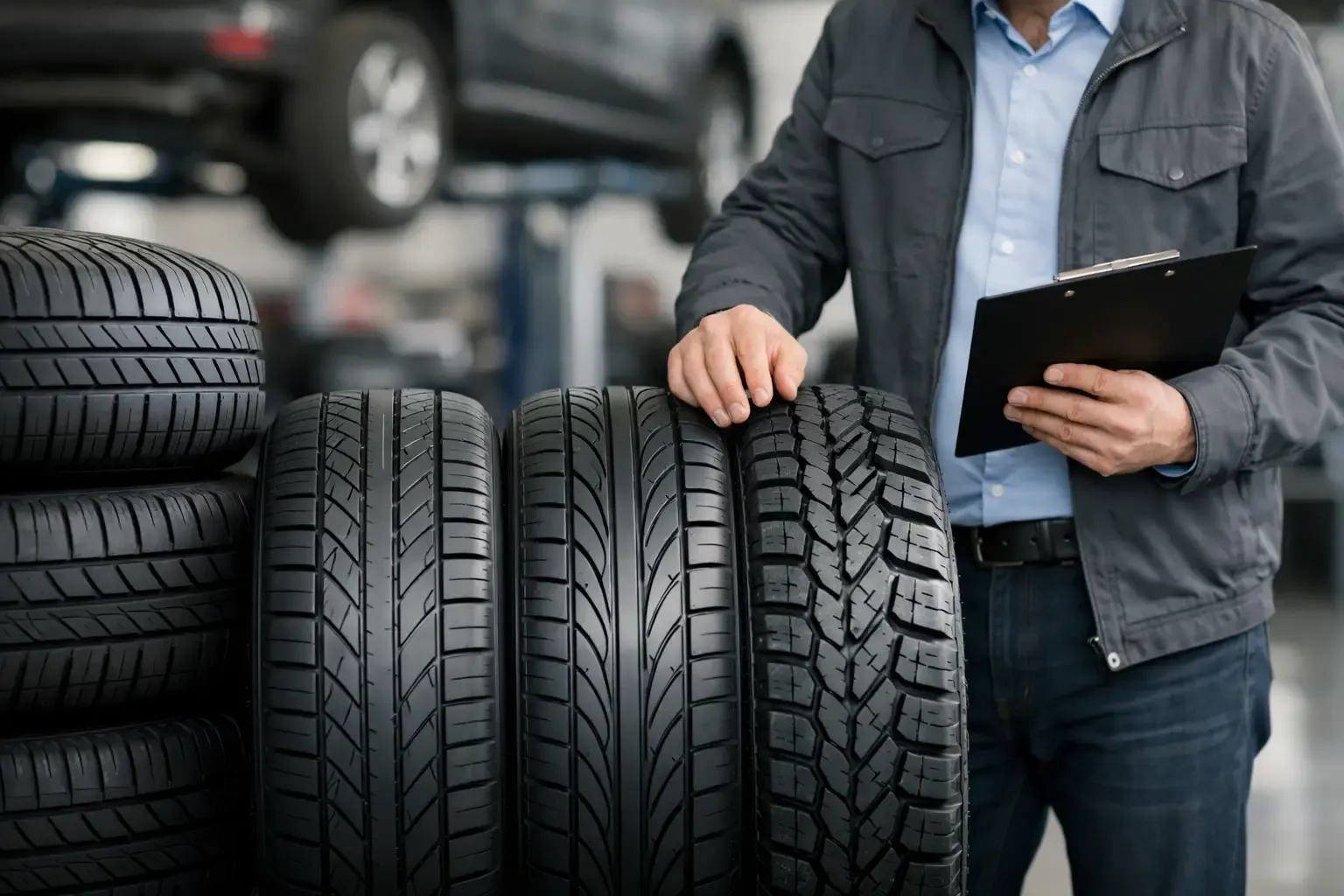
Every tire carries a short résumé printed right on its sidewall. Most drivers never read it until the day they need new tires and someone asks, "What size are you running?" Knowing how to read those markings saves time on the phone, helps you compare quotes fairly, and can reveal a problem the tread depth alone won't show you: a tire that's simply too old.
Here's a plain-English walk through the numbers, using a common example you might find on an SUV or crossover around Reynoldsburg or Hilliard: P225/65R17 102H.
Tire Size: The First String of Numbers
The size is the largest code on the sidewall, and it's the one you need when you book a replacement.
- P means P-metric, a passenger-vehicle tire. You may see LT (light truck) on pickups and heavier SUVs, or ST (special trailer) on travel trailers and campers. ST tires are made for trailers only and should not go on a tow vehicle.
- 225 is the section width in millimeters, measured sidewall to sidewall.
- 65 is the aspect ratio: the sidewall height is 65 percent of the width. Lower numbers mean a shorter, sportier sidewall.
- R means radial construction, which covers nearly every passenger tire sold today.
- 17 is the wheel diameter in inches. The new tire has to match your wheel exactly.
Load Index and Speed Rating
Right after the size you'll find a number and a letter, like 102H. The number is the load index, a code for how much weight each tire can carry at its maximum pressure. The letter is the speed rating, the top sustained speed the tire is engineered for (H is 130 mph, V is 149 mph, T is 118 mph).
Replacement tires should meet or exceed the load index and speed rating your vehicle manufacturer specifies on the door-jamb placard or in the owner's manual. This matters most on pickups like the F-150 and Silverado, and on RVs and campers that carry heavy loads down I-71 or US-33 for a weekend trip. Going lower on load capacity to save on a tire is a bad trade.
The DOT Code: How Old Are Your Tires?
Look for the letters DOT followed by a string of numbers and letters. The last four digits are the build date: the first two are the week, the last two are the year. A tire stamped 2523 was made in the 25th week of 2023. The code is sometimes printed only on one side of the tire, so you may need to look at the inner sidewall.
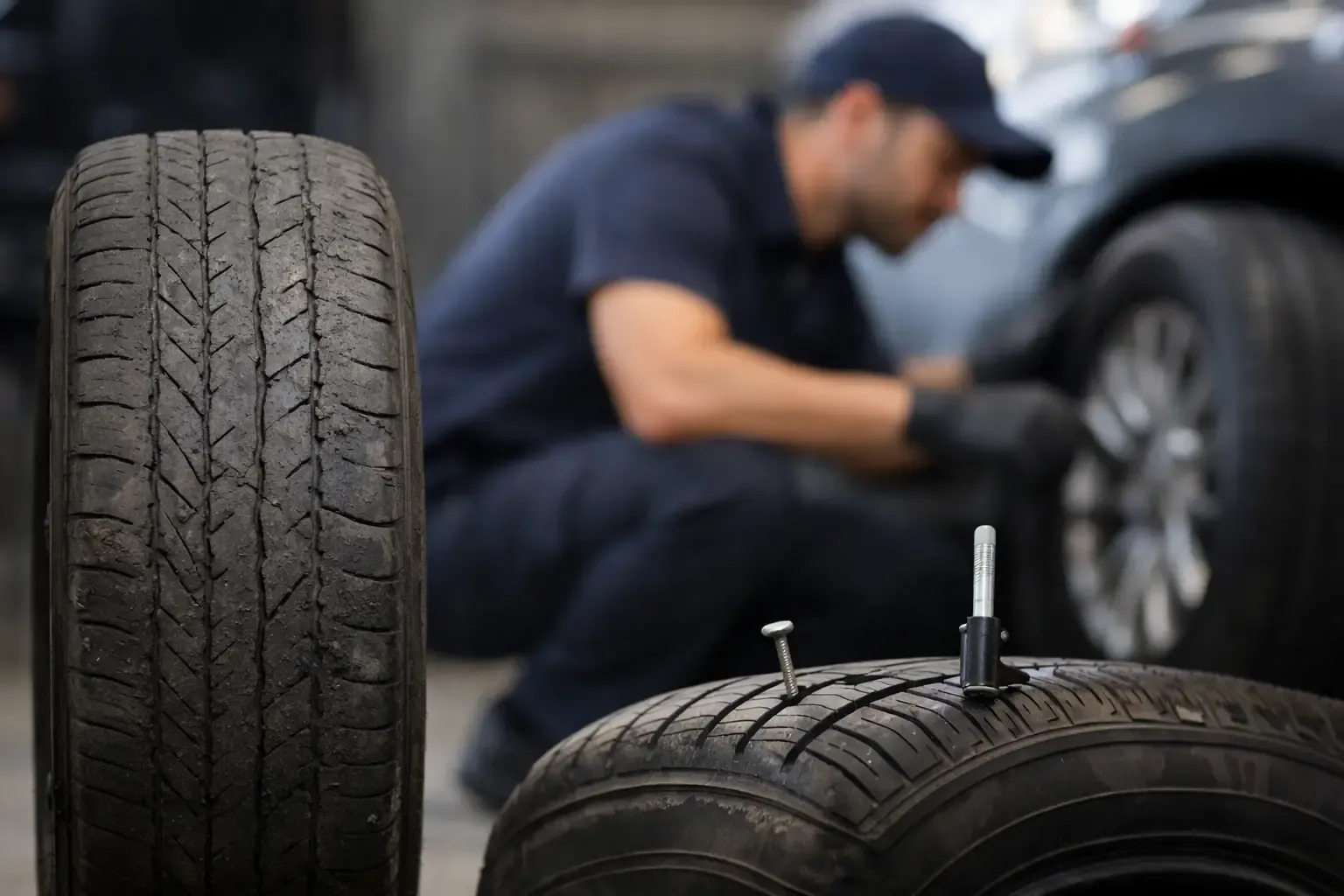
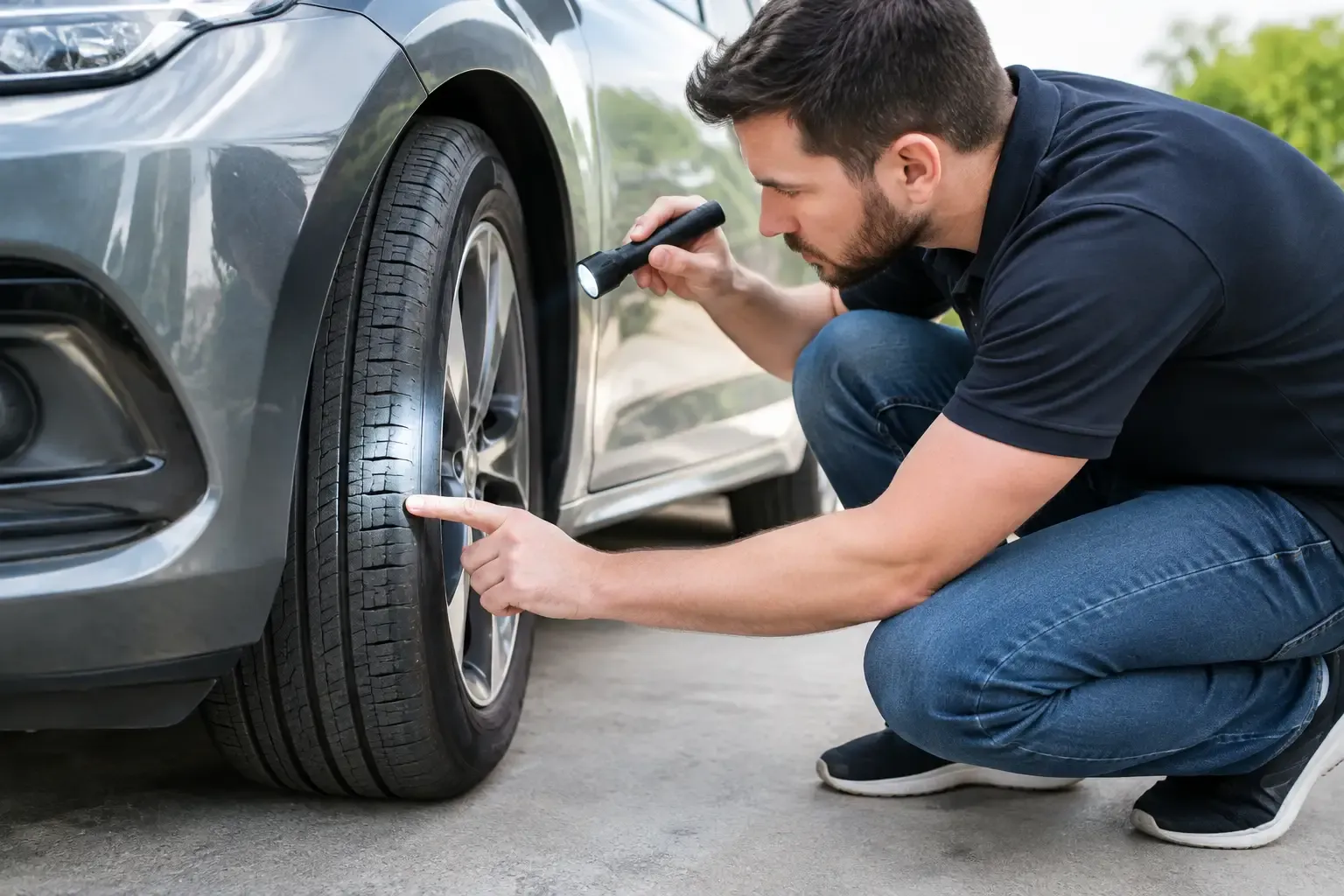
Rubber ages even when a tire sits unused, and that's a real concern for RVs, campers, trailers, and spare tires that don't see many miles. Many vehicle and tire manufacturers recommend having older tires inspected regularly and replacing them after a set number of years regardless of tread, so check your owner's manual and the tire maker's guidance. Cracking in the sidewall or between tread blocks is a sign age is catching up.
Checking the date on all four tires also helps when you're deciding whether to replace two or four. If the other three tires are the same age and close to the end of their life, replacing the full set in one visit usually makes more sense than coming back in a few months.
Maximum Pressure Is Not Your Pressure
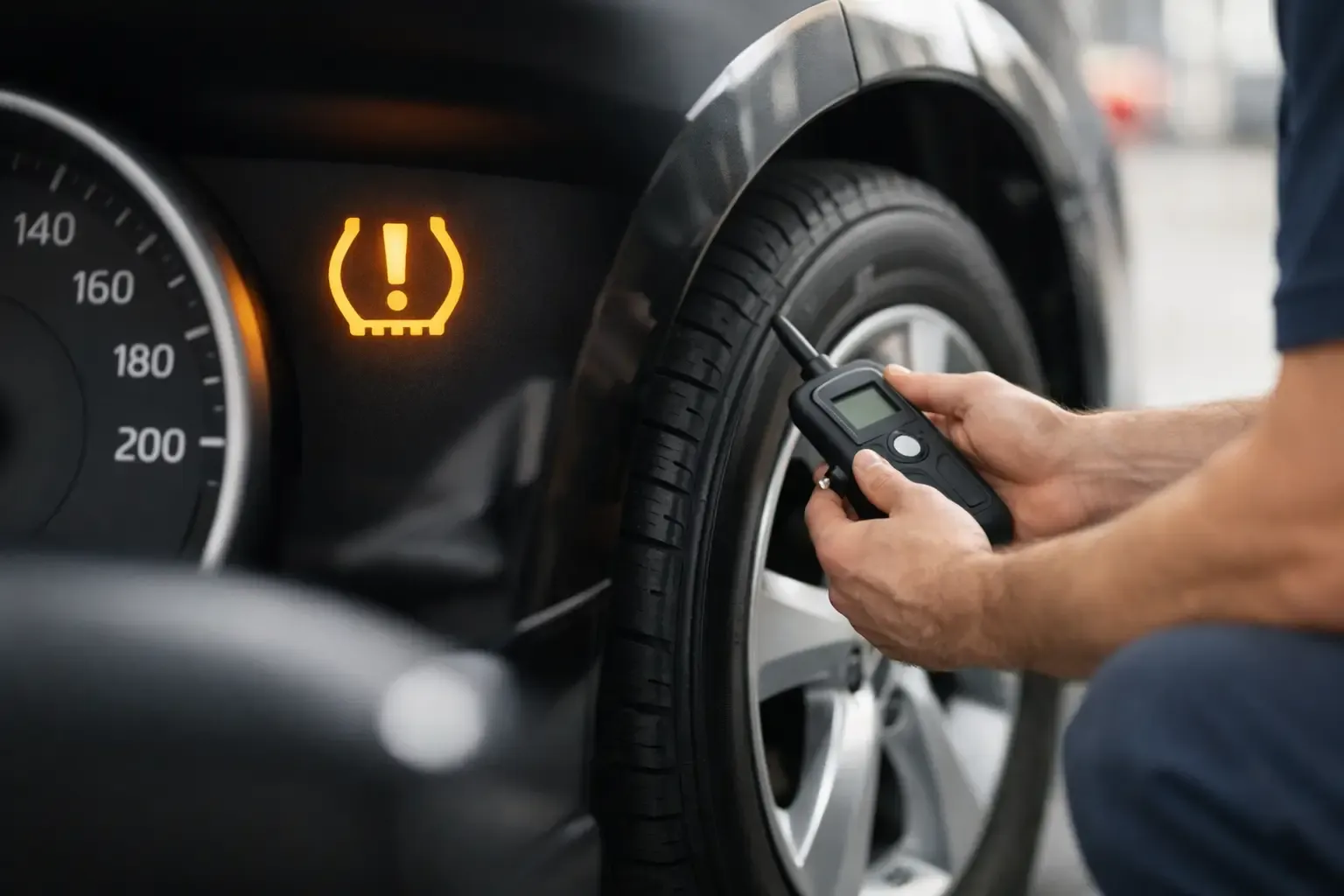
The sidewall lists a maximum inflation pressure. That is the most the tire can safely hold, not the number you should fill it to. Your correct pressure is on the placard inside the driver's door jamb. Filling to the sidewall maximum makes the ride harsh and reduces grip, especially on wet pavement along I-270.
Other Markings Worth Knowing
- UTQG ratings (on most passenger tires): treadwear is a relative number for comparing tires, not a mileage promise. Traction is graded AA, A, B, or C, and temperature A, B, or C.
- M+S means the tread design meets a mud-and-snow standard. It's common on all-season tires.
- Three-peak mountain snowflake means the tire passed a severe-snow traction test. You'll see it on winter tires and many all-weather tires, which is worth knowing before an Ohio winter.
- Ply and load range (on LT and ST tires): letters like E indicate a heavier-duty construction for trucks, trailers, and campers.
Use the Sidewall to Get the Right Set Faster
When you call for tires, snap a photo of the sidewall or read off the size, load index, and speed rating. That's all a technician needs to quote and bring the right tires to your driveway or workplace. If you're not sure your current tires are even the correct size for your vehicle, compare them to the door-jamb placard, since previous owners sometimes install the wrong size.
For more on tire safety, recalls, and how to check whether your tires are part of a recall by their identification number, see the NHTSA tire safety page and the NHTSA recall lookup.
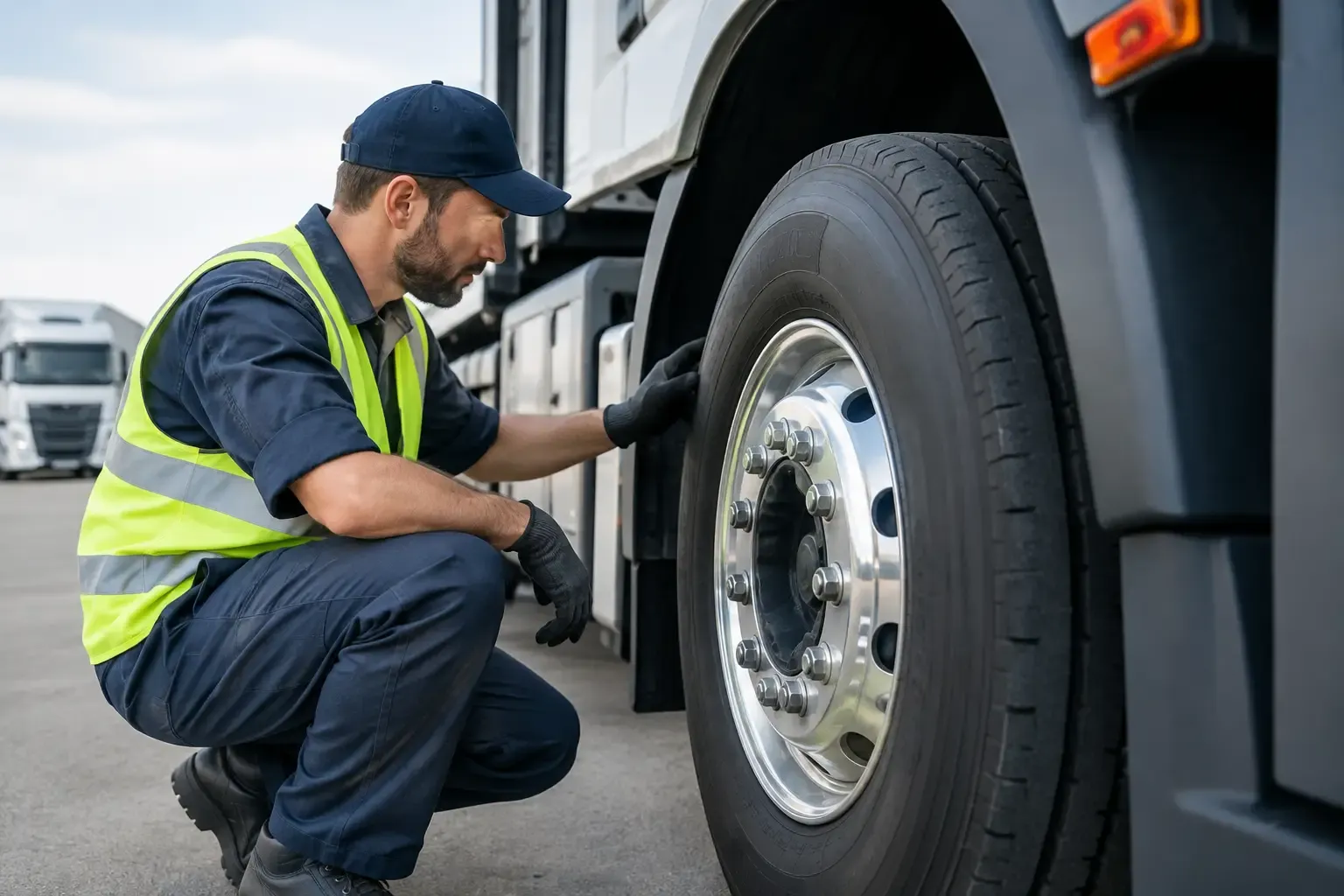
Hauling a camper or running a work truck? We handle those too. See our RV and camper tire service and semi truck and commercial tire service.
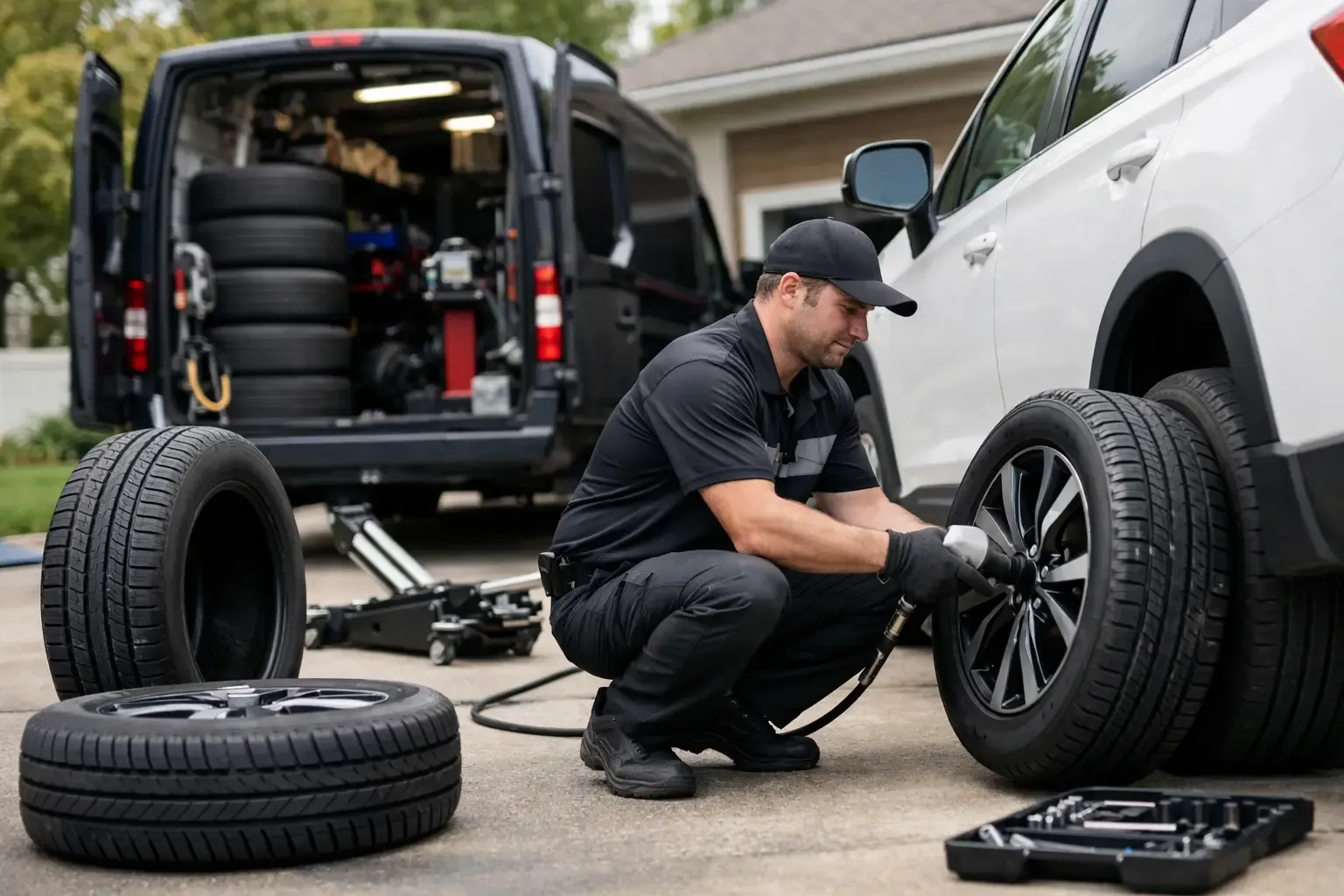
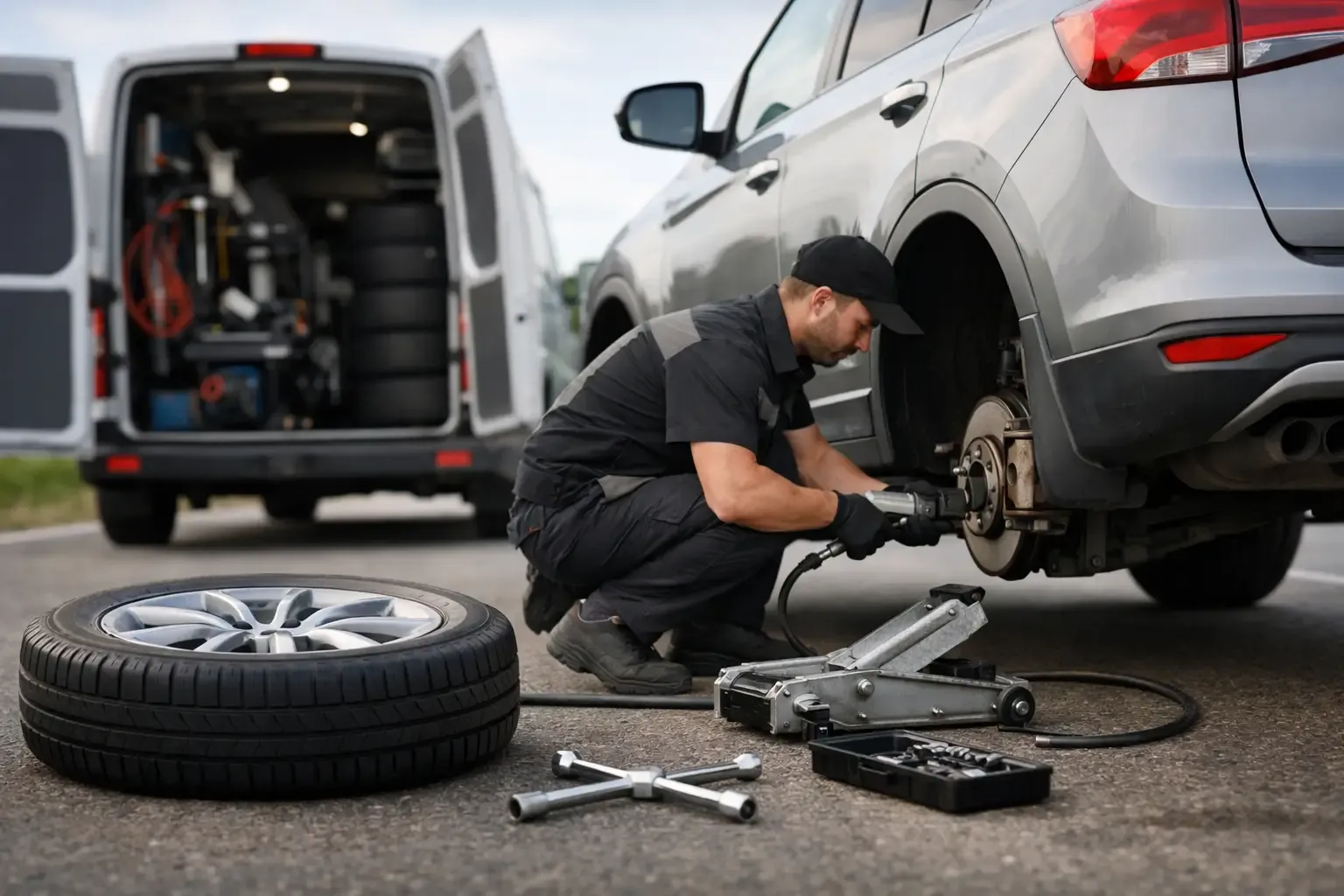
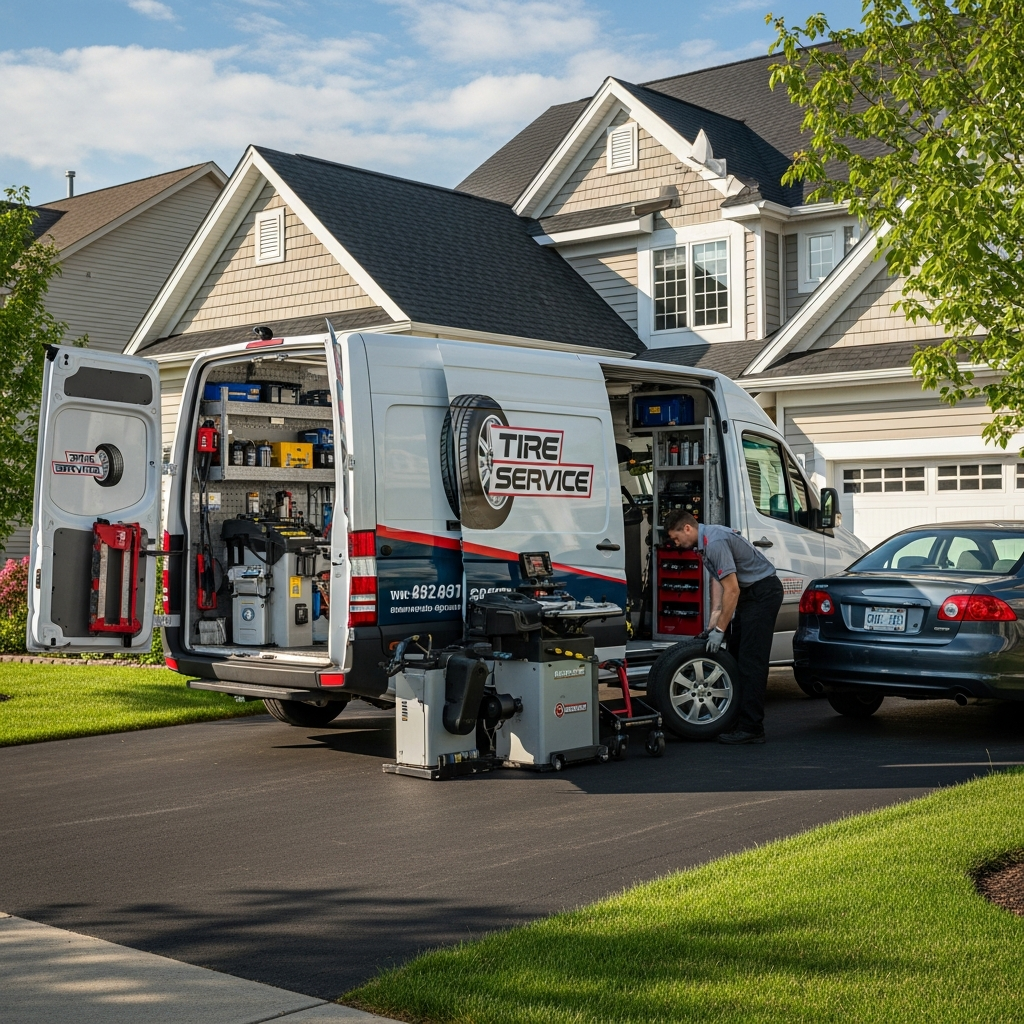
Ready for a new set? Elite Mobile Tire installs 2 or 4 new tires right in your driveway or parking lot anywhere around Columbus, Obetz, Groveport, Grove City, and Reynoldsburg. Financing is available through Afterpay and Acima with up to 24-month payment plans. Call 614-344-5010 or visit elitemobiletire.com to book.