What the Cost of Mobile Tire Balancing 2026 Actually Covers
Our price: mobile tire balancing at Elite Mobile Tire is around $50 per tire, done at your home, work, job site or roadside anywhere around Columbus. The rest of this guide explains what goes into that number and what to ask any provider before you book.
The cost of mobile tire balancing in 2026 is not a single line item: it bundles labor, equipment, travel, and materials into one quoted price. Elite Mobile Tire provides transparent upfront pricing with no hidden fees.
Balancing vs. Mounting: Two Separate Line Items
Tire mounting is the physical act of seating a tire onto a wheel and sealing the bead so it holds air. Wheel balancing is the separate process of measuring weight distribution around the assembled wheel and attaching small weights to correct any imbalance.
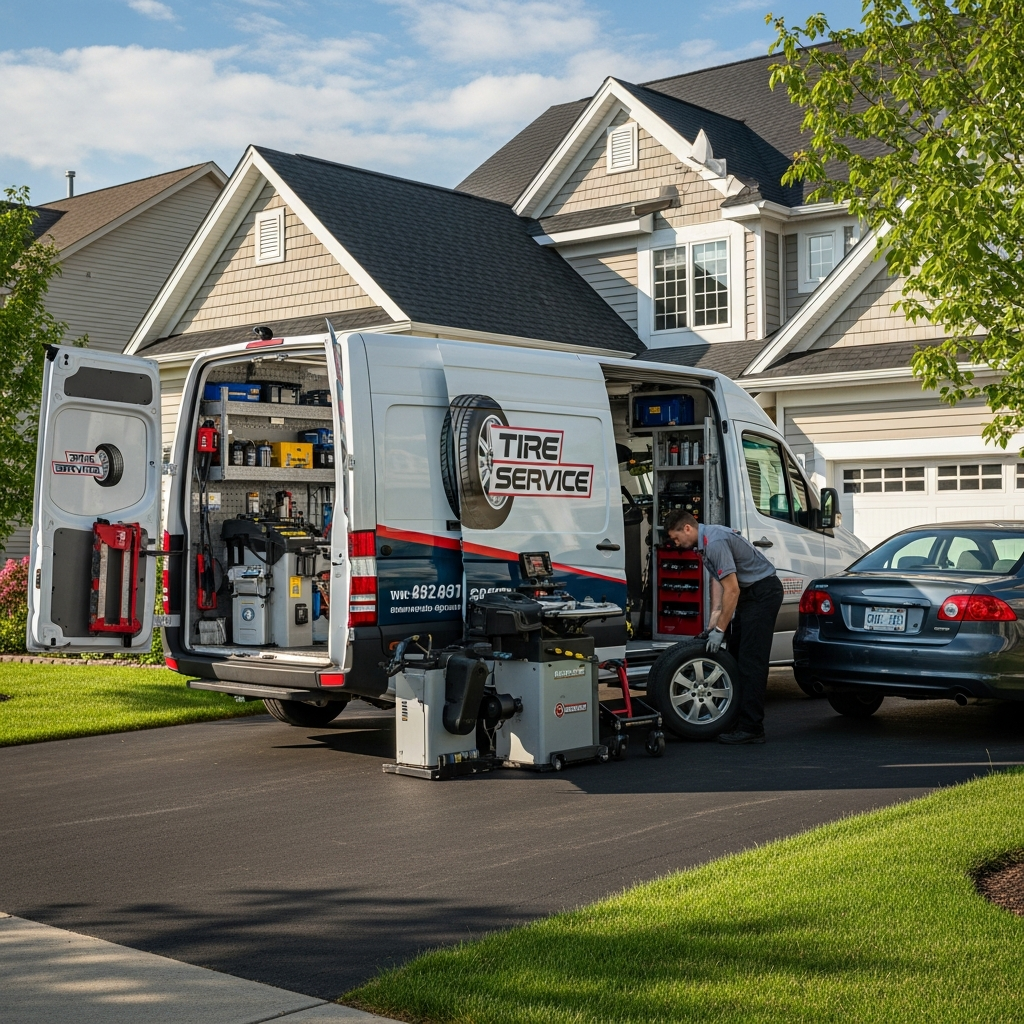
What a Fully Equipped Mobile Service Vehicle Brings
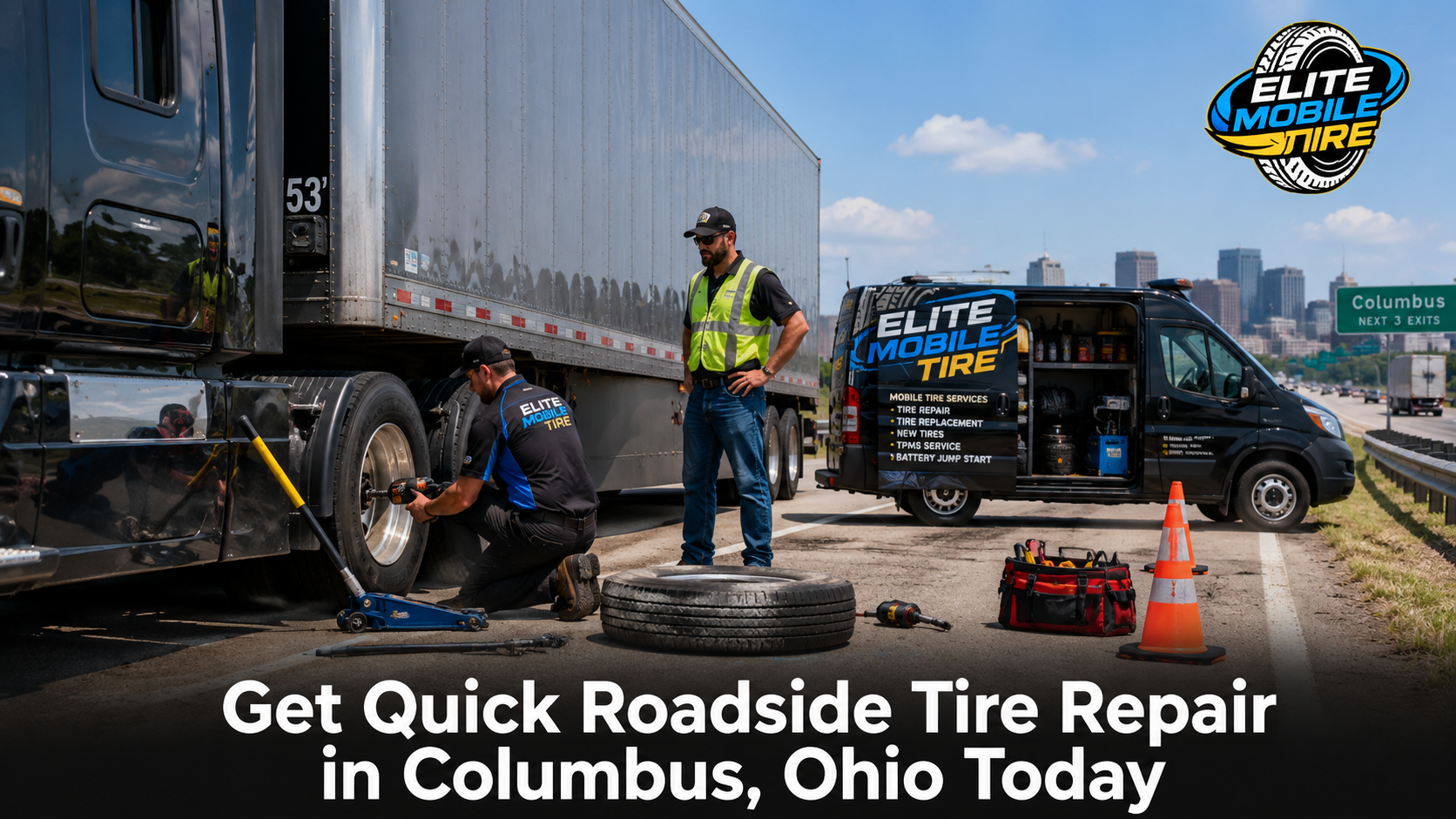
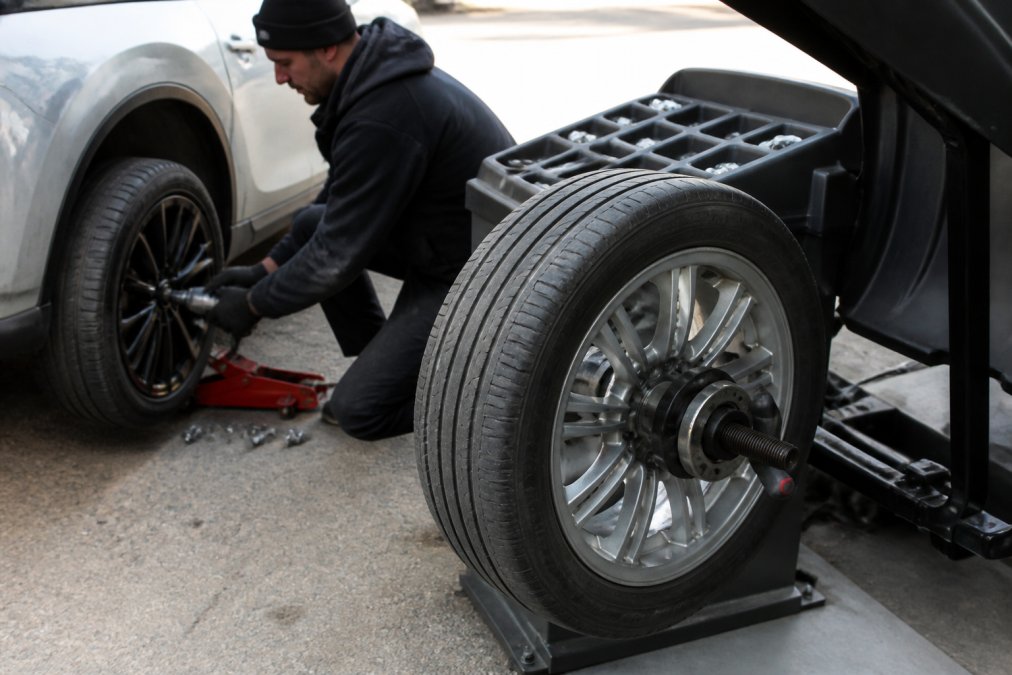
A properly outfitted mobile service vehicle carries a computerized balancing machine, a tire changer, a torque wrench set, wheel weights, valve stems, and a TPMS scan tool. That equipment is why on-site service costs more than a bare-bones roadside tire change. The alternative is a technician who can swap a tire but cannot balance it, leaving you with a shop visit afterward.
Average Cost to Mount and Balance Tires: What Drives the Number
The average cost to mount and balance tires depends on four variables: vehicle size, wheel type, tire construction, and whether TPMS sensors need recalibration. A compact sedan with steel wheels sits at the low end; a heavy-duty truck with large alloy wheels and stiff sidewalls sits at the high end.
Cost Driver | Why It Matters | Effect on Price
Wheel diameter | Larger wheels need more weights and longer machine cycles | Higher
Tire sidewall stiffness | Low-profile and heavy-duty tires resist bead seating | Higher
TPMS sensors | Recalibration requires a scan tool and extra time | Higher
Wheel material | Alloy wheels demand careful handling to avoid scratches | Higher
Vehicle count | Fleets booked in one visit reduce per-unit travel cost | Lower
Vehicle-Specific Balancing Costs Most Quotes Ignore
A passenger car and a commercial truck do not cost the same to balance. Larger wheels require more wheel weights, longer spin cycles, and sometimes a second technician. Motorhomes and RVs add larger tires and wheel wells that can require extra equipment. Fleet operators should ask for per-vehicle pricing, not a single blended rate.
Mobile Tire Service Hidden Fees: What to Ask Before You Book
Mobile tire service hidden fees are the most common complaint in this category, and nearly all come from four sources. Ask about each before you book.
Service Call, Convenience, and Disposal Fees Explained
- Service call fee: covers the technician's travel to your location; legitimate providers disclose it upfront.
- Convenience fee: sometimes charged for after-hours or emergency dispatch.
- Disposal fee: covers hauling away old tires; many states regulate tire disposal, so it is often a real cost.
- Valve stem and TPMS fees: new valve stems and sensor recalibration are frequently added after the fact.
Transparent providers fold these into the quoted price. Elite Mobile Tire provides transparent upfront pricing with no hidden fees.
How Long Does Mobile Tire Balancing Take?
A single tire balance typically takes 15 to 30 minutes once the technician is set up, and a full set of four runs 45 to 90 minutes. Total time depends on how many tires are serviced, whether mounting is also required, and how accessible the wheels are. Add travel time on top: a tight service radius means faster arrival, and same-day requests during peak hours take longer than a booked slot.
Time Estimates by Vehicle and Service Type
The table below reflects typical on-site time once the technician has set up. Travel time is separate.
Vehicle / Service | Balance Only (per tire) | Mount + Balance (per tire) | Full Set (4 tires)
Compact sedan, steel wheels | 10-15 min | 20-30 min | 45-75 min
Midsize SUV, alloy wheels | 15-20 min | 25-35 min | 60-90 min
Luxury sedan, low-profile tires | 20-30 min | 35-50 min | 90-120 min
Half-ton pickup, standard tires | 15-20 min | 25-40 min | 60-90 min
Heavy-duty truck, oversized tires | 25-40 min | 45-70 min | 120-180 min
Dually truck (6 tires) | 20-30 min | 40-60 min | 150-210 min
RV / motorhome (6 tires) | 25-40 min | 50-75 min | 180-240 min
What Slows a Mobile Balance Down
Conditions that push time past these estimates:
- Locking lug nuts with a missing key. The technician cannot remove the wheel and must wait while you locate the key or authorize a removal tool.
- Aftermarket wheel covers or hubcaps. These add removal and reinstallation steps and can hide damage that needs to be documented.
- TPMS sensor replacement. Swapping a sensor and relearning it to the vehicle adds 10-15 minutes per wheel.
- Road force balancing. If you request road force instead of standard spin balancing, each wheel takes roughly twice as long because the machine simulates road load.
- Inclement weather. Rain or snow slows setup and forces the technician to work more carefully around electrical equipment.
- Tight or blocked access. A vehicle parked against a wall, in a narrow garage, or behind another car prevents the technician from reaching all four wheels efficiently.
Scheduling Windows and Arrival Time
Most mobile providers quote a service window rather than an exact arrival time. A two-hour window is standard because traffic, prior appointments, and weather affect the route. Booking the first appointment of the day gets the tightest window, while same-day and emergency requests during peak hours have the longest waits. Booking a day or two ahead shortens both the wait and the time on site.
Fleet Timing: Why Sequence Matters
Fleet operators get the biggest time savings because the technician stays on site and works through vehicles in sequence. The first vehicle may take the full estimated time, but each additional vehicle usually goes faster. Schedule fleet balancing during a planned downtime window, such as an overnight shift, and ask whether the provider charges a premium for after-hours fleet work.
Mobile Balancing Versus a Traditional Tire Shop
Mobile balancing trades a shop's overhead for travel cost, and for most drivers the trade favors mobile. A traditional shop carries rent, utilities, front-desk staff, and waiting-room space, costs baked into every ticket. What you give up with mobile service is the ability to get an alignment done in the same visit; what you gain is your afternoon back.
The Real Cost Comparison: Sticker Price vs. Total Cost
The headline price at a traditional shop often looks lower, but it rarely includes the full cost of getting the service done.
Comparing shops on the balance price alone misses most of the real cost. At a shop you add the drive, the wait, and time off work, plus disposal, valve stem and TPMS charges that often show up at checkout. With Elite Mobile Tire, mobile balancing runs around $50 per tire, the technician comes to you, and your quote is itemized before any work starts. Schedule service
When a Traditional Shop Still Wins
Mobile service is not the right answer for every situation. A shop makes more sense when:
- You need an alignment at the same time. Alignment requires a rack, and mobile providers do not carry one. If your vibration is caused by alignment rather than balance, you will end up at a shop anyway.
- You have a warranty claim or defect. Most tire warranties require service through an authorized dealer or retailer, and mobile providers may not be able to process the claim.
- No mobile provider covers your area. Rural locations sometimes fall outside mobile service areas.
- You want a written alignment or suspension inspection. These require shop equipment that mobile vans do not carry.
When Mobile Service Wins on Total Cost
Mobile service is the better choice when:
- Your time is scarce. Parents, remote workers, and business owners often cannot afford a two-hour shop visit during business hours.
- You're replacing a full set. Four new tires mounted and balanced in your driveway saves the longest shop wait of all.
- You have multiple vehicles at one location. A household with three cars or a small fleet can have all vehicles serviced in one appointment, spreading the trip charge.
- Your vehicle is not easily driven. A car with a flat or a vehicle in storage can still be serviced on site.
- You need early-morning or evening service. Many mobile providers offer windows outside normal shop hours.
- You want to avoid a waiting room. This matters for customers with children or mobility limitations.
The Hidden Cost of a Cheap Shop Quote
A low shop quote can hide costs that appear at checkout, including:
- Shop supplies fee. A percentage-based surcharge that covers rags, cleaners, and disposal.
- Environmental or tire disposal fee. Required in many states and often not quoted upfront.
- TPMS service kit. A new valve stem and seal that many shops add automatically.
- Road force balancing upgrade. If a standard balance does not resolve a vibration, the shop may upsell road force.
- Alignment recommendation. A shop that finds uneven wear may recommend an alignment, adding to the ticket.
A Quick Decision Framework
Ask yourself three questions:
- Do I need any service that requires a shop rack or alignment equipment? If yes, book the shop and add balancing to that visit.
- Is my time worth more than the drive and the wait? If yes, mobile is the better economic choice.
- Do I have more than one vehicle to service? If yes, mobile becomes more attractive because the trip charge is shared.
If you answered no to the first question and yes to either of the others, mobile balancing is likely the right call.
TPMS, Road Force Balancing, and When to Re-Balance
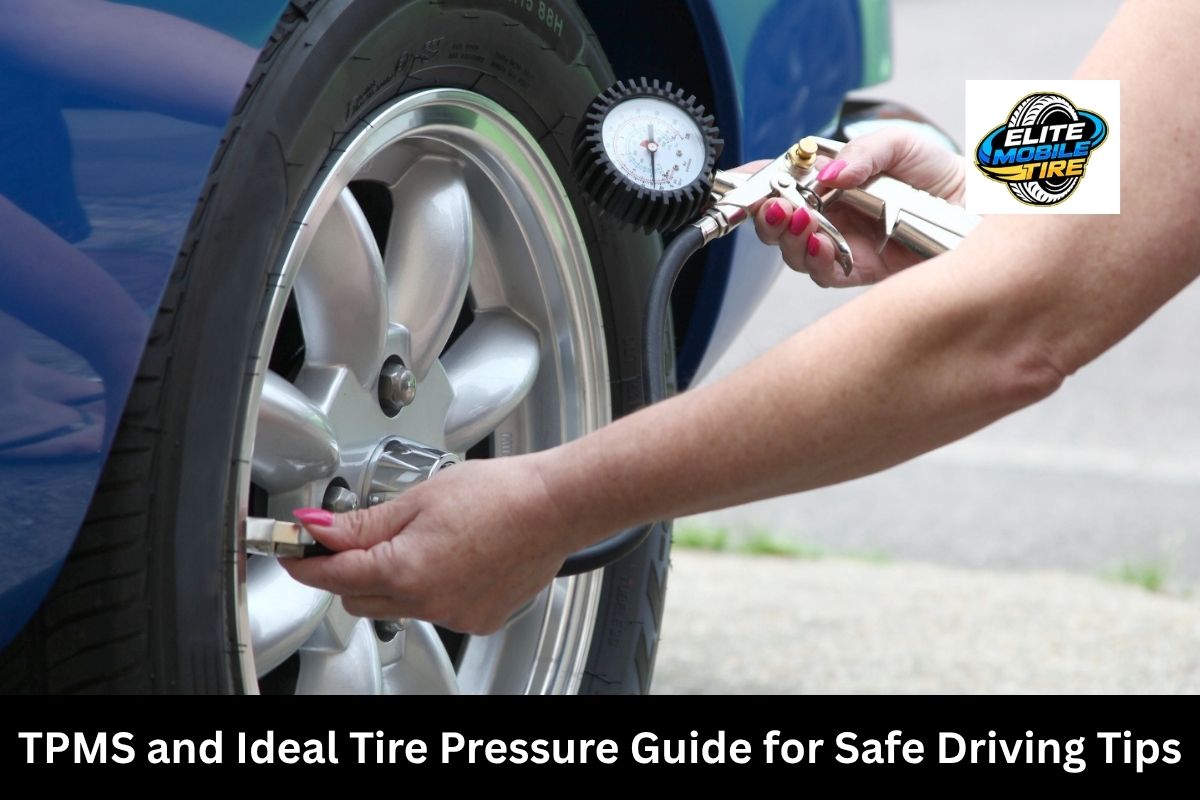
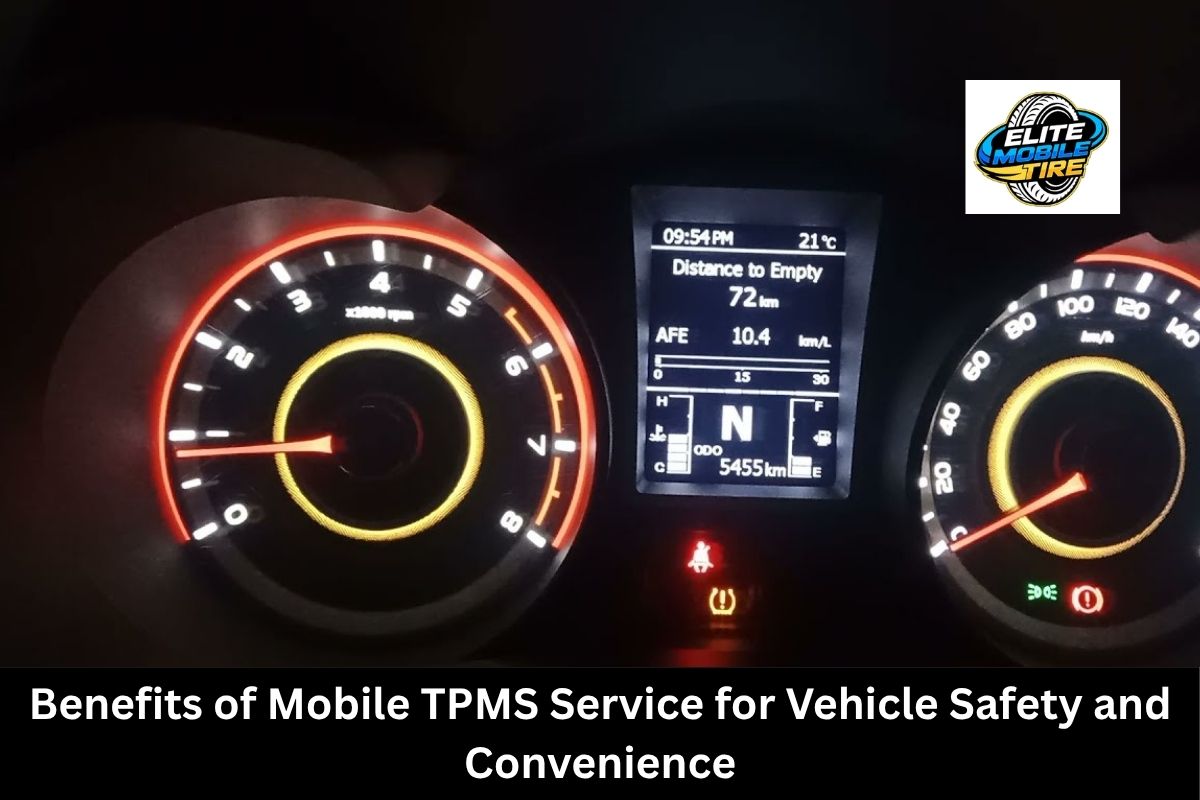
The tire pressure monitoring system is a sensor inside each wheel that reports pressure to your dashboard. Any time a tire is mounted or a wheel is rotated, those sensors may need recalibration so readings stay accurate. Skipping this step leaves drivers with a warning light that will not go away.
Re-balance when you notice any of these:
- Steering wheel vibration at highway speed
- Uneven tire wear patterns across the tread
- New tires installed or wheels rotated
- A wheel weight has fallen off
- Vibration after hitting a pothole or curb
DIY Balancing Kits vs. Professional On-Site Service
DIY balancing kits work well enough for a lawn mower or a low-speed trailer. For a road vehicle, the math changes quickly. A bubble balancer measures static balance only and cannot correct dynamic imbalance, the side-to-side wobble that shows up at highway speed. Proper dynamic balancing requires a computerized machine that spins the wheel and measures forces in two planes.
How to Prepare Your Vehicle for Mobile Tire Service
Preparation takes five minutes and prevents most scheduling problems. Clear access to all four wheels, confirm your tire size, and note any existing damage before the technician arrives.
Work through this checklist before your appointment:
- Park on a flat, paved surface away from traffic
- Pull forward so all four wheels are reachable
- Remove locking lug nut keys from the glovebox and hand them over
- Note your tire size from the sidewall
- Disclose any TPMS warning lights or prior wheel damage
- Confirm the quoted total includes travel, disposal, and balancing
- Ask how long the technician will need and stay reachable
Frequently Asked Questions
How much does mobile tire balancing cost?
At Elite Mobile Tire, mobile tire balancing is around $50 per tire. Your final quote depends on the number of tires, wheel size, vehicle type (passenger car, RV, or commercial truck), and whether mounting, TPMS service, or valve stems are needed. You get the full price before booking, so the quote is the number you pay.
What factors influence the price of mobile tire balancing?
The biggest drivers are wheel diameter (larger wheels need more weights and time), tire type, whether the tire must be mounted and bead-seated first, and whether road force balancing is required. Vehicle class matters too: a commercial truck or RV takes longer than a sedan. Add-ons like TPMS calibration, valve stem replacement, and tire disposal each carry their own line item. Always confirm what is bundled into the base rate before you approve the job.
Are there hidden fees associated with mobile tire balancing services?
Common add-ons include a service call fee, a convenience fee, disposal charges, TPMS sensor replacement, and after-hours surcharges. None of these are inherently unfair, but they should appear in the quote, not on the final invoice. Ask three questions: Is the service call fee included? Is disposal included? Is there an after-hours rate? A provider with transparent pricing will answer all three before dispatch.
Is it more expensive to have tires balanced at home versus a shop?
The balancing line item itself is often comparable. What changes is the total cost: a shop visit adds fuel, time off work, and possibly a second trip if the tire must be ordered. Mobile service folds the trip into one appointment at your home, office, or job site. For busy drivers, the mobile option frequently comes out ahead even when the per-tire rate is slightly higher.
Ready for a new set? Elite Mobile Tire installs 2 or 4 new tires right in your driveway or parking lot anywhere around Columbus, Obetz, Groveport, Grove City, and Reynoldsburg. Financing is available through Afterpay and Acima with up to 24-month payment plans. Call 614-344-5010 or visit elitemobiletire.com to book.