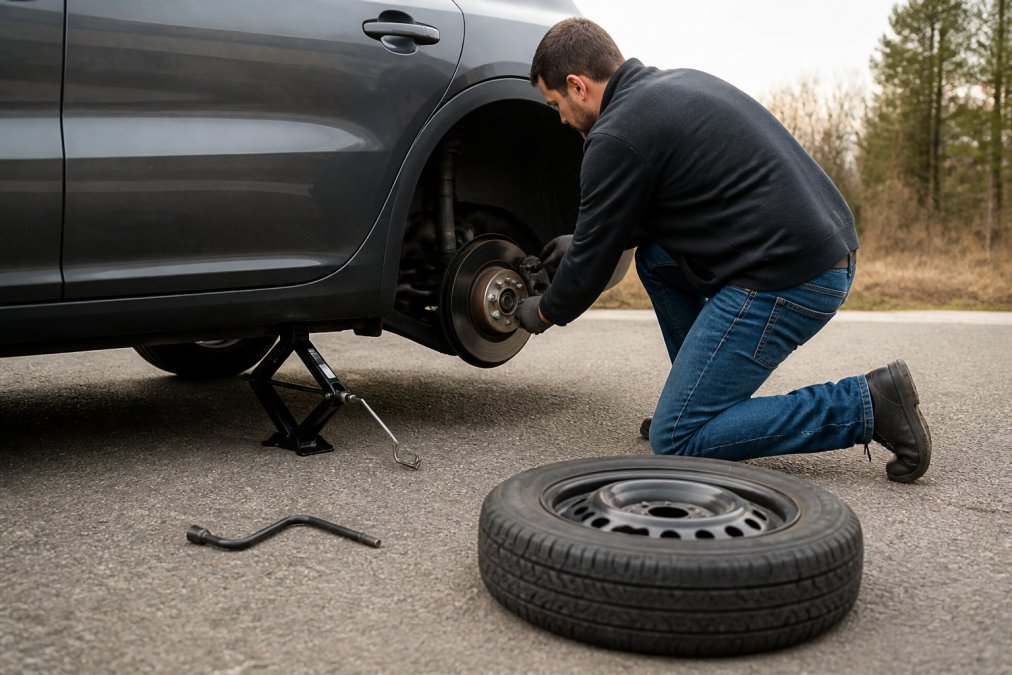
Essential Tools for Changing a Flat Tire
Knowing how to change a flat tire safely starts before you hear that thump-thump-thump on the highway. According to National Highway Traffic Safety Administration guidance on roadside safety, tire issues remain one of the most common causes of roadside breakdowns. We've responded to countless emergency calls where drivers had the right intentions but the wrong equipment. Knowing how to change a flat tire safely requires having the proper tools within arm's reach before you need them.
The difference between a 15-minute tire change and a two-hour ordeal often comes down to preparation. Most drivers discover their jack is missing or their lug wrench doesn't fit only after they're stranded.
What Your Vehicle's Emergency Kit Should Contain
Every vehicle should carry:
- Lug wrench or tire iron that matches your lug nut size
- Scissor jack or hydraulic jack rated for your vehicle's weight
- Wheel chocks to prevent rolling
- Reflective safety triangle and reflective vest
- Flashlight with fresh batteries
- Work gloves for grip and protection
- Tire pressure gauge to verify inflation
- Spare tire in good condition with adequate tread depth
How to Use a Car Jack Safely
A jack lifts thousands of pounds, but it is a temporary lifting device, not a support mechanism. Never place any part of your body under a vehicle supported only by a jack.
The most common mistake is positioning the jack at the wrong point. Every vehicle has specific jack points, reinforced chassis sections designed to bear the load. Check your manual for exact locations.
Finding the Correct Jack Points on Your Vehicle
Jack points are reinforced areas along the underside where the jack can lift the weight without damaging the chassis or body panels. On most vehicles, you'll find them:
- Just behind the front wheel wells
- Just ahead of the rear wheel wells
- Marked by small notches or arrows in the rocker panel
Position the jack so its lifting pad sits squarely on the jack point. If it slips, you risk undercarriage damage or the vehicle falling.
Step-by-Step: How to Change a Flat Tire Safely
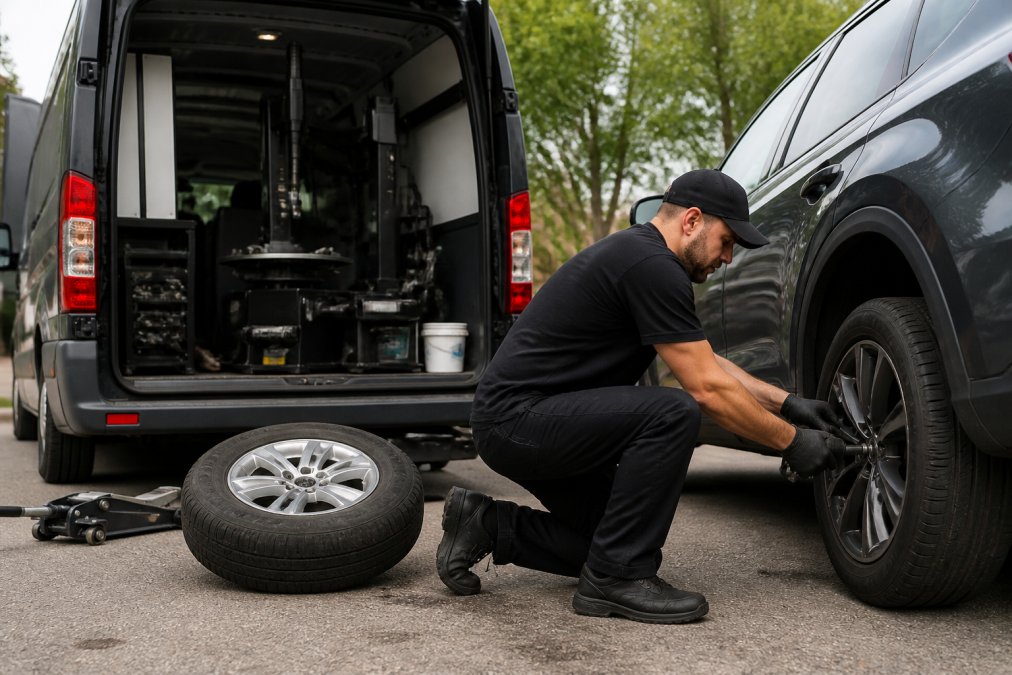
The complete process to change a flat tire takes most drivers 15-30 minutes with practice. Here's how to change a flat tire safely, start to finish.
Step 1: Pull Over and Secure the Vehicle
Find level ground away from traffic and turn on your hazard lights immediately. Engage the parking brake, shift into park (or first gear for manual), and place wheel chocks behind the tires opposite the flat.
Have passengers exit on the side away from traffic and stand well behind the guardrail or off the roadway.
Step 2: Loosen the Lug Nuts and Raise the Vehicle
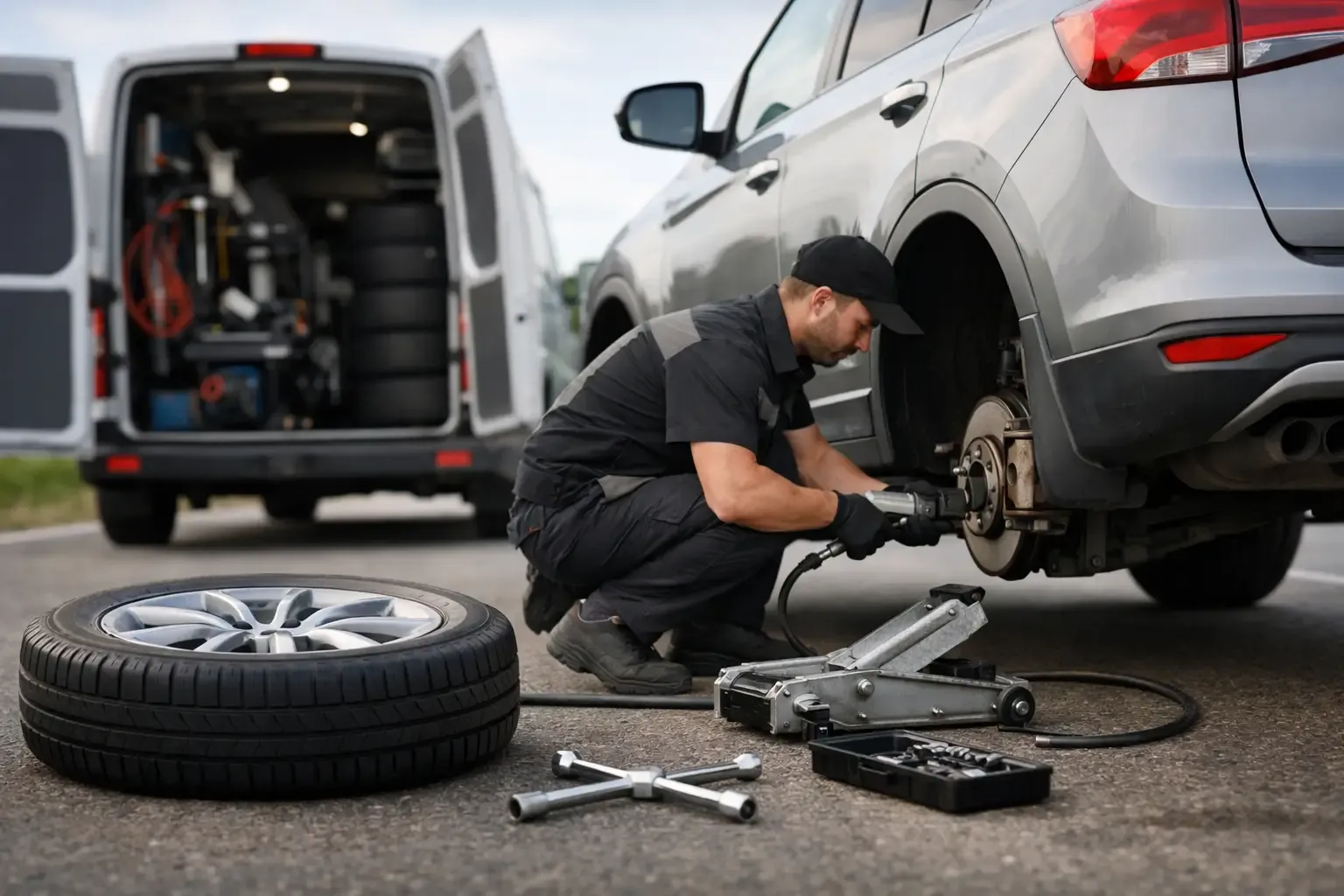
Loosen the lug nuts one-quarter turn counter-clockwise before lifting. If they won't budge, apply penetrating oil and wait a few minutes. Position the jack at the correct jack point and raise until the flat clears the ground by about 6 inches.
Step 3: Remove the Flat, Mount the Spare, and Lower the Jack
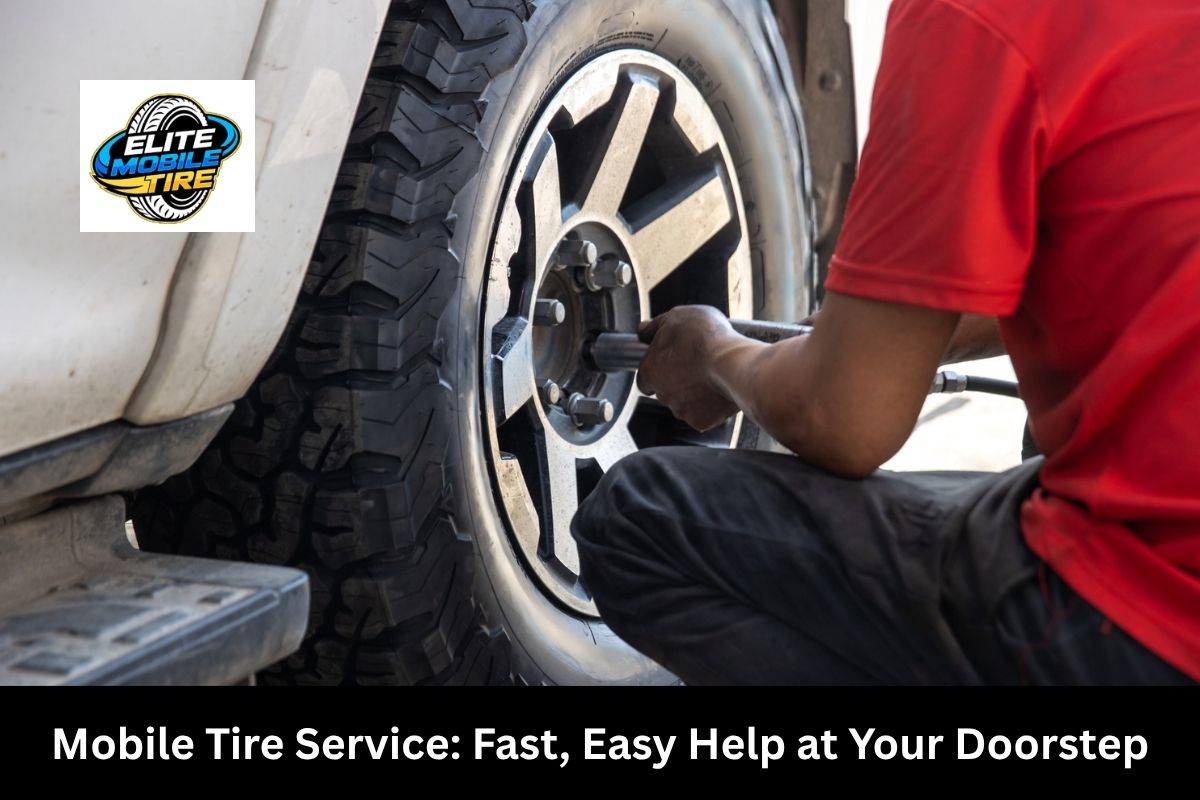
Remove the loosened lug nuts and set them where they won't roll away. Pull the tire straight toward you to dismount it. Align the spare's bolt holes with the wheel studs and push it onto the hub. Hand-tighten the lug nuts in a star pattern, lower the jack, then tighten them firmly in the same star pattern once the tire touches ground.
Troubleshooting Stuck Lug Nuts and Other Common Problems
Stuck lug nuts are a common reason a roadside tire change turns into a tow. The cause usually falls into one of three buckets, each calling for a different response.
Diagnose the Cause Before You Lean on the Wrench
- Over-torqued by a shop or previous owner. Lug nut torque specs vary by vehicle and are listed in your owner's manual, with light trucks generally specified higher than passenger cars. Installed with an impact wrench and no torque stick, nuts can be seated well past spec. These usually break free with a breaker bar and steady pressure.
- Rusted or corroded threads. Common on vehicles that see road salt, where nut and stud fuse at the thread interface. This is where penetrating oil earns its keep.
- Cross-threaded or galling. The nut went on crooked, or the stud and nut galled together. Forcing it can snap the stud, turning a tire change into a hub replacement.
The Escalation Ladder
Work through these in order. Stop the moment the nut moves.
- Breaker bar with a six-point socket. A 12-point socket rounds off soft or rusted nuts; a six-point grips the flats. If your factory lug wrench is a 12-point, this is the upgrade that matters most.
- Penetrating oil, then wait. Spray the base of the nut where it meets the wheel, not the top, and give it 10 to 15 minutes. Reapply once.
- Cheater bar. Slide a length of steel pipe over the breaker bar handle to add leverage. Apply force smoothly and in line with the bar; jerking loads snap studs.
- Stop and call for help. A snapped stud means the wheel cannot be safely re-torqued. If a nut will not move after steps 1 through 3, call professional roadside assistance rather than applying more force.
Other Problems You Will Hit
- Jack sinks into soft ground. Place a square of thick plywood or a purpose-made jack pad under the jack base to spread the load. It is the difference between a stable lift and a tipped jack on hot asphalt or gravel.
- Spare will not hold air. Check the valve stem first; a cracked stem or missing valve cap is a common culprit. If the stem is intact and the tire still bleeds down, the spare has a bead leak or punctured sidewall and is not usable.
- Lug nuts will not thread back on. Clean the studs with a wire brush before mounting the spare. Rust or grit can cross-thread the nut and ruin the stud.
- Wheel will not come off the hub. Rust can seize the wheel to the hub face. With the vehicle safely supported, strike the tire sidewall with a rubber mallet while pulling outward. Never strike the wheel itself.
If a lug nut has not moved after a breaker bar, penetrating oil, and a cheater bar, the right move is to stop. A snapped stud is far more expensive than a service call.
Temporary Spare vs. Full-Size Spare: Key Differences
A temporary spare, the "donut," is not a smaller version of your regular tire. It is a different class of component with its own engineering limits, and treating it like a normal tire is one of the most common ways drivers turn a flat into a crash.
Why the 50 mph / 70 Mile Limits Exist
Those common limits reflect three physical differences:
- Tread depth and contact patch. A donut has shallow tread and a much narrower contact patch than your road tire, which means less grip, longer stopping distances, and reduced hydroplaning resistance in rain.
- Sidewall construction. Thinner and stiffer to save weight and space, it flexes less predictably under cornering load and heat-cycles faster at highway speed.
- Heat buildup. At sustained highway speed, the smaller tire spins faster and generates heat faster than it can shed. That is the mechanism behind the mileage limit: a heat budget, not a wear budget.
Comparison at a Glance
Feature | Temporary Spare | Full-Size Spare
Maximum speed | Typically 50 mph | Same as your road tires
Driving range | Typically about 70 miles | Normal driving until repair
Tread depth | Shallow | Full
Wet traction | Significantly reduced | Comparable to road tires
Weight | Lighter | Heavier
Storage | Compact, fits under floor | Requires more space
TPMS sensor | Usually none | Often present
Best use | Limp to the nearest safe repair | Normal driving until repair
Driving Behavior on a Donut
Even within the 50 mph limit, a donut changes how the vehicle handles:
- Pulling toward the spare side. The smaller diameter means the vehicle sits unevenly. Correct with steering input, not by speeding up.
- Longer braking distances. Add following distance; in rain, add more.
- Reduced cornering grip. Take turns slower than normal, especially on ramps and in parking structures.
- ABS and traction control may behave differently. The system sees one wheel spinning faster and may interpret it as a slip event. This is normal, but do not rely on those systems to compensate.
TPMS Sensor Reset After a Tire Change
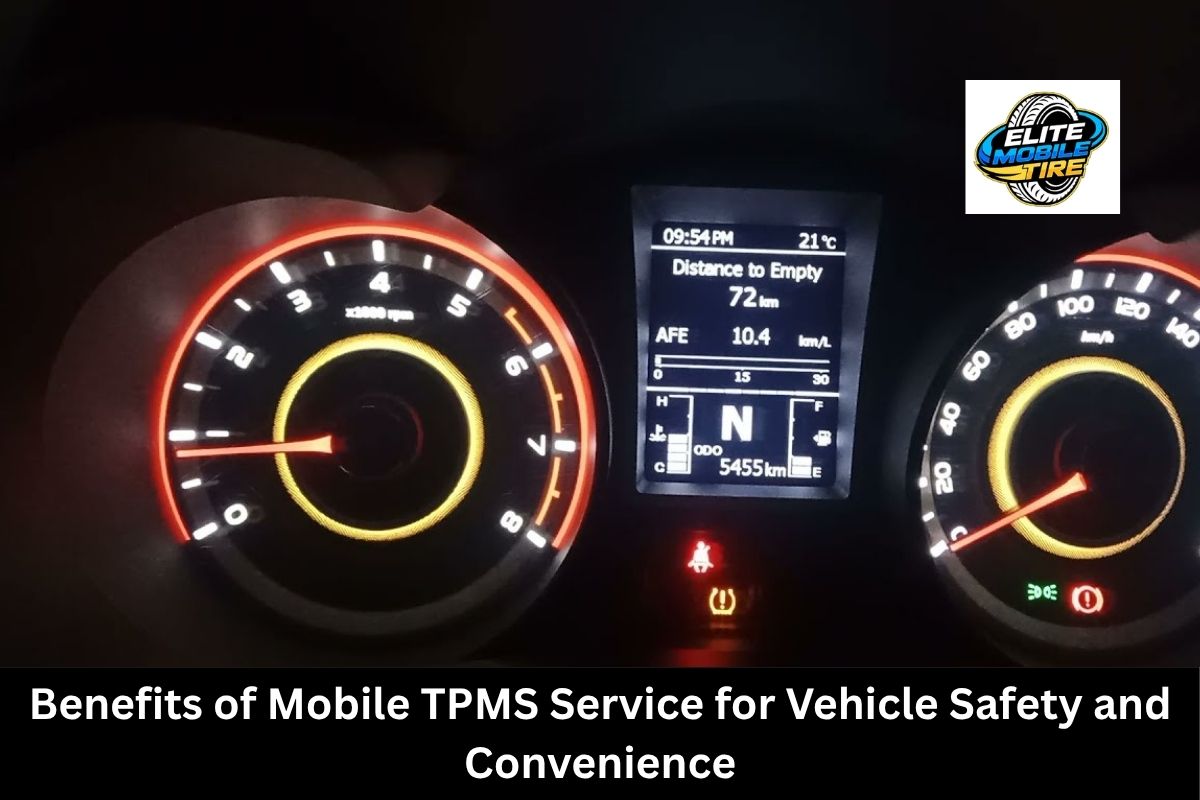
The Tire Pressure Monitoring System light will often stay on after you mount a temporary spare. This is expected, not a fault: temporary spares typically carry no TPMS sensor, so the system has no pressure reading for that corner and defaults to a warning.
What to do:
- Do not ignore the light indefinitely. It is telling you one corner is unmonitored. Drive accordingly.
- After the road tire is repaired or replaced and reinstalled, the light should clear on its own after a few miles once the system re-reads all four sensors.
- If it does not clear, the reset procedure varies by manufacturer. Most vehicles use a dedicated TPMS reset button, a menu sequence through the driver-information display, or an automatic relearn triggered by a specific drive cycle.
- If the light flashes for 60 to 90 seconds at startup and then stays solid, that usually indicates a sensor fault rather than low pressure. A tire professional can scan and replace the sensor.
When a Full-Size Spare Is Worth the Space
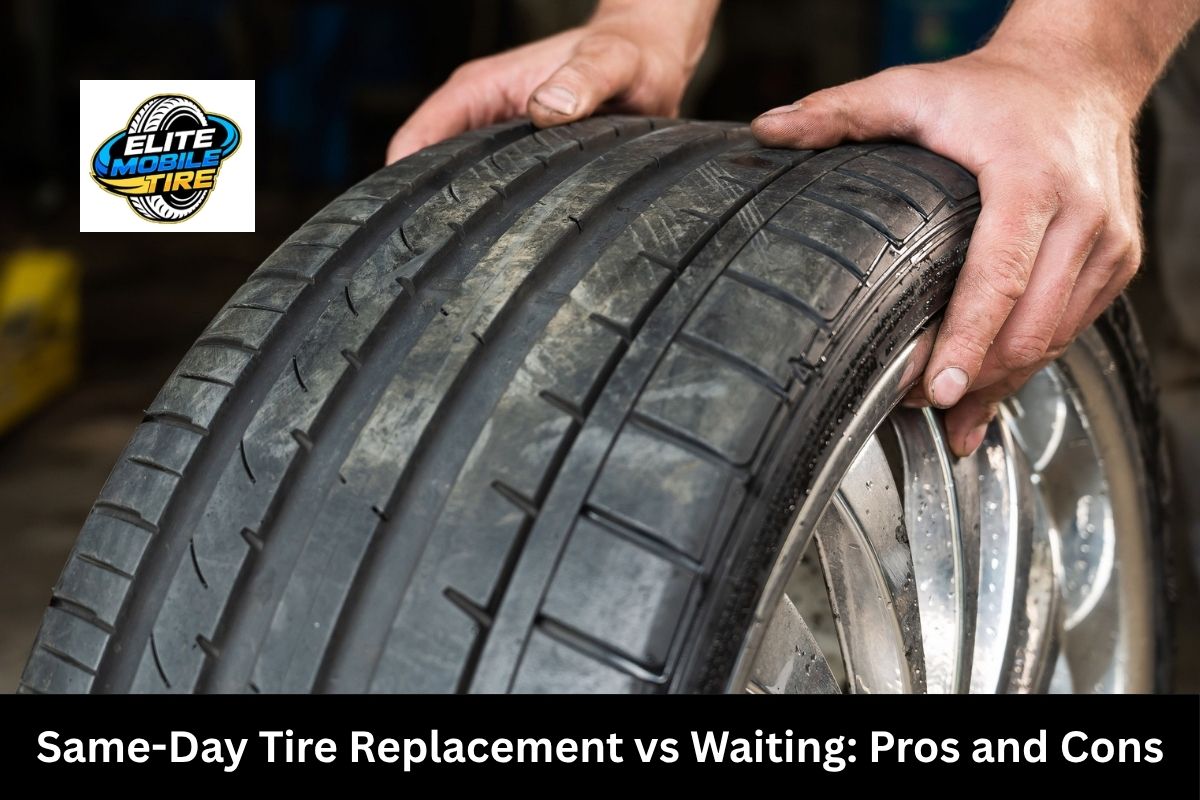
If your vehicle came with a full-size spare, use it without the donut restrictions, but still treat it as temporary. A full-size spare sitting for years may have aged rubber even with full tread. Check the date code on the sidewall: many manufacturers recommend replacing tires that are six to ten years old regardless of tread depth, and a never-used spare is not exempt.
When to Call Professional Roadside Assistance
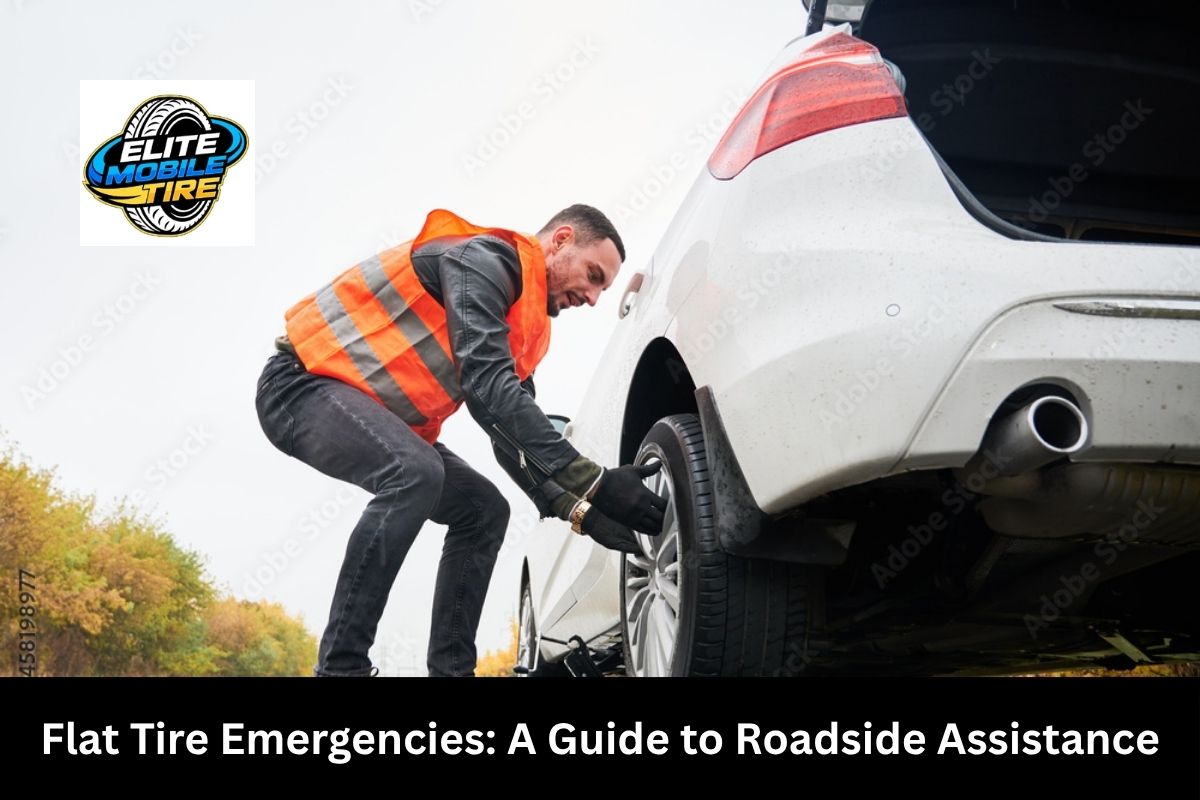
Call for professional help when conditions make a DIY change unsafe. If you're on a narrow shoulder with heavy traffic, at night with poor visibility, or lack the physical ability to loosen lug nuts, staying in your vehicle and waiting for a professional is the smarter choice.
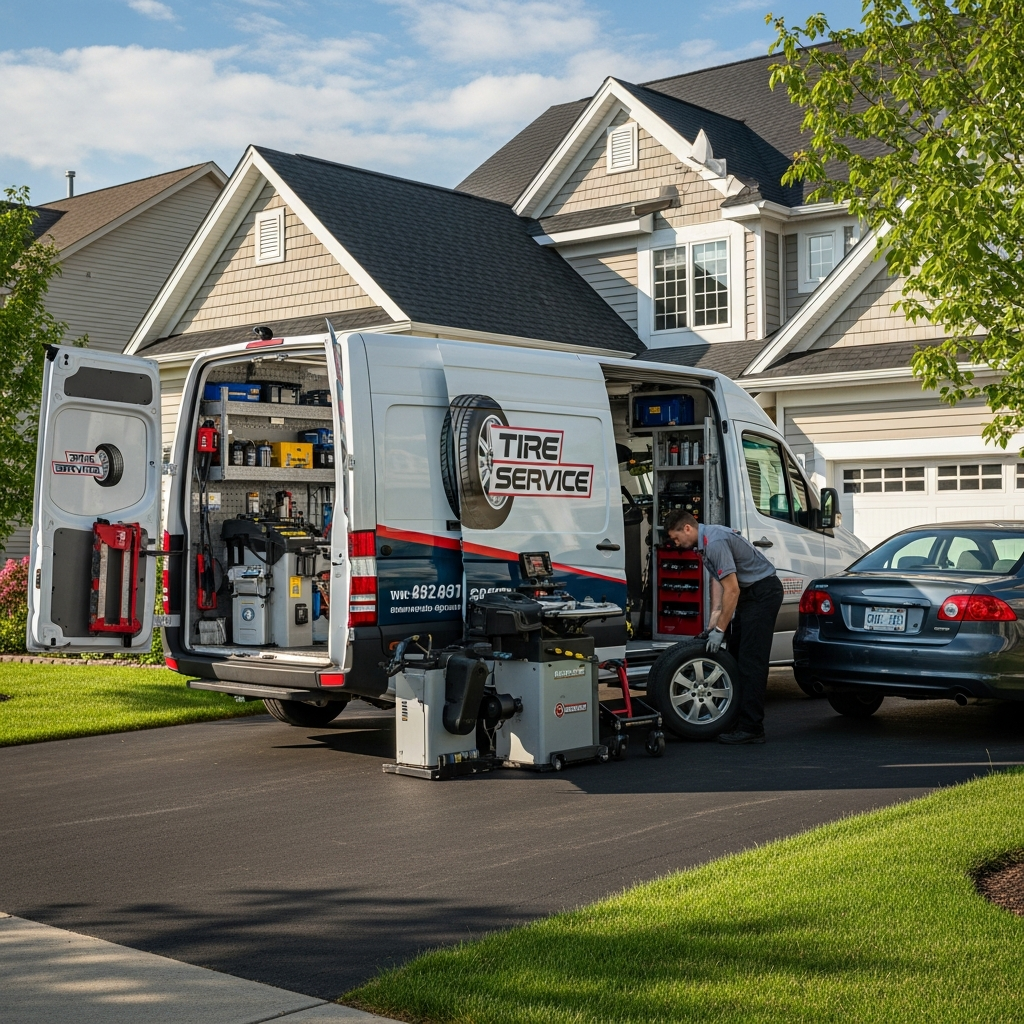
Elite Mobile Tire provides expert, on-site tire installation, repair, and balancing services directly to your home, office, or job site in the Columbus, Ohio area. By bringing a fully equipped workshop to you, we eliminate the need for tow trucks and wasted time in waiting rooms. Our certified technicians deliver professional, transparent service for everything from passenger cars to commercial trucks. Whether you need emergency flat repair or a scheduled tire exchange, we offer a seamless experience that respects your busy schedule, and same-day Elite Rapid Response is available.
If you don't have a spare at all, calling for mobile service can be a convenient alternative to waiting for a tow. Elite Mobile Tire can bring the right tire to you and complete the installation on the spot.
A flat tire on a busy road is stressful, but knowing how to change a flat tire safely turns a potential crisis into a manageable inconvenience. When conditions aren't safe or you'd rather not handle it yourself, Elite Mobile Tire brings certified technicians and professional equipment directly to your home, office, or job site, with transparent upfront pricing, same-day availability, and expert handling of tire issues including TPMS.
Frequently Asked Questions
What is the safest way to change a flat tire?
The safest method is to pull completely off the road onto level ground, turn on your hazard lights, and set the parking brake. Use wheel chocks if available. Loosen the lug nuts slightly before raising the vehicle with a jack placed at the correct jack point. Never put any part of your body under a vehicle supported only by a jack. If traffic or terrain makes the situation unsafe, call professional roadside assistance instead.
Do I need special tools to change a flat tire?
Most vehicles come with a lug wrench, jack, and spare tire from the factory, though some newer vehicles carry only an inflator kit. These basic tools are enough for a standard tire change. A tire pressure gauge, wheel chocks, reflective vest, and work gloves add safety, and a breaker bar helps with over-tightened lug nuts. If your vehicle lacks these essentials, a mobile tire service can handle the job on-site with professional equipment.
What should I do if I cannot change my tire safely?
If you are on a busy highway, in extreme weather, or lack the physical ability to change the tire, do not attempt it. Call professional roadside assistance or a mobile tire service. Stay inside your vehicle with your seatbelt on and hazard lights flashing. If you have a safety triangle and can place it safely, set it behind your vehicle. Waiting for a certified technician is far safer than risking injury on a dangerous road.
How do I know if my spare tire is safe to drive on?
Check the spare's inflation level and tread depth before you need it. Temporary spares are typically rated for a maximum of 50 mph and around 70 miles of driving. Full-size spares can go farther but may have aged rubber if they are older. Never exceed the speed or distance limits printed on the tire or in your owner's manual. After mounting, verify tire pressure and schedule a replacement or repair as soon as possible.
Ready for a new set? Elite Mobile Tire installs 2 or 4 new tires right in your driveway or parking lot anywhere around Columbus, Obetz, Groveport, Grove City, and Reynoldsburg. Financing is available through Afterpay and Acima with up to 24-month payment plans. Call 614-344-5010 or visit elitemobiletire.com to book.