
Step 1: Secure Your Vehicle and Assess the Damage
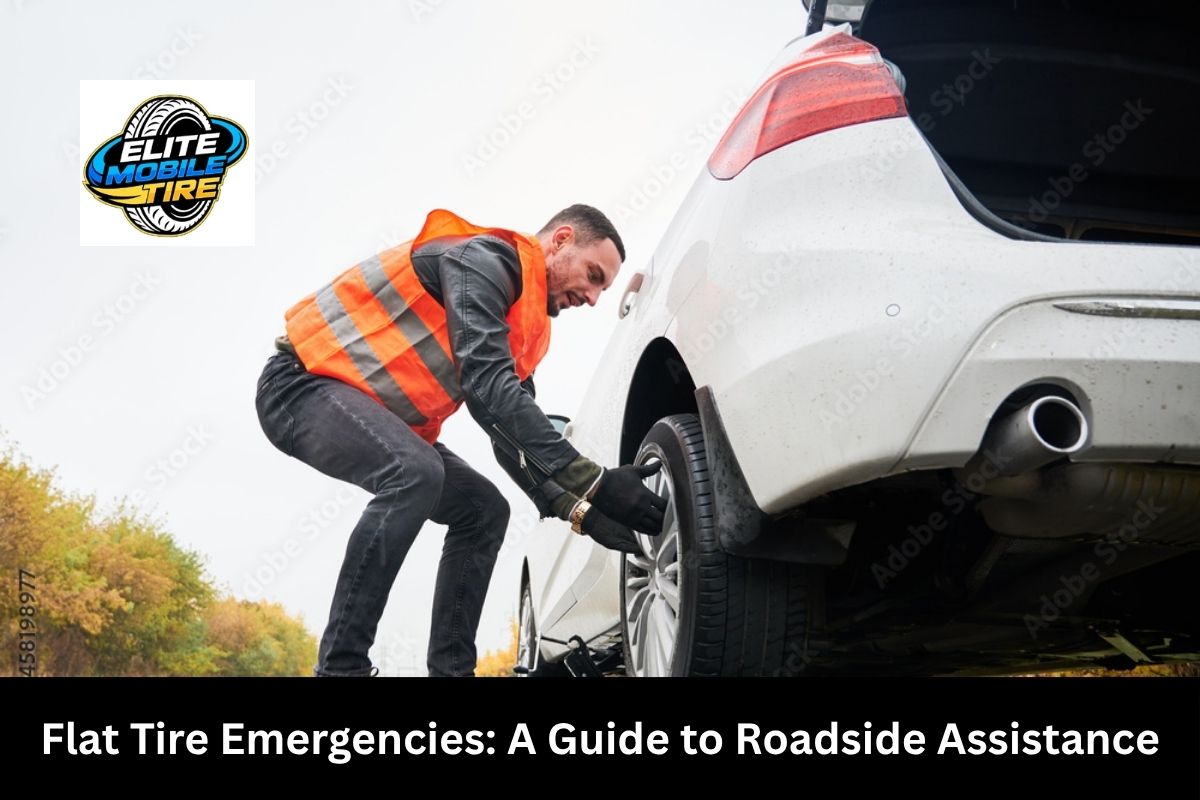
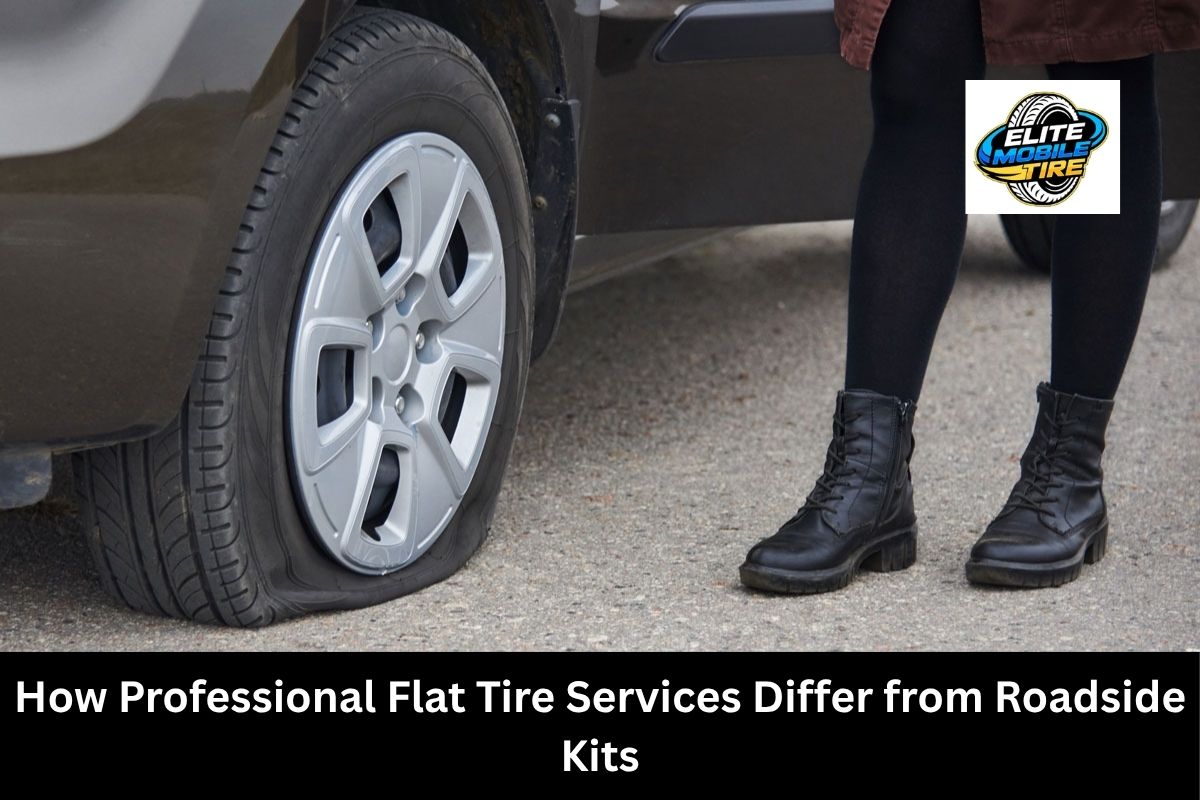
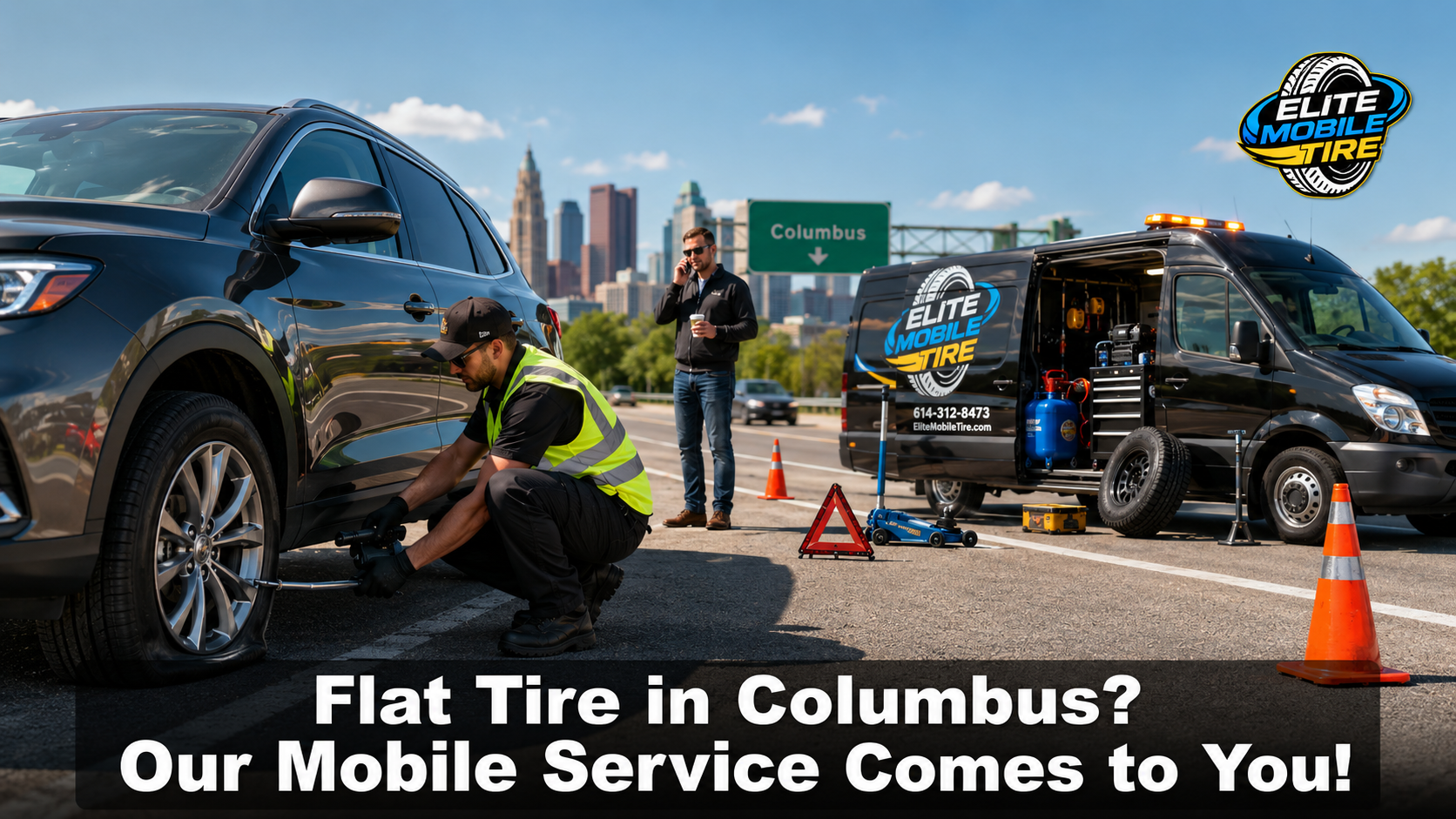
A flat tire in traffic is a safety emergency before it is a repair problem. Urgent tire repair in Columbus, Ohio, starts with one rule: get off the road before you touch the wheel. NHTSA guidance on tire safety stresses that tire failures at highway speed are especially dangerous, so your first priority is control and a safe place to stop.
- Grip the wheel firmly and ease off the gas. Do not brake hard.
- Turn on your hazard lights immediately.
- Coast to the shoulder, median, or the nearest exit ramp. A parking lot beats a shoulder every time.
- Park on flat ground, set the parking brake, and turn the wheels away from traffic.
- Exit through the door facing away from the road, and stand behind the barrier if there is one.
Watch Out
Never change a tire on the traffic side of a highway shoulder. Drivers drift onto shoulders constantly, and a rear-facing repair puts you directly in their path. Move to the far side of the vehicle or wait for professional help.
What to Do If You Get a Flat Tire on the Highway
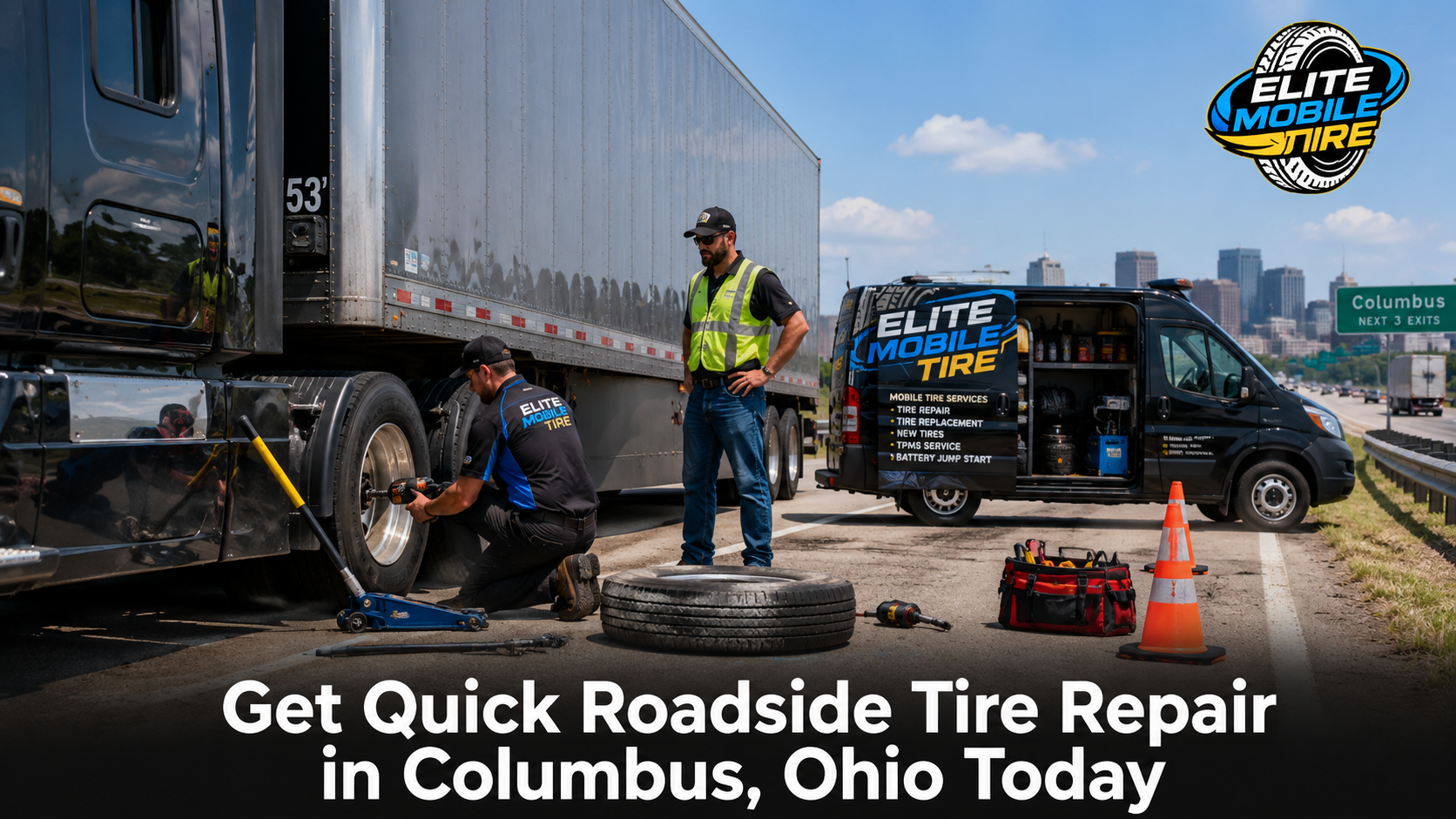
Call for help first, then decide about the spare. On a highway shoulder, the risk of a secondary collision outweighs the cost of a service call. Emergency roadside assistance dispatches a technician to your exact location, no jack, no traffic exposure, no guessing.
How to Change a Flat Tire Safely (and When to Call for Help)
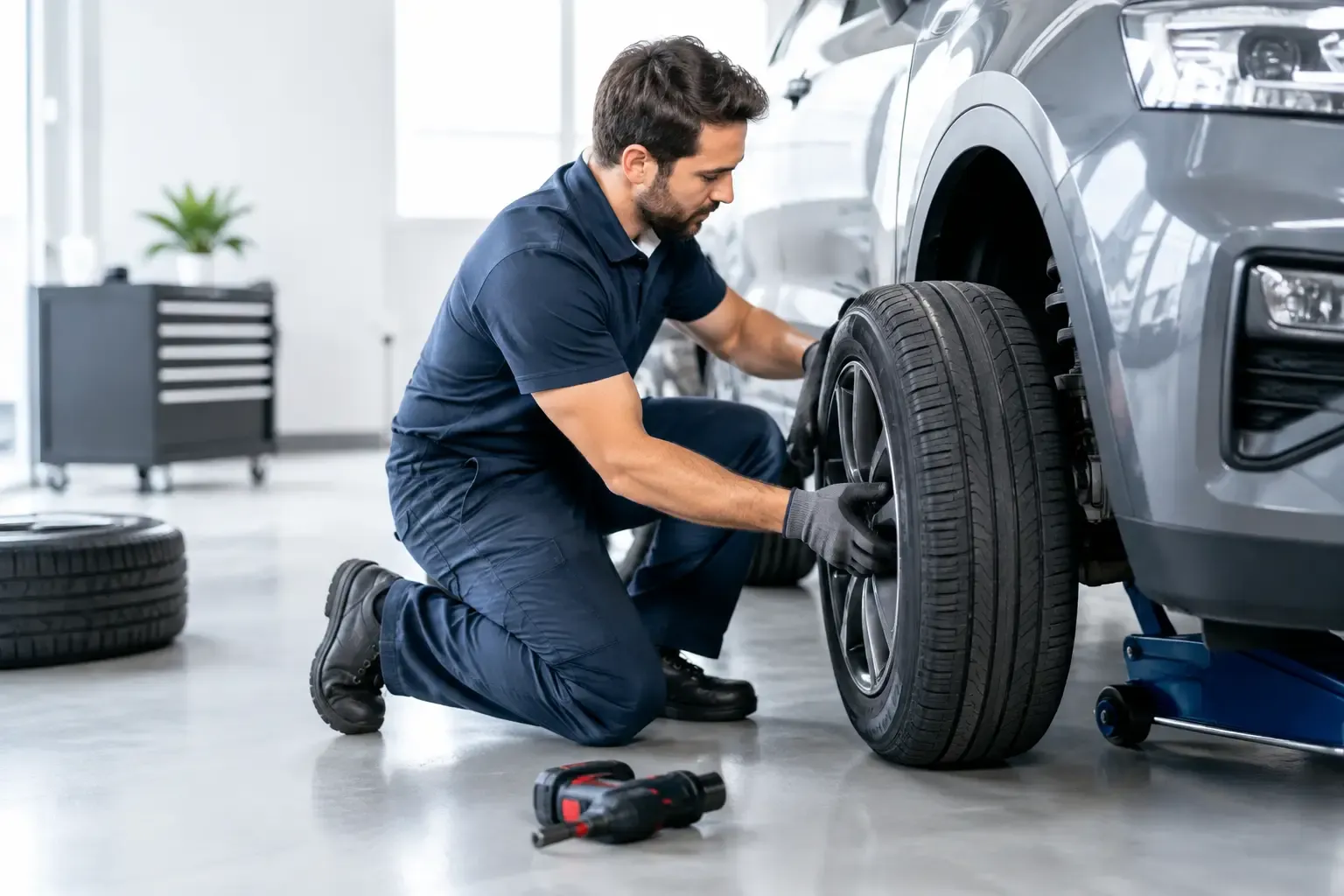
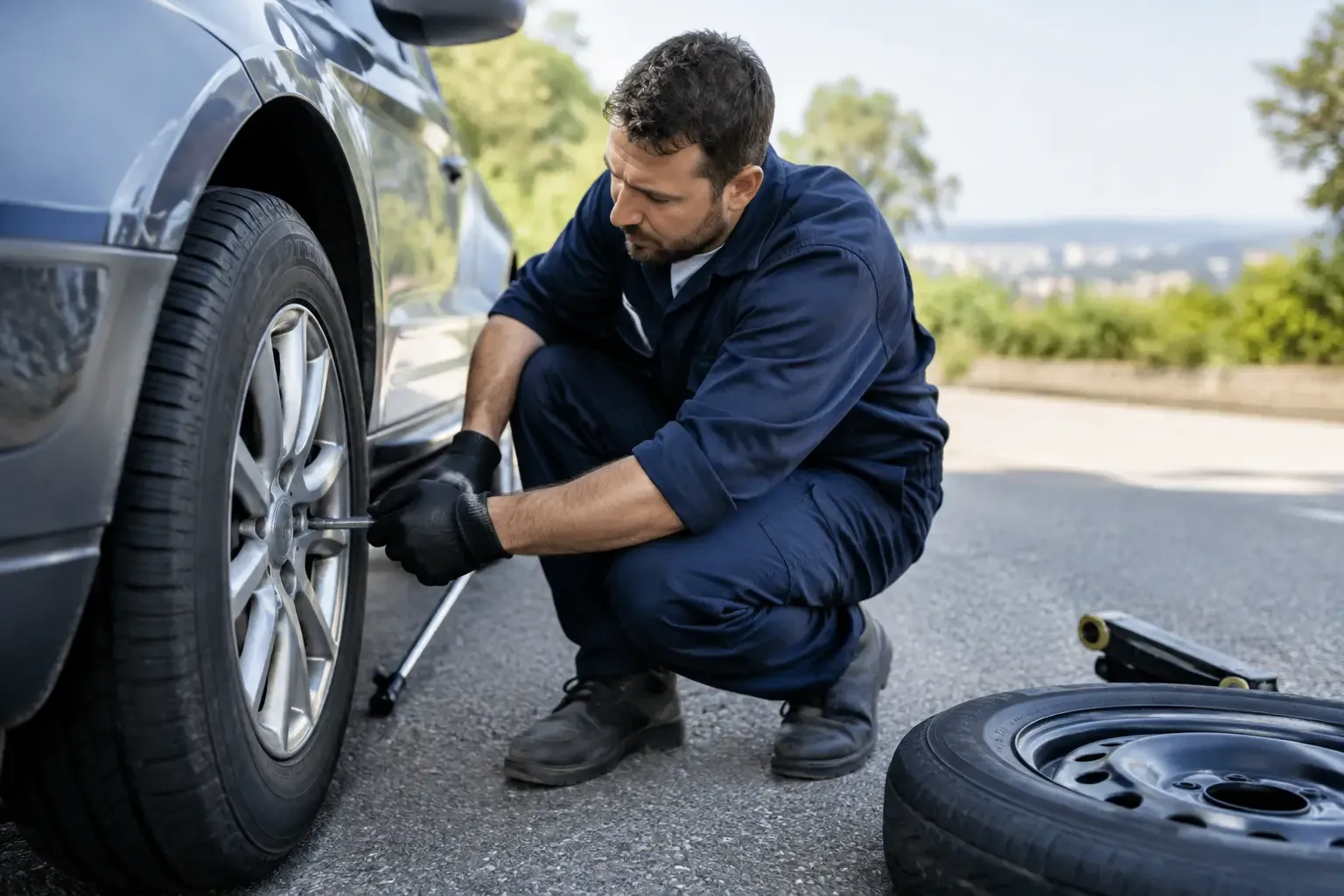
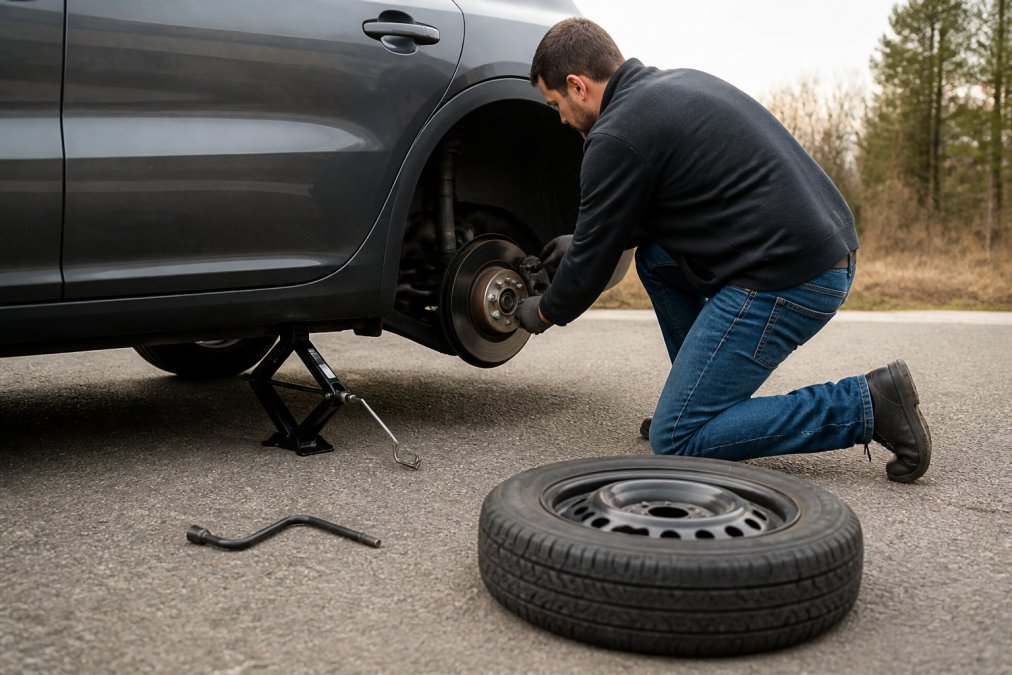
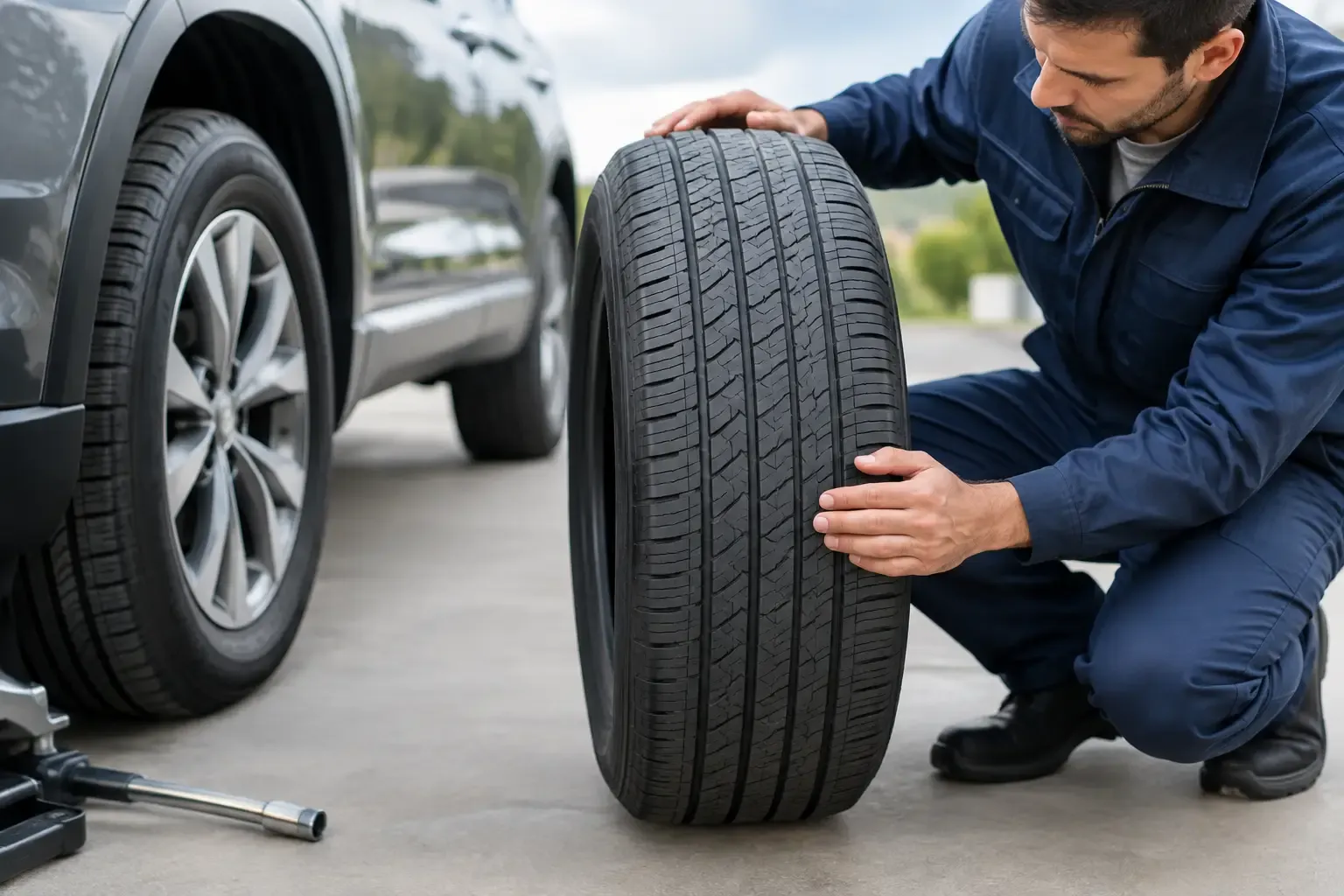
Changing a flat safely takes 15 to 20 minutes on flat ground with the right tools, and only when you are clear of traffic and the damage is repairable with a spare:
- Loosen the lug nuts a quarter turn before jacking
- Lift the vehicle only until the flat tire clears the ground
- Remove the lug nuts, swap the wheel, and hand-tighten in a star pattern
- Lower the vehicle, then torque the nuts in the same star pattern
- Check the spare's pressure before you drive on it
DIY Temporary Repair Safety: What You Can and Cannot Fix on the Road
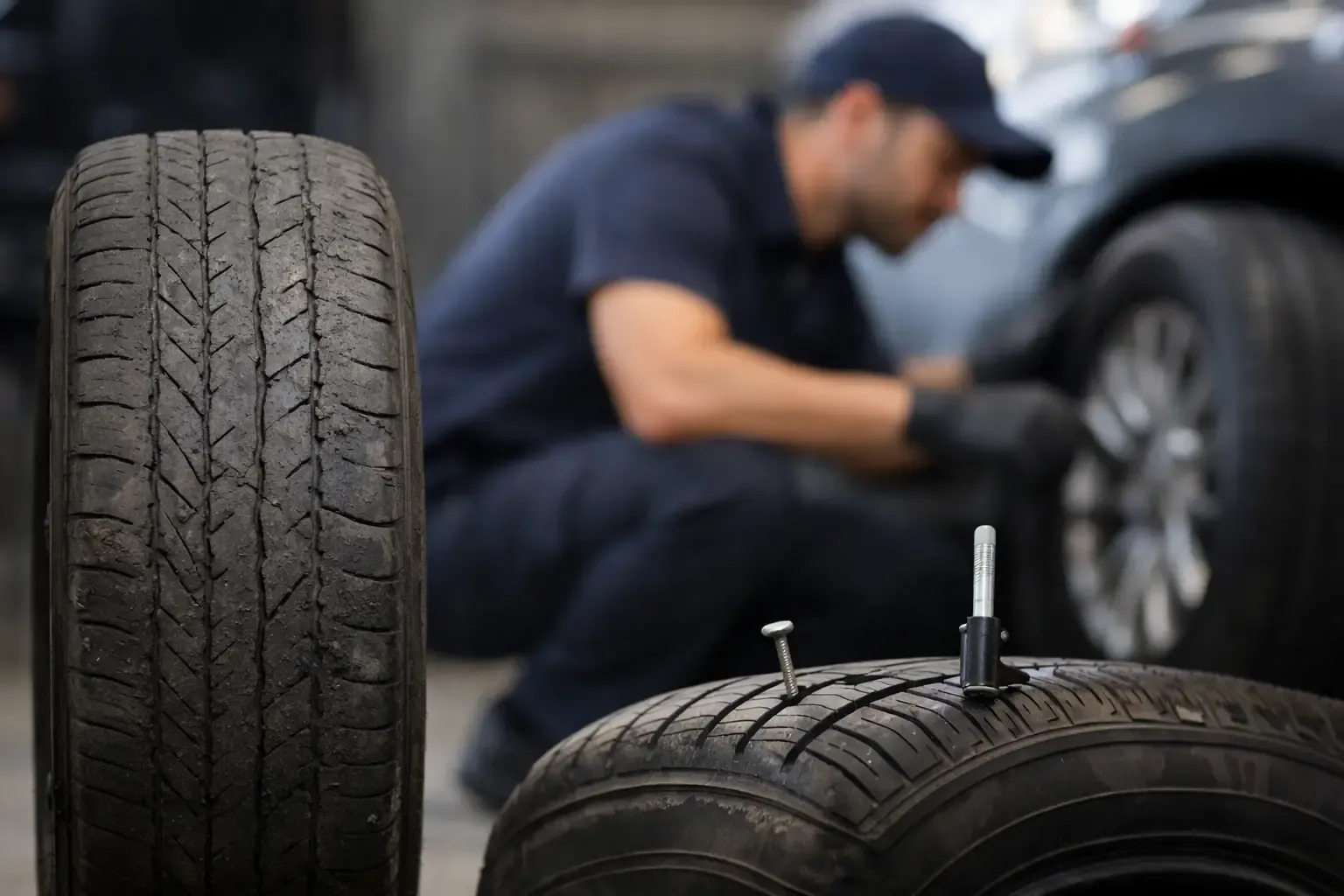
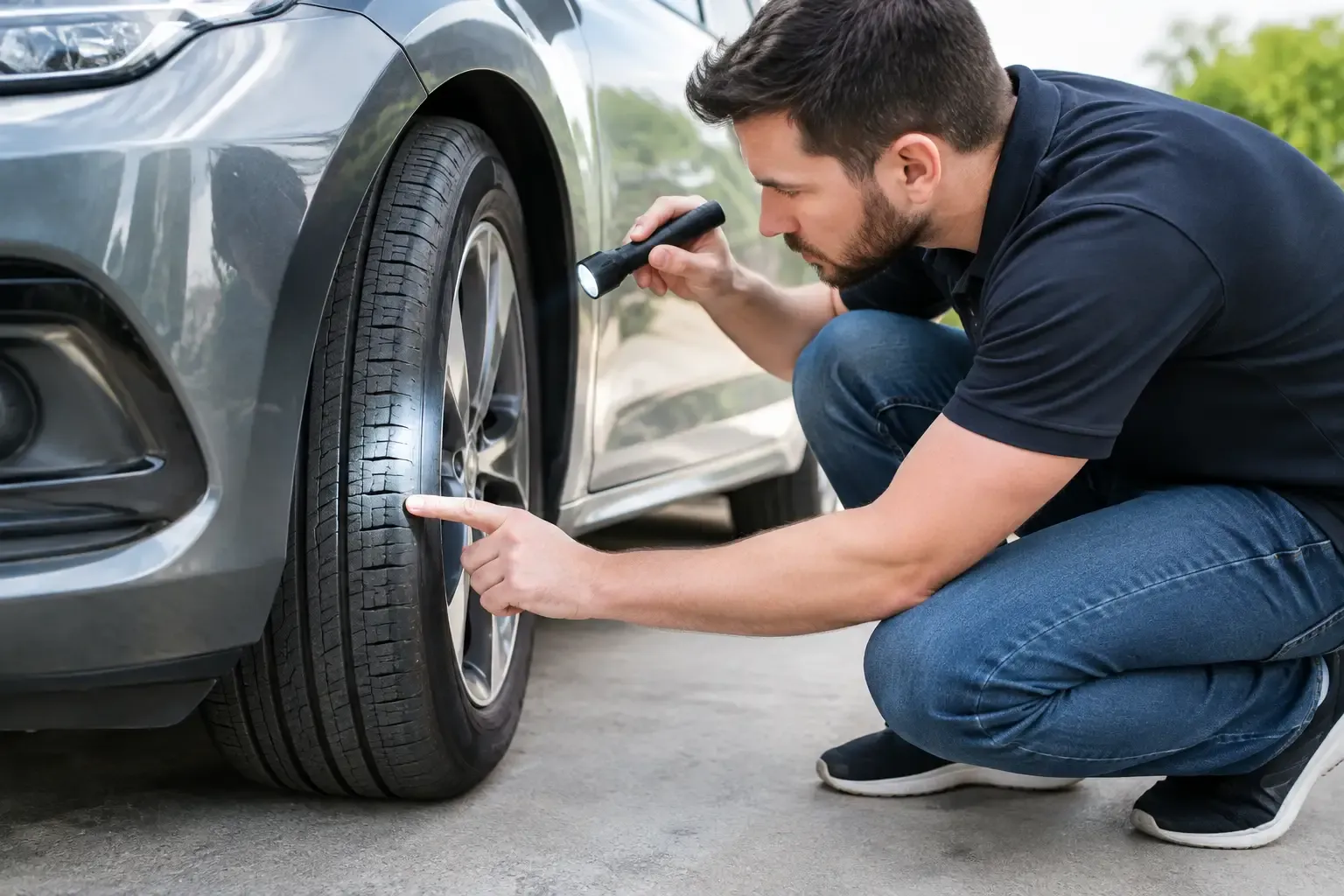
You can safely plug a small tread puncture with a tire plug kit in an emergency. You cannot safely repair sidewall damage, a puncture near the tread shoulder, or a tear longer than about a quarter inch, those need a new tire.
Pro Tip
If you use a plug kit, mark the tire and tell your technician exactly where the repair is. A plug left in place can hide internal damage, and a proper patch-plug from the inside is the only way to know the tire is sound.
Mobile Tire Repair Near Me: How On-Site Service Works in Columbus
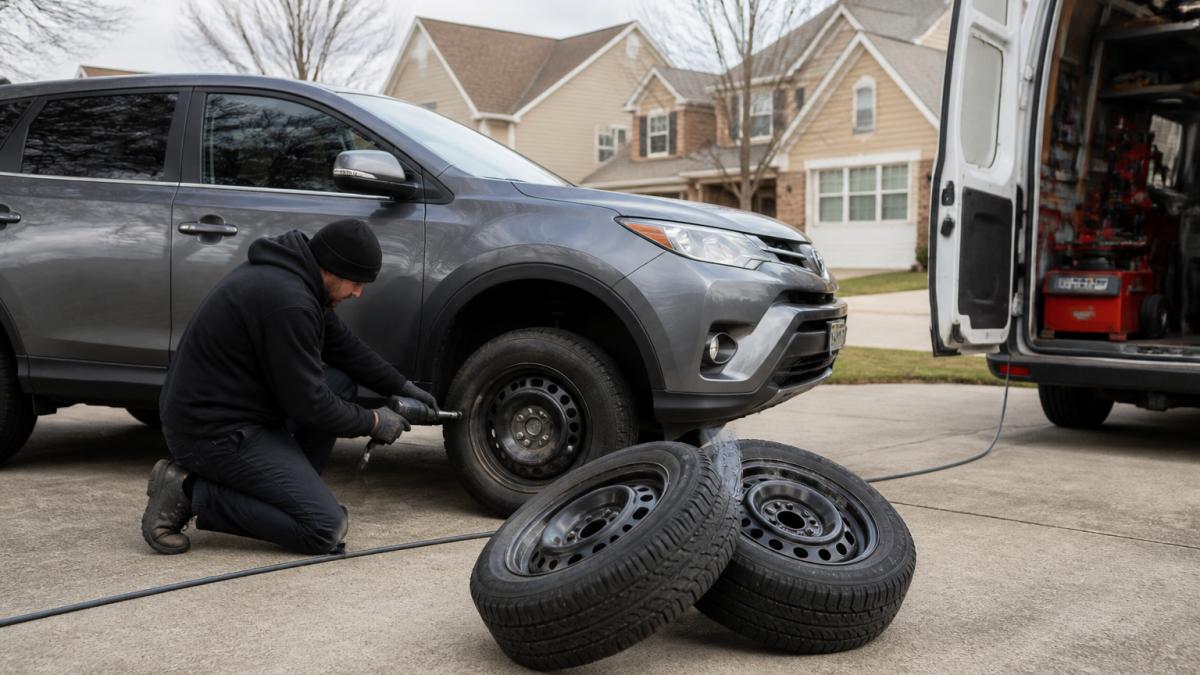
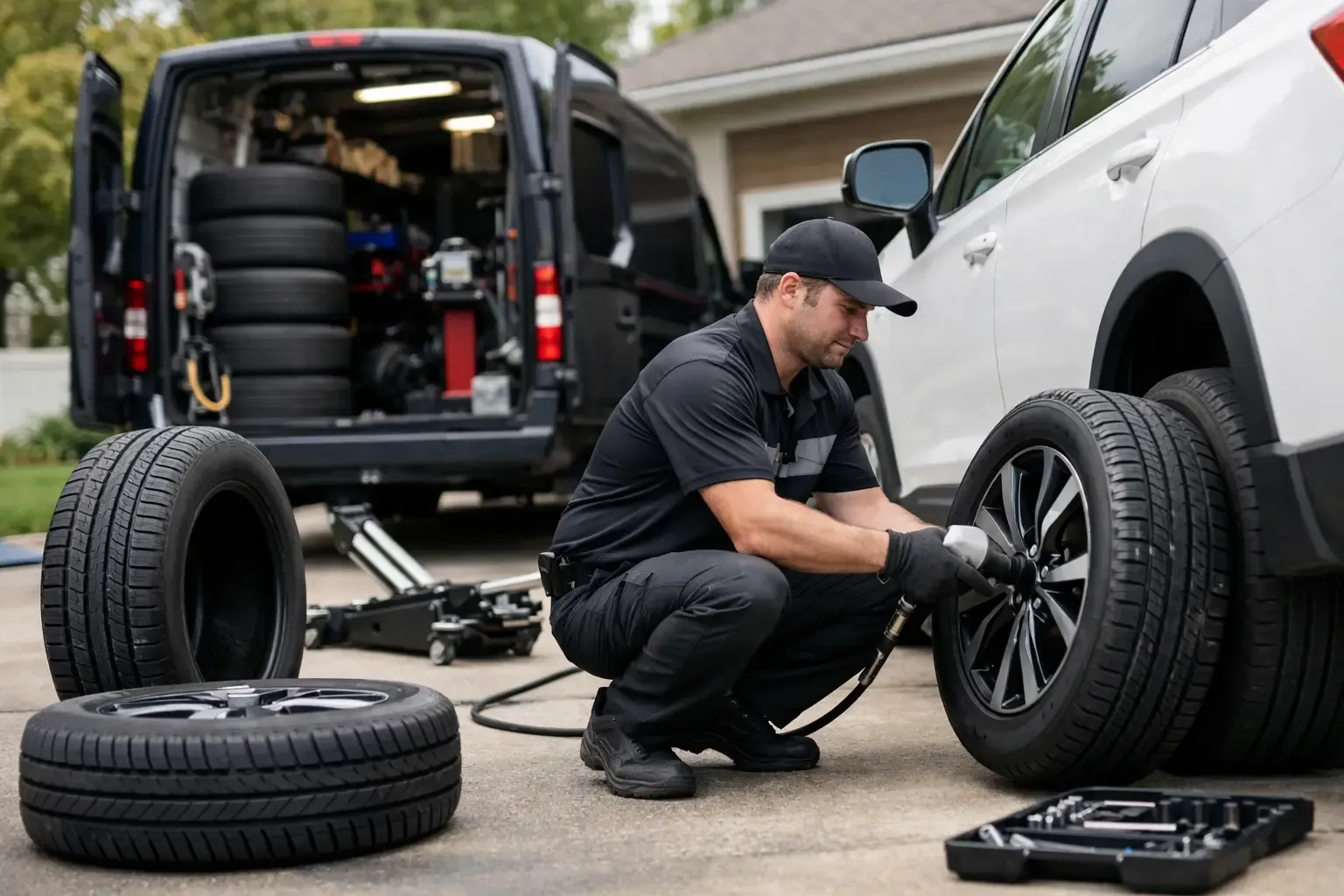
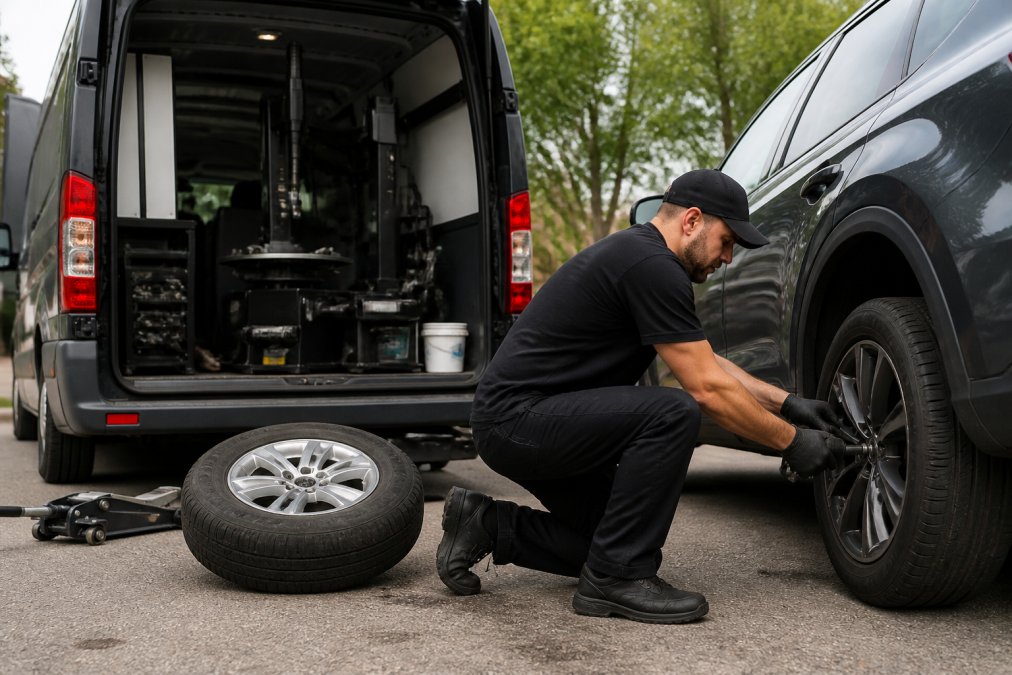
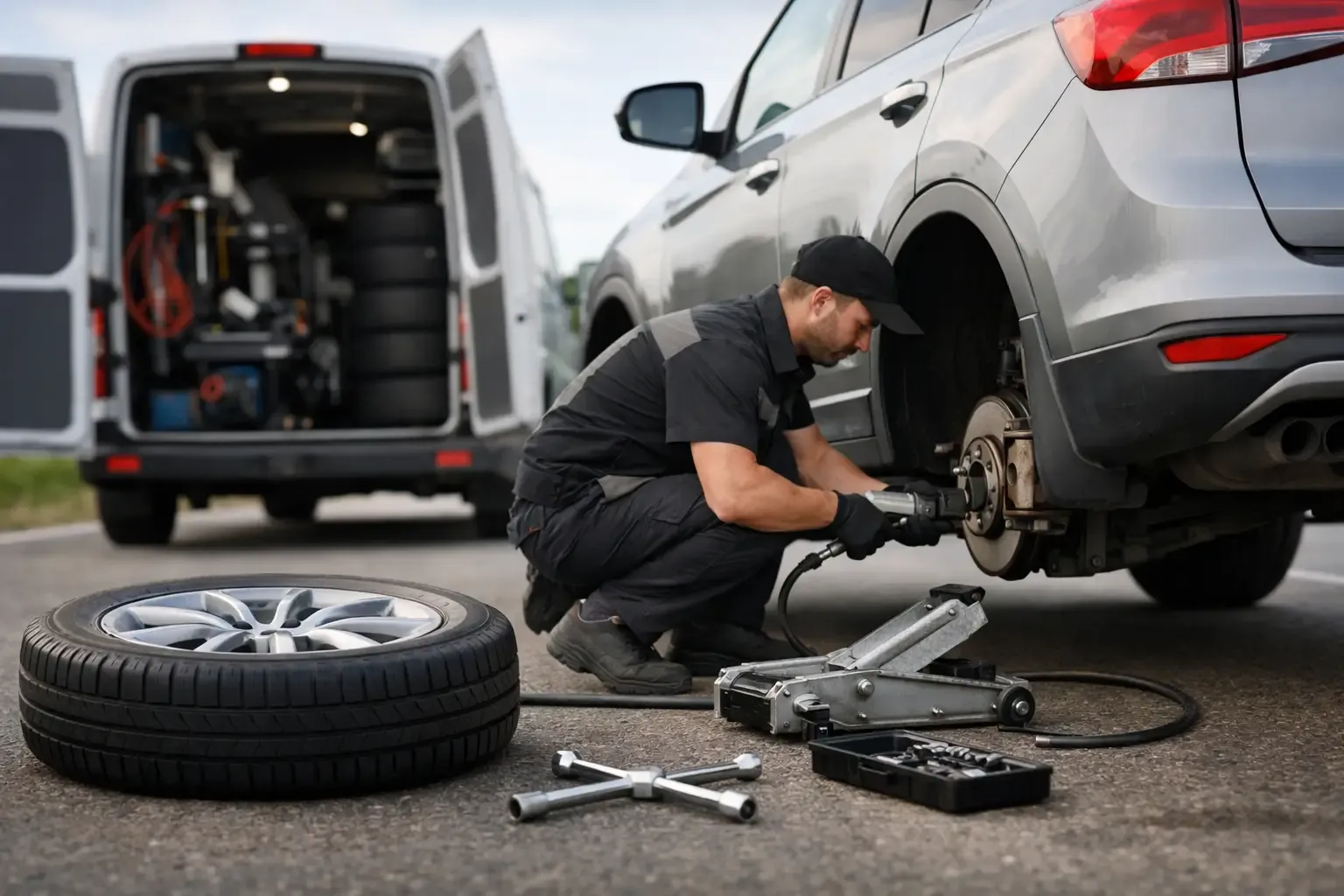
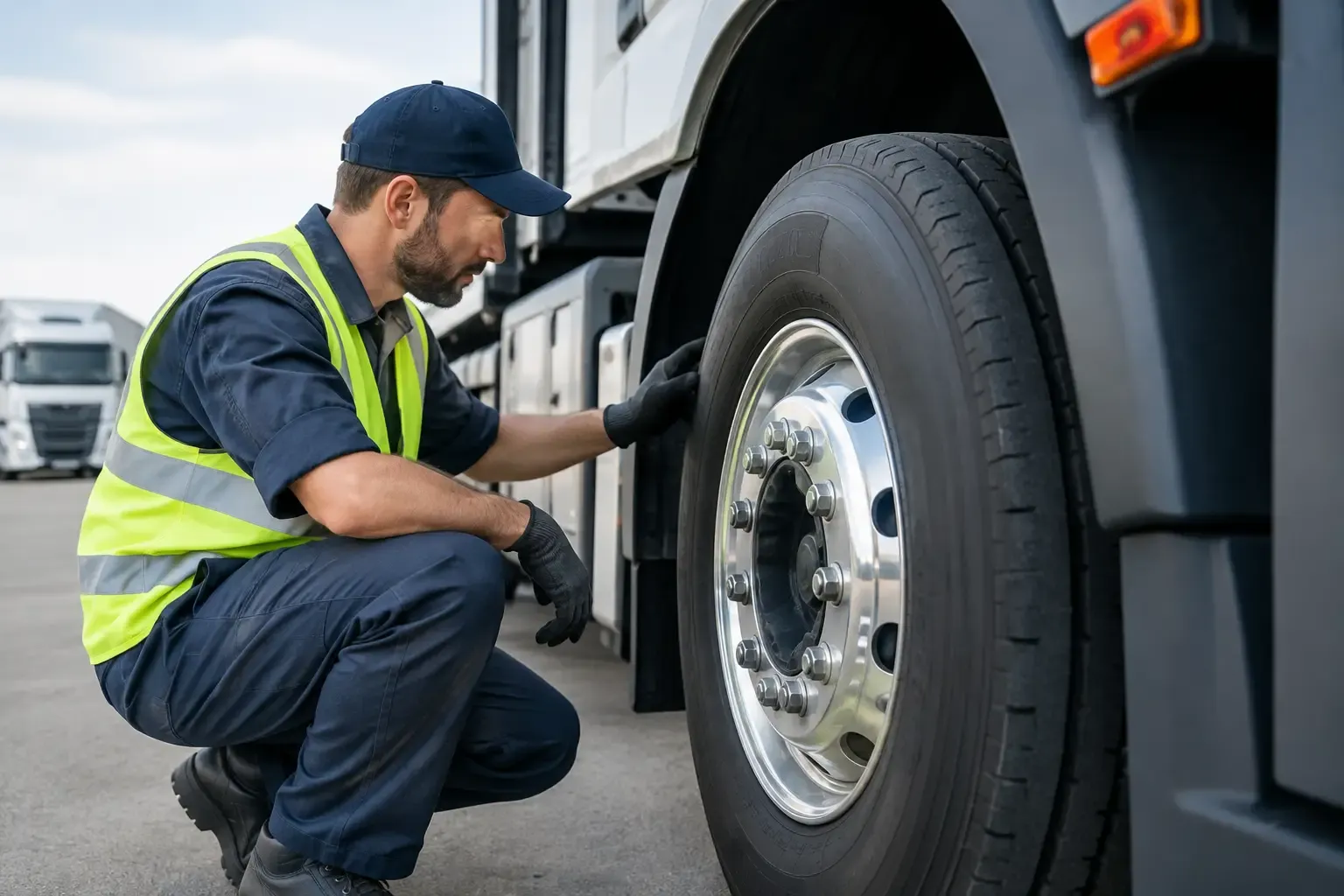
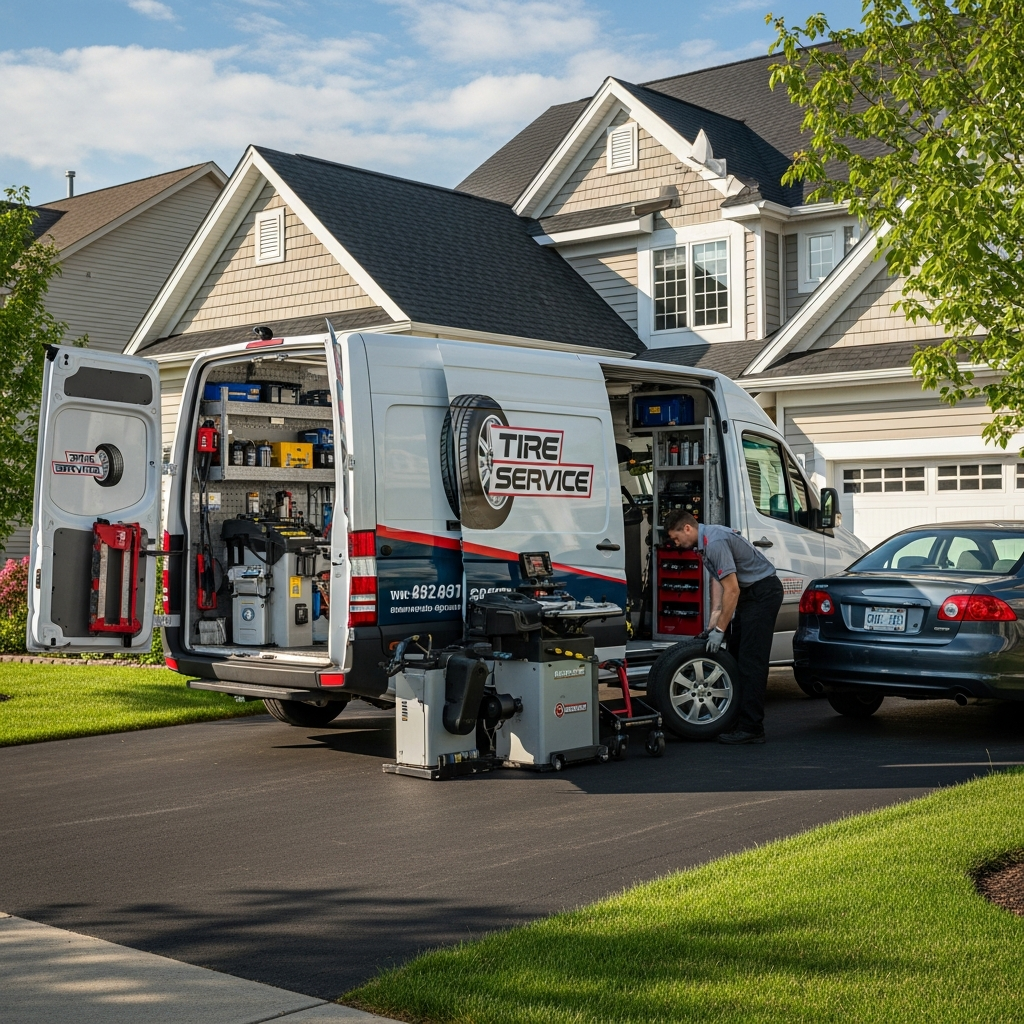
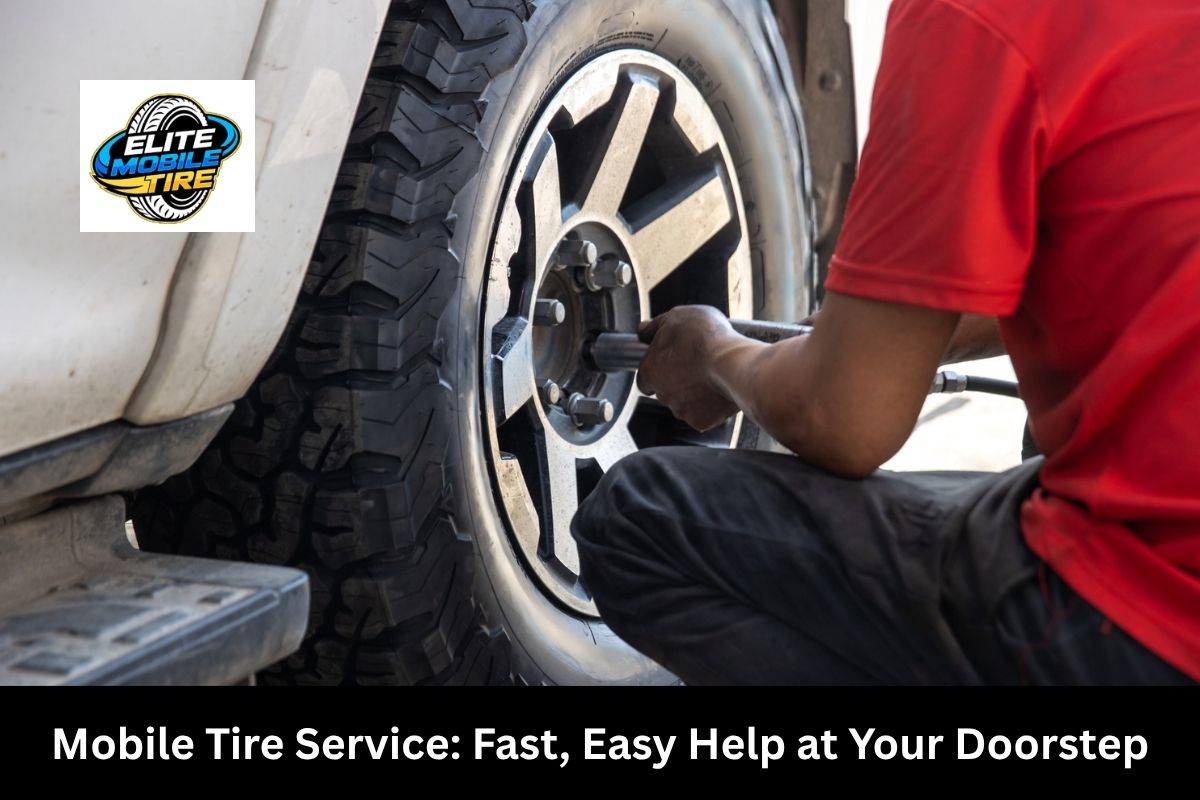
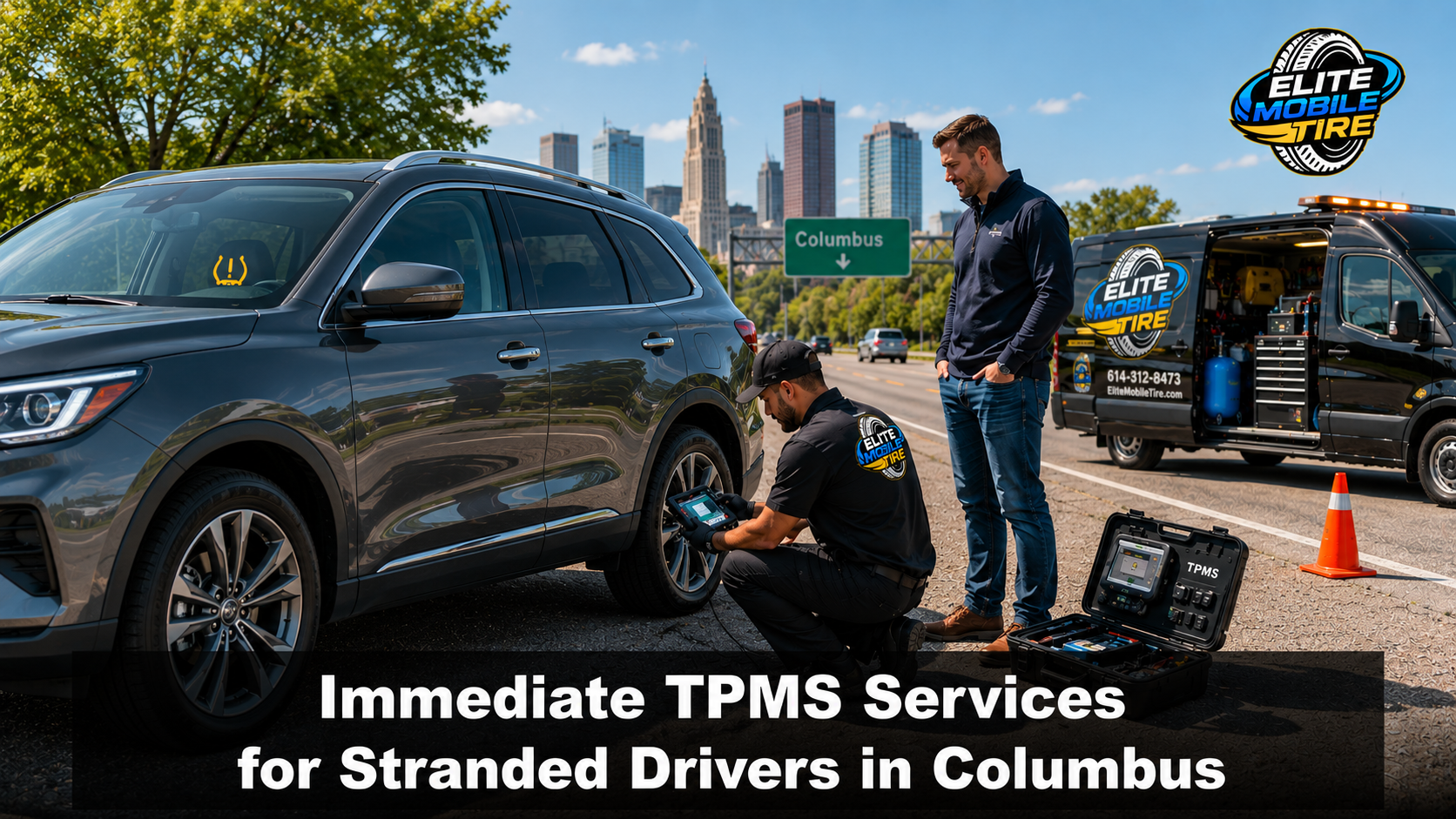
Mobile tire repair brings the shop to you. A technician arrives in an equipped van, lifts your vehicle on site, and completes the repair or replacement in your driveway, office lot, or job site. For drivers searching mobile tire repair near me, this removes the tow, the waiting room, and the second trip.
What the Technician Actually Brings and Does
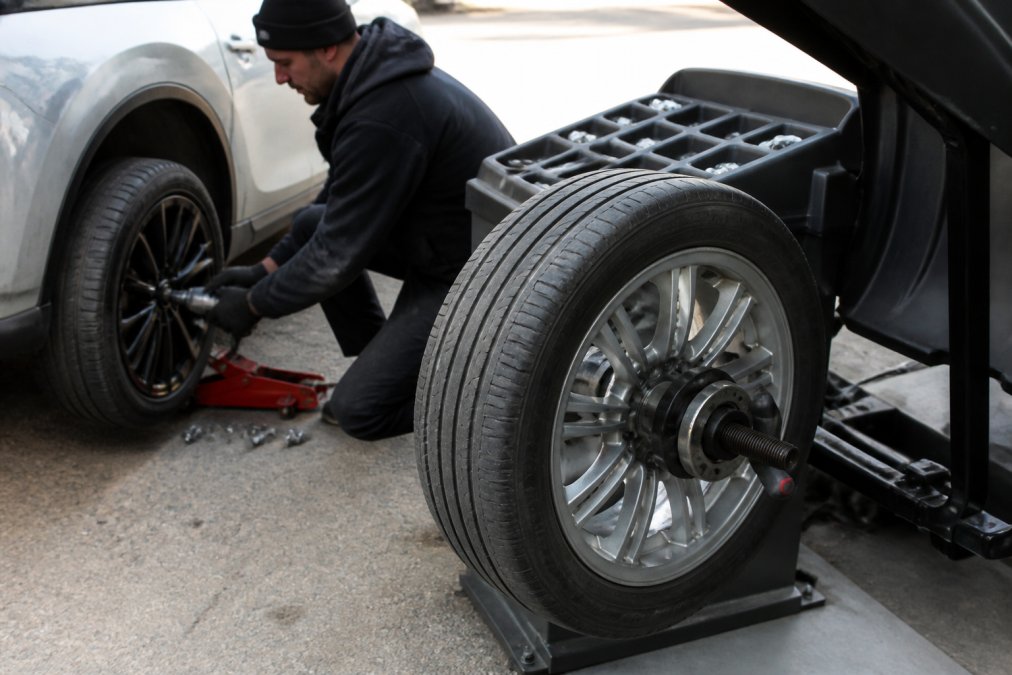
A properly equipped mobile unit is a workshop on wheels, not a guy with a jack and a lug wrench. The van typically carries:
- A floor jack and jack stands rated for passenger and light-truck weight
- A torque wrench, impact gun, and a full socket set
- A tire changer and wheel balancer sized for the van's power supply
- A plug-and-patch kit plus an internal patch-plug station
- A compressor and a calibrated tire pressure gauge
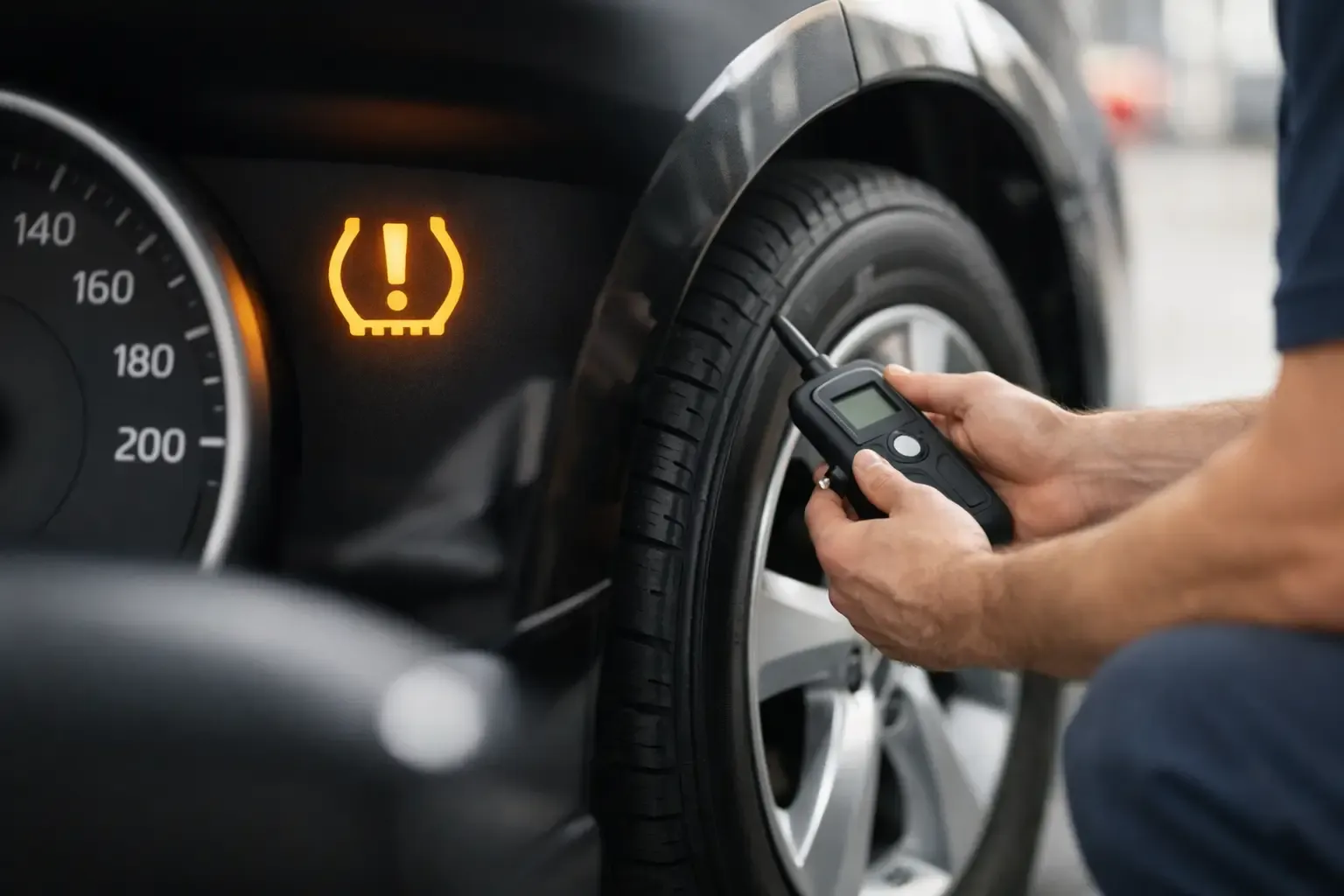
- TPMS scan and reset tools
- A selection of common tire sizes, valve stems, and wheel weights
The Tire Size Problem Most Guides Skip
If your vehicle runs a less common size, a technician who carries it saves you a day of phone calls. Before you book, read your tire's sidewall and give the dispatcher the full size string, load index, and speed rating. A 235/65R17 104H is not interchangeable with a 235/65R17 99T on a heavier vehicle.
Ask two questions when you book:
- Do you carry my exact size on the van, or will it need to be sourced?
- If it needs sourcing, what is the realistic arrival window?
What to Expect from Emergency Dispatch and Service Radius
Emergency dispatch works on a service radius, the distance a technician will travel to reach you. A wider radius means faster coverage in outlying areas. When you call, give your exact location, tire size, and whether the vehicle is drivable.
Situation | Best First Move | Typical Outcome
Tread puncture, drivable | Book on-site repair | Patch-plug, tire kept
Sidewall gash or bulge | Call for replacement | New tire required
No spare, highway shoulder | Emergency dispatch | On-site swap
Slow leak, parked at home | Schedule mobile visit | Diagnosed and sealed
Multiple fleet vehicles | Book a fleet window | All serviced on site
Pro Tip
Before the technician starts, ask them to show you the damage and confirm the repair method in writing on the work order. A patch-plug from the inside is the only repair most tire manufacturers recognize as permanent; an outside plug is a get-home measure.
When Mobile Service Beats a Tow
Mobile service wins when the vehicle is safe where it sits, the tire size is available, and the damage is repairable or replaceable on site. A tow makes more sense when the wheel or suspension is damaged, the vehicle cannot be moved safely, or the tire size must be ordered. On a live traffic lane or blind curve, call for help and let the dispatcher decide between a tire van and a tow.
Cost of Tire Patch vs Replacement: What Affects Your Final Bill
The cost of tire patch vs replacement depends on three things: the damage location, whether the tire can be repaired to manufacturer standards, and whether a same-size replacement is in stock. A repairable tread puncture costs far less than a new tire, but only if the damage qualifies.
Price Brackets to Expect
Exact prices vary by provider, tire size, and vehicle. Confirm the quote before work begins.
Service | Typical Range | What It Includes
Internal patch-plug repair | Lower bracket | Tire off, patch-plug from inside, remount, balance
Outside plug (get-home only) | Lowest bracket | Plug inserted from outside, no internal inspection
Mobile call-out fee | Add-on | Travel to your location, varies by distance
Single replacement tire, common size | Mid bracket | Tire, mount, balance, valve stem
Single replacement tire, less common size | Higher bracket | Same, plus sourcing and possible delay
TPMS sensor replacement | Add-on | New sensor, relearn to vehicle
Old tire disposal | Small add-on | Recycling fee per tire
What Drives the Bill Up
- Sidewall or shoulder damage, which cannot be patched
- A puncture too close to a previous repair
- Run-flat tires driven while flat, which often destroys the inner liner
- A tire size that must be ordered rather than pulled from stock
- Add-ons like balancing, a new valve stem, or disposal of the old tire
- A mobile call-out fee that is separate from the repair itself
Elite Mobile Tire provides transparent upfront pricing with no hidden fees. Ask any provider to confirm whether mounting, balancing, and disposal are included.
Insurance and Road Hazard Warranty Coverage for Tire Damage
A road hazard warranty covers tire damage from potholes, glass, nails, and debris, and is separate from your auto insurance policy. Check two places before paying out of pocket: the warranty that came with the tires, and your policy's roadside or comprehensive coverage.
Watch Out
Do not authorize a replacement before you check the warranty. Once the old tire is disposed of, proving the damage and the tread depth for a prorated claim becomes much harder. Ask the technician to photograph the damage and note the tread depth on the work order first.
The Decision Rule
If the puncture is in the tread, away from the shoulder, and the tire holds air after a patch-plug, repair it. If the damage is on the sidewall, the tire was driven flat, or the puncture sits near a previous repair, replace it. When repair plus call-out approaches the cost of a replacement, the replacement is usually better value because it resets the tire's service life.
Step-by-Step Emergency Protocol: From Blowout to Back on the Road
A blowout demands a different response than a slow leak. The tire has failed suddenly, the vehicle is pulling hard, and your first job is control, not repair.
- Keep both hands on the wheel and hold it straight.
- Ease off the accelerator. Do not brake.
- Let the vehicle slow on its own until you are under control.
- Signal and move to the shoulder or the nearest safe pull-off.
- Turn on hazards, set the parking brake, and exit away from traffic.
- Assess the damage from a safe position.
- Call for on-site help or change to your spare if conditions allow.
Key Takeaway
The single best decision in any tire emergency is choosing the safe location over the fast fix. A repair done on a dangerous shoulder is not worth the risk when on-site service can come to you.
Why Drivers Choose Elite Mobile Tire for Urgent Tire Repair
Elite Mobile Tire brings a fully equipped workshop to your home, office, or job site across Greater Columbus, so you skip the tow truck and waiting room entirely. Certified technicians handle everything from passenger cars to commercial trucks, including TPMS work and balancing.
Frequently Asked Questions
How much does emergency tire repair cost?
The cost of tire patch vs replacement depends on the damage and tire type. A simple puncture repair typically costs less than a new tire, but pricing varies by tire size and service call. Elite Mobile Tire provides transparent upfront quotes before any work begins, so you know exactly what you'll pay. They do not charge hidden fees for balancing or disposal. For a specific quote, contact them directly with your tire size and location.
Can a flat tire be repaired on the side of the road?
Yes, many flat tires can be repaired on the side of the road if the puncture is in the tread area and the tire has not been driven on while flat. Mobile tire repair near me services bring the equipment to you. However, sidewall damage or a blowout usually requires a replacement. For safety, move your vehicle to a safe location, turn on hazard lights, and call a mobile technician rather than attempting a repair in traffic.
Is it better to patch or replace a flat tire?
It depends on the damage. A puncture in the tread smaller than 1/4 inch can often be safely patched and plugged. Sidewall damage, a puncture larger than 1/4 inch, or a tire with low tread depth should be replaced. A tire patch-plug combo is the most reliable repair for tread punctures. If you're unsure, a certified technician can assess the tire and recommend the safest option. Never repair a tire with sidewall damage.
What should I do if I get a flat tire on the highway?
If you get a flat tire on the highway, do not stop in a travel lane. Signal, move to the right shoulder or emergency lane, and turn on your hazard lights. If you can safely exit the highway, do so. Stay in your vehicle with your seatbelt on and call for urgent tire repair. Do not attempt to change a tire on the highway unless you are in a protected area and it is safe. A mobile service can reach you and handle the repair.
Ready for a new set? Elite Mobile Tire installs 2 or 4 new tires right in your driveway or parking lot anywhere around Columbus, Obetz, Groveport, Grove City, and Reynoldsburg. Financing is available through Afterpay and Acima with up to 24-month payment plans. Call 614-344-5010 or visit elitemobiletire.com to book.