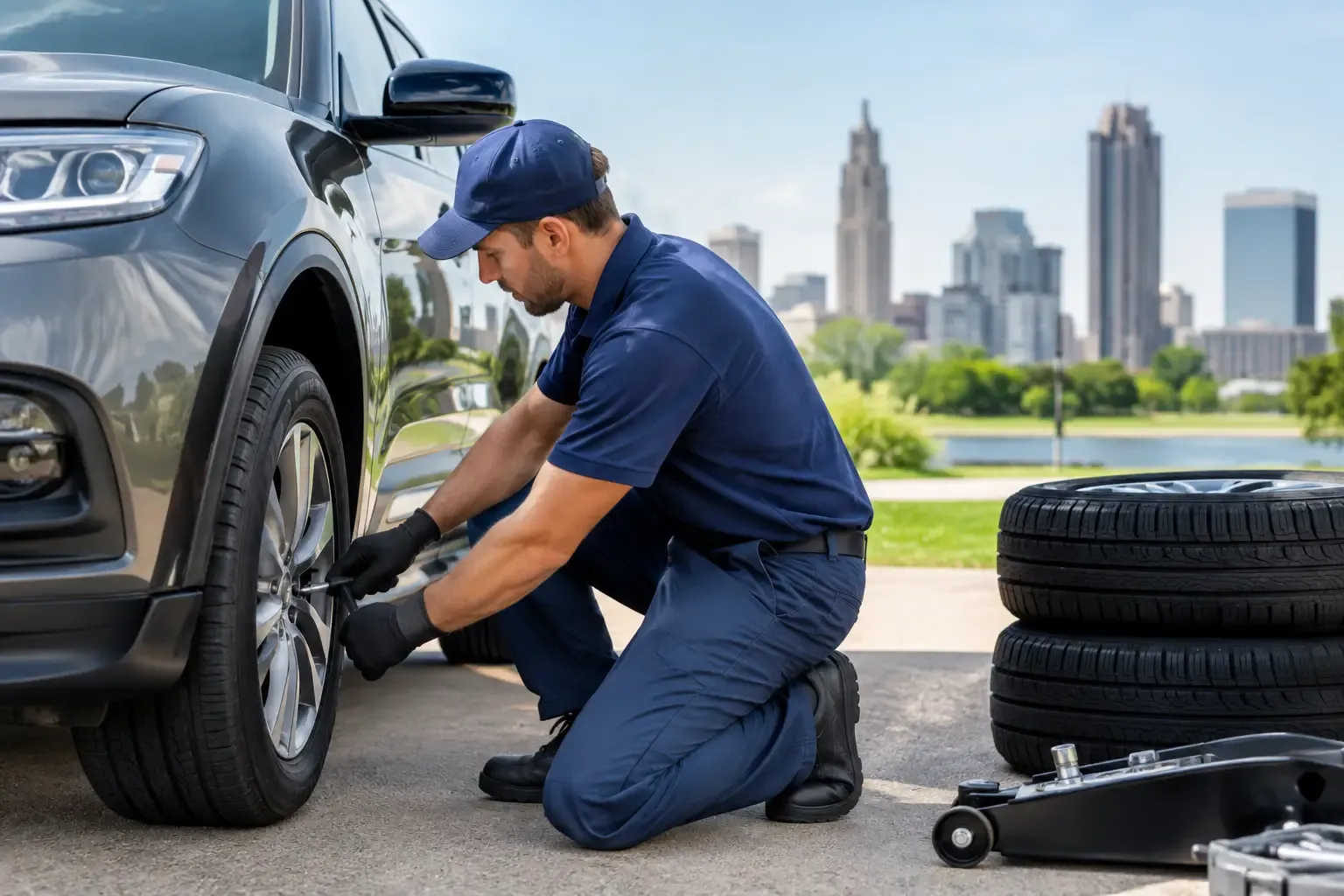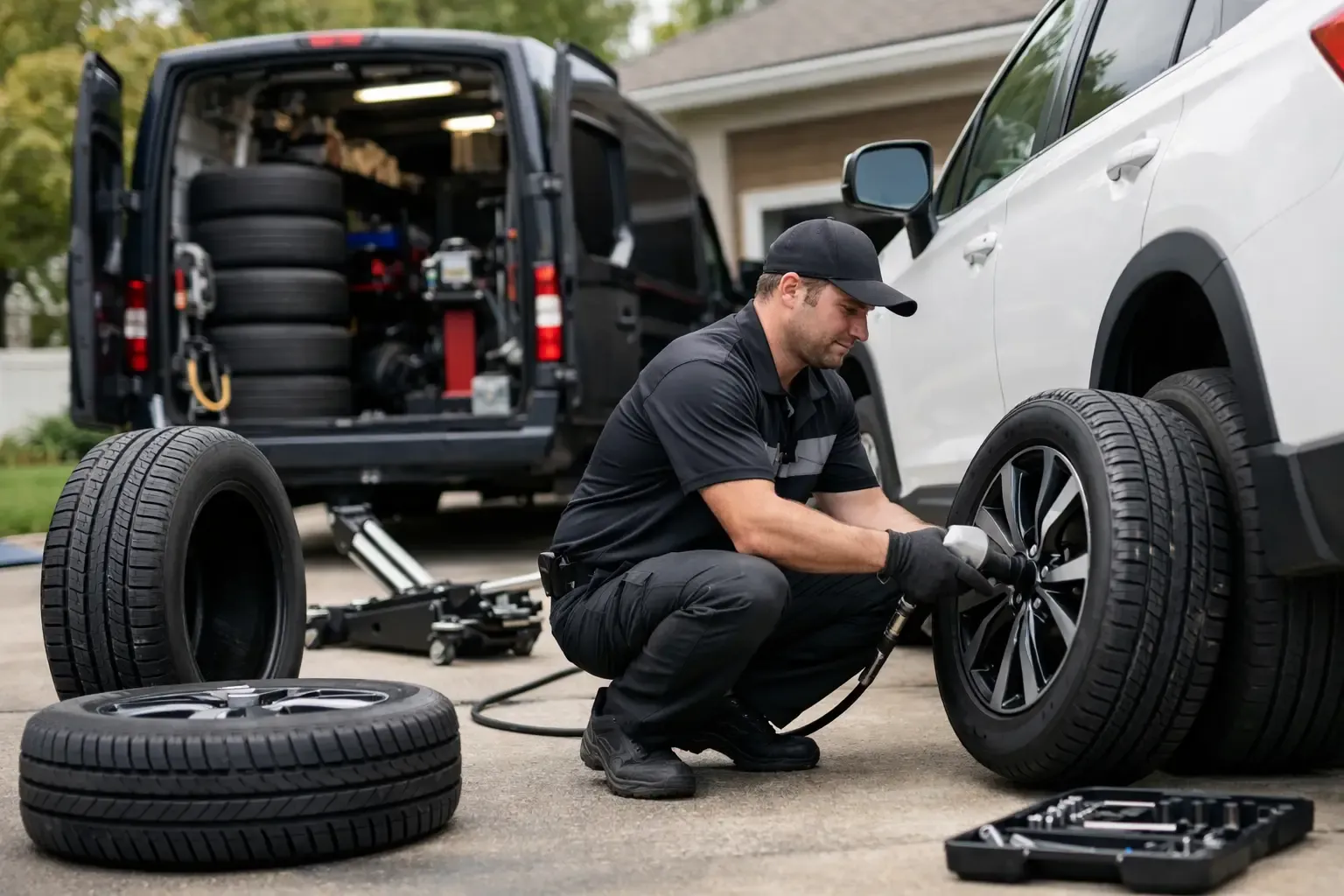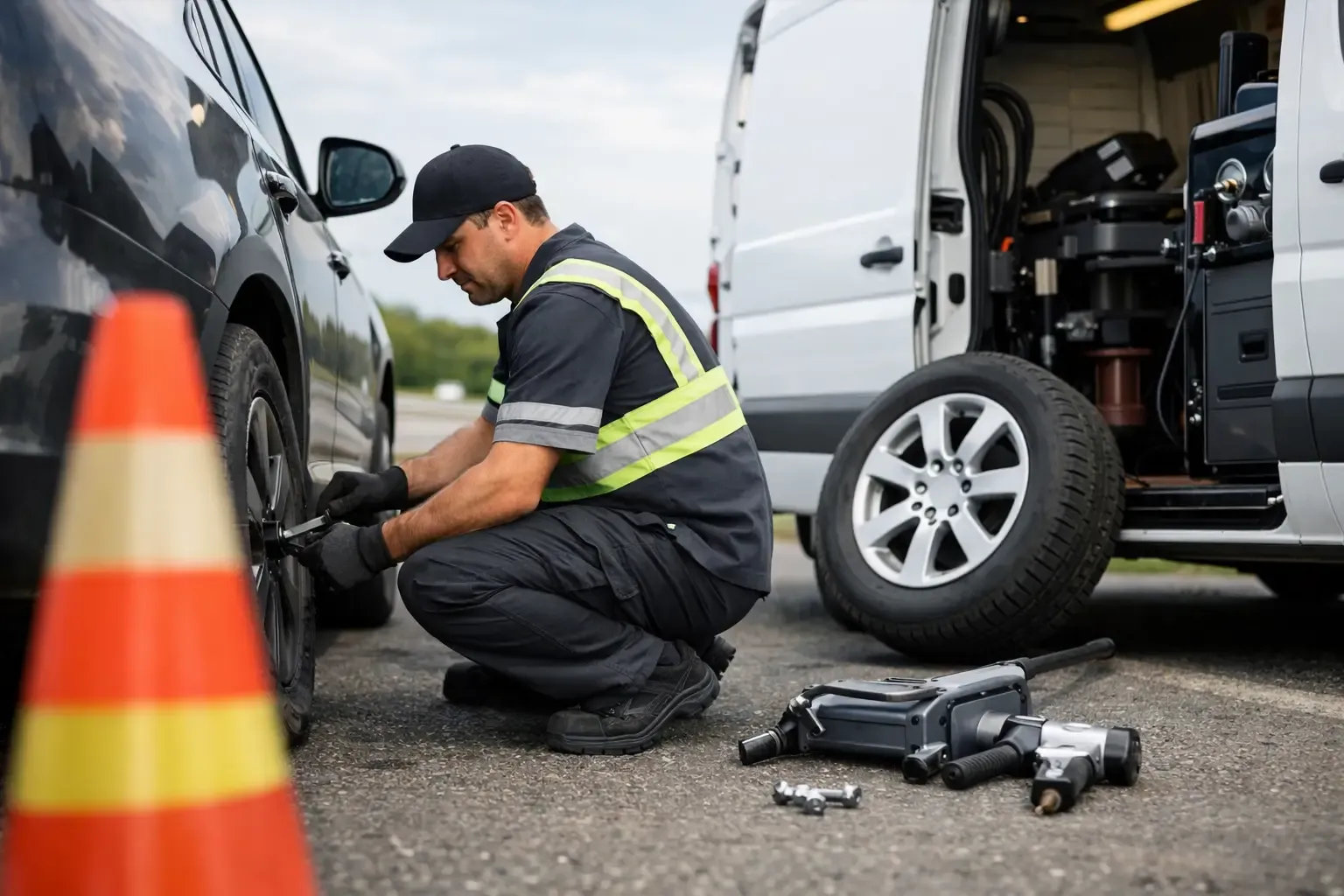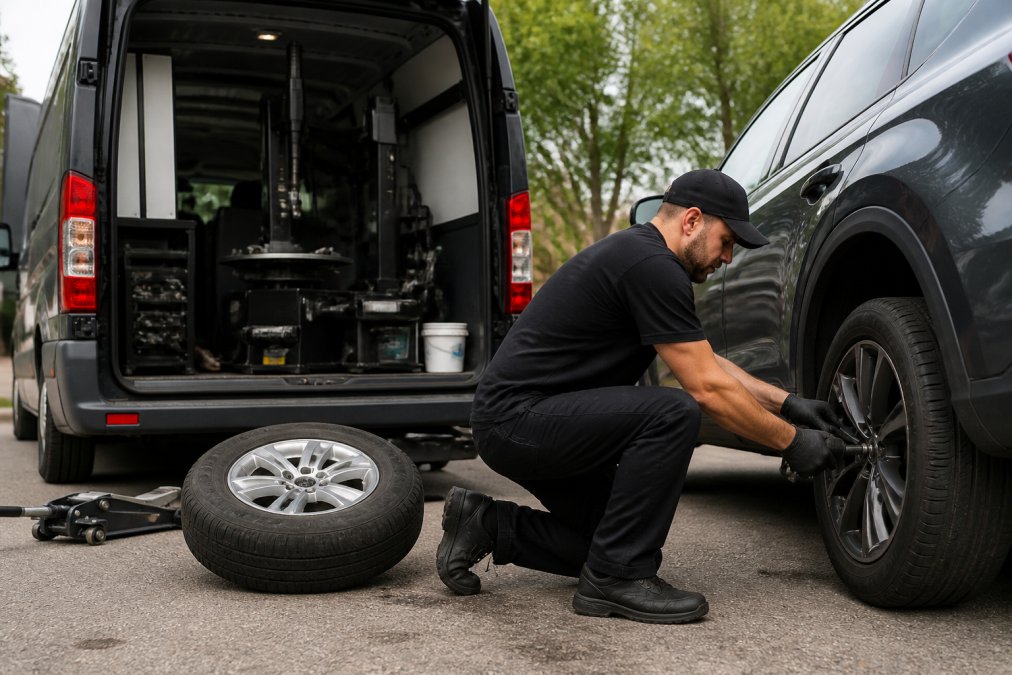
A flat tire can turn a normal commute, school pickup, or workday into a stressful stop on the shoulder. This guide to roadside spare tire changes helps you make the safest next decision: change the tire yourself when conditions allow, or get qualified help when the location, damage, or vehicle setup makes the job unsafe.
A spare tire is meant to get you out of an immediate problem, not to turn a risky roadside situation into a longer one. Before reaching for the jack, take a moment to assess where you are, what type of spare your vehicle has, and whether you can work without putting yourself near traffic.
Start With Safety, Not the Lug Nuts
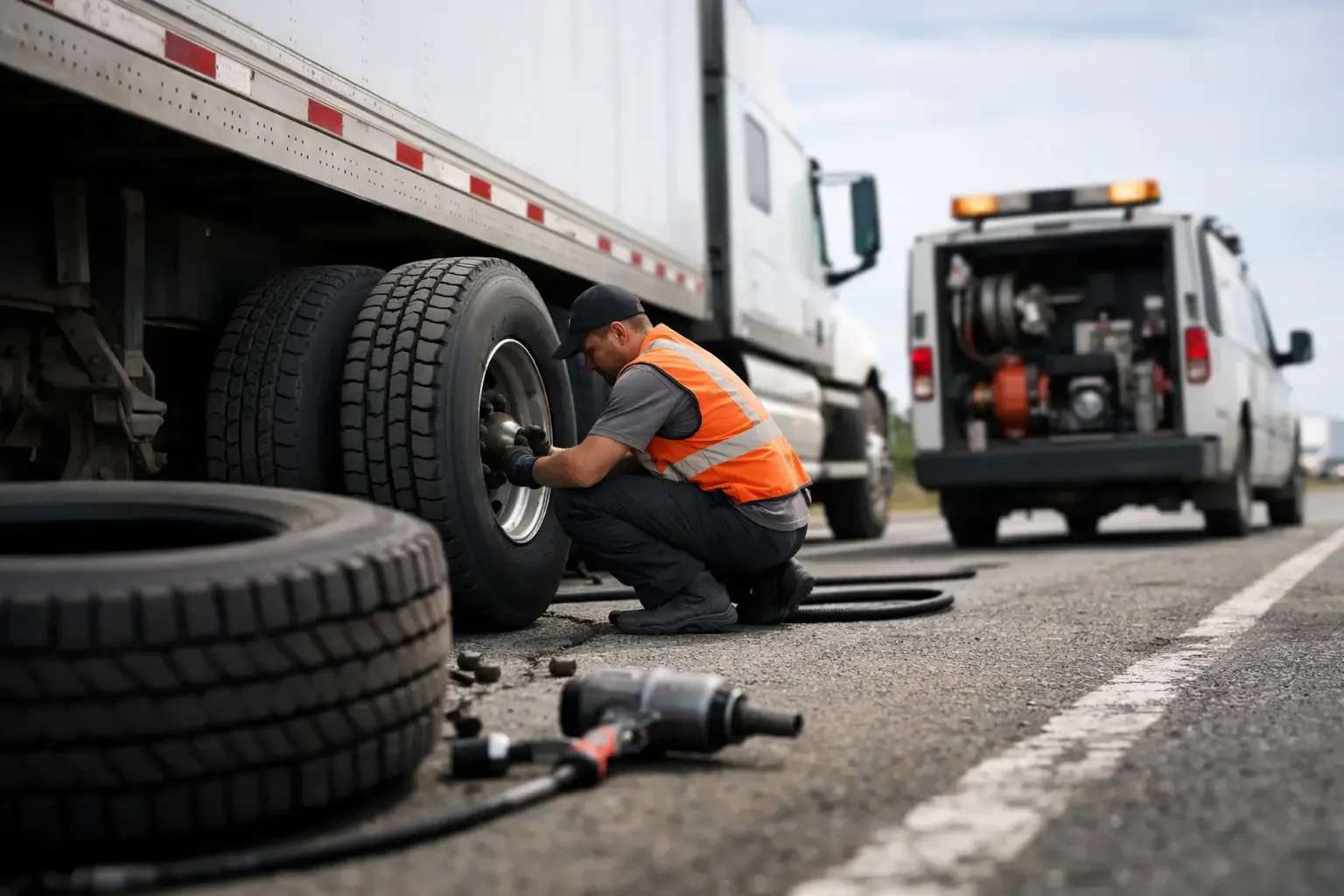
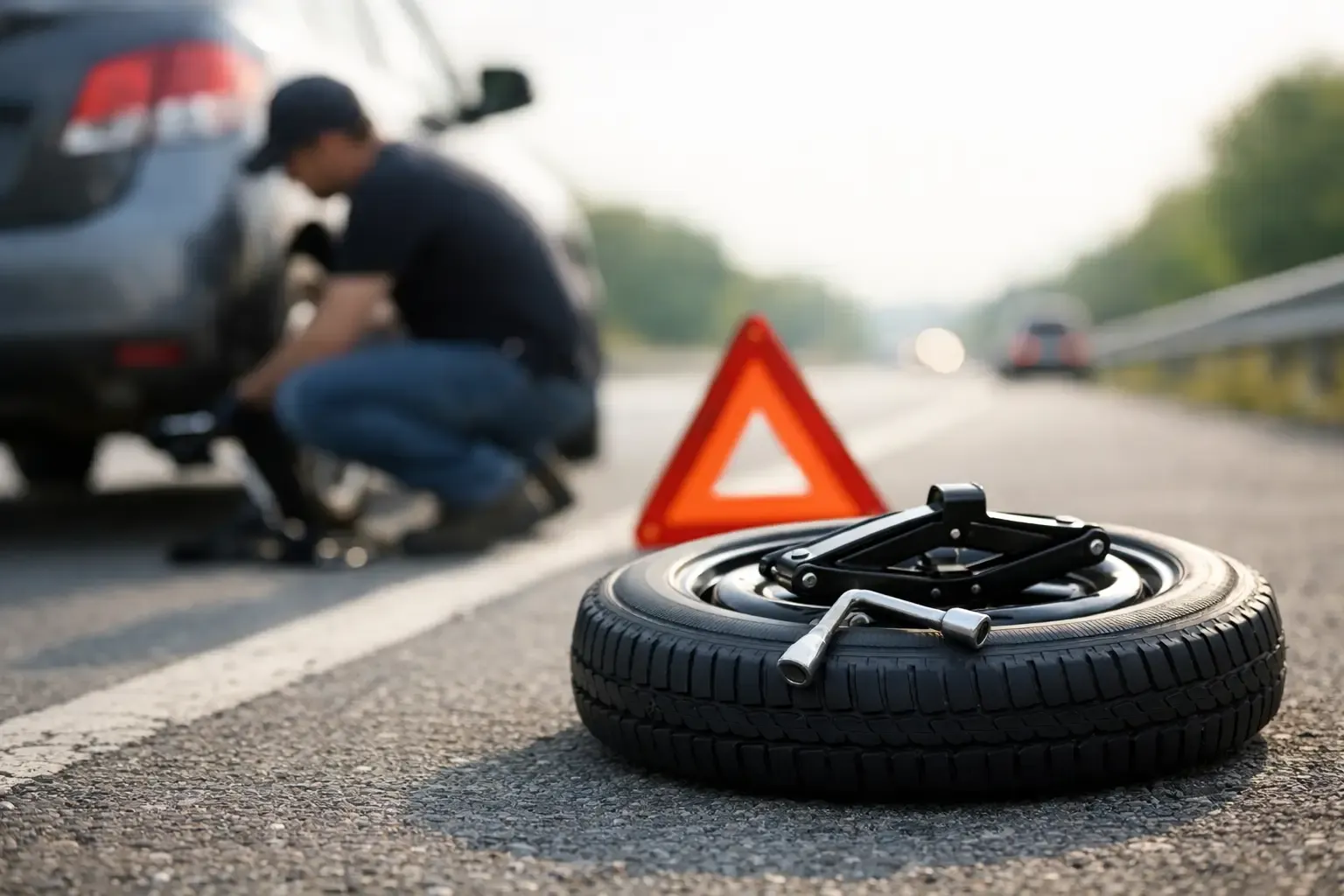
The best place to change a tire is a level, firm surface away from moving traffic. A parking lot, driveway, wide shoulder, or nearby side street is usually better than stopping on a narrow road. If you are on a highway, near a blind curve, on soft ground, or too close to traffic, stay in the vehicle with your seat belt fastened if it is safe to do so and call for roadside assistance.
Turn on your hazard lights as soon as you realize you have a flat. If you have reflective triangles or flares and can place them safely, use them to give approaching drivers more notice. Avoid standing between your vehicle and traffic.
Before lifting the vehicle, confirm these basic conditions:
- The vehicle is parked on solid, level ground.
- The transmission is in Park, or in gear for a manual transmission.
- The parking brake is fully engaged.
- Passengers and pets are in a safe location away from traffic.
- You have the correct spare, jack, lug wrench, and wheel-lock key if your wheels use locking lug nuts.
If any of those conditions are missing, waiting for professional help is the practical choice. Saving a few minutes is not worth the risk of a slipping jack or passing traffic.
Check What Kind of Spare You Have
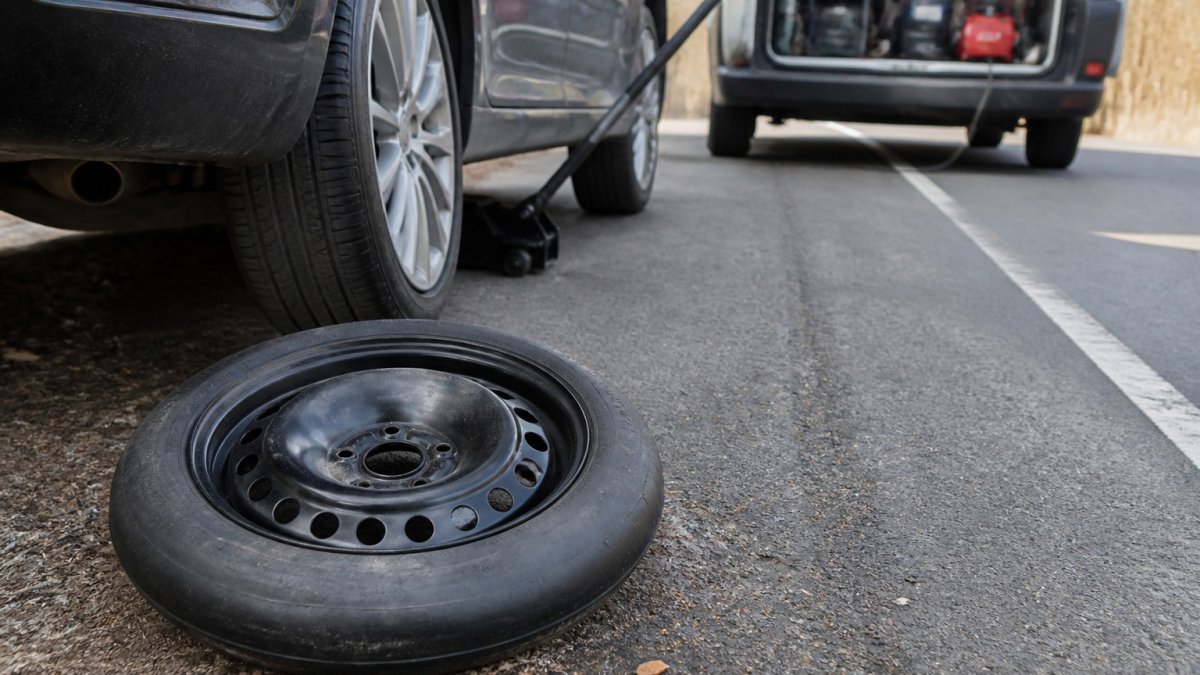
Not every spare tire can be driven the same way. A full-size spare may match your regular tires, but it still needs to have adequate air pressure and tread depth. A compact temporary spare, often called a donut, is smaller and has specific speed and distance limits printed on its sidewall or on a warning label in the vehicle.
Some newer vehicles do not include a spare at all. They may have a tire inflator kit, sealant, run-flat tires, or another temporary mobility system. Sealant can help with a small puncture in the tread area, but it cannot repair a sidewall cut, bent wheel, blowout, or tire that has come off the bead. It can also complicate a later repair if used when it was not necessary.
Your owner's manual is the authority for your vehicle's jack points, spare-tire instructions, and temporary-spare limitations. If the spare is visibly damaged, badly underinflated, or more than a few years old with cracking, do not rely on it for highway driving.
How to Change a Spare Tire at the Roadside
Once you are in a safe location and have the right equipment, work methodically. Rushing is how lug nuts get cross-threaded, jacks get positioned incorrectly, and tools get left behind.
1. Find the jack points and prepare the wheel
Locate the approved jack point closest to the flat tire. These reinforced areas are typically identified in the owner's manual and may be marked underneath the vehicle. Placing a jack under the wrong area can damage the rocker panel, underbody components, or suspension.
Remove the hubcap or wheel cover if needed to access the lug nuts. Before raising the vehicle, use the lug wrench to loosen each lug nut about one-quarter to one-half turn. Do not remove them yet. The tire needs to remain on the ground while you break the nuts loose so the wheel does not spin.
2. Raise the vehicle carefully
Position the jack squarely under the designated lift point and raise the vehicle until the flat tire is just clear of the ground. It does not need to be lifted higher than necessary. Never place your hands, legs, or body underneath a vehicle supported only by its factory jack.
If the ground is soft, uneven, sandy, or sloped, stop. A jack can sink or shift without warning. This is one of the most common situations where mobile roadside service is safer than a do-it-yourself change.
3. Remove the flat and install the spare
Remove the lug nuts completely and set them somewhere clean and visible, such as inside a hubcap or on a towel. Pull the flat tire straight toward you. If it is stuck from corrosion, do not kick it or force it in a way that could knock the vehicle off the jack.
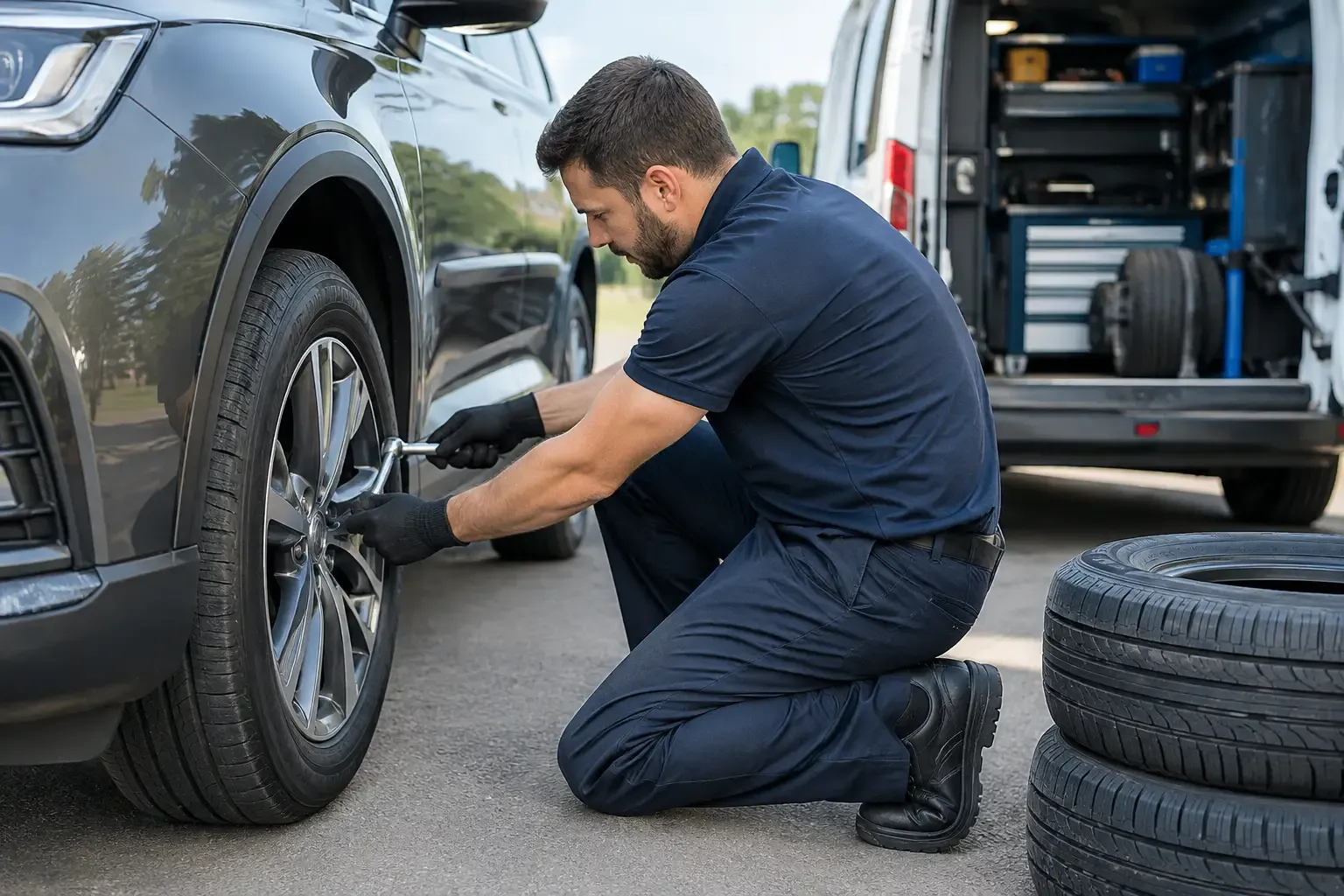
Align the spare tire with the wheel studs and push it fully onto the hub. Thread each lug nut by hand first. This matters because a lug nut started at an angle can damage the threads. Once all nuts are hand-tight, use the wrench to snug them in a star pattern, moving across the wheel rather than around it in a circle.
4. Lower the vehicle and tighten correctly
Lower the vehicle until the tire contacts the ground and cannot rotate freely, then tighten the lug nuts again in the same star pattern. Lower it fully and remove the jack. Use steady pressure on the wrench, but do not jump on it or use an extension pipe unless your vehicle manufacturer specifically instructs otherwise.
The final torque should match your vehicle's specification. A professional torque wrench is the accurate way to confirm this. Lug nuts that are too loose can allow wheel movement. Lug nuts that are too tight can damage studs and make future service difficult.
5. Stow your equipment and check the tire
Place the flat tire, jack, and tools back in the vehicle so they do not become loose during driving. Check the spare's visible condition and pressure if you have a gauge. Then reset your expectations: a temporary spare is a short-term solution. Follow the speed limit printed on the tire or listed in your manual, avoid aggressive braking and sharp turns, and arrange proper tire service as soon as possible.
When a Roadside Spare Change Is Not the Right Move
A spare tire change is simple only when the vehicle, tools, and surroundings cooperate. Call for help if the wheel is damaged, the lug nuts will not loosen, the jack will not sit securely, or the tire is flat on the traffic-facing side of the vehicle. The same applies if you do not have a usable spare, cannot locate the wheel-lock key, or notice more than one damaged tire.
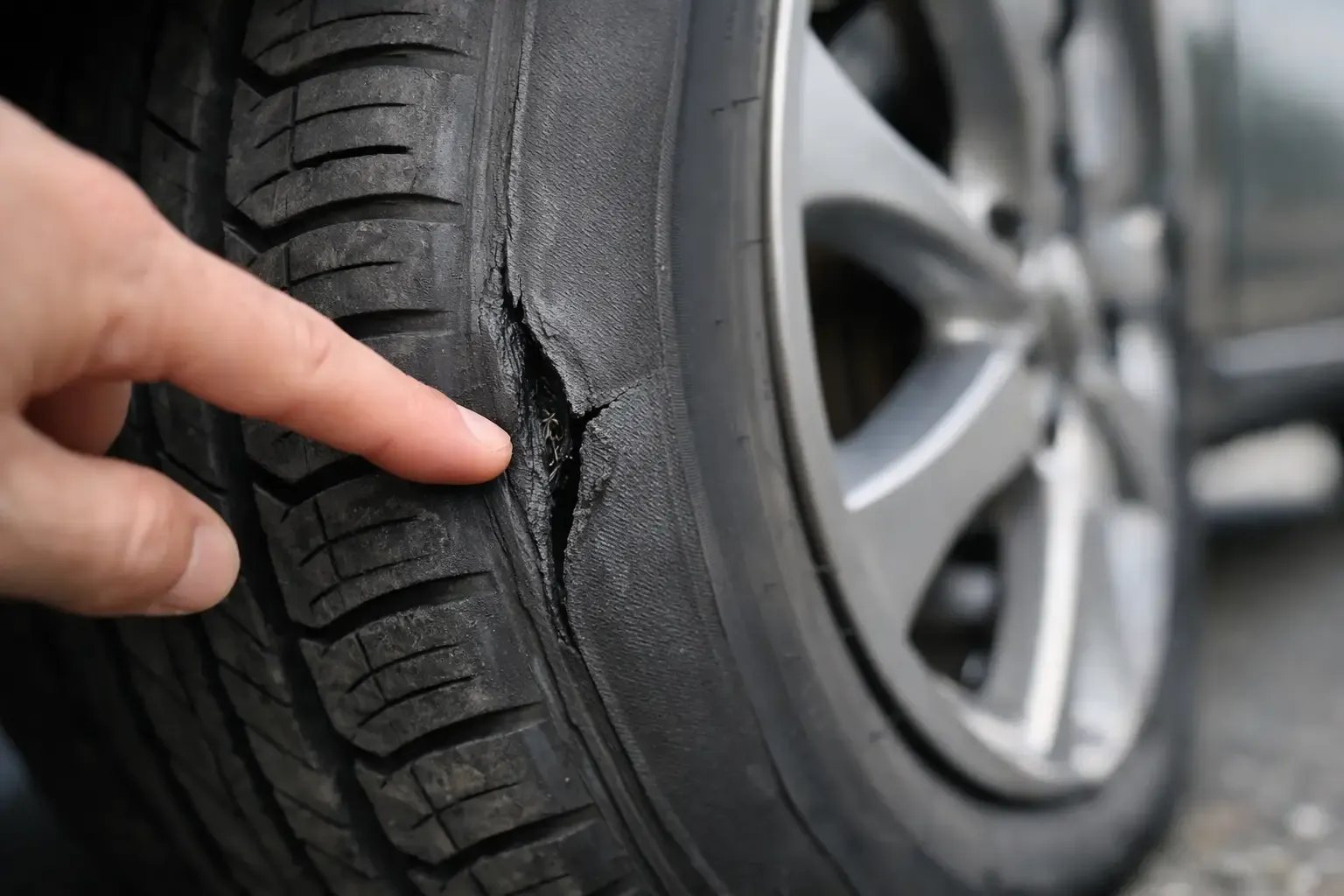
There are also cases where the flat should be inspected before anyone installs a spare. A sidewall bubble, a deep cut, a separated tread, or a tire damaged after driving while flat may mean the tire cannot be repaired. A qualified technician can inspect the wheel and tire, install the spare safely, and explain the next step without guessing.
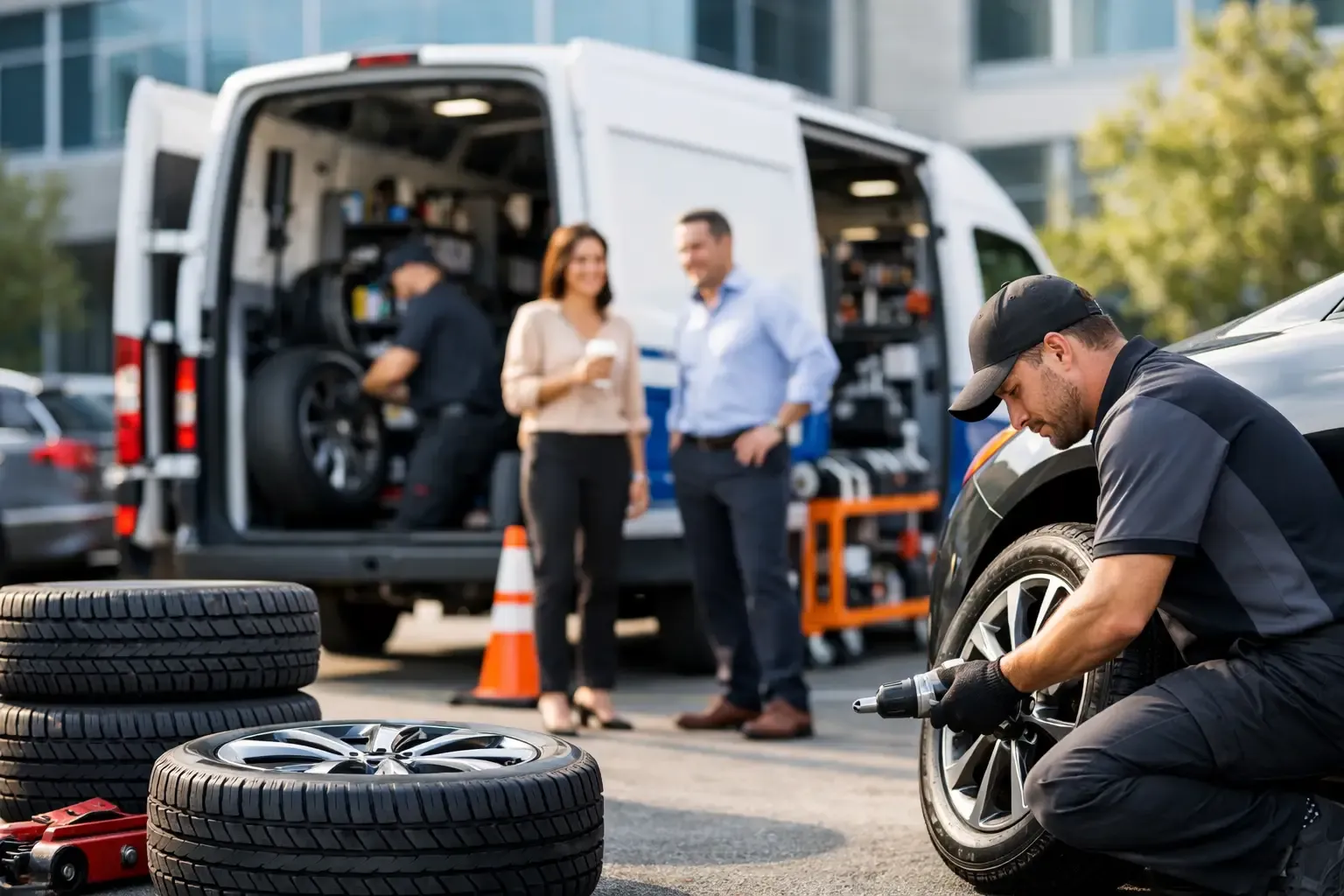
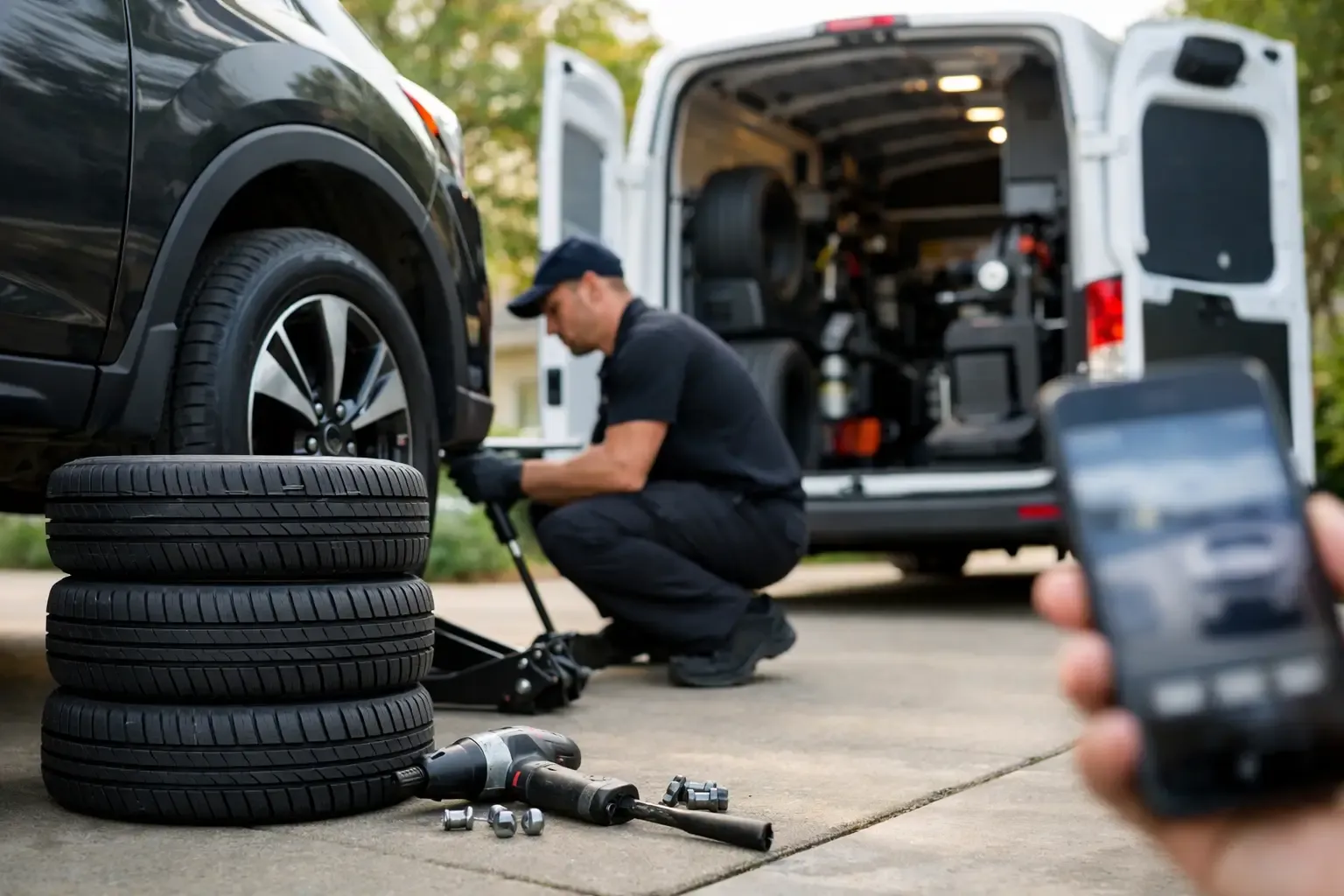
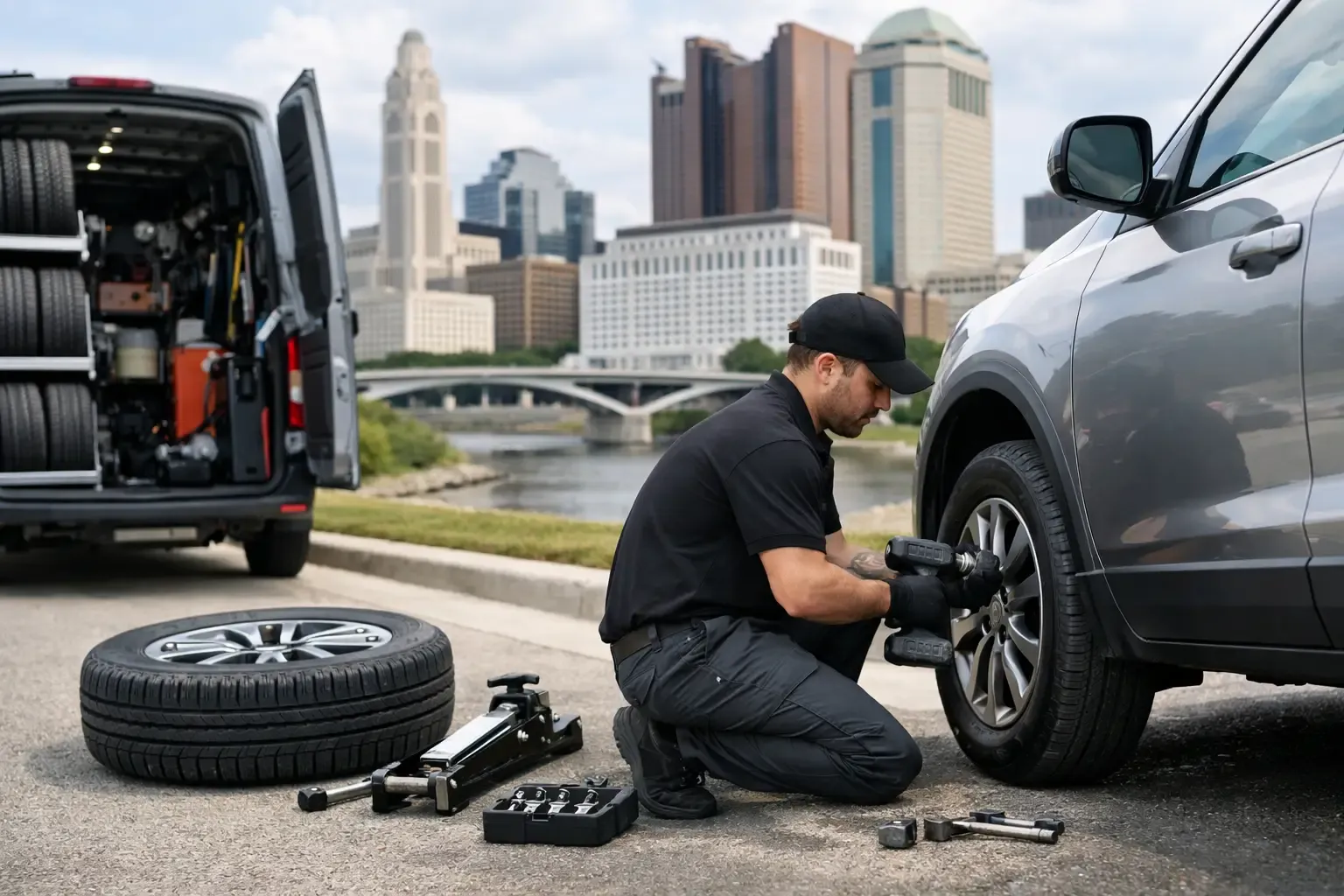
For Columbus-area drivers, mobile tire service can be especially helpful when a flat happens at home, at the office, or in a parking lot where waiting for a tow would disrupt the entire day. Elite Mobile Tire is available 24/7, including weekends and overnight, and can come to the vehicle for roadside support, spare tire changes, tire repair evaluations, and replacement service when a spare is not the right answer.
What to Do After the Spare Is Installed
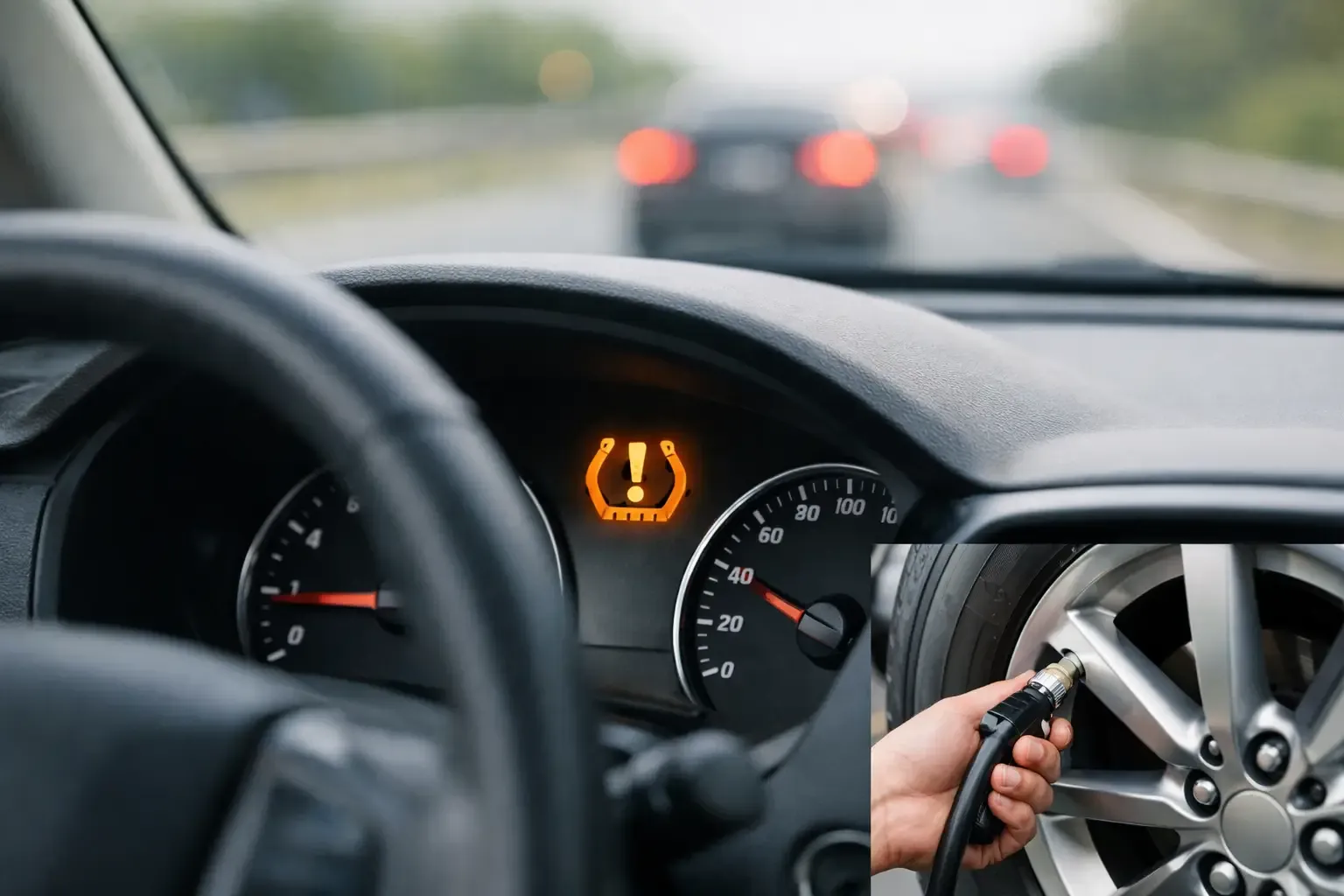
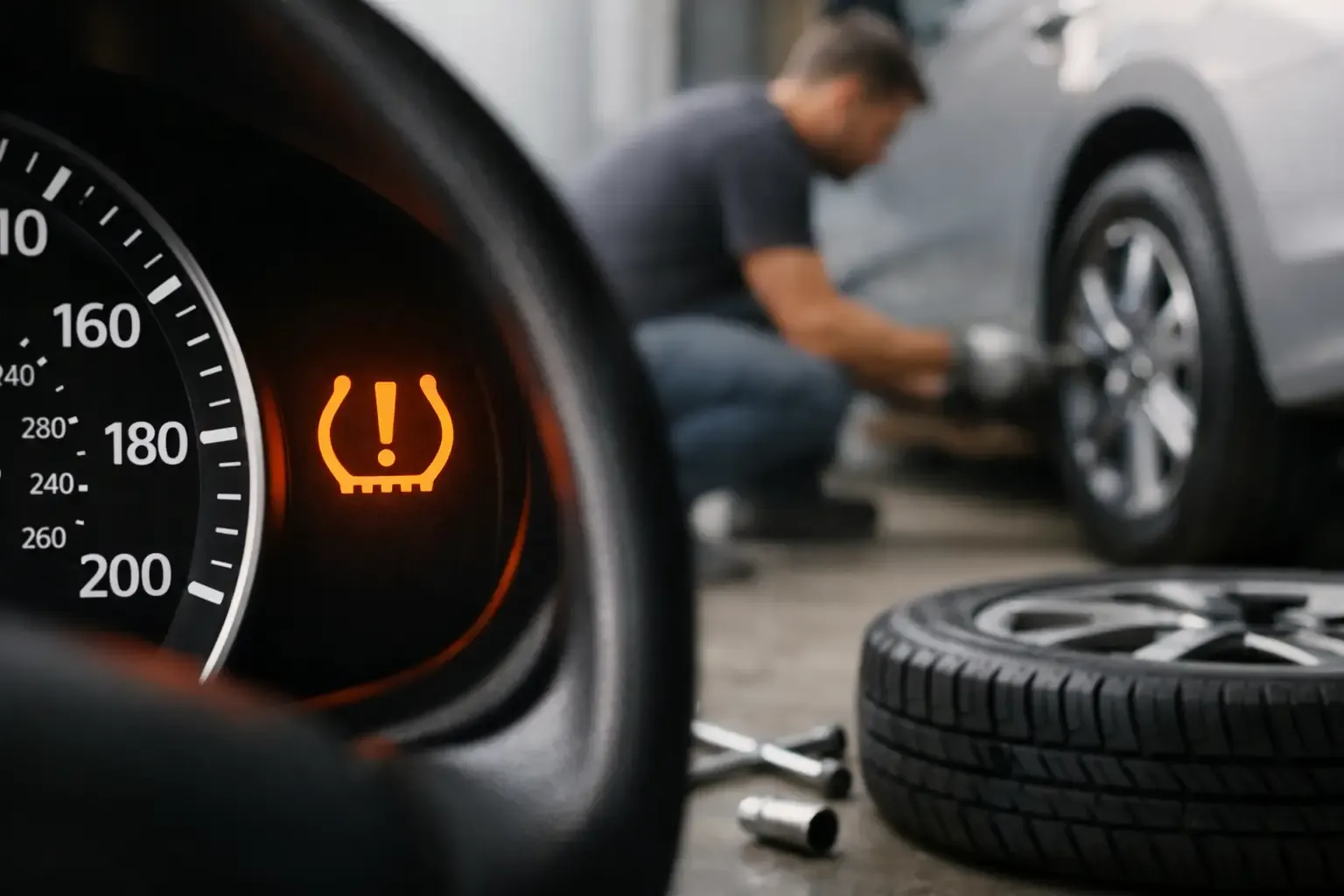
Do not treat the warning light disappearing as proof that the problem is solved. Your tire pressure monitoring system may need time to update, and some vehicles require a TPMS reset after tire service. More importantly, the original flat needs to be inspected.
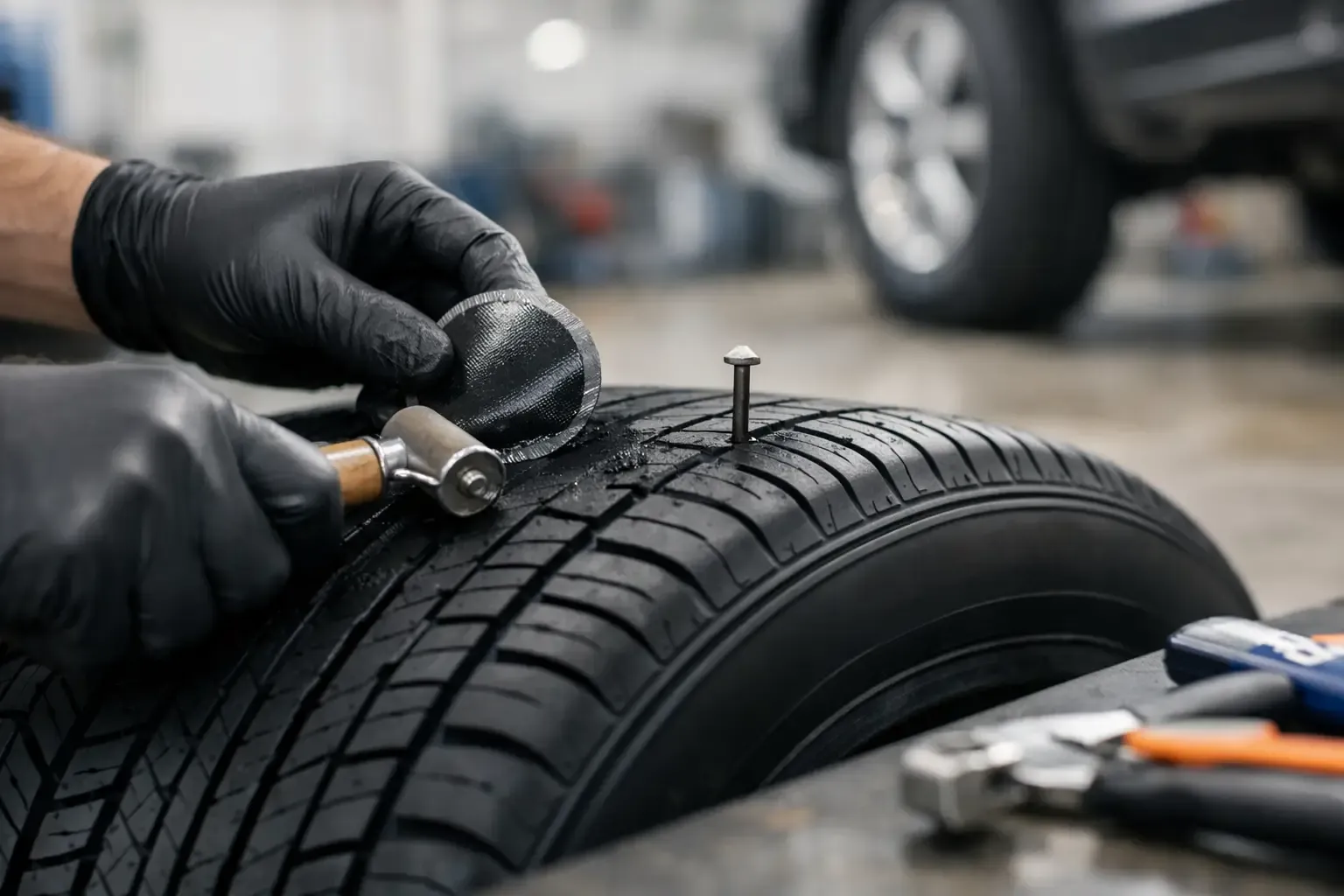
A puncture through the central tread area may be repairable if the tire was not driven flat and the damage is within repairable limits. Damage near the shoulder or sidewall generally requires replacement. The tire's age, tread depth, and the condition of the other tires also affect the recommendation. On all-wheel-drive vehicles, a replacement tire may need to be closely matched to the remaining tires to protect the drivetrain.
Make a habit of checking your spare during regular maintenance. Verify its pressure, make sure the jack and lug wrench are present, and confirm you know where the wheel-lock key is stored. Those small checks make a roadside problem far more manageable when time matters.
A flat tire is inconvenient enough. Choose the safe option, use the spare only as intended, and get the damaged tire inspected promptly so your next trip starts with confidence rather than another roadside surprise.
Ready for a new set? Elite Mobile Tire is open 24/7 and installs 2 or 4 new tires right in your driveway or parking lot anywhere around Columbus, Obetz, Groveport, Grove City, and Reynoldsburg. Financing is available through Afterpay and Acima with up to 24-month payment plans. Call 614-344-5010 or visit elitemobiletire.com to book.