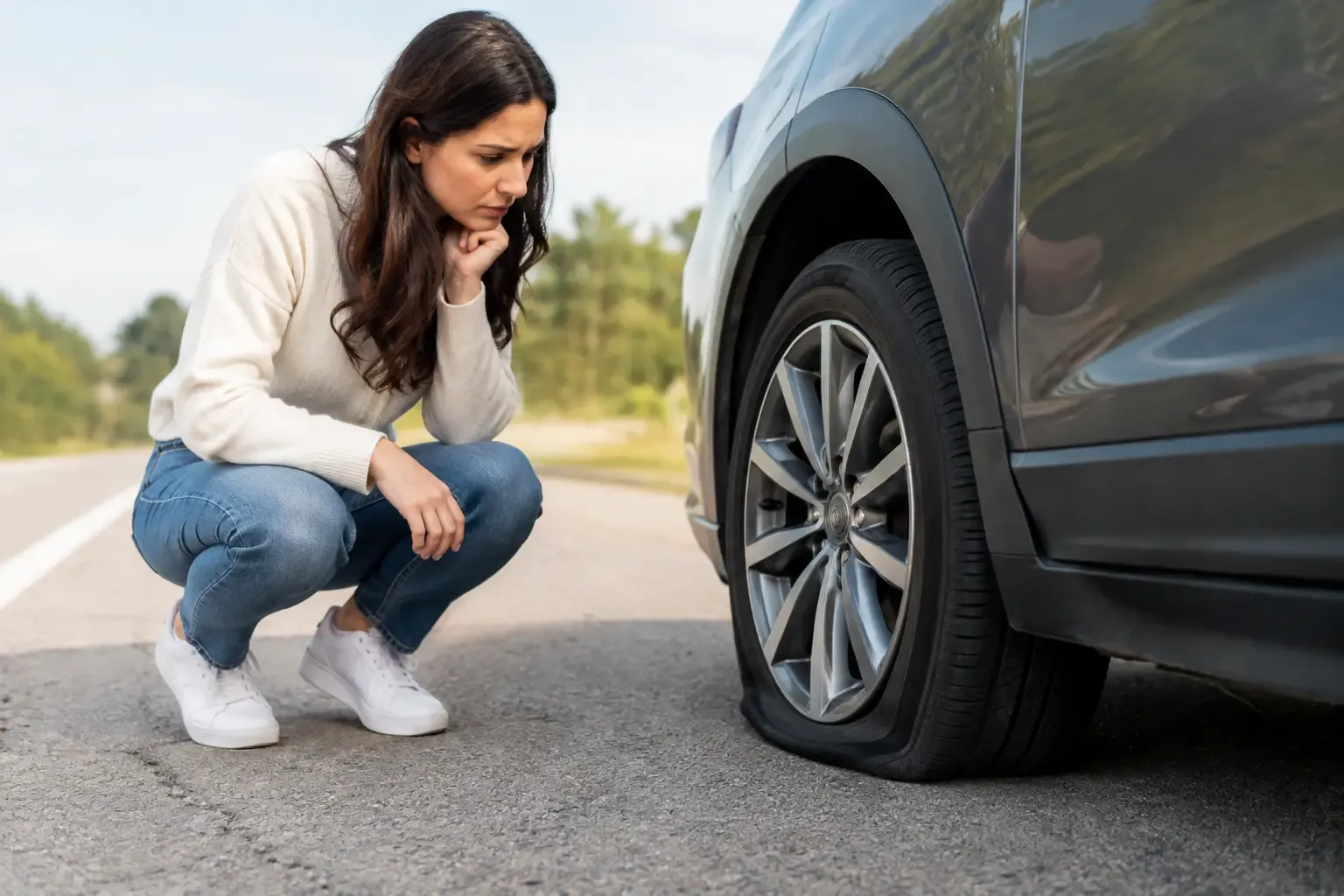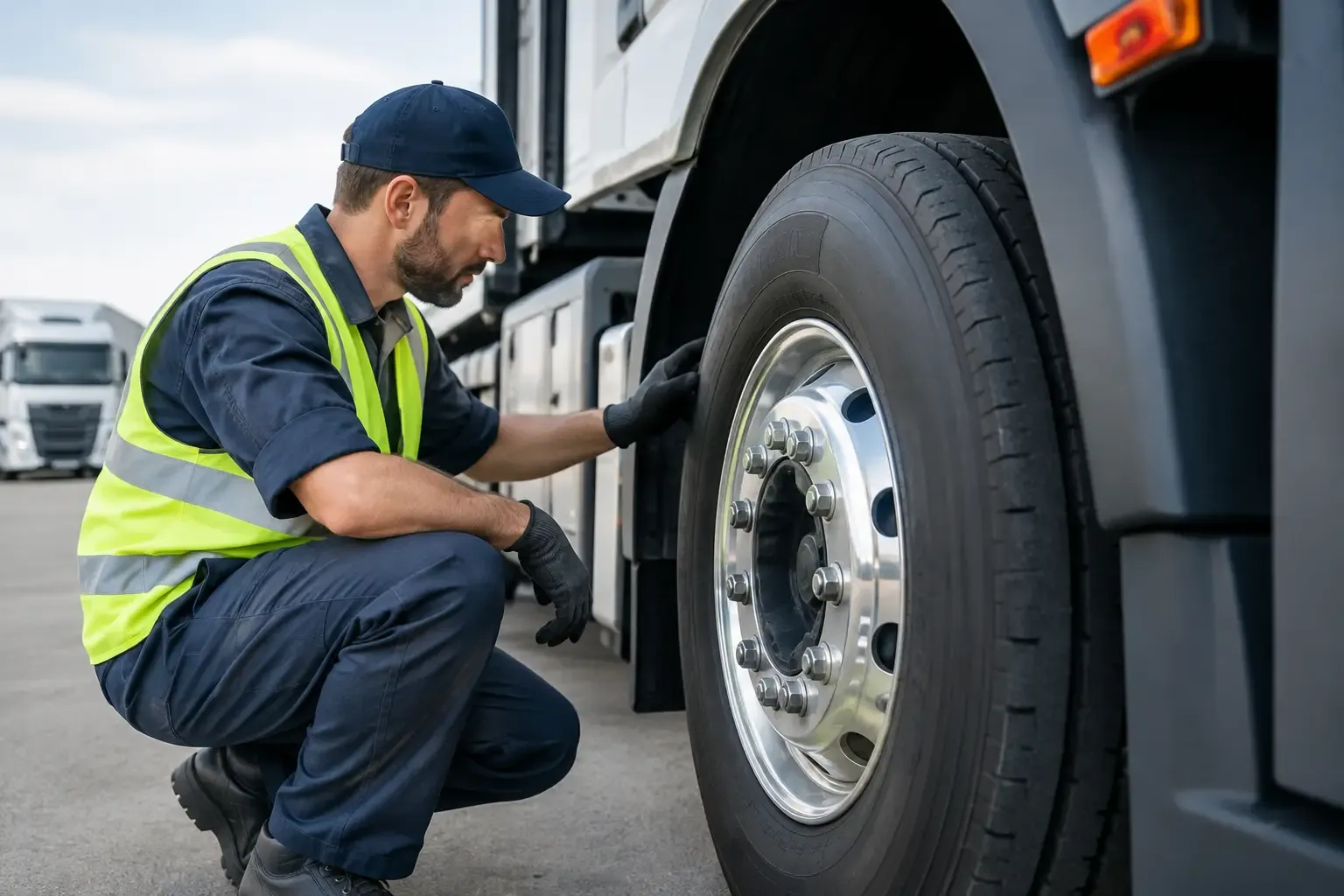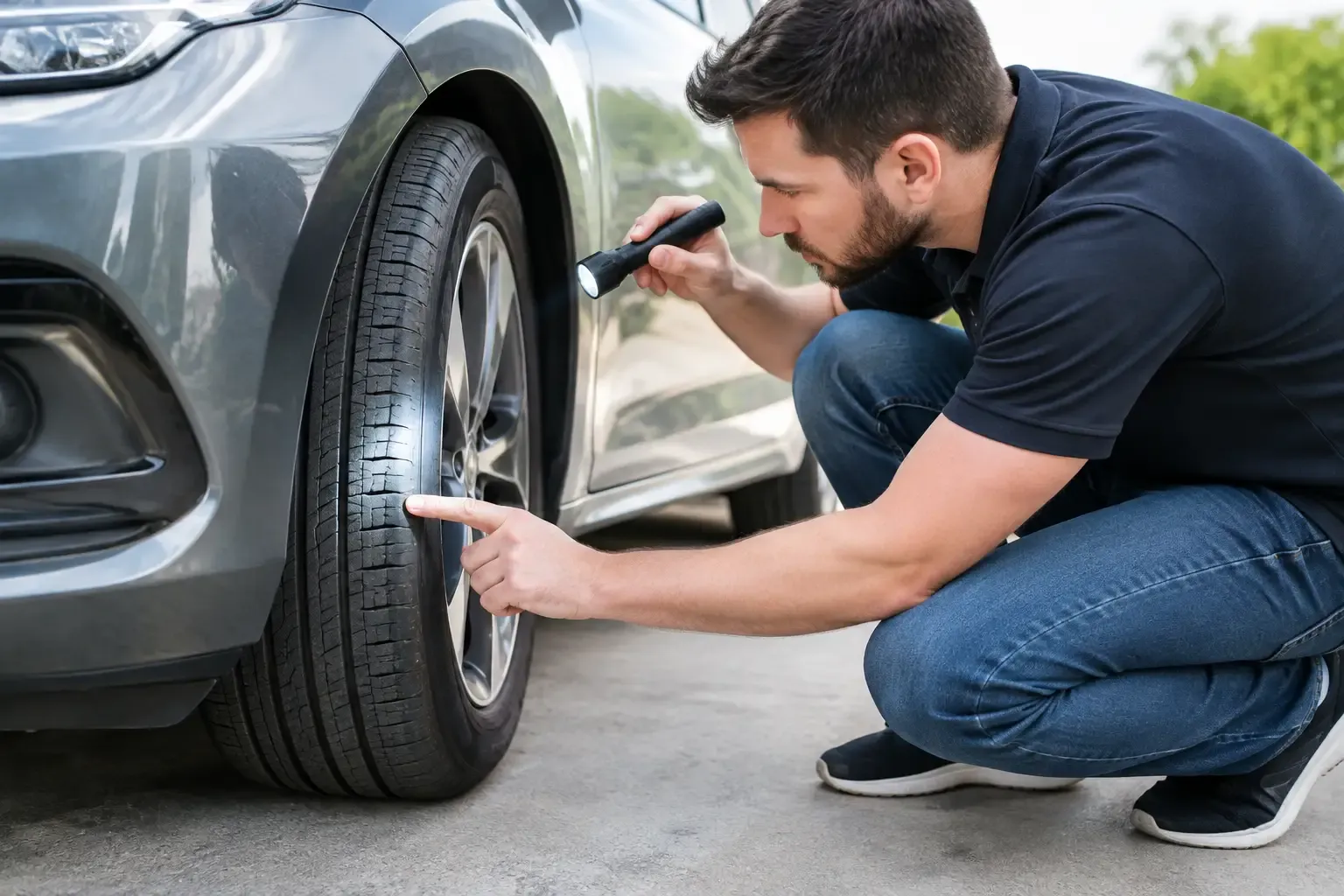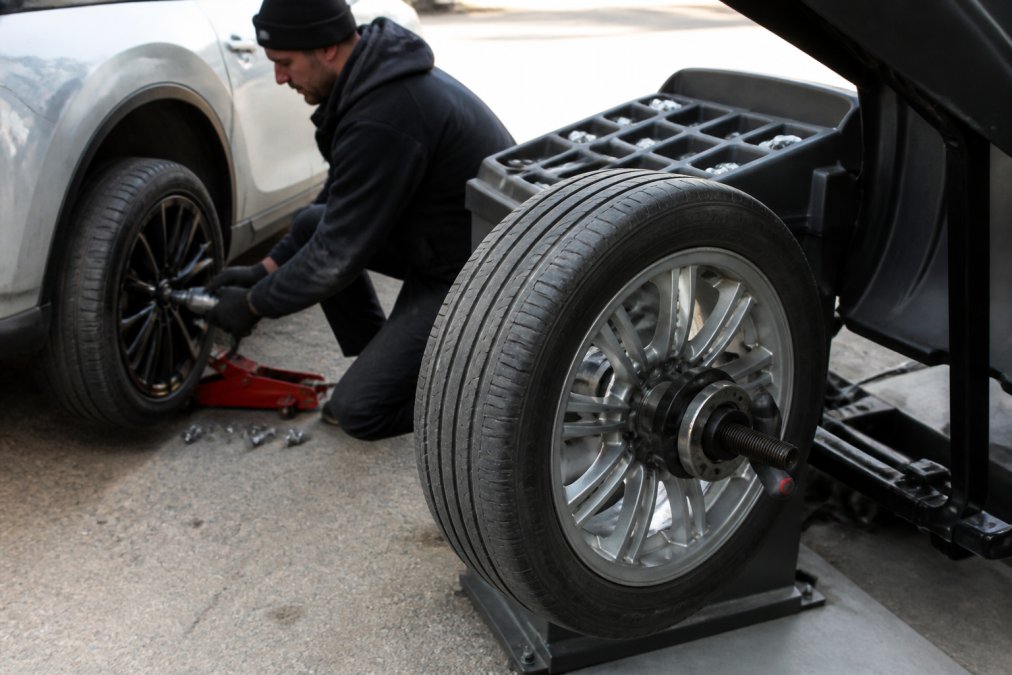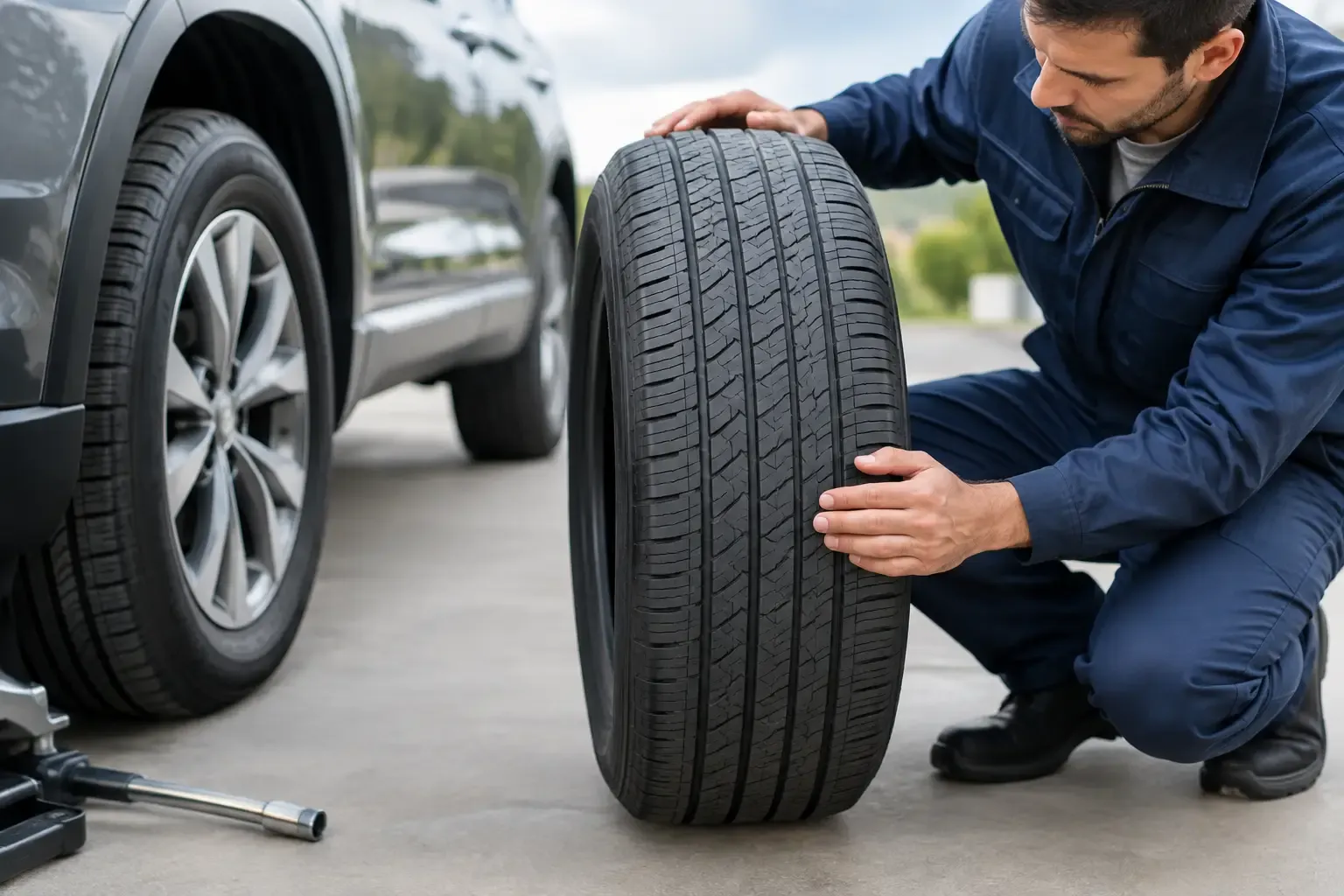
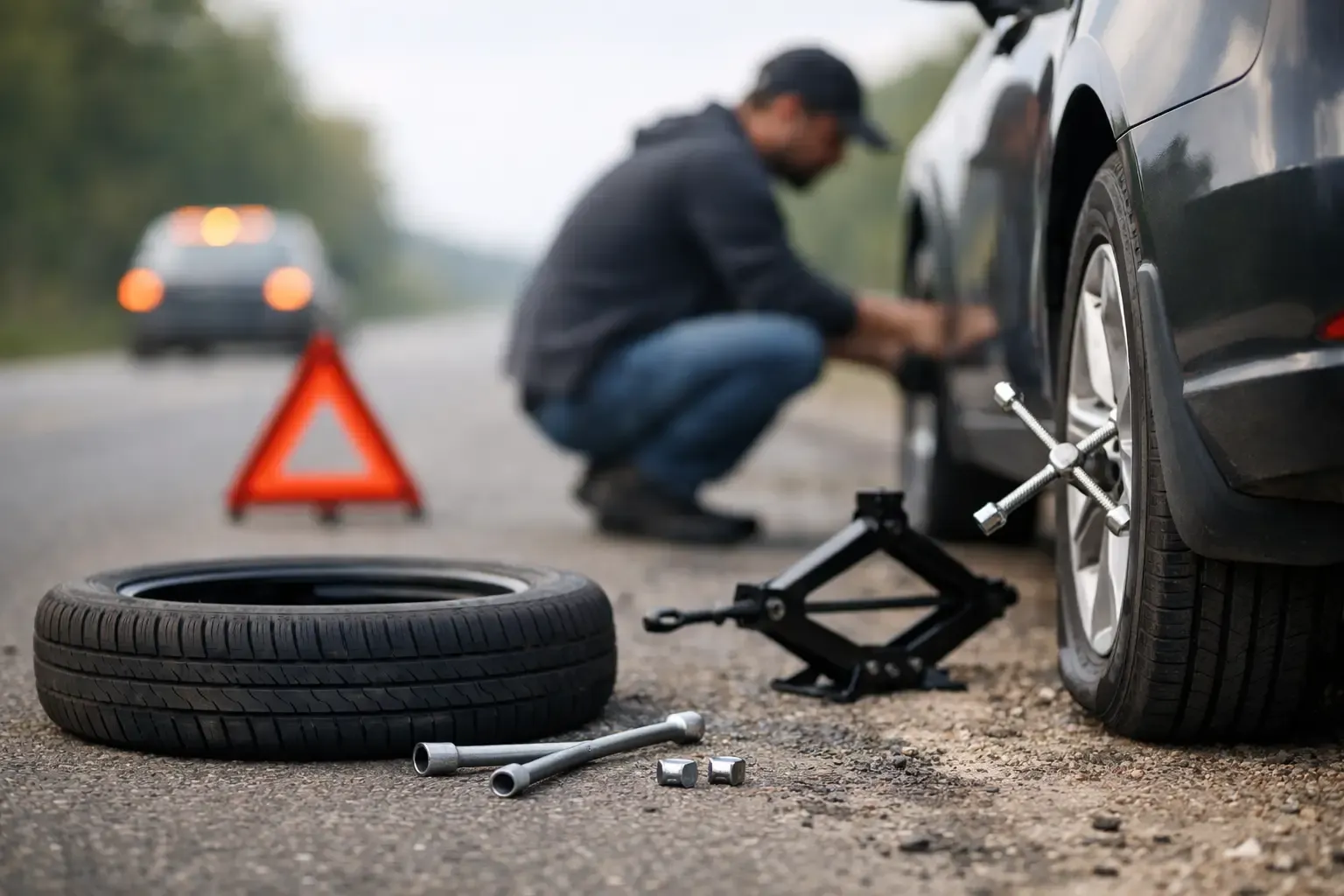
A tire problem rarely happens at a convenient time. It shows up on the way to work, during school pickup, or halfway through an already packed day. This guide to roadside tire emergencies is built for that exact moment - when you need clear steps, not guesswork, and a safe plan to get back on the road.
What to do first in any roadside tire emergency
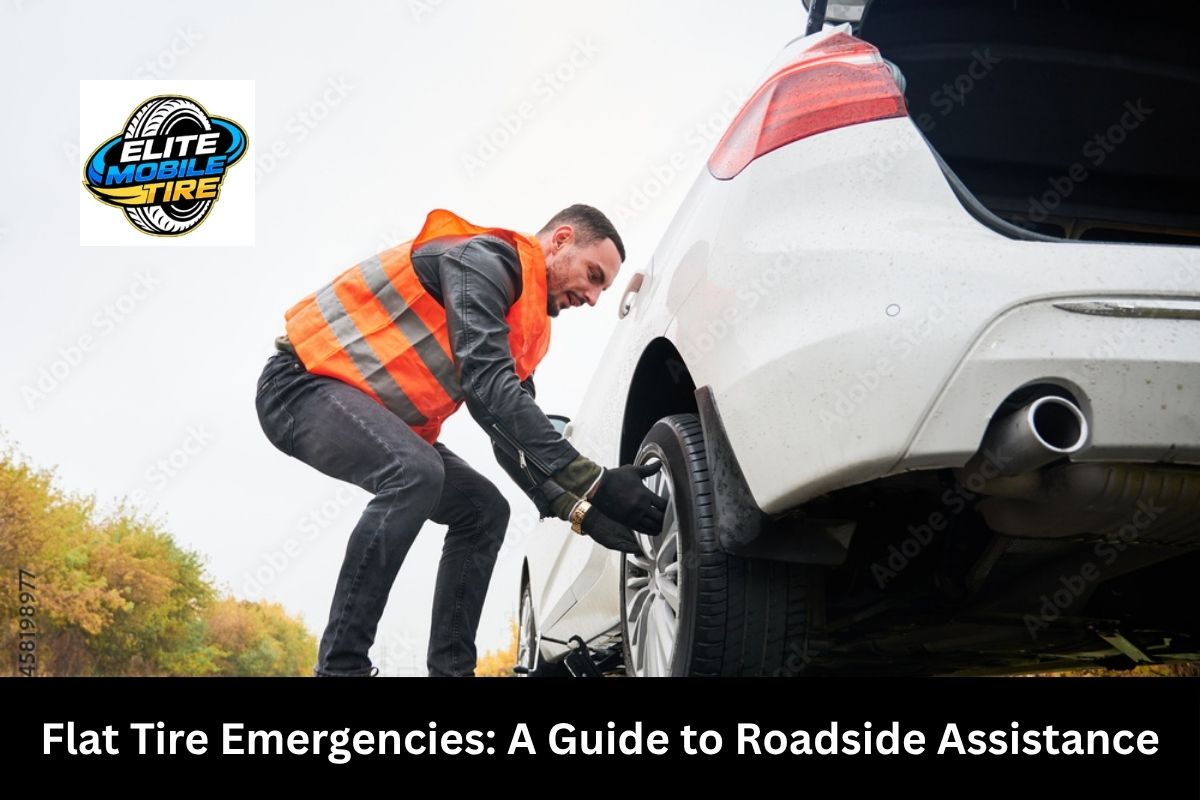
The first priority is not the tire. It is your location and your safety. If you feel a sudden thump, hear rapid flapping, or notice the vehicle pulling hard to one side, reduce speed gradually and keep both hands on the wheel. Avoid slamming the brakes, especially at highway speeds, because a damaged tire can make the vehicle less stable.
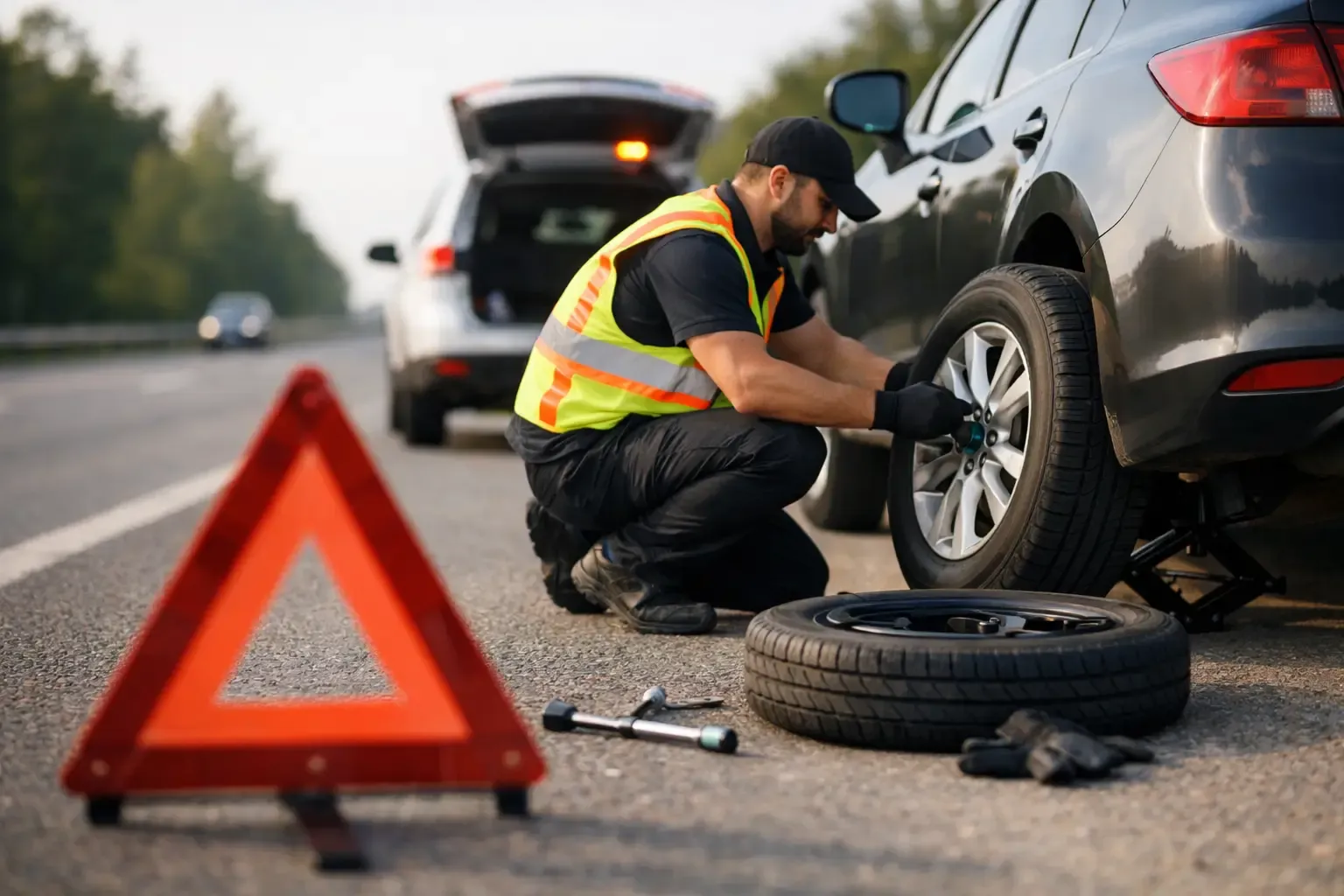
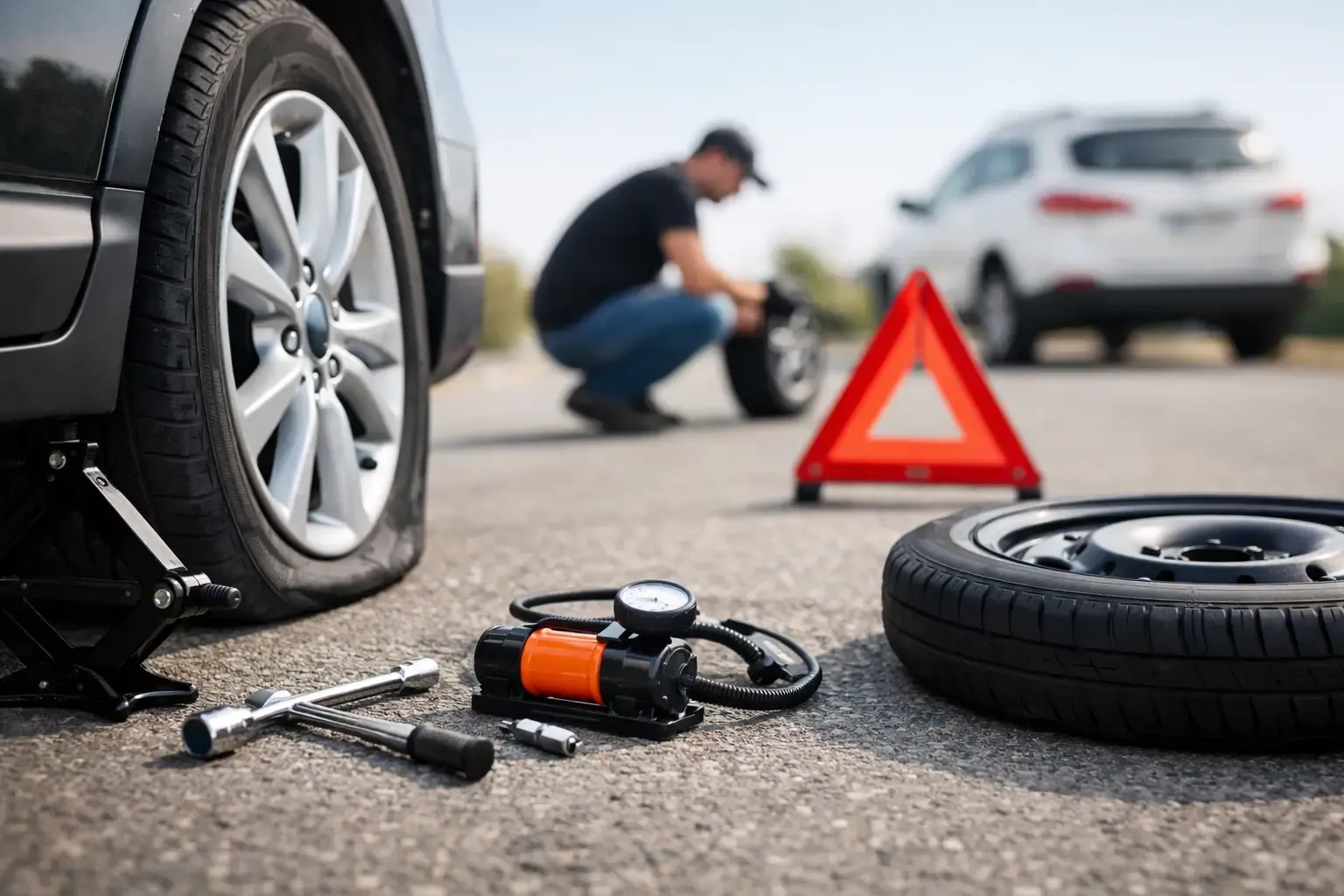
Move to a safe place as soon as you can. A wide shoulder, parking lot, side street, or other flat area is far better than stopping in a traffic lane or on a narrow curve. Turn on your hazard lights right away. If it is dark, rainy, or visibility is poor, stay extra aware of passing traffic before you step outside.
Once stopped, set the parking brake and take a breath. A lot of bad roadside decisions happen when drivers rush. Before touching anything, look at your surroundings. If traffic is close, the ground is soft, or the vehicle is on a slope, changing a tire yourself may not be the safest option.
Guide to roadside tire emergencies by problem type
Not every flat is the same, and the right response depends on what actually failed. A slow leak from a nail is a very different problem than a sidewall blowout.
If you have a slow leak
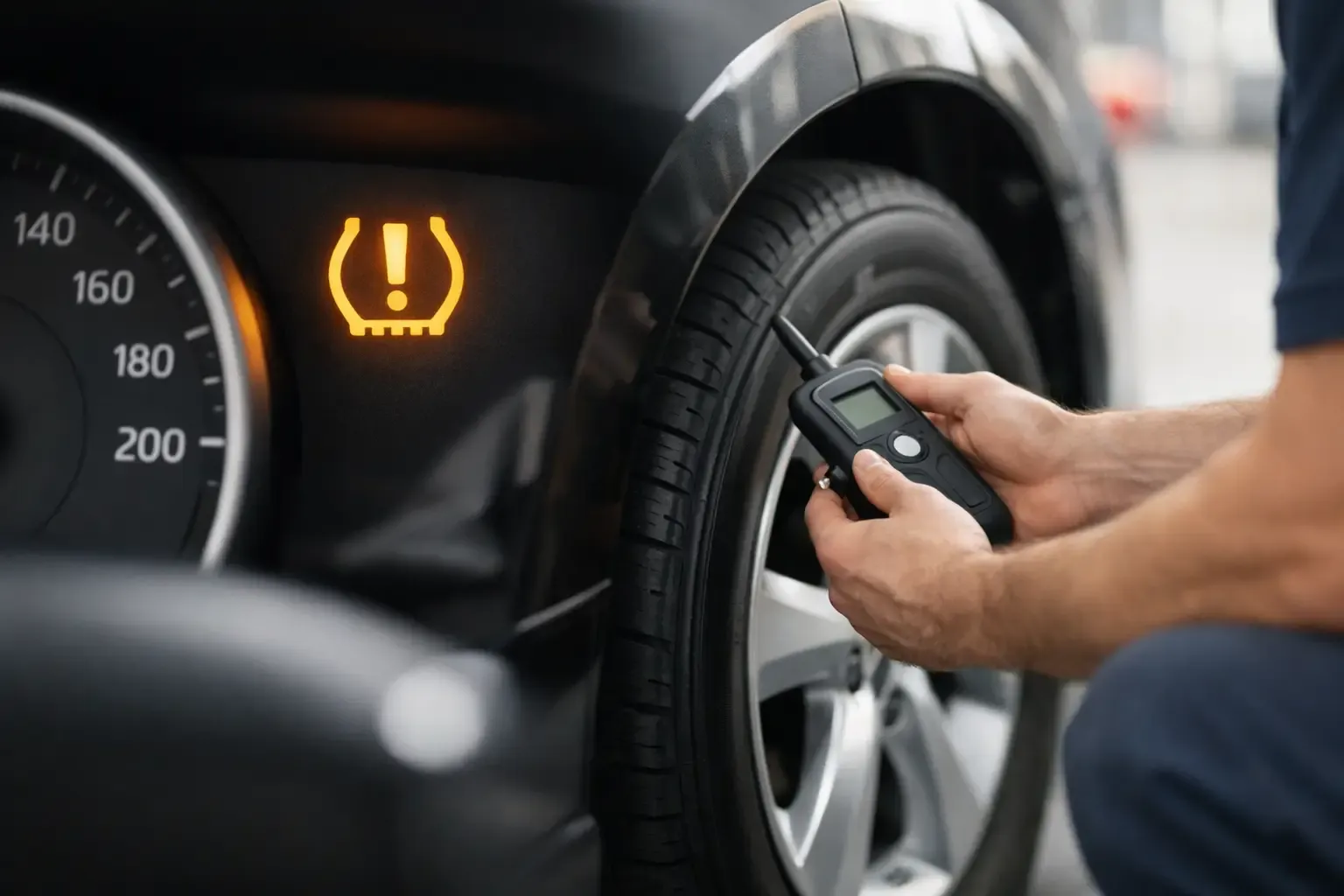
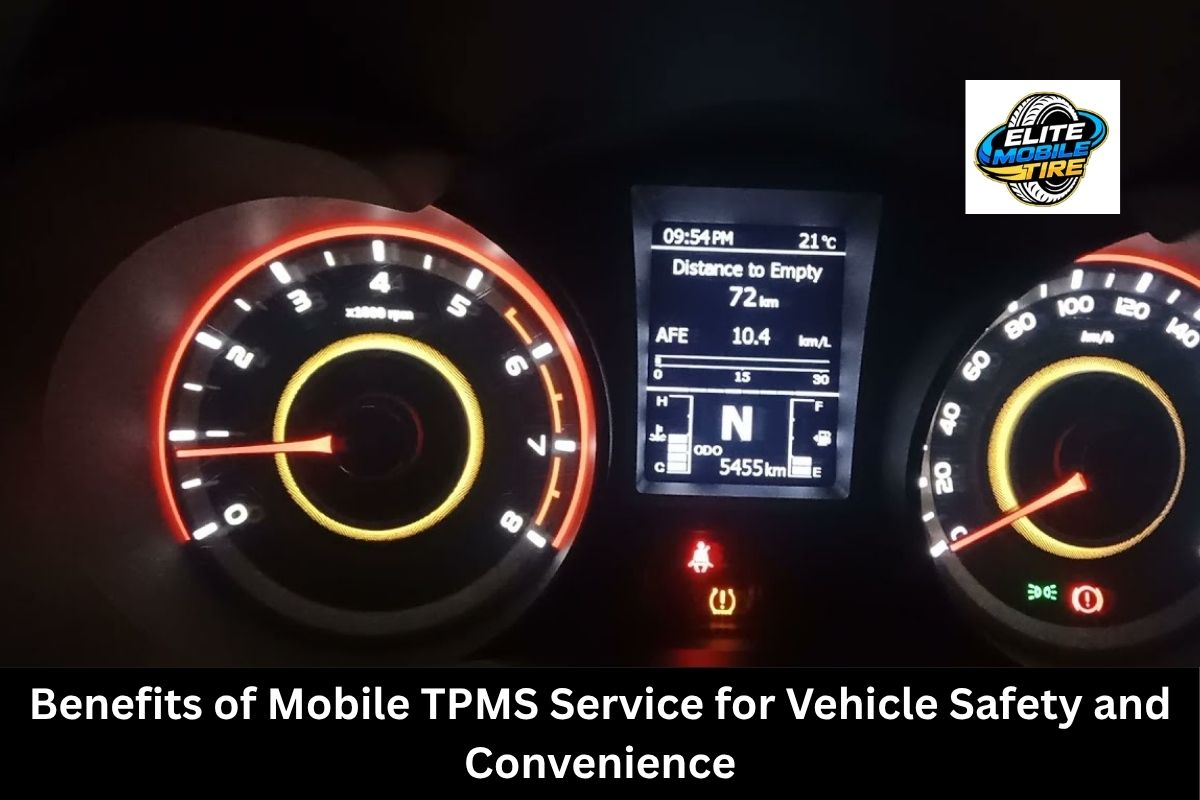
A slow leak often gives you some warning. The tire pressure light may come on, the vehicle may feel slightly soft in one corner, or you may notice the tire looking low after parking. In some cases, you can still drive a short distance at reduced speed to reach a safer stopping point. That said, driving too far on low pressure can ruin a tire that might otherwise be repairable.
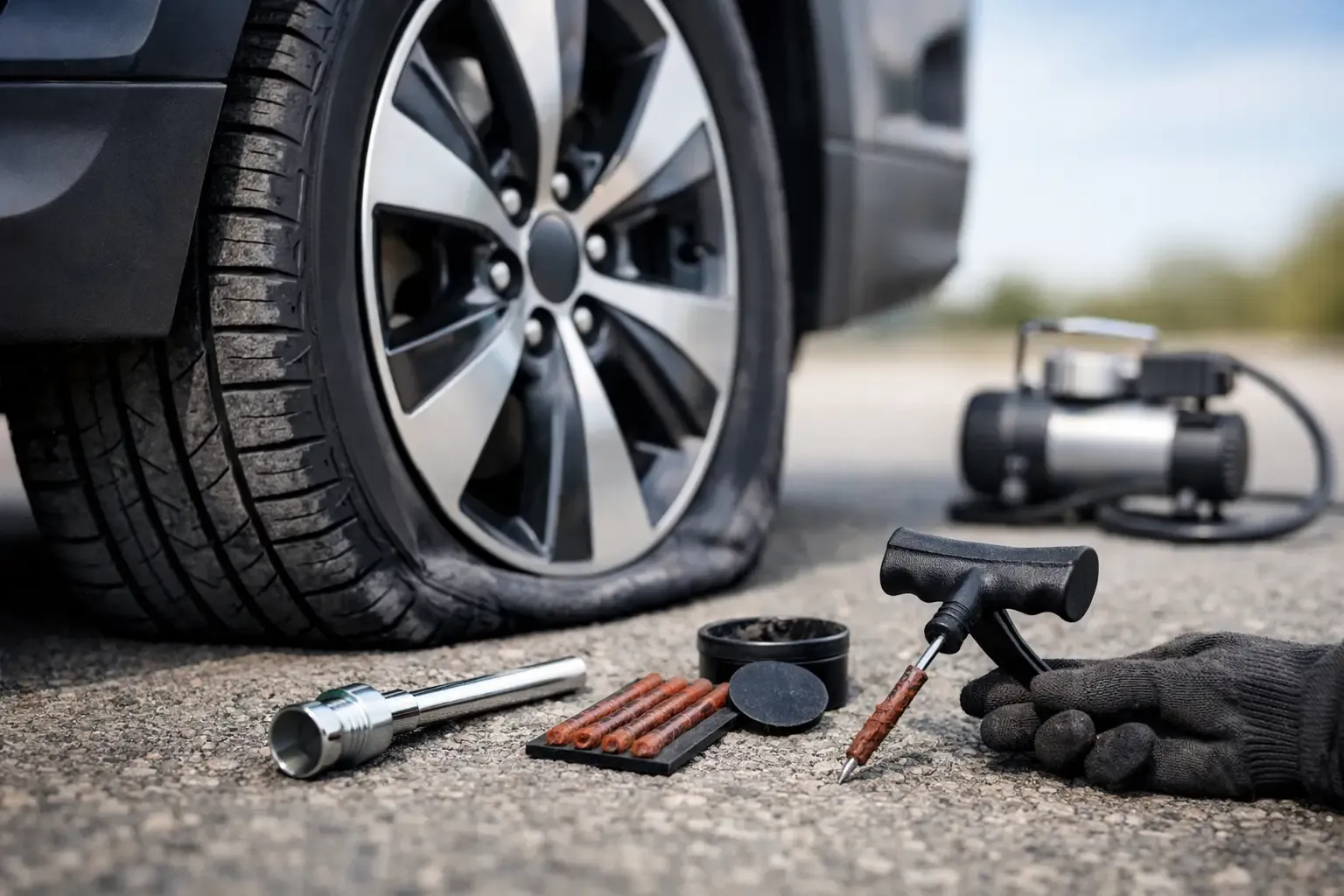
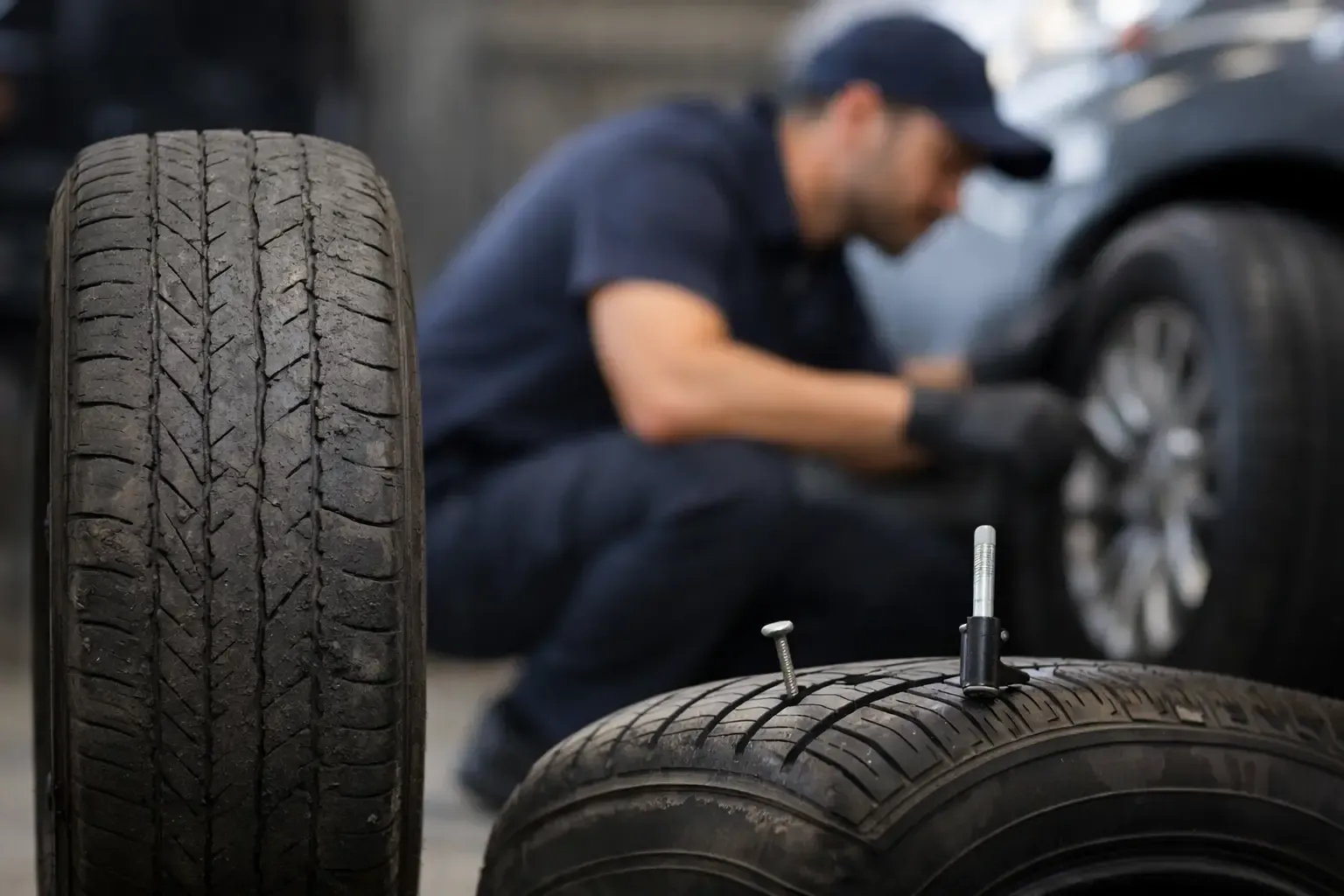
If you can see an obvious puncture in the tread area, do not pull the object out on the roadside. That can let air escape faster. If the tire is still holding some pressure, it may be possible to inflate it temporarily and move the vehicle a short distance, but only if the tire has not been driven flat and there is no visible sidewall damage.
If you have a sudden flat or blowout
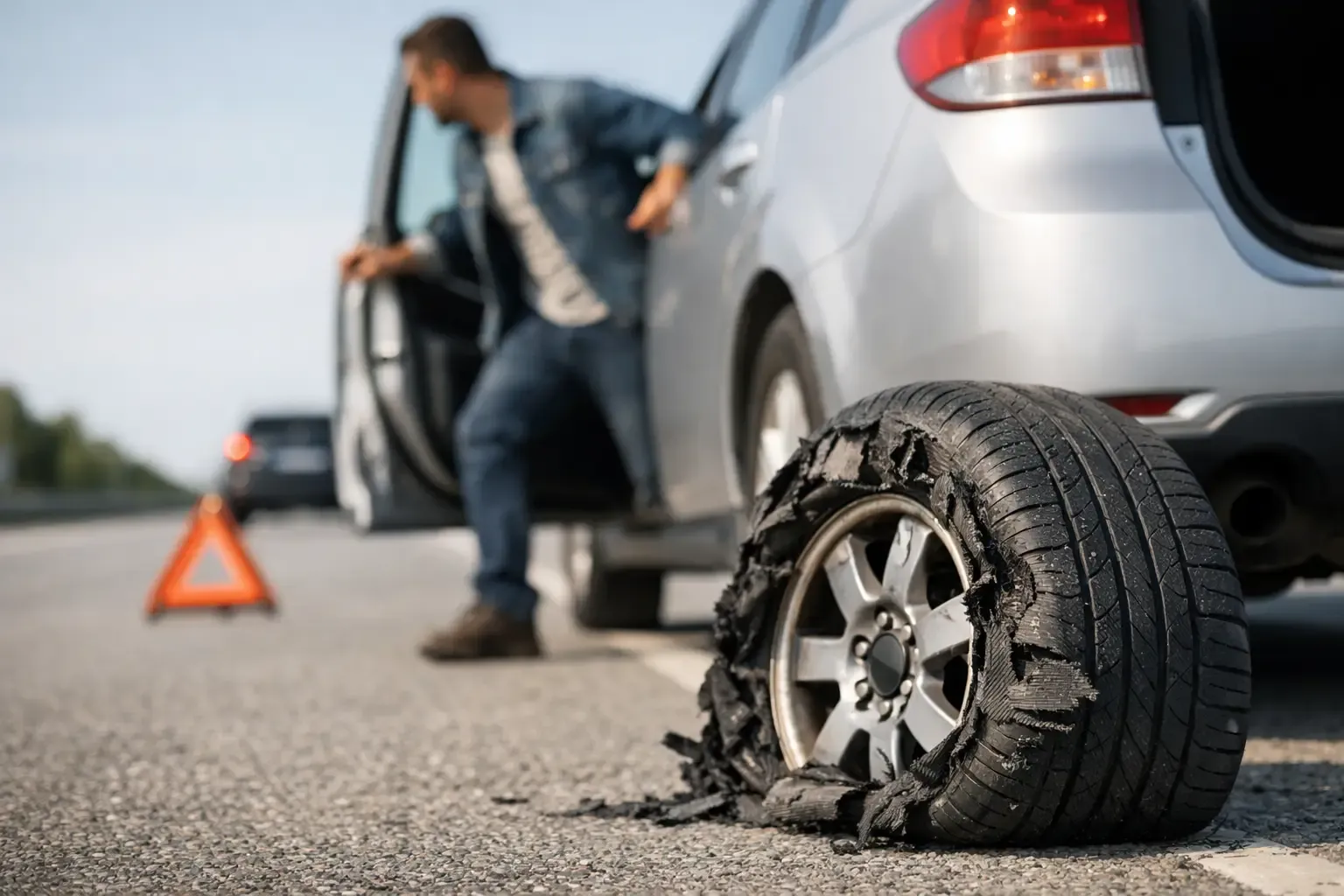
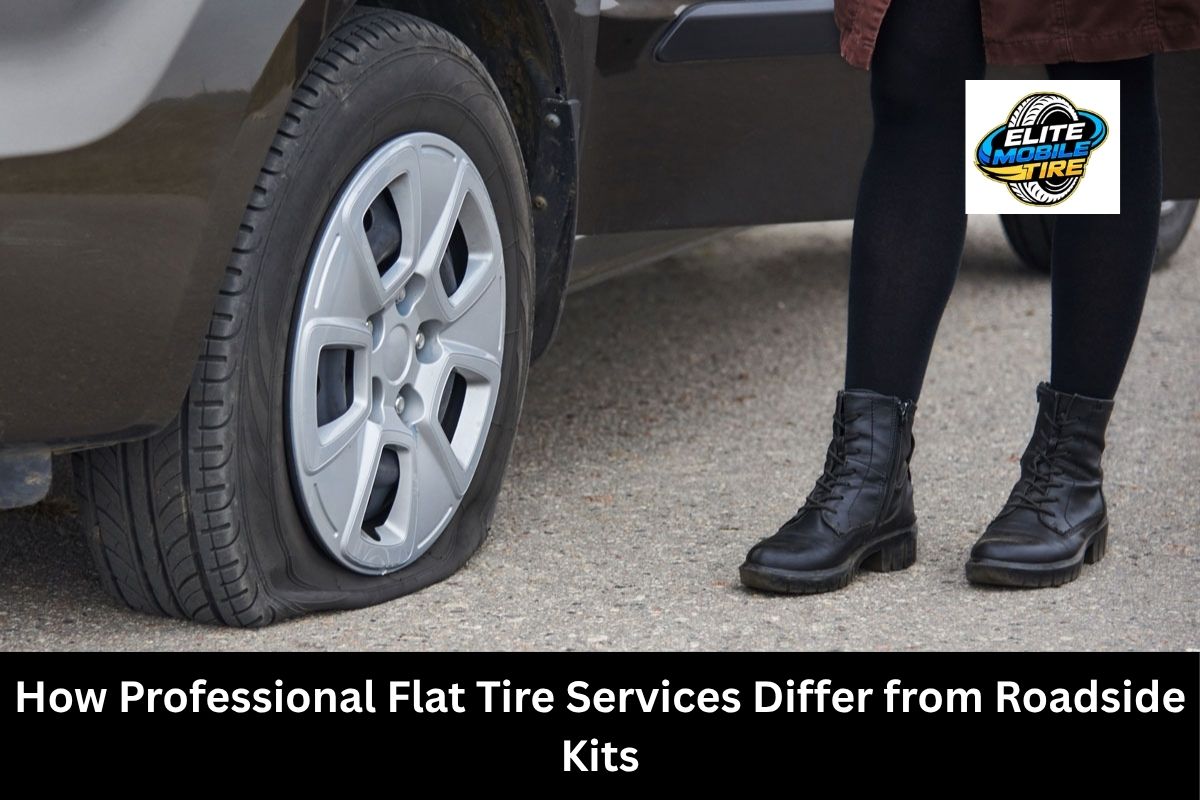
A blowout feels more dramatic. You may hear a pop, the car may shake, and steering can feel heavy or uneven. Stay calm and focus on control. Ease off the accelerator, hold the wheel firmly, and let the vehicle slow down before braking gently.
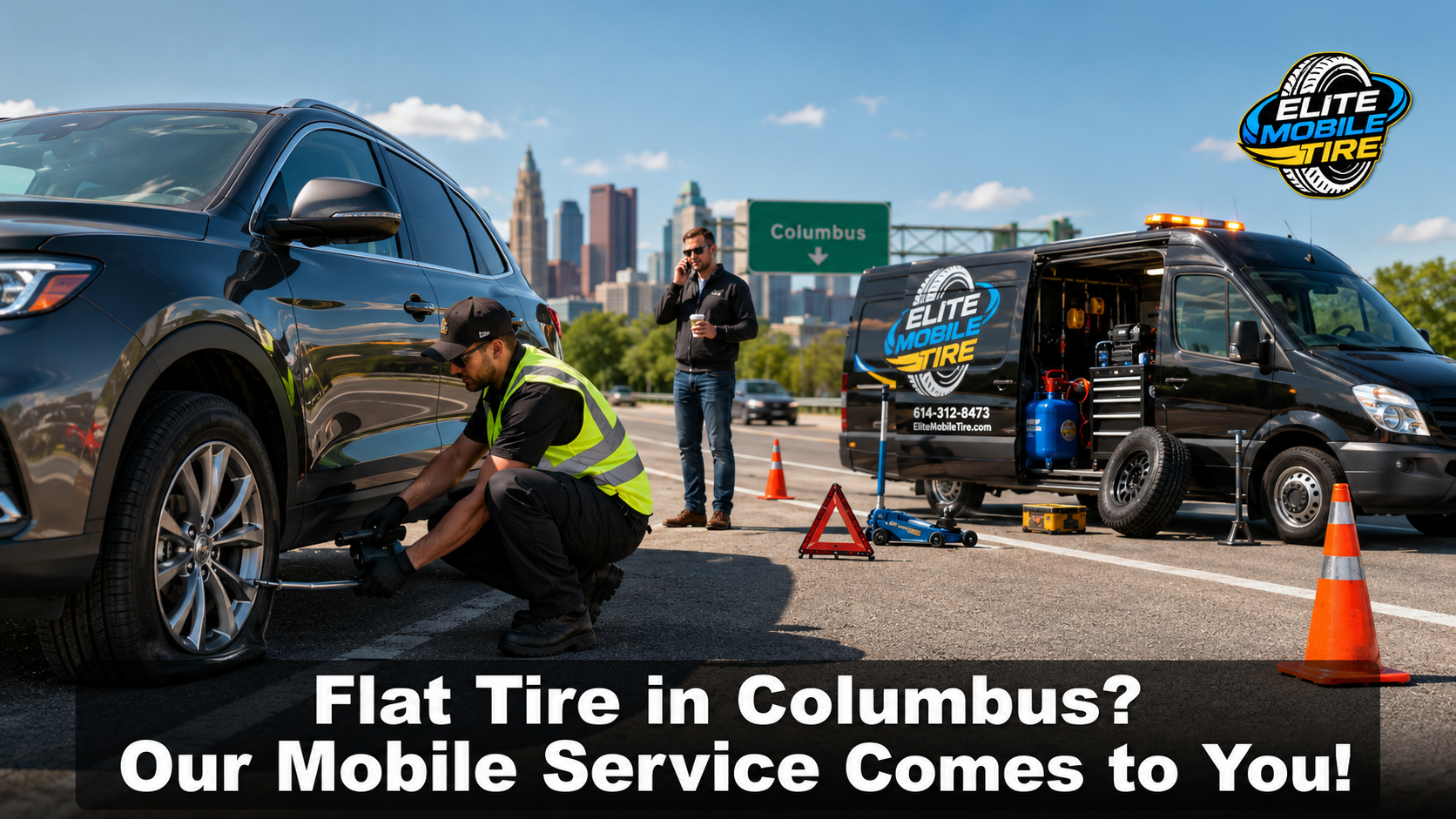
After you stop, inspect from a safe distance. If the sidewall is shredded, the tire came off the rim, or there is visible structural damage, the tire is not a candidate for a simple roadside repair. In that situation, the realistic options are installing a spare or calling for mobile roadside tire service.
If the sidewall is damaged
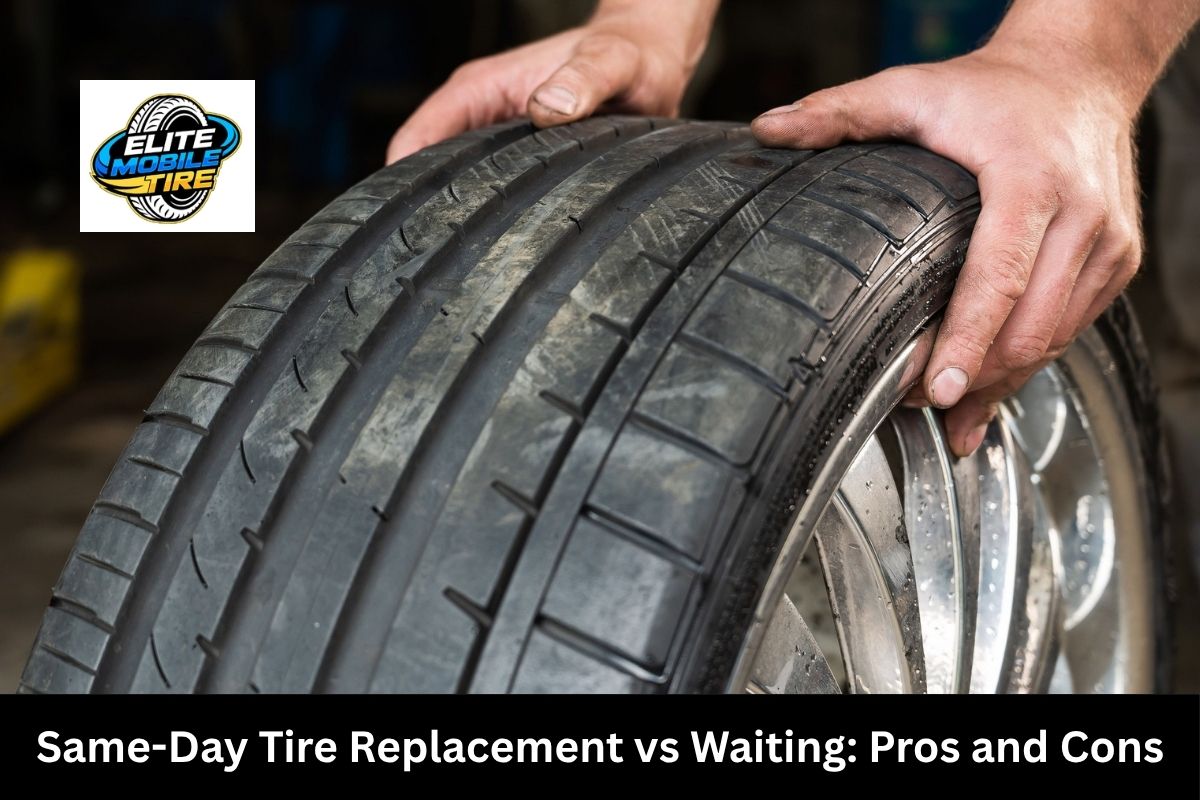
Cuts, bubbles, or impact damage in the sidewall are serious. Hitting a pothole or curb can damage the tire internally even if the outside does not look terrible at first glance. A sidewall cannot be safely patched the way a small tread puncture sometimes can. If the damage is in the sidewall, replacement is the safe answer.
If the wheel or rim is damaged too
Sometimes the tire is only part of the problem. If you hit a deep pothole and the wheel is bent, cracked, or no longer sealing correctly, adding air will not solve much. You may also notice the car vibrating badly or the tire refusing to hold pressure after inflation. That usually means the roadside fix is limited, and professional help is the better next step.
Should you change the tire yourself?
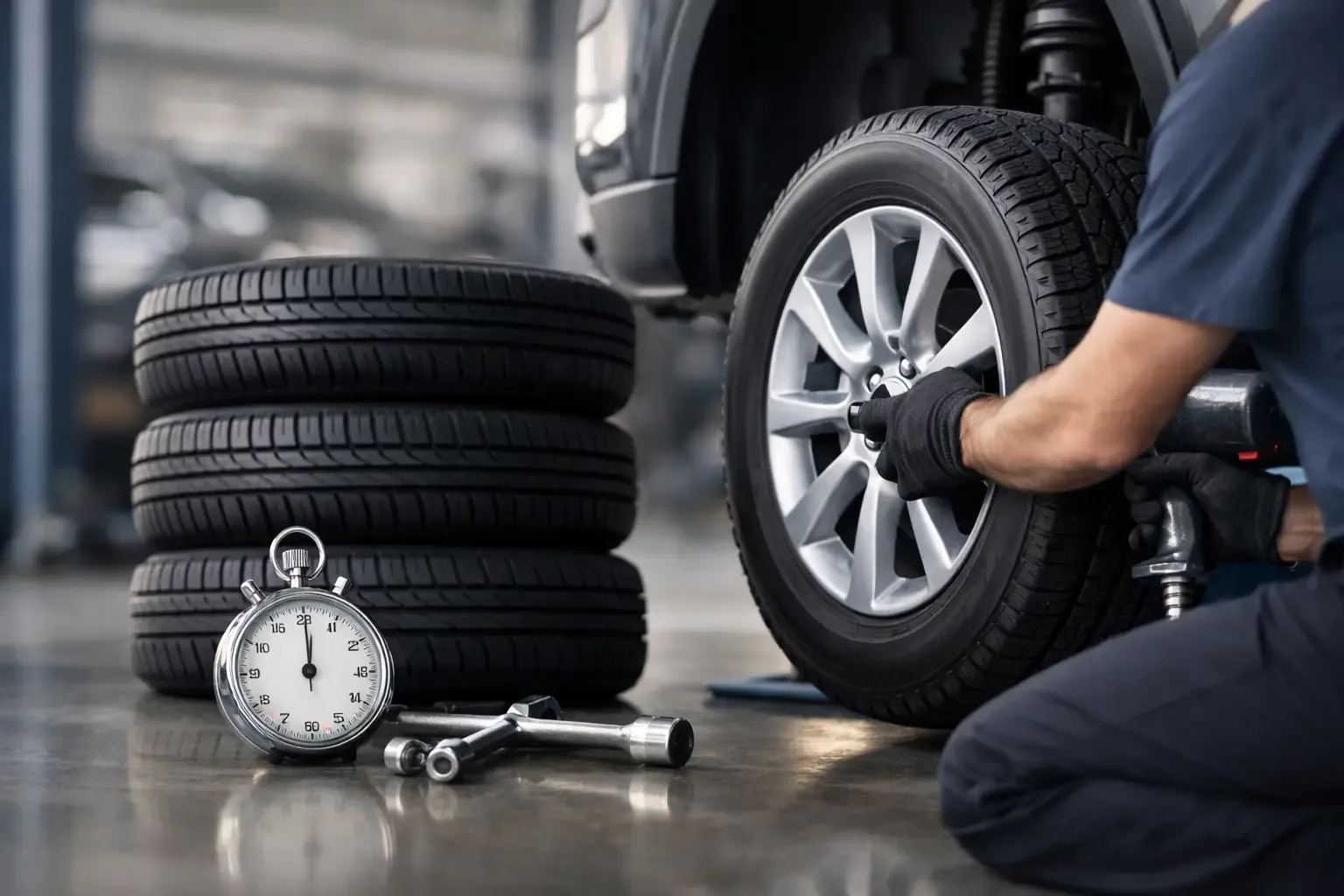
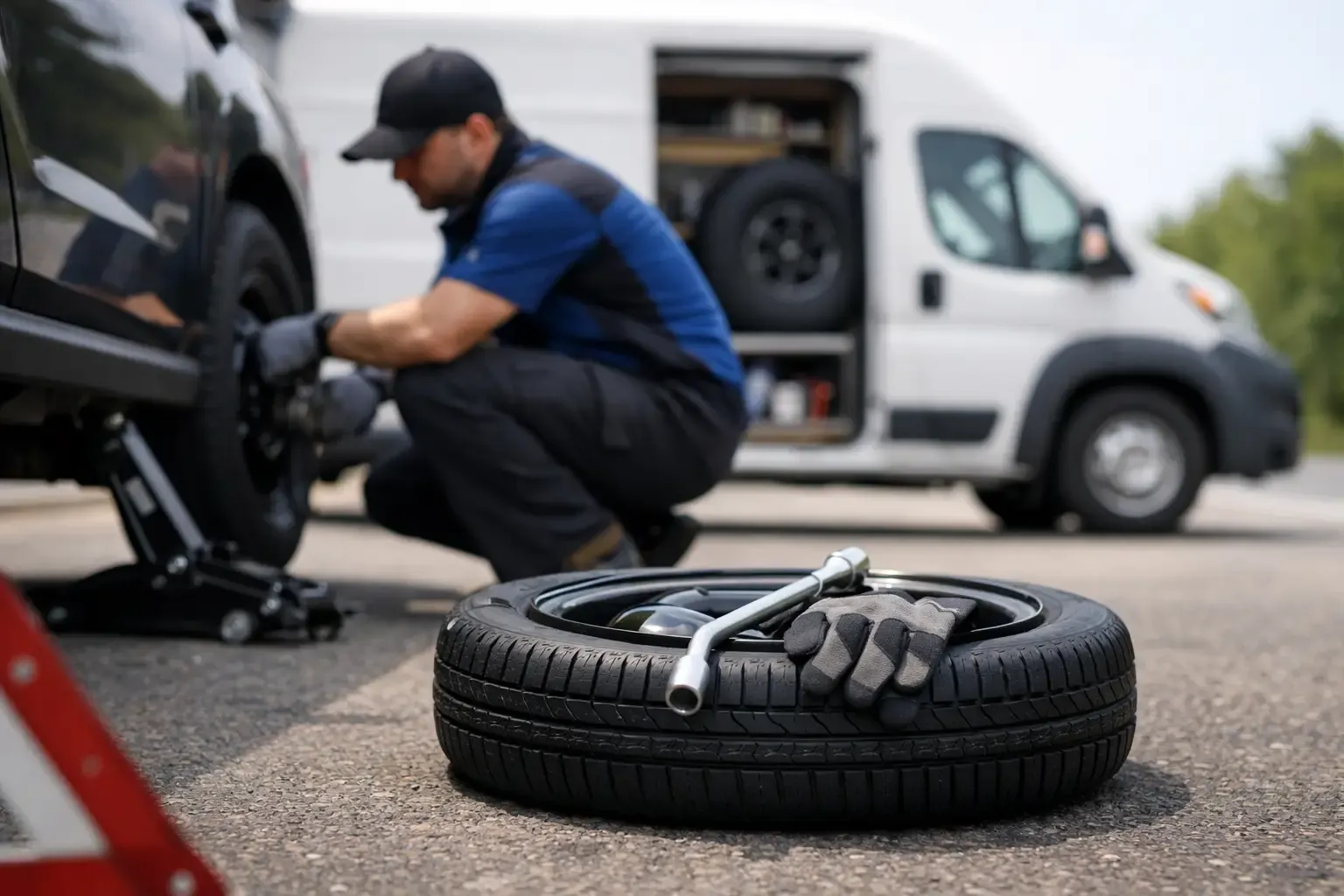
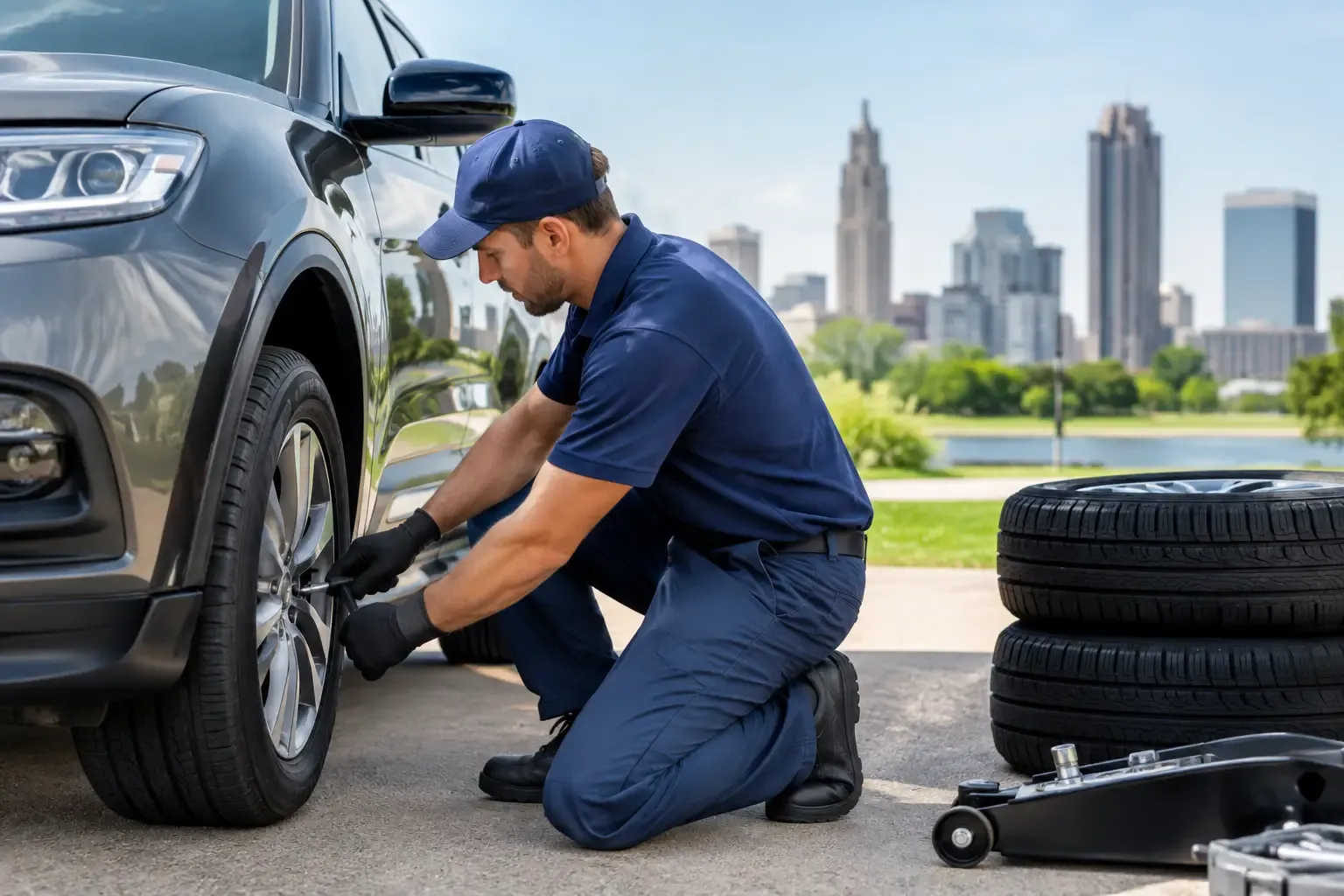
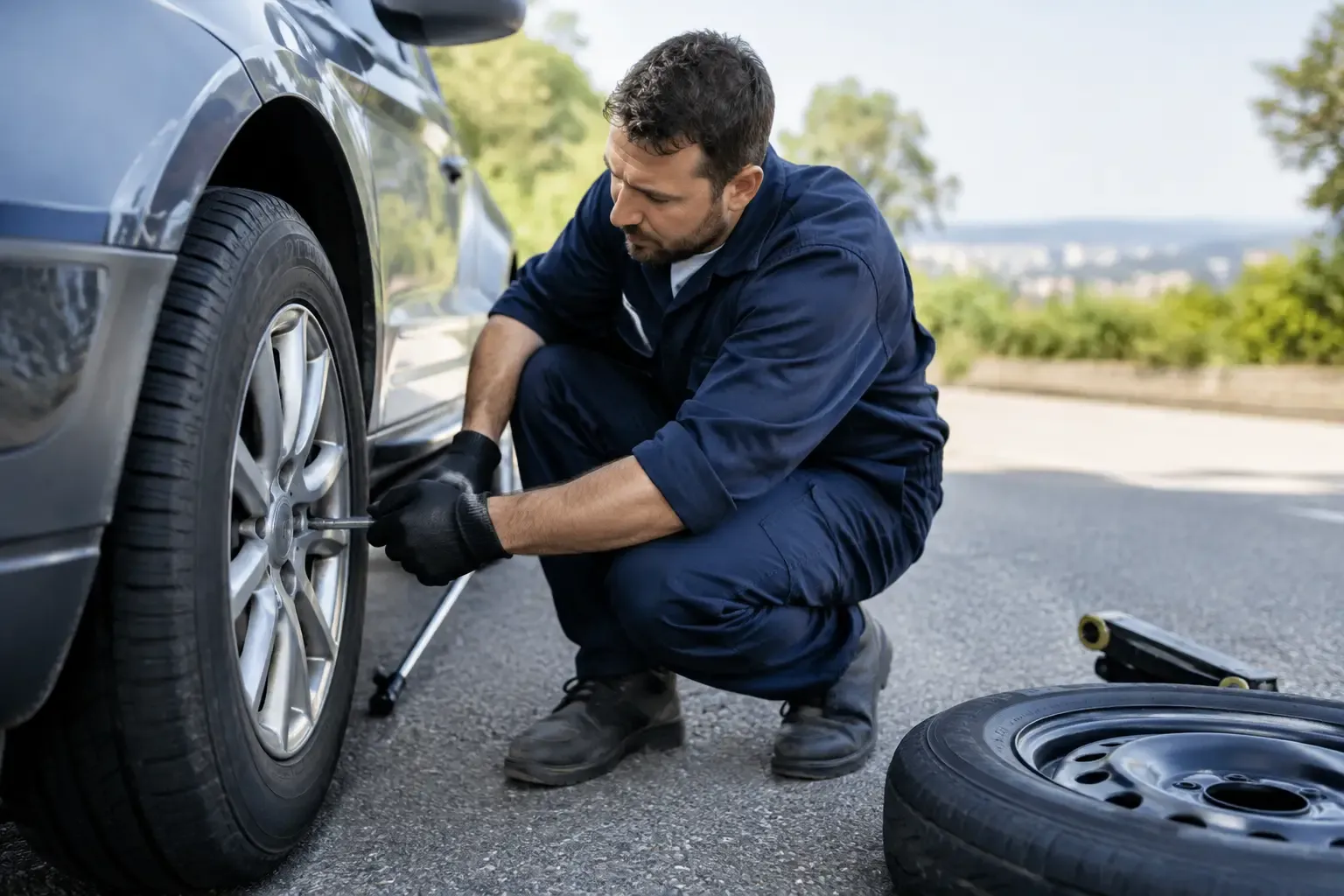
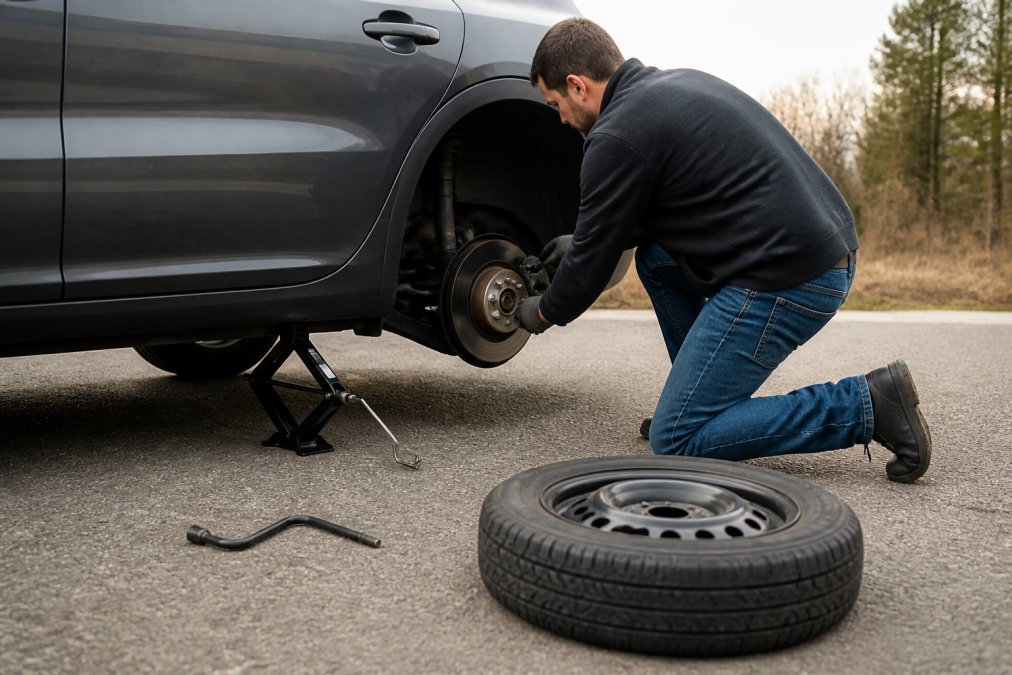
It depends on three things: your location, your equipment, and your confidence using it correctly. If you are parked in a safe area on level ground and you know you have a usable spare, a properly working jack, and the right lug wrench, a spare tire change may be reasonable.
But many drivers discover problems only after they start. The spare may be underinflated. The locking lug key may be missing. The lug nuts may be overtightened. The jack points may be unclear. On the side of a busy road, those issues quickly turn a simple job into a safety risk.
There is also the question of time. If you are on your way to work, transporting children, or dealing with bad weather, waiting beside the road while trying to figure it out may not be your best option. Professional roadside tire help is often less about mechanical difficulty and more about reducing risk and disruption.
If you use a spare, know its limits
Not all spares are meant for normal driving. Many vehicles carry a temporary spare, sometimes called a donut. It is designed to get you off the roadside, not to handle long trips, high speeds, or days of regular use.
Check the sidewall markings on the spare if you can. Temporary spares usually have speed and distance limits. Ignoring those limits can affect handling, braking, and drivetrain components, especially on all-wheel-drive vehicles. A full-size spare gives you more flexibility, but it still needs proper inflation and tread condition to be considered roadworthy.
If your vehicle does not have a spare at all, you are not alone. Many newer cars come with an inflator kit instead. Those kits can help with small tread punctures, but they are not a cure-all. They generally do not work for sidewall damage, larger punctures, or tires that have already been driven too long while flat.
What not to do during a roadside tire emergency
A lot of tire damage gets worse because drivers try to push through it. If a tire loses pressure quickly, do not keep driving in hopes that it will hold on a little longer. That can destroy the tire, damage the wheel, and make the repair more expensive than it needed to be.
Do not crawl under a vehicle supported only by a jack. Do not stand close to traffic if you can avoid it. Do not assume tire sealant solves every issue, and do not rely on a spare without checking whether it is actually usable.
It is also wise not to trust appearances alone. A tire can look only mildly low and still have internal damage from heat or impact. If the vehicle was driven while the tire was significantly underinflated, the safest move is to have it professionally inspected before returning to normal driving.
What a professional roadside tire service can help with
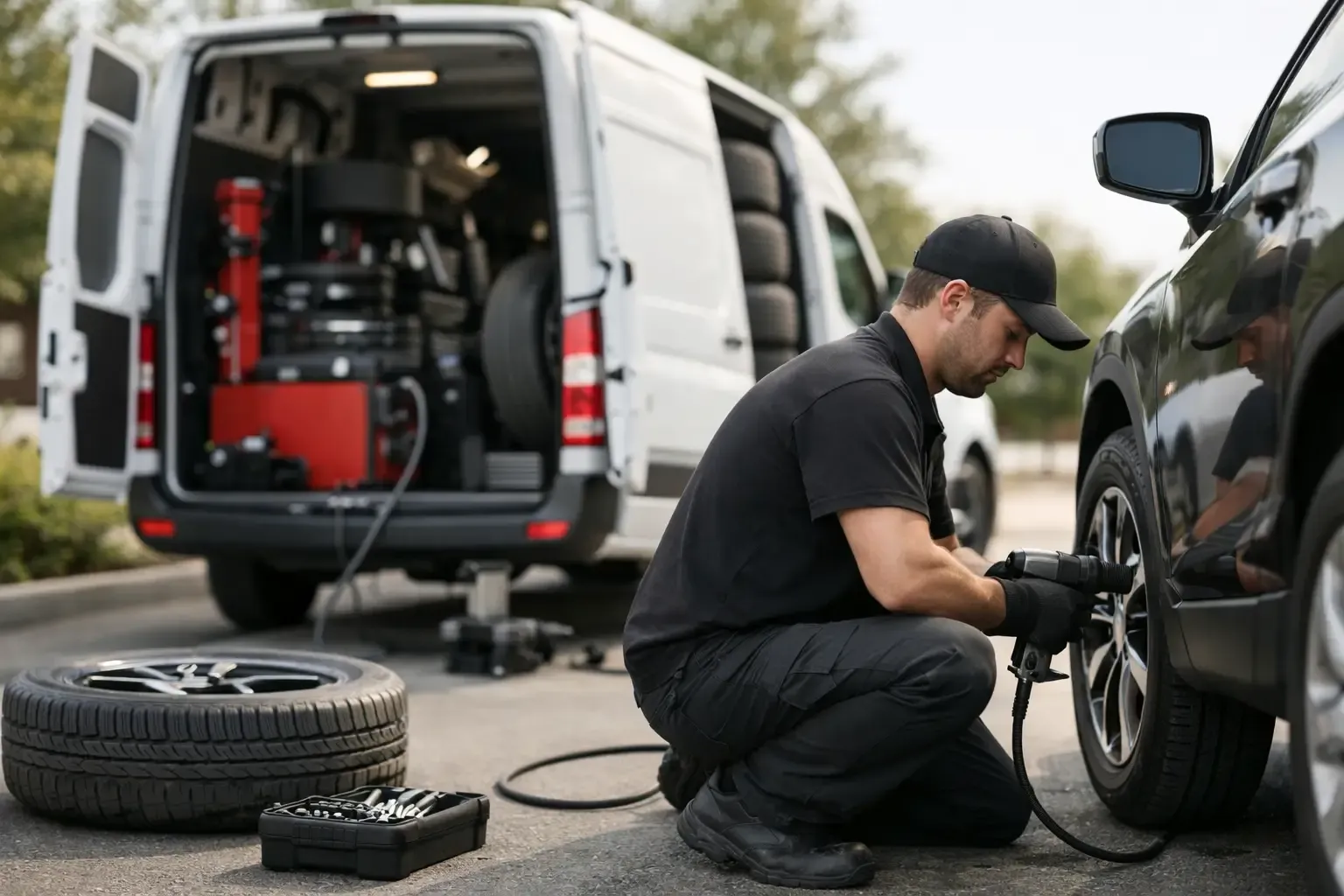
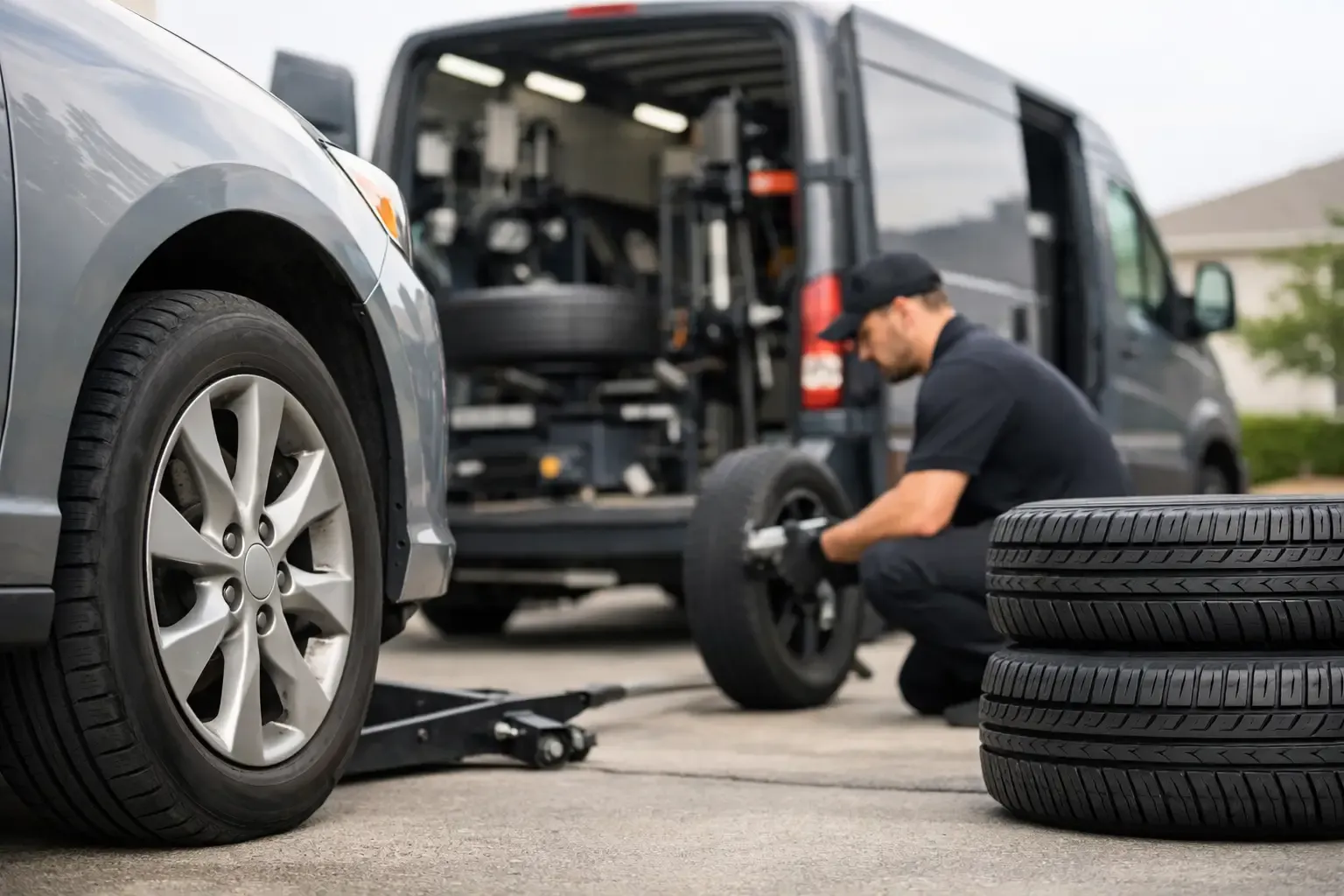
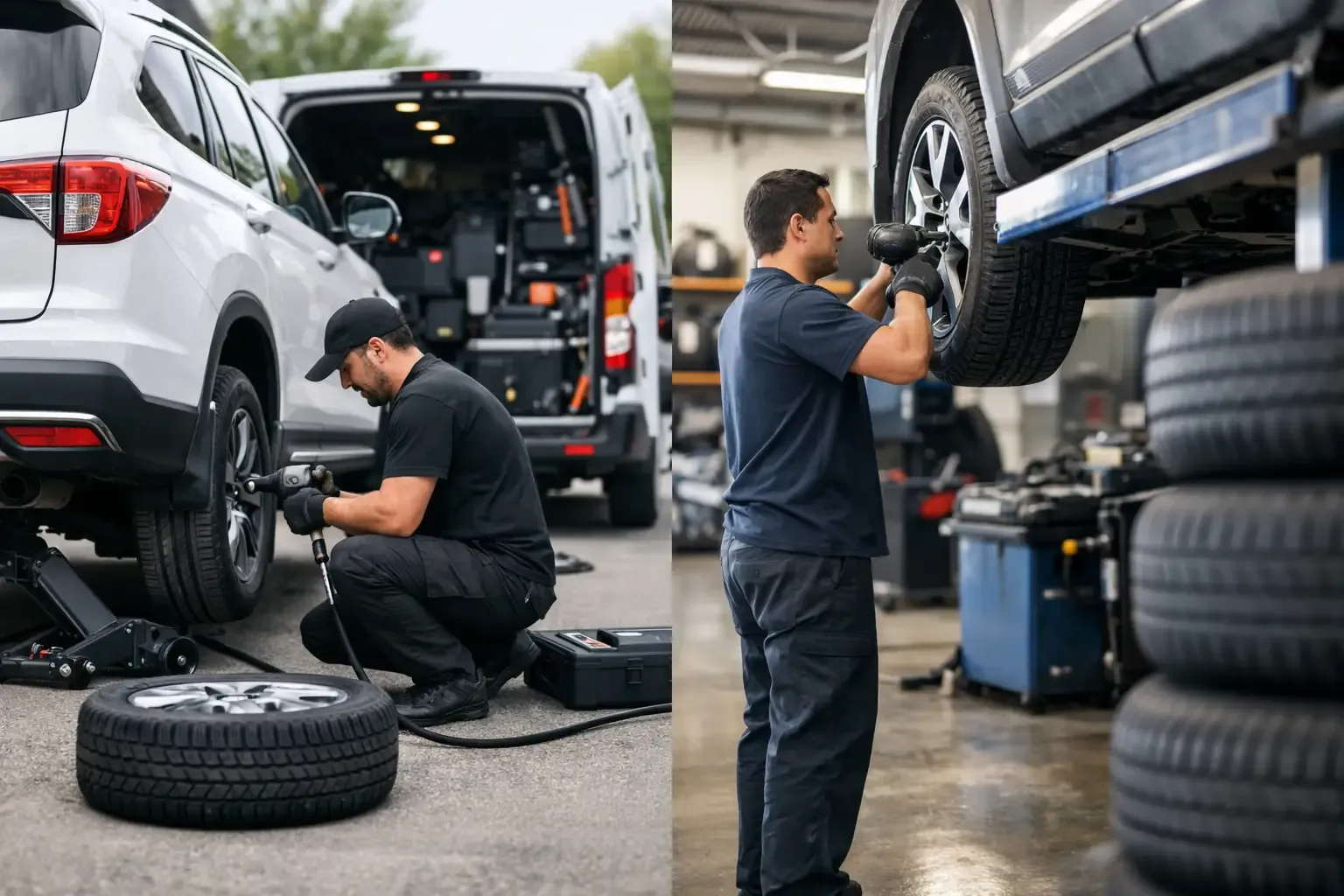
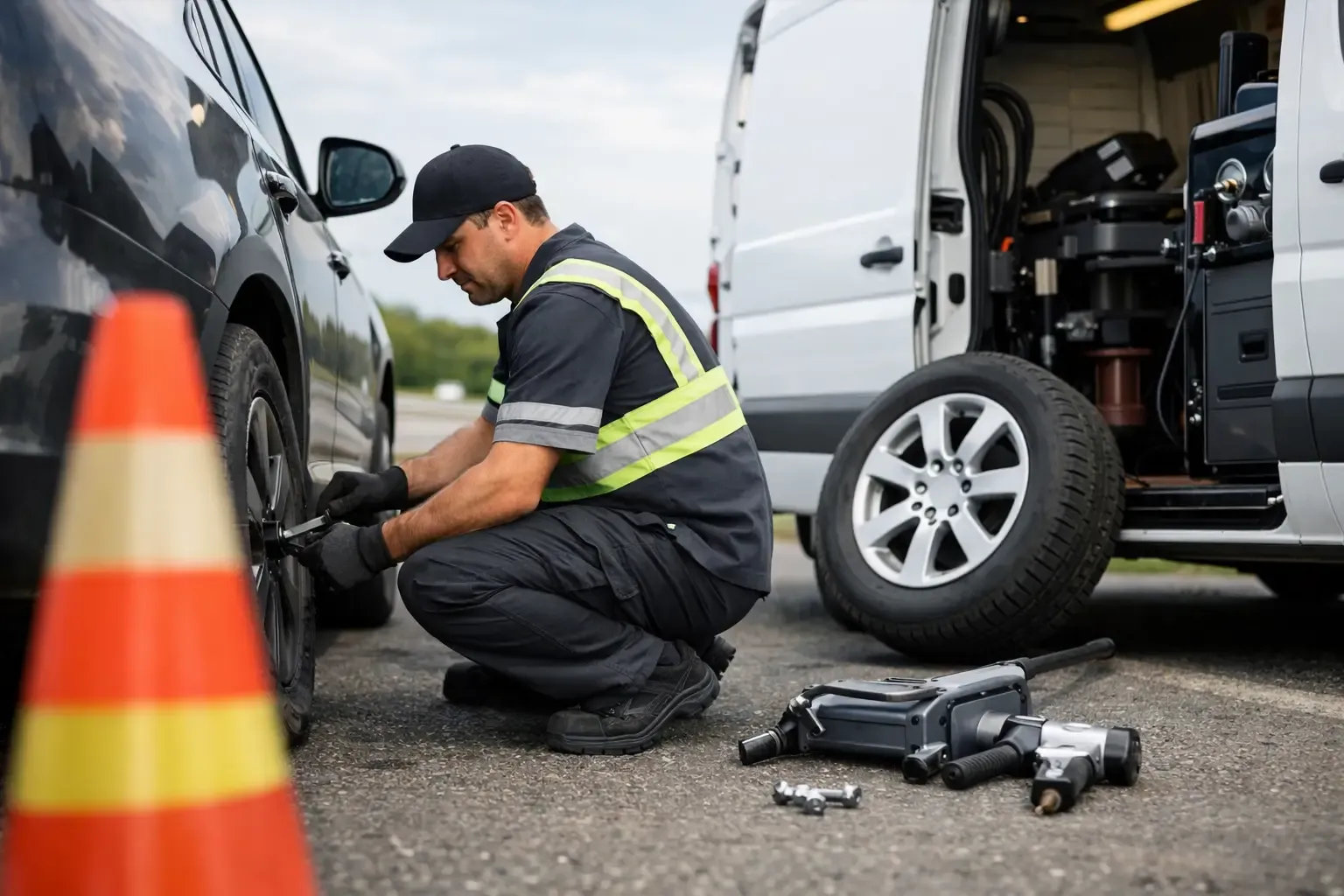
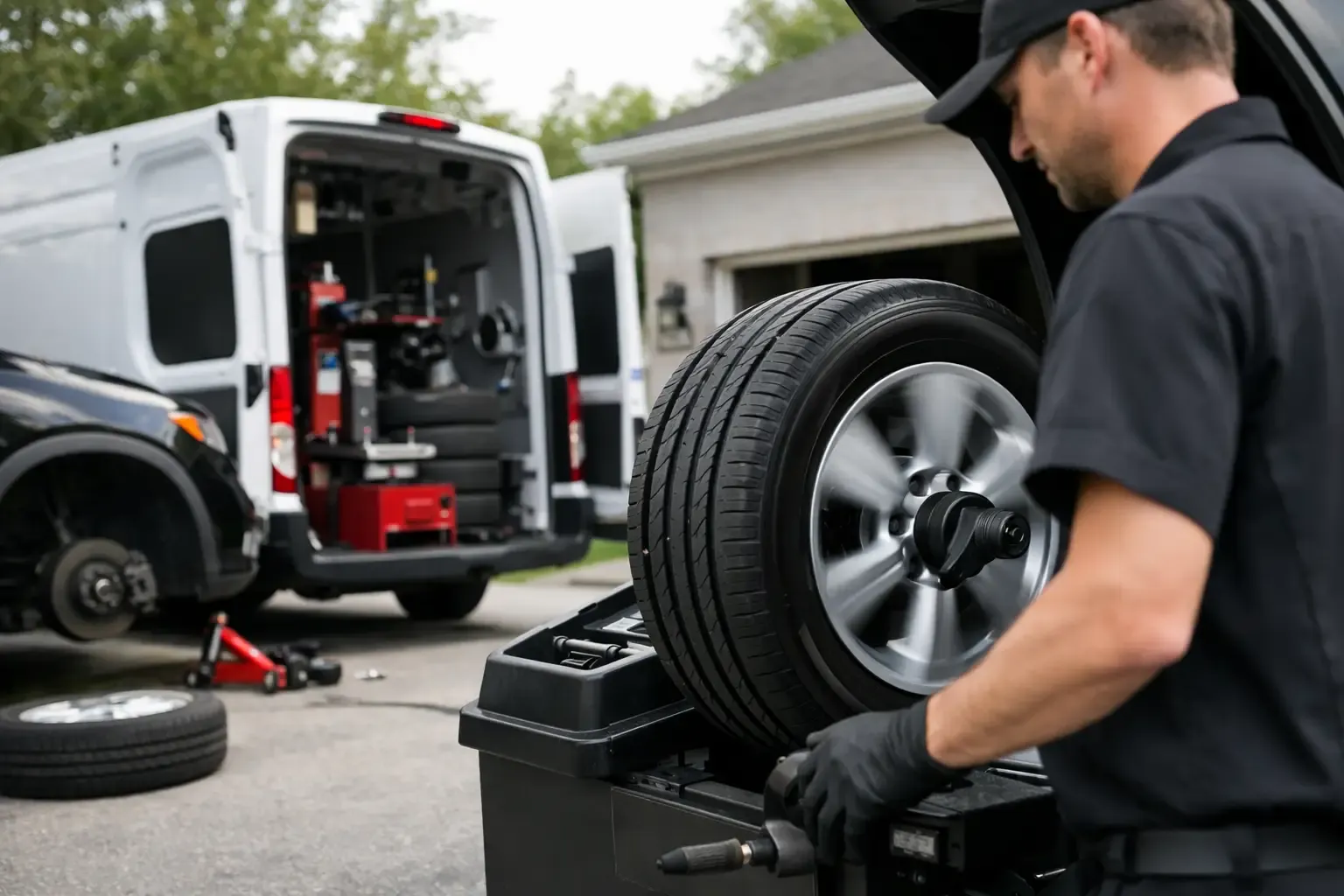
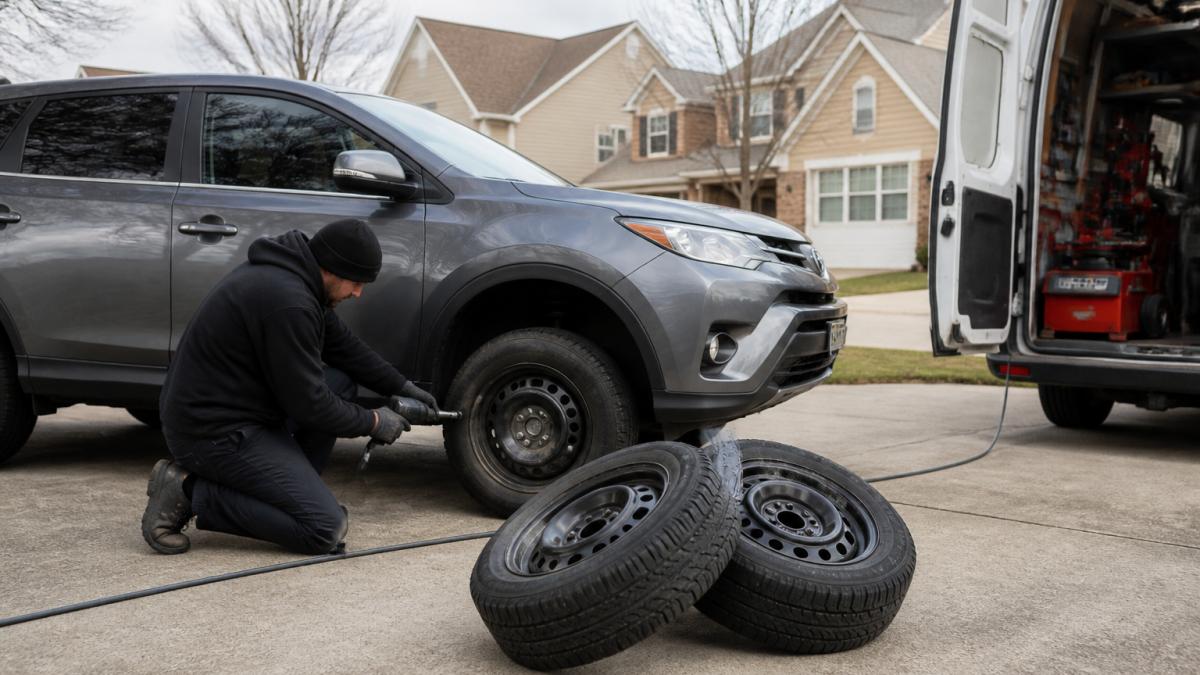
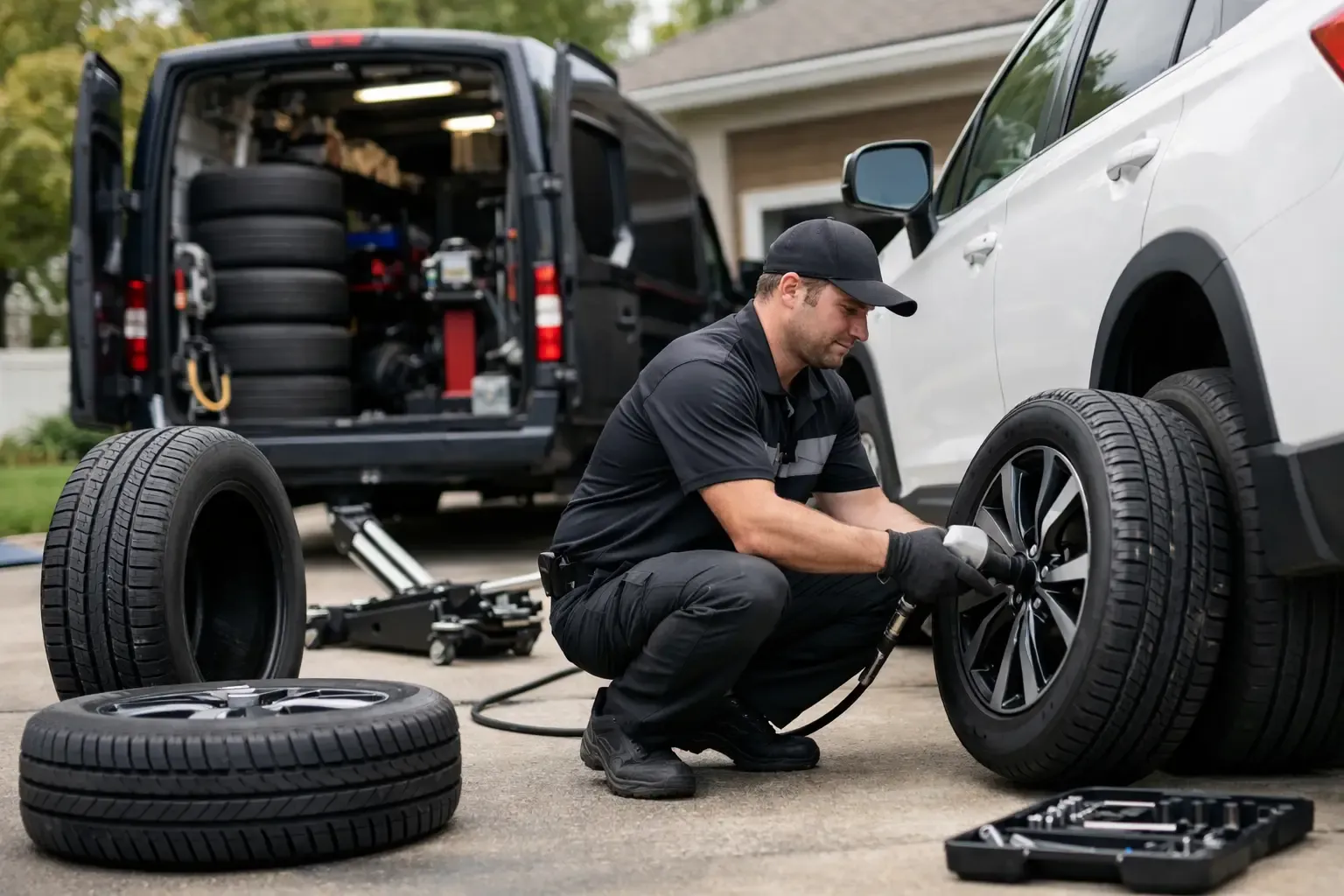
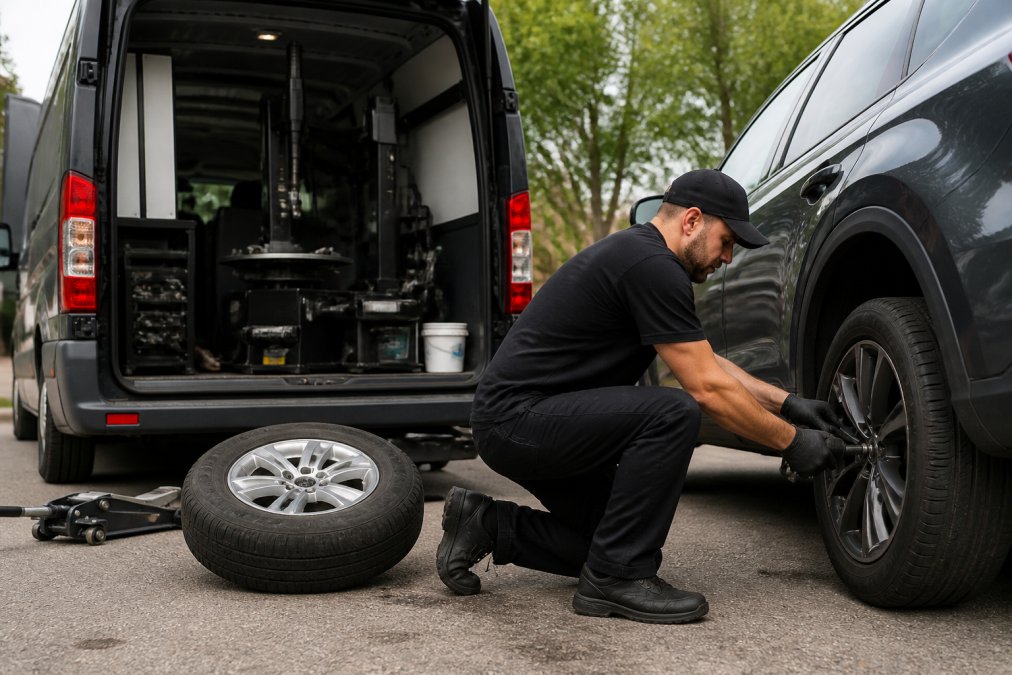
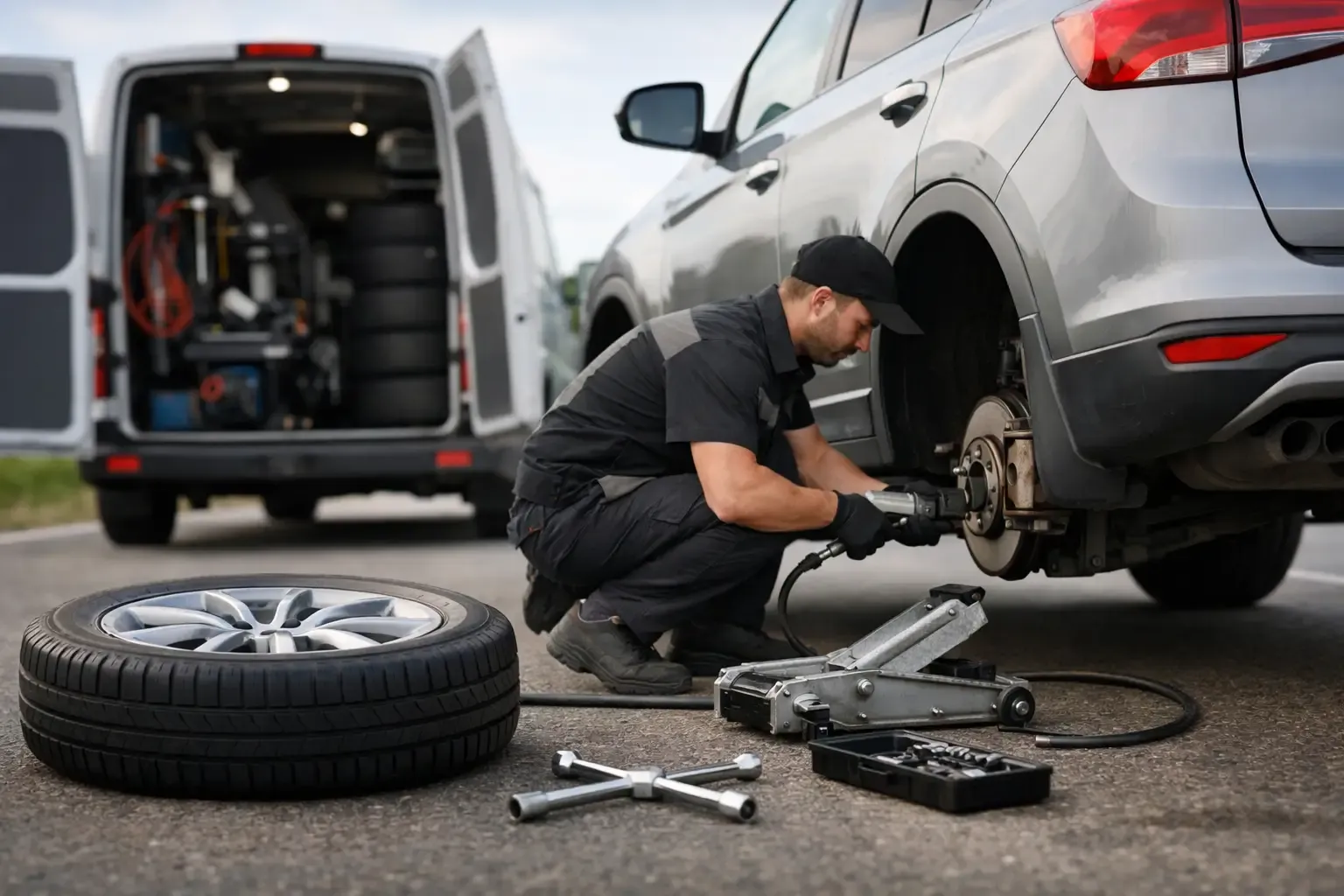
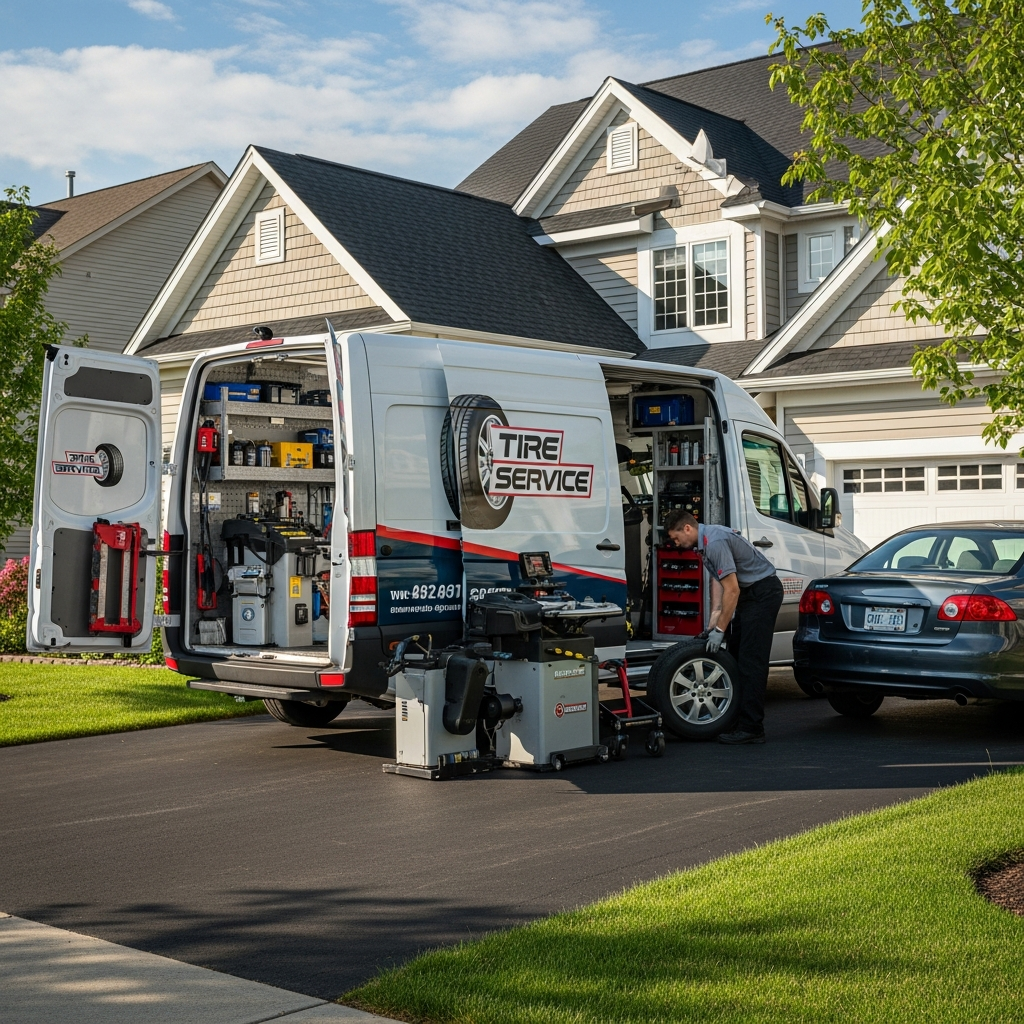
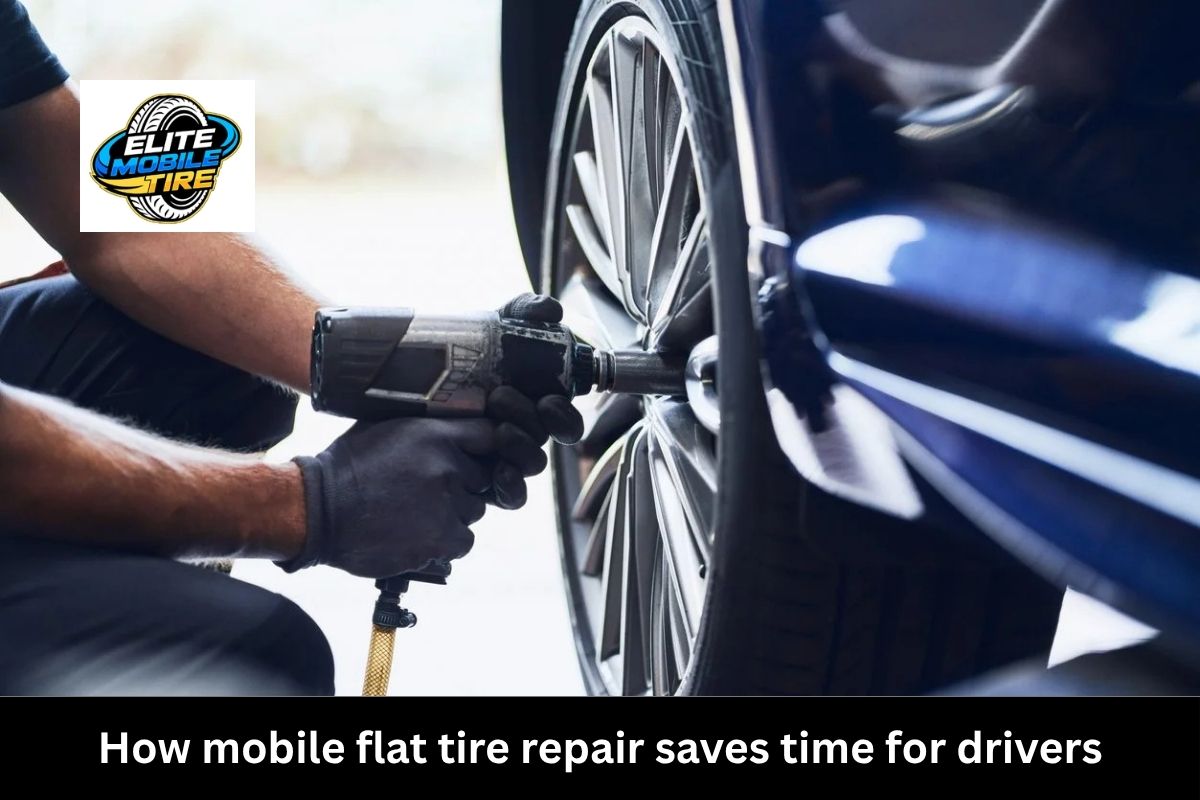
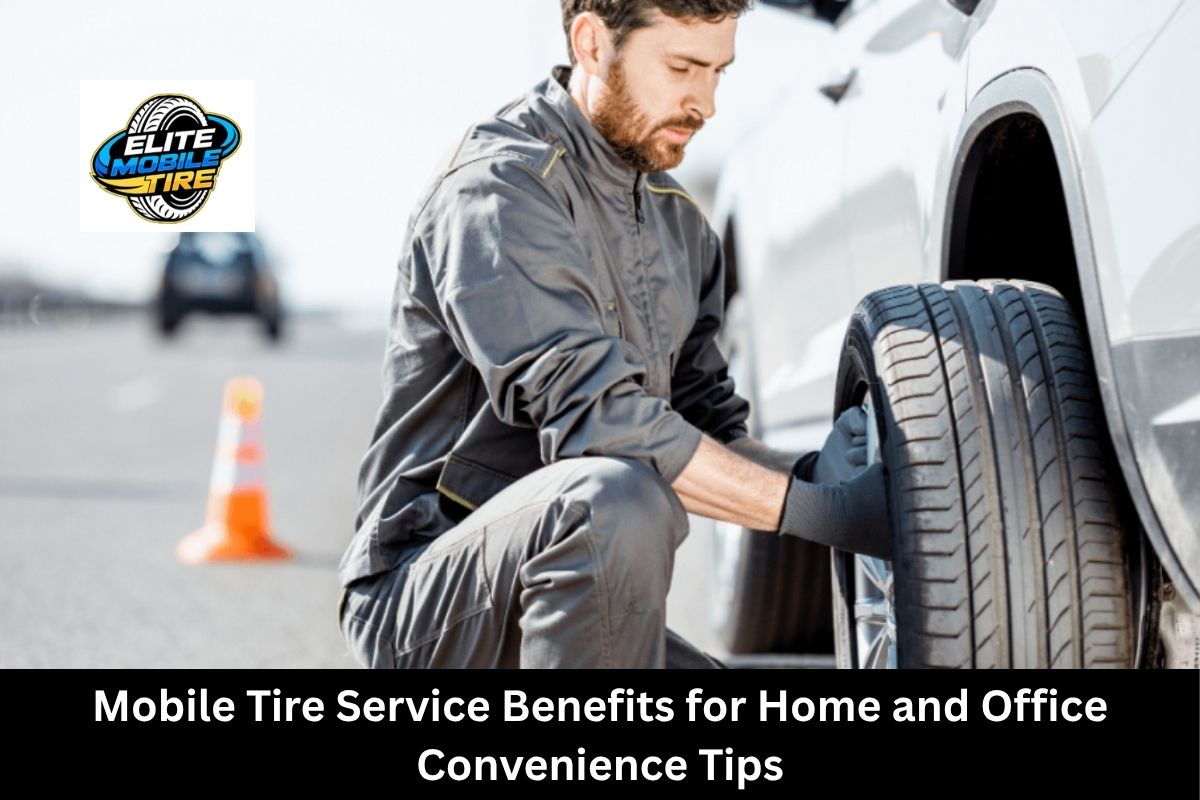
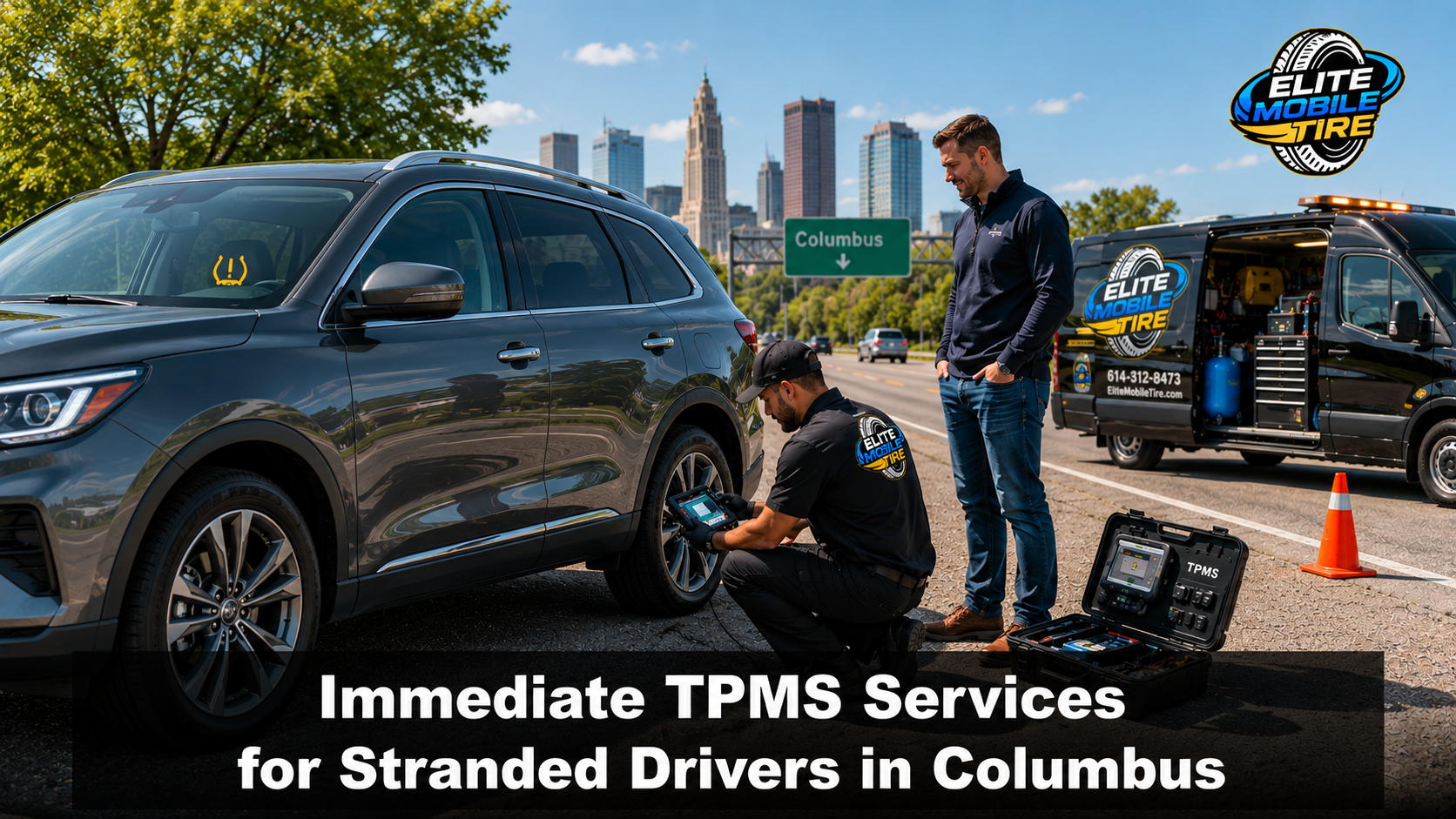
A mobile tire service is useful when the situation is unsafe, inconvenient, or simply beyond what roadside tools can handle. That may include a flat repair if the puncture is in a repairable area, a spare tire change, on-site tire replacement, pressure checks, balancing, or helping determine whether the wheel or TPMS was affected too.
For drivers around Columbus, this can save a full chain of extra problems. Instead of arranging a tow, waiting at a shop, and losing half a day, you can often get help where the car already is - at home, at work, or on the roadside if conditions allow for safe service. That is especially helpful for families, commuters, and anyone trying to solve the problem quickly without cutting corners on safety.
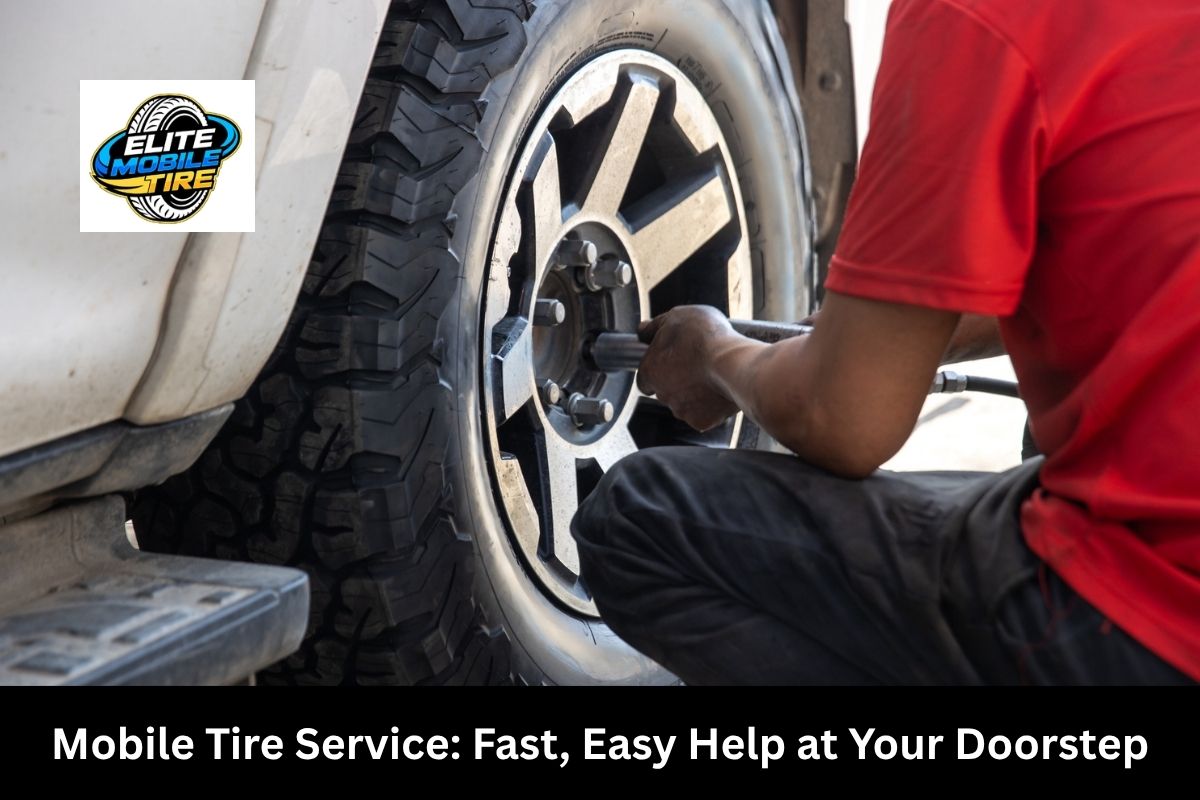
Companies like Elite Mobile Tire are built for exactly this kind of moment: clear communication, on-location service, and a direct path from roadside issue to working solution.
How to prepare before the next flat happens
The best roadside tire emergency is the one that stays manageable because you prepared early. Check your spare a few times a year, not just after a flat. Make sure the jack and tools are in the vehicle and that any wheel lock key is easy to find. If your car uses a tire inflator kit, confirm it is complete and not expired.
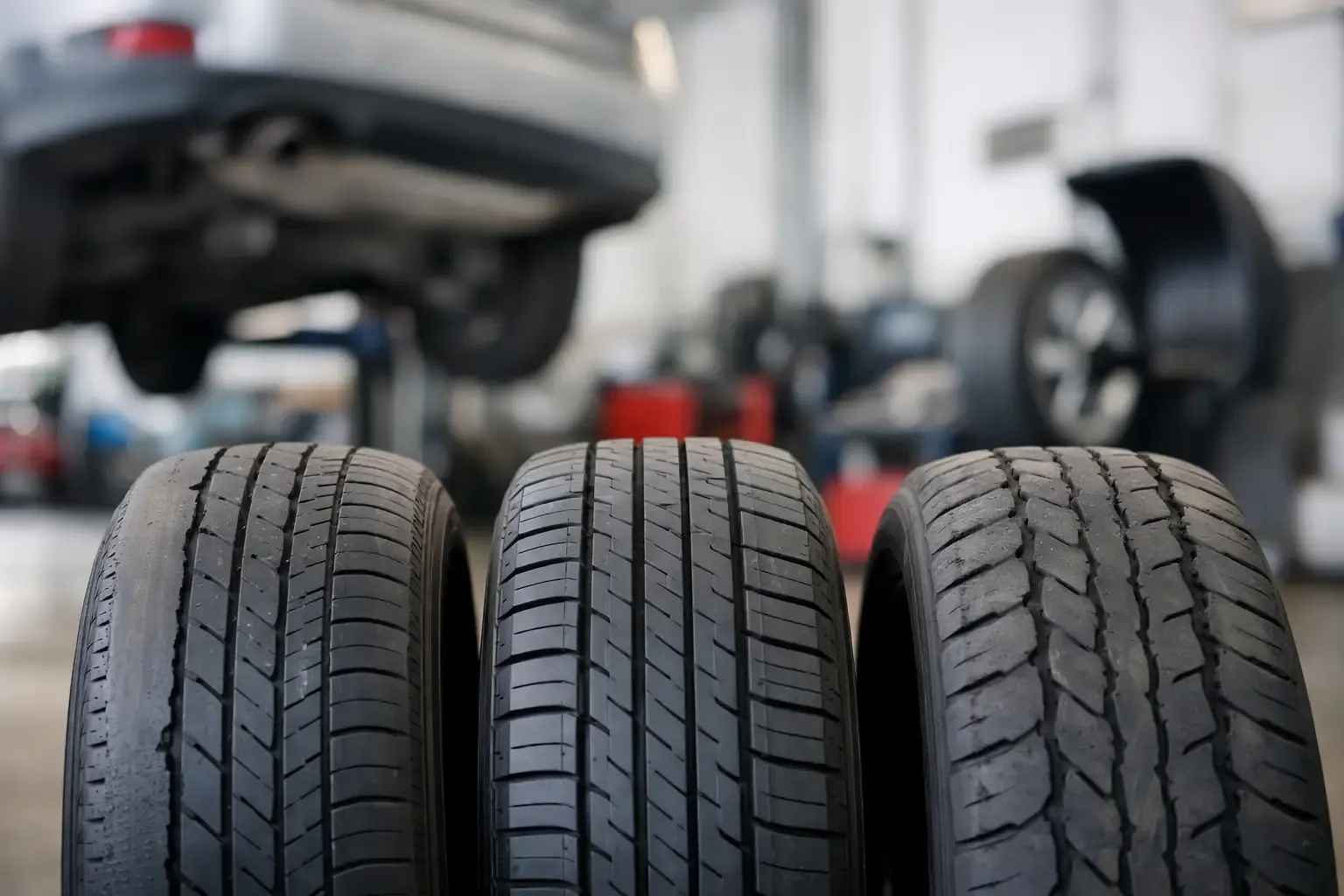
It also helps to pay attention to your tires before they become a problem. Uneven wear, repeated pressure loss, cracks, bulges, or vibration are warning signs worth addressing before a busy morning turns into a roadside stop. A tire that is already weakened by wear or damage is much more likely to fail when it hits a pothole or road debris.
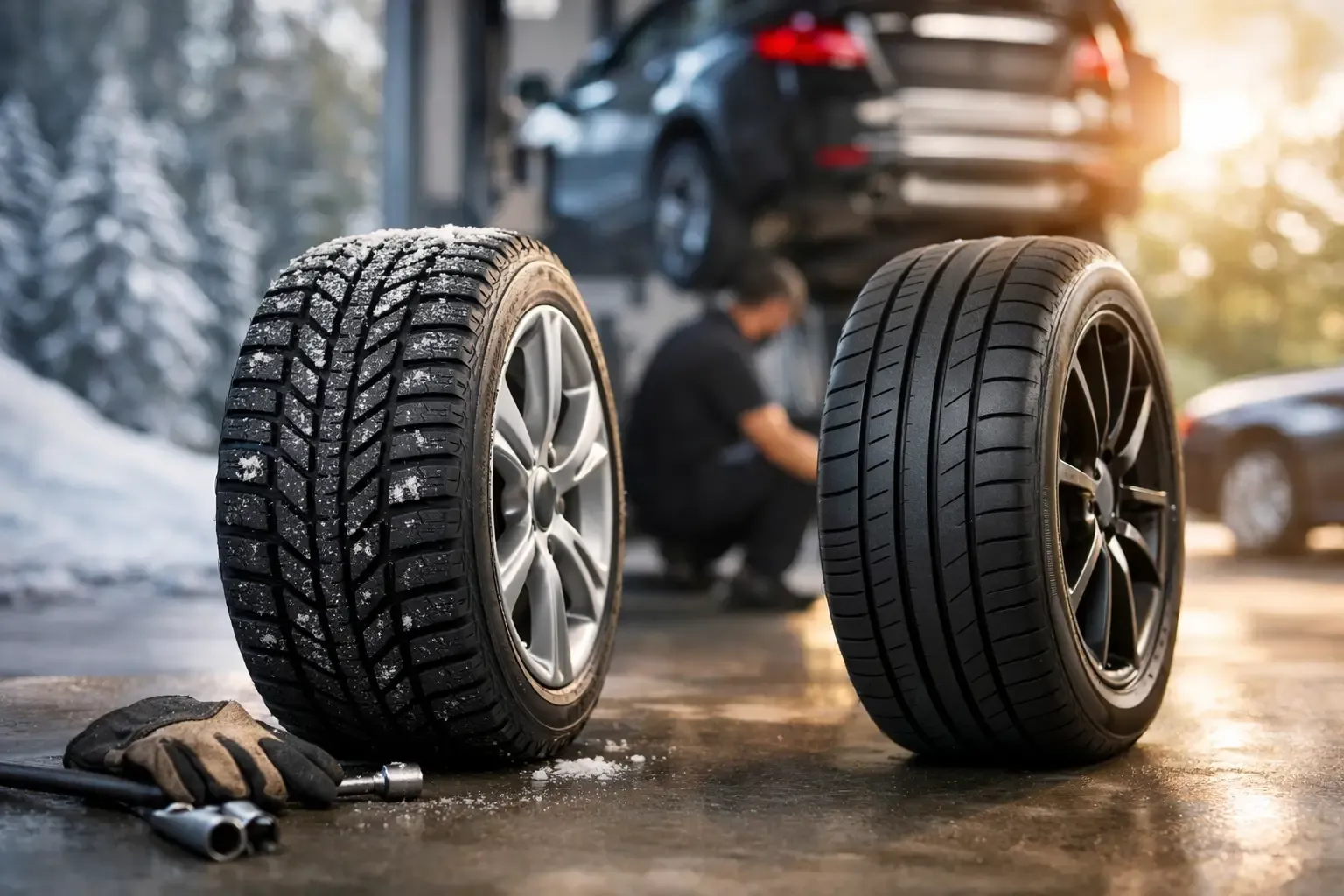
If you drive regularly around central Ohio, seasonal temperature swings can add another layer. Cold snaps can drop tire pressure fast, and potholes tend to show up when roads are at their worst. That does not mean every low tire is an emergency, but it does mean small issues can turn urgent faster than many drivers expect.
Roadside tire emergencies are stressful because they interrupt everything at once - your schedule, your safety, and your sense of control. The good news is that the right response is usually simple: get to a safe spot, assess the damage honestly, and choose the option that gets you moving again without taking unnecessary risks.
Ready for a new set? Elite Mobile Tire installs 2 or 4 new tires right in your driveway or parking lot anywhere around Columbus, Obetz, Groveport, Grove City, and Reynoldsburg. Financing is available through Afterpay and Acima with up to 24-month payment plans. Call 614-344-5010 or visit elitemobiletire.com to book.