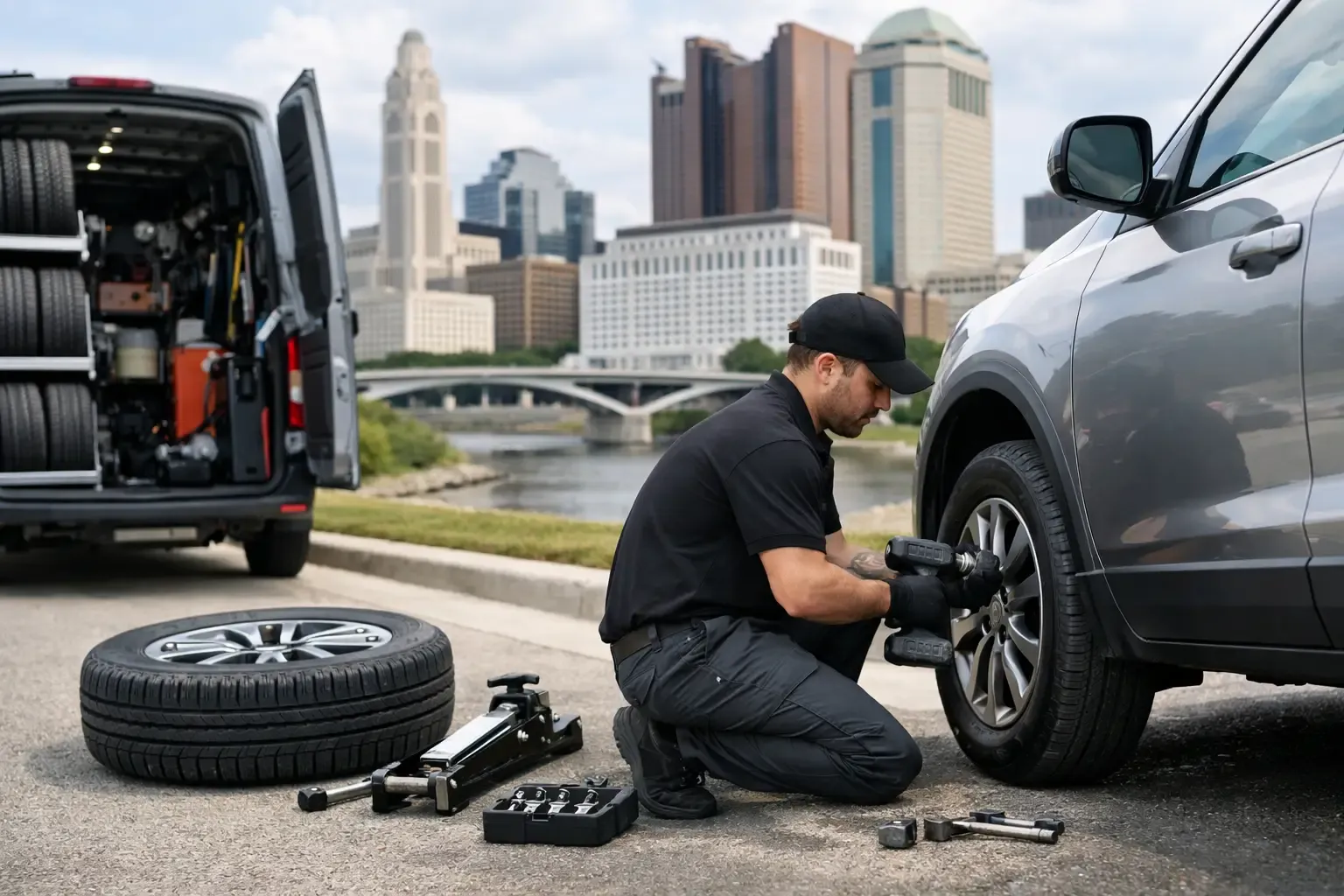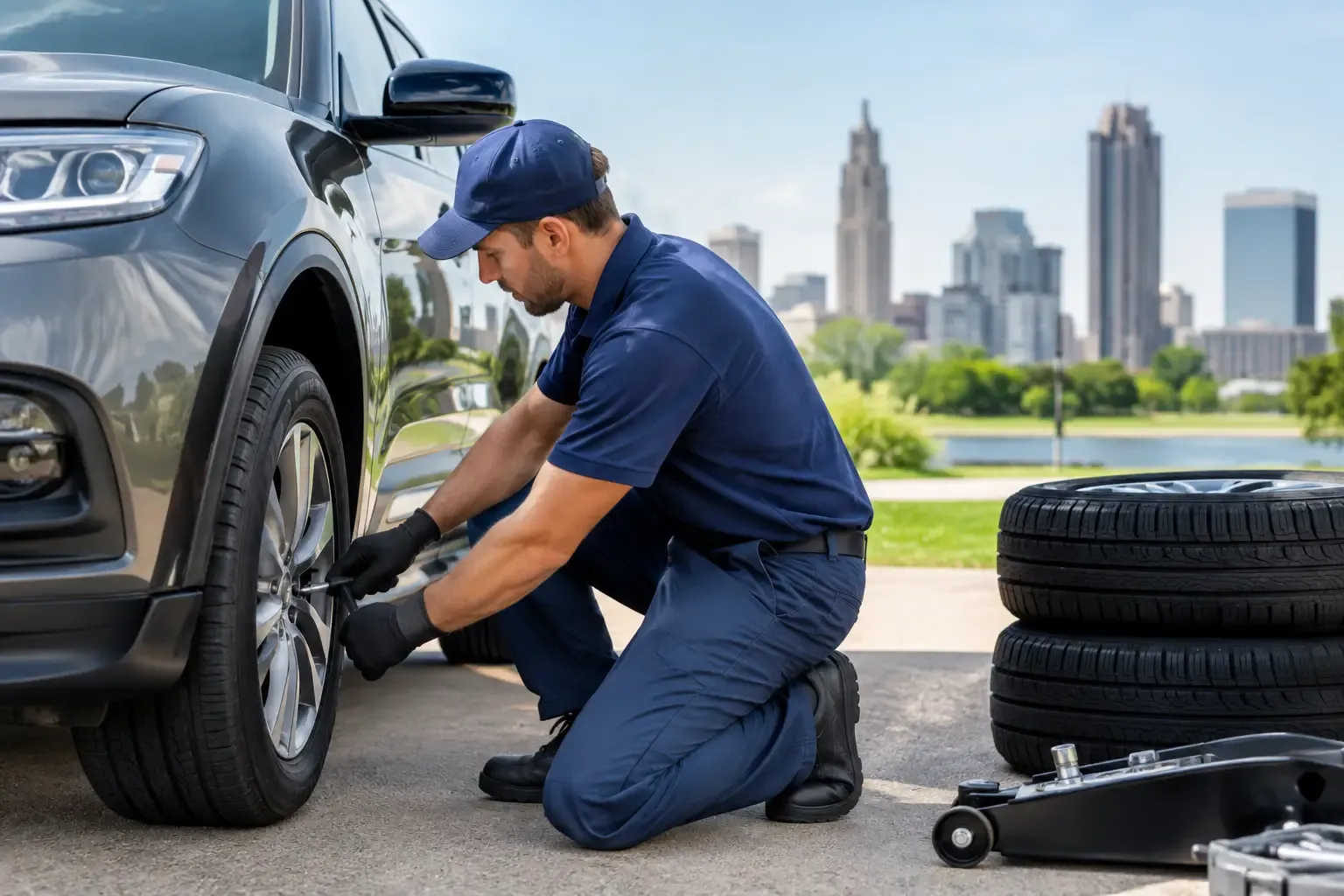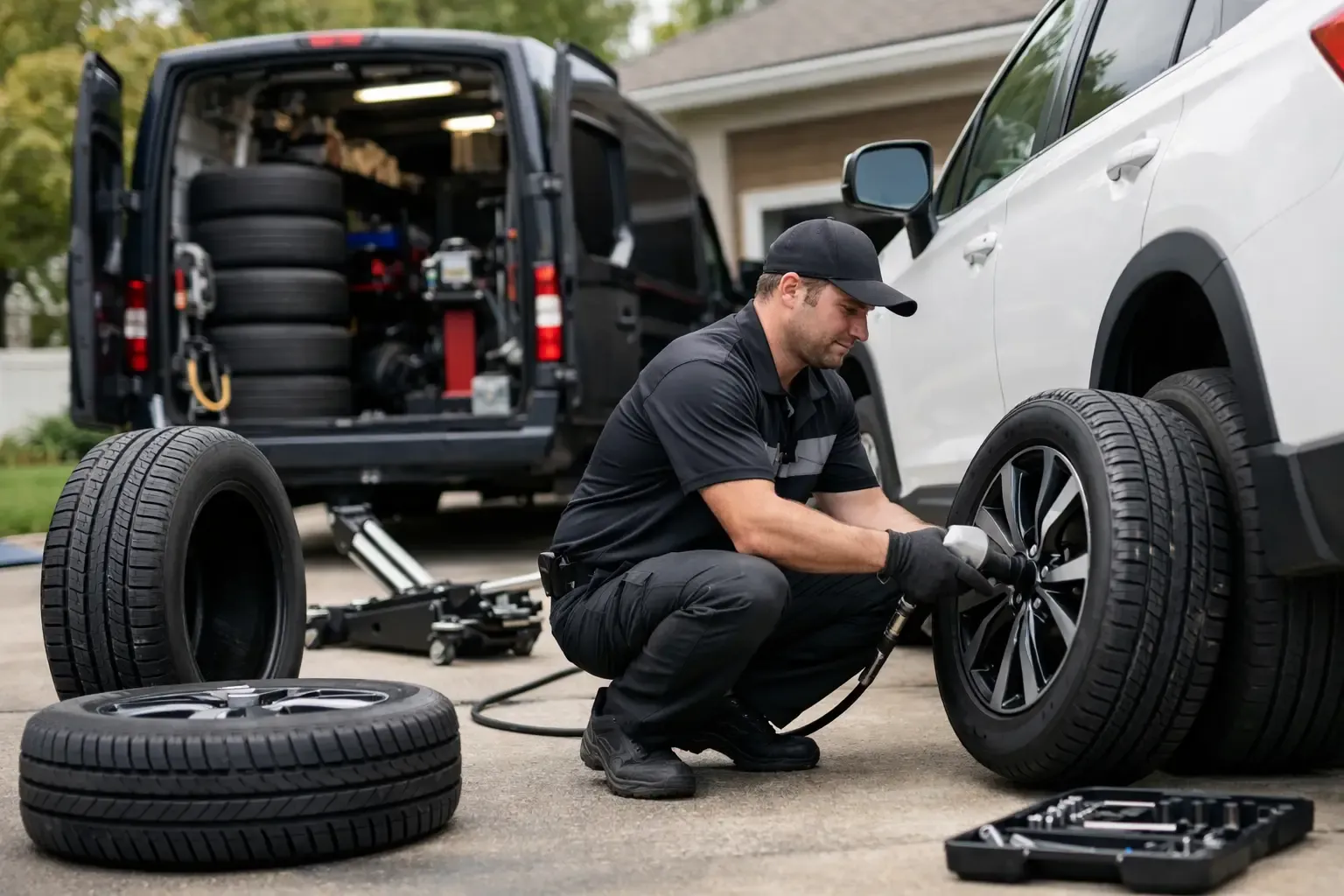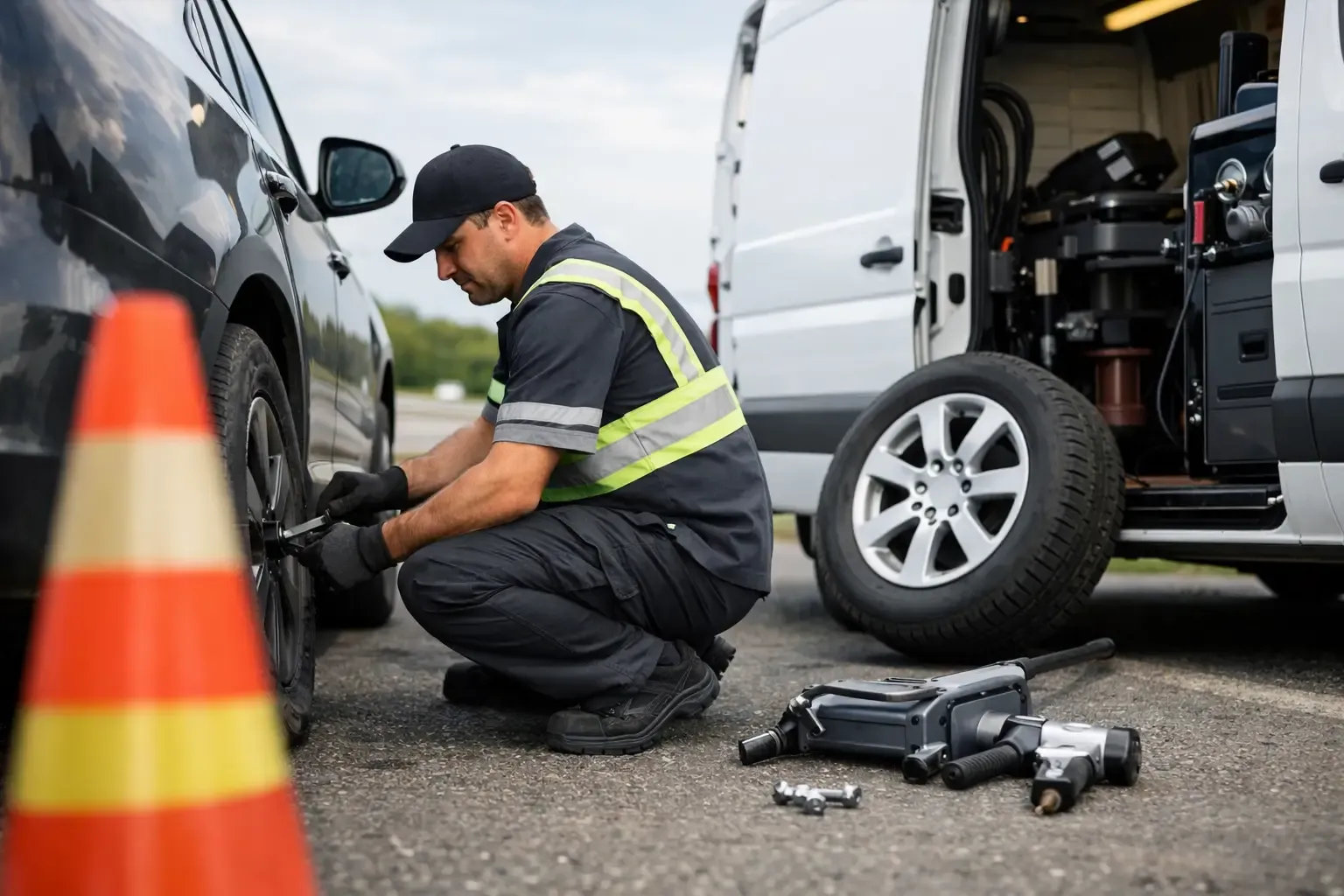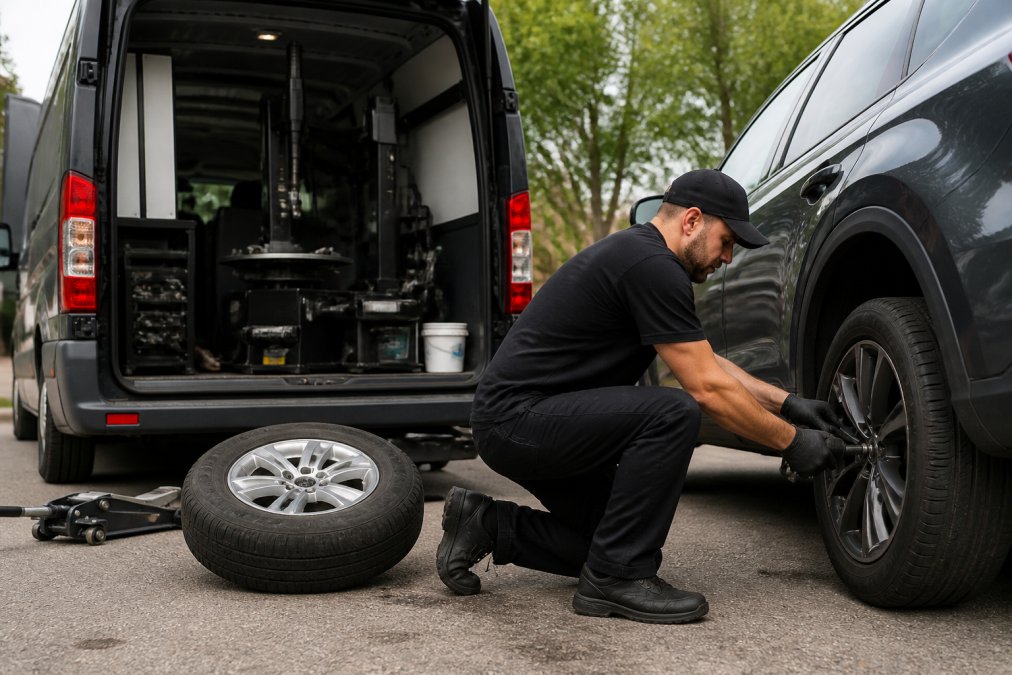
A flat tire can change the shape of your whole day in a few seconds. You may be heading to work on I-270, picking up a child near Creekside, or parked in your own driveway when the tire pressure warning appears. When you need flat tire help Gahanna drivers can rely on, the first priority is not getting moving immediately. It is getting yourself, your passengers, and your vehicle to a safe position so the right repair can be made.
A mobile tire professional can bring service directly to your home, workplace, or roadside location, saving you from arranging a tow or spending an afternoon in a waiting room. Still, knowing what to do in the first few minutes helps protect your wheels, tires, and safety.
What to Do When You Notice a Flat Tire
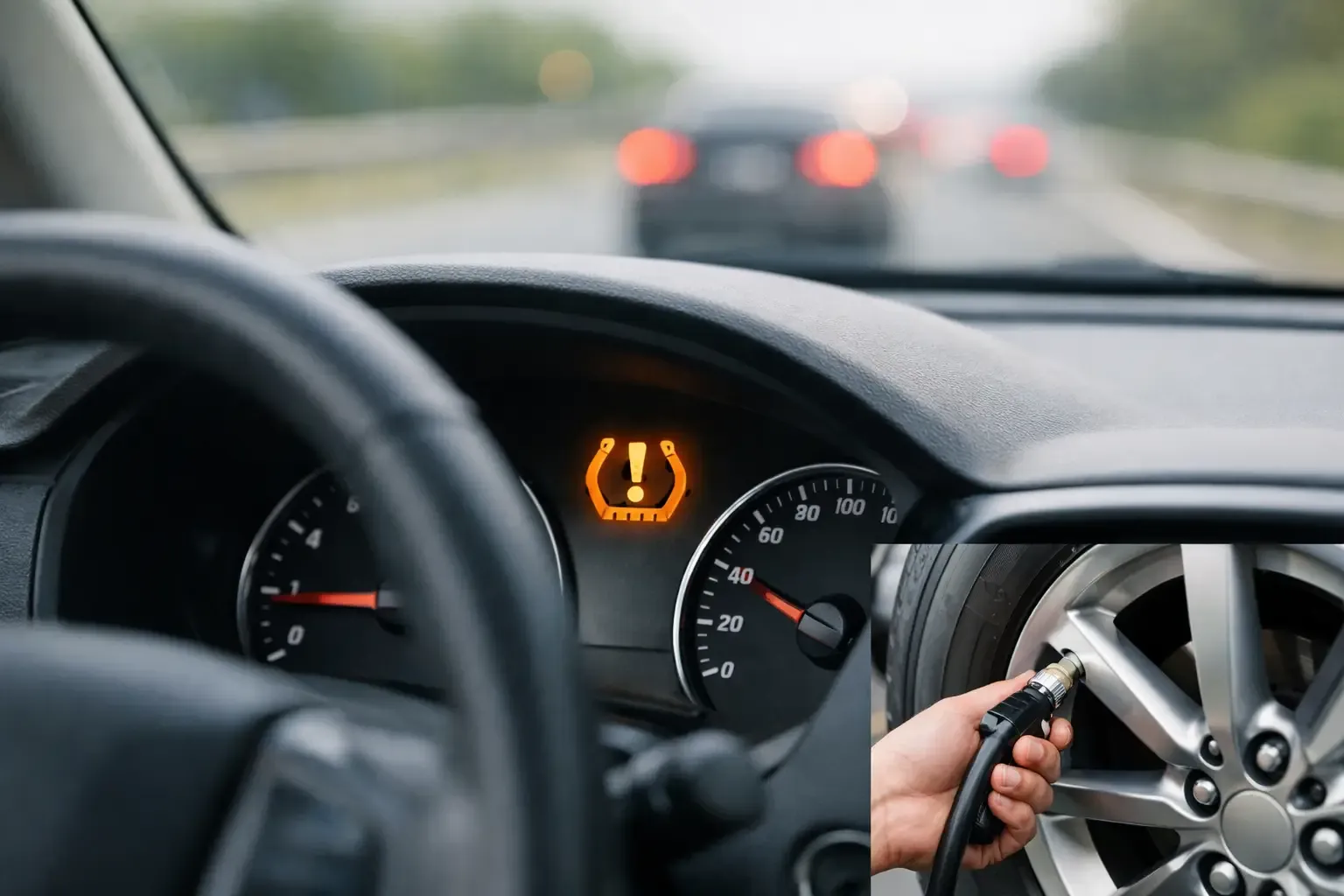
If you feel a sudden pull in the steering wheel, hear repetitive thumping, or see the tire pressure monitoring system light come on, ease off the accelerator. Avoid hard braking or sharp steering movements. A damaged tire changes how the vehicle handles, particularly at highway speeds or in wet conditions.
Turn on your hazard lights and look for a safe, level place to stop. A parking lot, wide shoulder, or residential street with room away from traffic is much safer than stopping on a curve or narrow roadside. If the vehicle is difficult to control, focus on slowing down gradually and getting out of the active traffic lane.
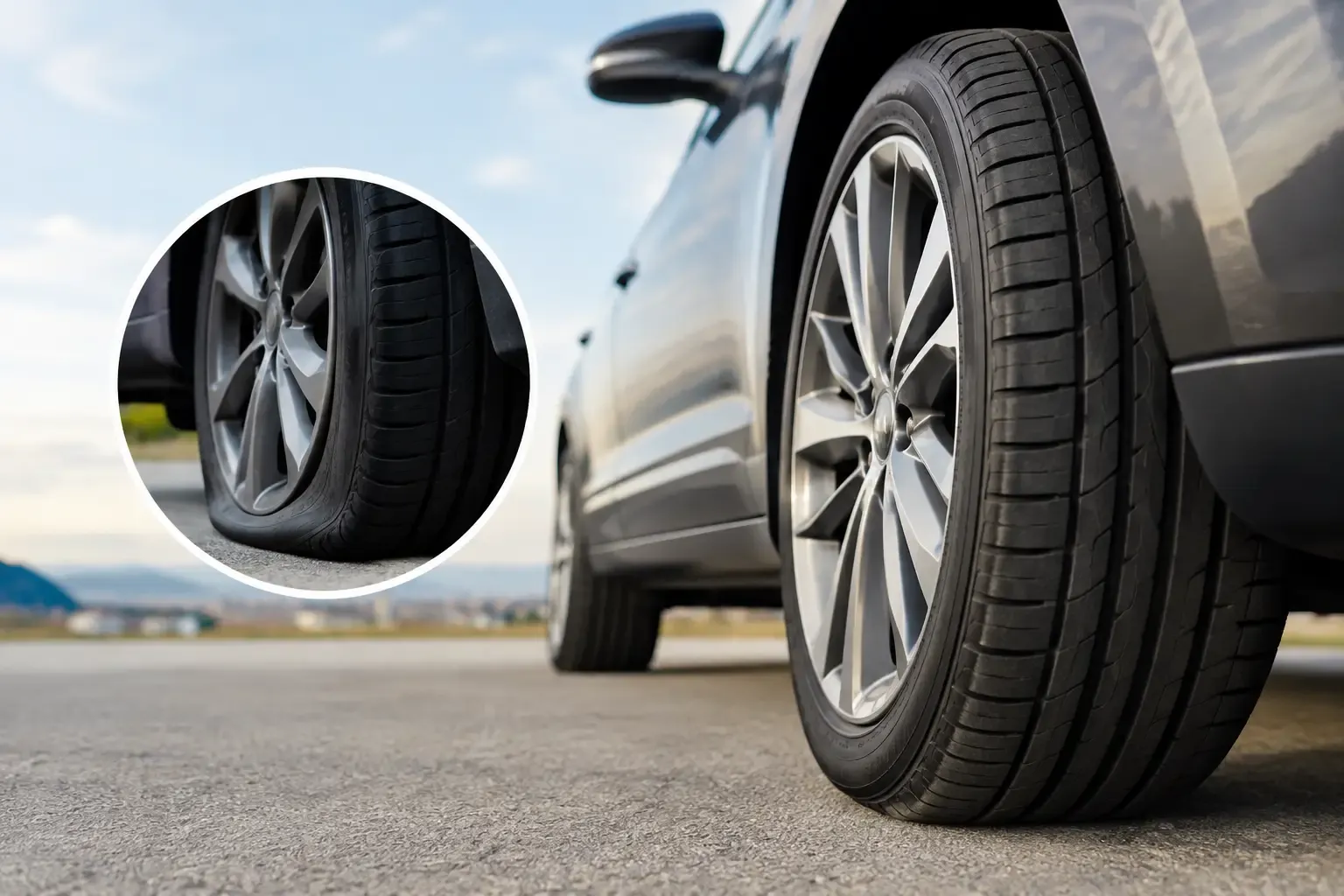
Once parked, place the vehicle in park, set the parking brake, and check your surroundings before stepping out. Do not keep driving on a tire that has lost most of its air. Even a short distance on a flat can damage the tire's internal structure and grind down the wheel, turning a repairable puncture into a larger replacement job.
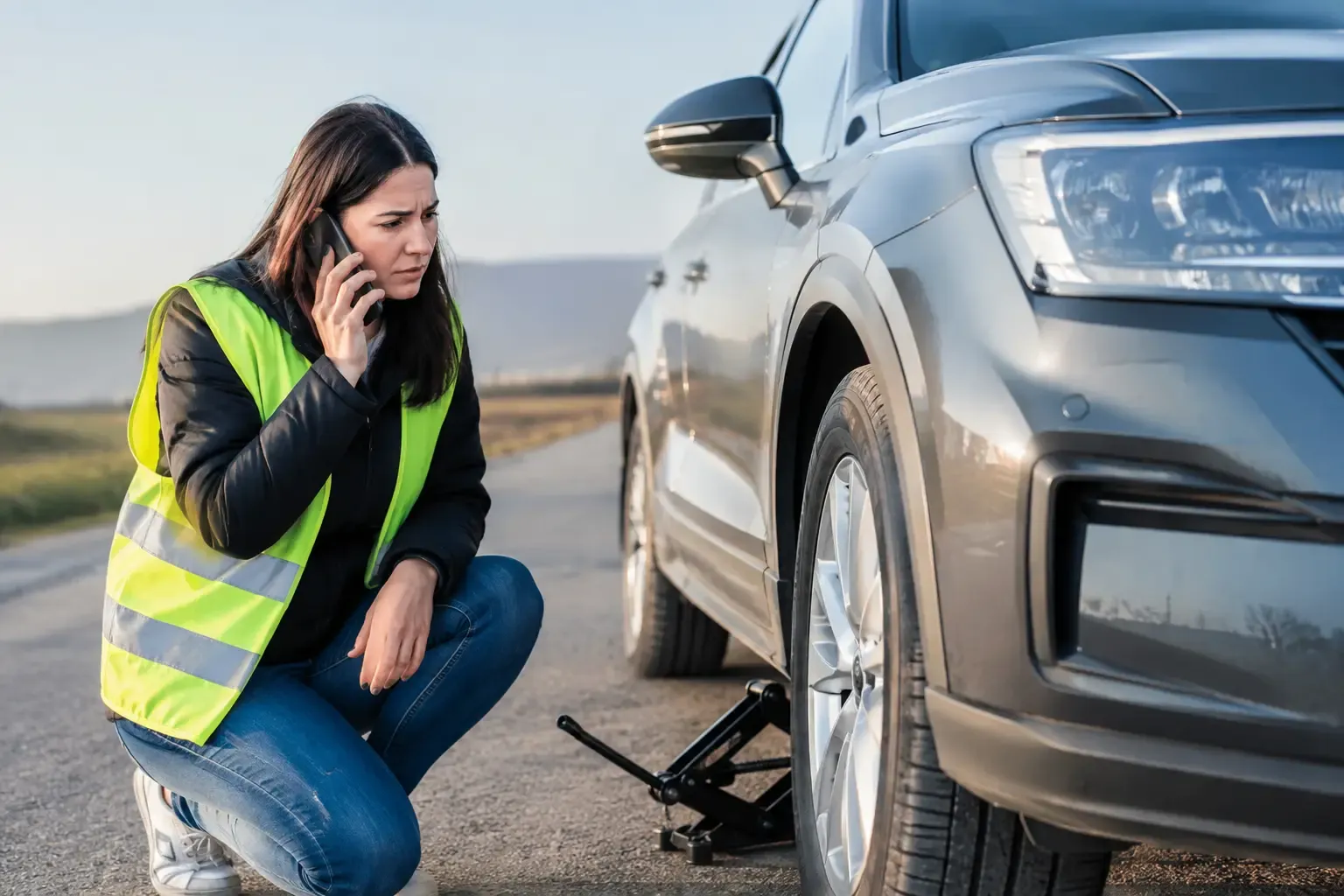
If you are on a busy roadway and cannot safely inspect the tire, stay in the vehicle with the doors locked and call for roadside assistance. Your location matters. A technician can respond more effectively when you can provide a nearby cross street, business name, parking lot, or landmark.
Flat Tire Help in Gahanna: Repair, Spare, or Replacement?
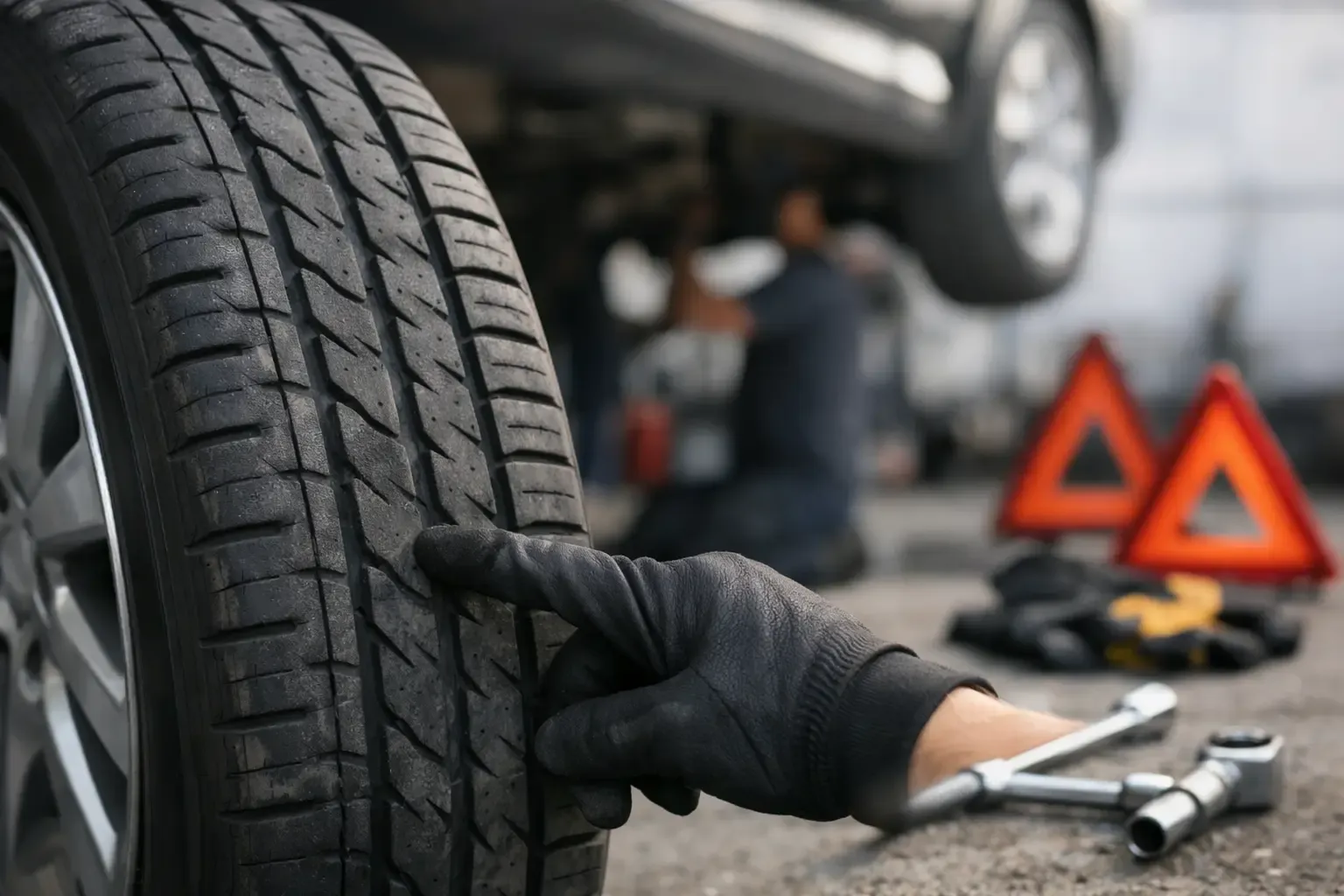
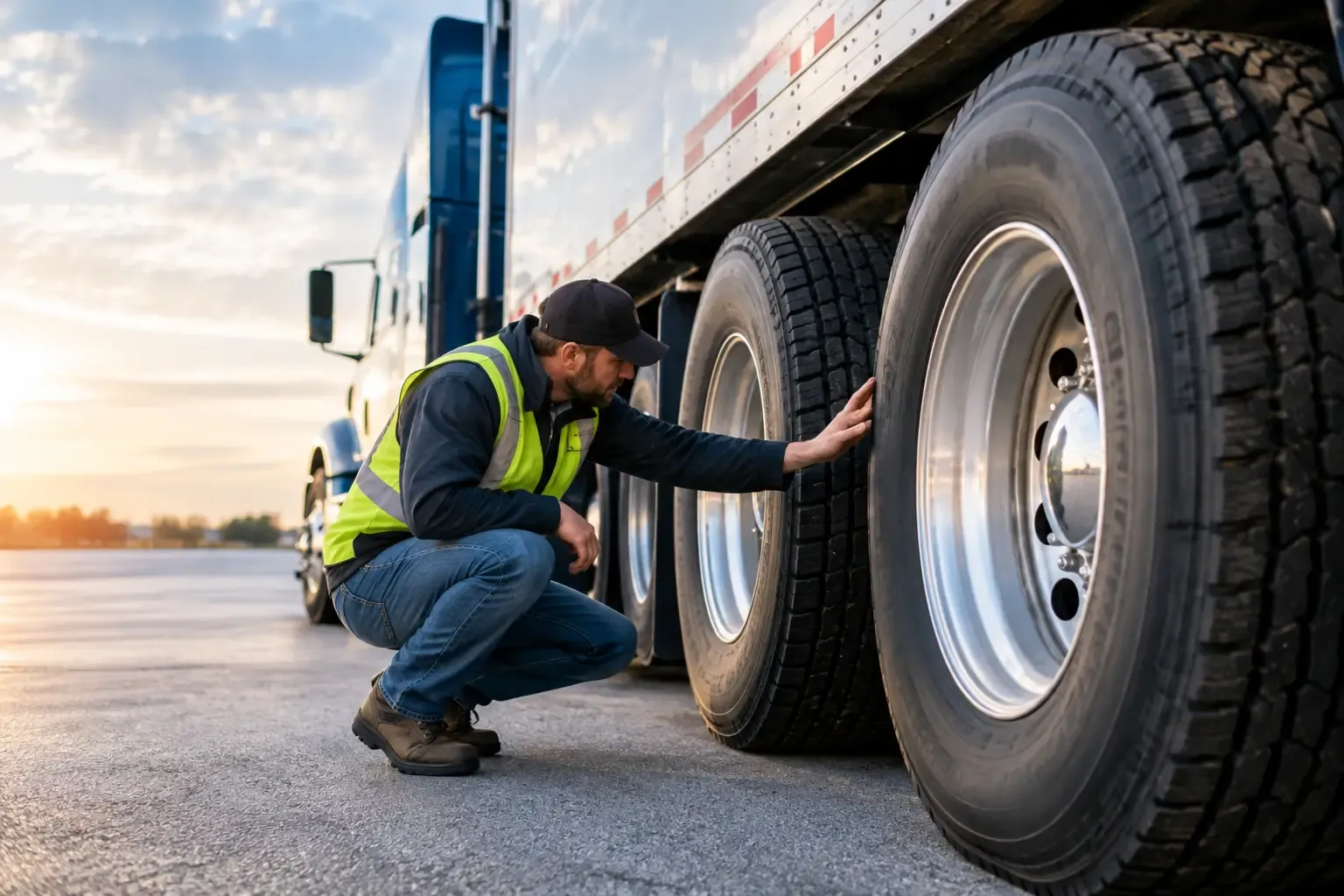
Not every flat has the same solution. The visible cause may be a nail, screw, pothole impact, damaged valve stem, sidewall cut, or wheel issue. A qualified technician needs to inspect the tire inside and out before confirming whether it can safely stay in service.
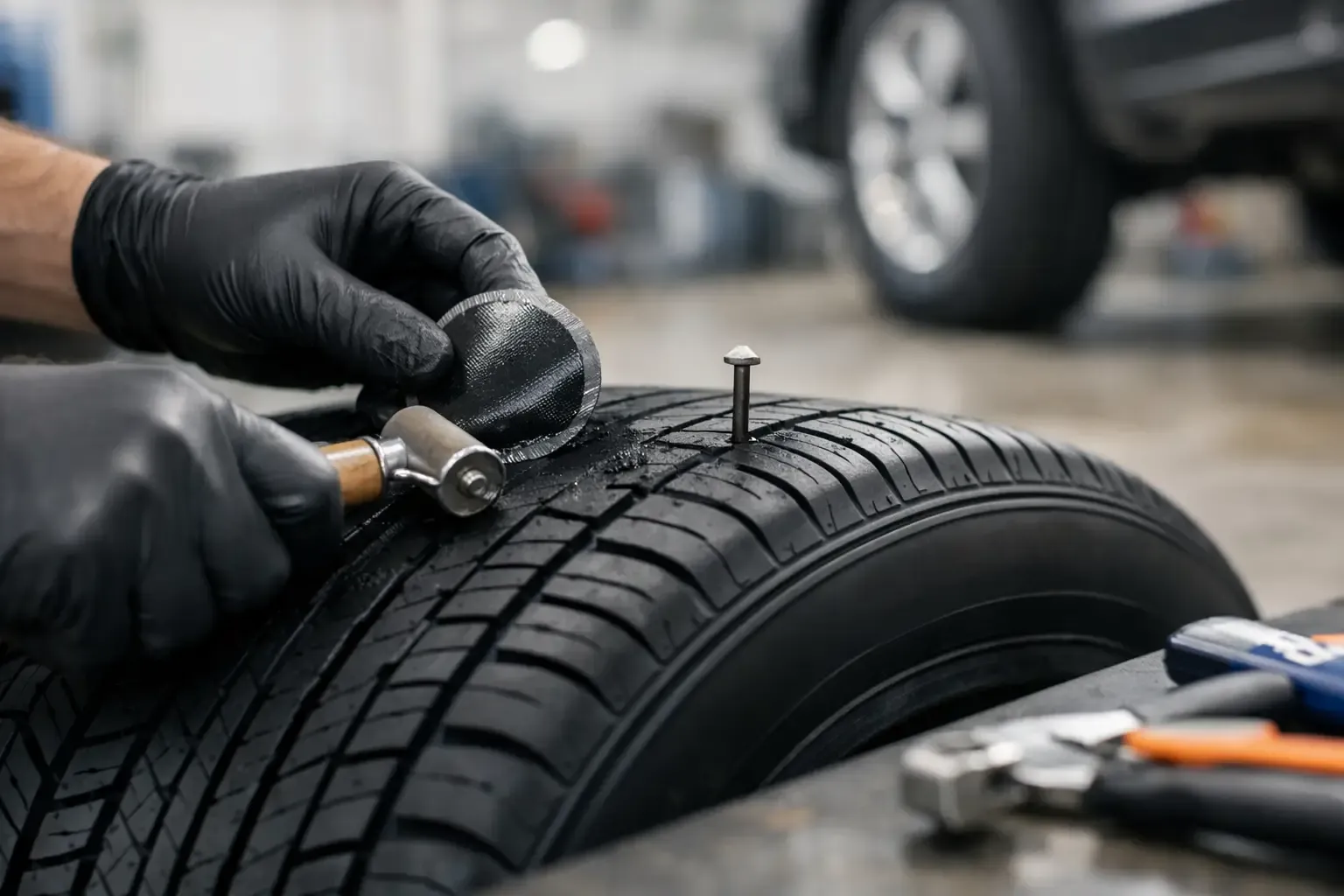
A puncture in the center tread area is often repairable when the tire has not been driven while flat and there is no internal damage. A professional repair involves more than inserting a plug from the outside. The tire should be removed, inspected, and repaired from the inside with the appropriate patch-and-plug method. That approach helps seal the injury properly and allows the technician to check for damage that cannot be seen from the outside.
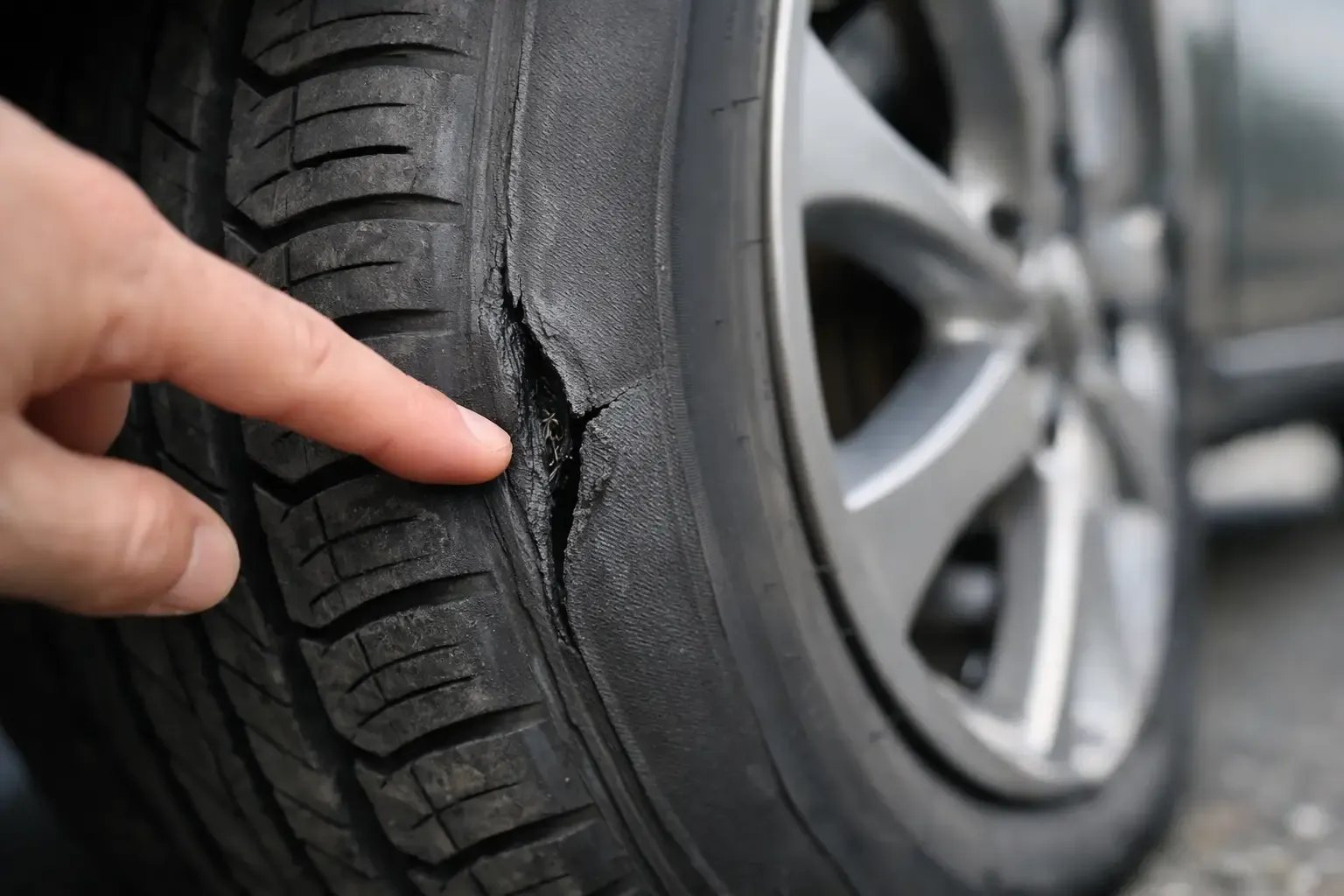
Damage near the sidewall or shoulder usually calls for replacement. These parts of the tire flex heavily while driving and cannot be repaired safely. A large puncture, separated tread, exposed cords, or a tire that has been driven flat may also require a new tire. It can be frustrating to hear that a repair is not advisable, but the trade-off is clear: a tire's ability to hold air is not the same as its ability to perform safely during braking, cornering, and highway driving.
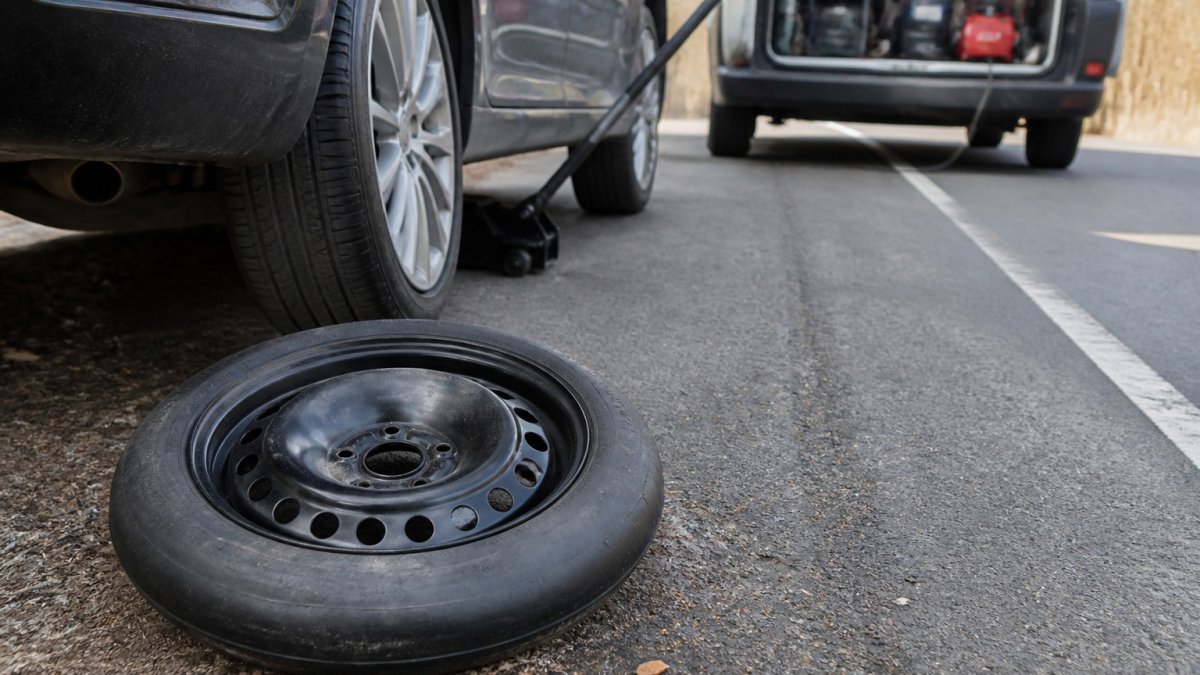
A spare tire can be useful when a permanent repair or replacement cannot happen immediately. Before relying on it, check whether it is a full-size spare or a temporary compact spare. Compact spares have speed and distance limits, and they are not intended for normal daily driving. They are a short-term way to get to the next safe service step.
Why Driving on a Low Tire Can Cost More
Many drivers hope they can make it a few more miles to a tire shop. That decision often makes the situation worse. Tires are engineered to support the vehicle through pressurized air. When pressure drops too far, the sidewalls bend excessively and generate heat. The internal cords can weaken even if the tire appears to reinflate normally later.
Driving on a low or flat tire also puts the wheel at risk. A pothole, curb, or rough patch can bend or crack the rim when there is not enough air cushioning the impact. On vehicles with low-profile tires, that risk can be even higher because there is less sidewall between the road and the wheel.
Stopping early may feel inconvenient, especially when you are close to home or work. But it can preserve a tire that is otherwise repairable and prevent unnecessary wheel damage. When in doubt, pull over safely and arrange professional help where the vehicle is located.
What a Mobile Tire Technician Can Handle On Site
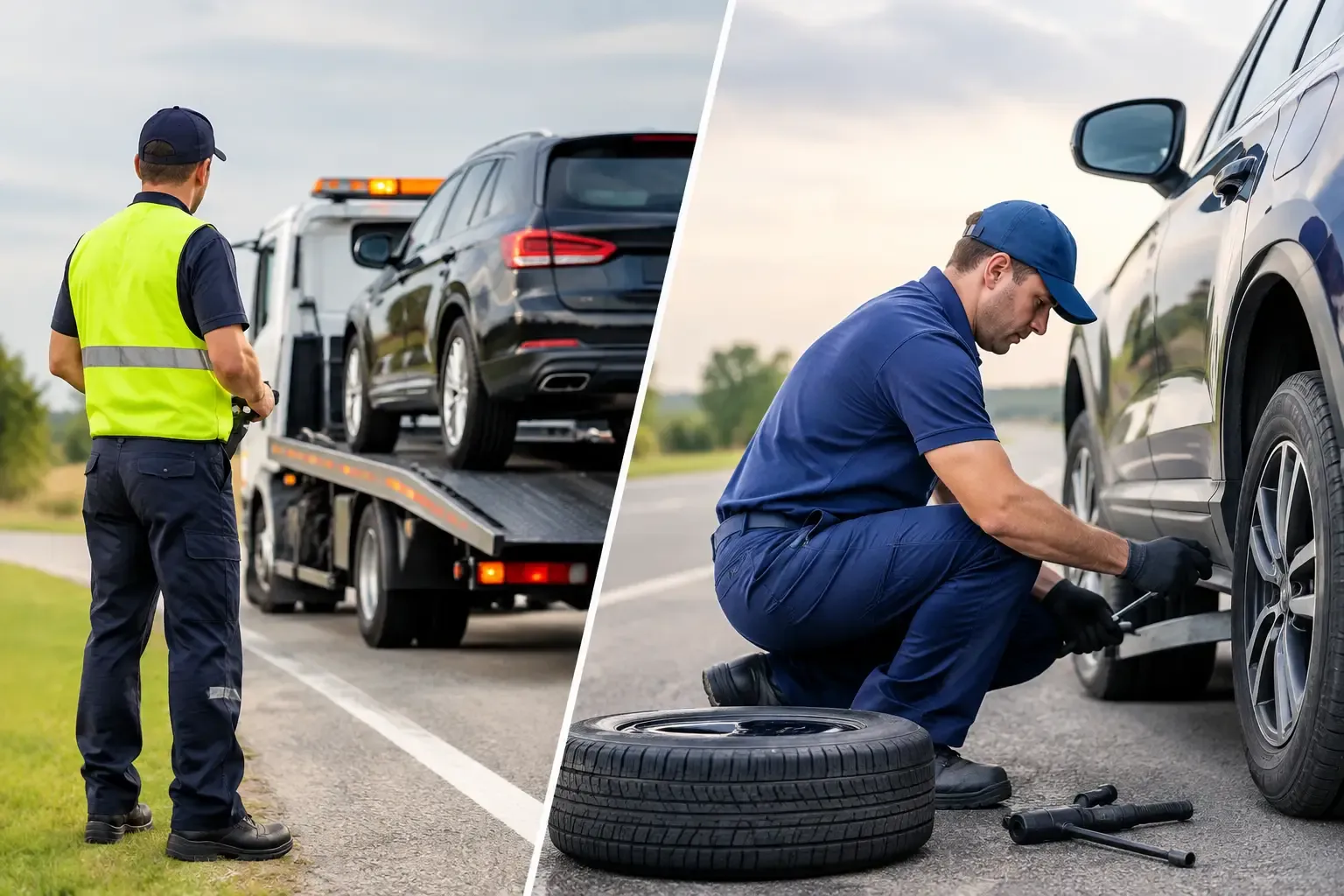
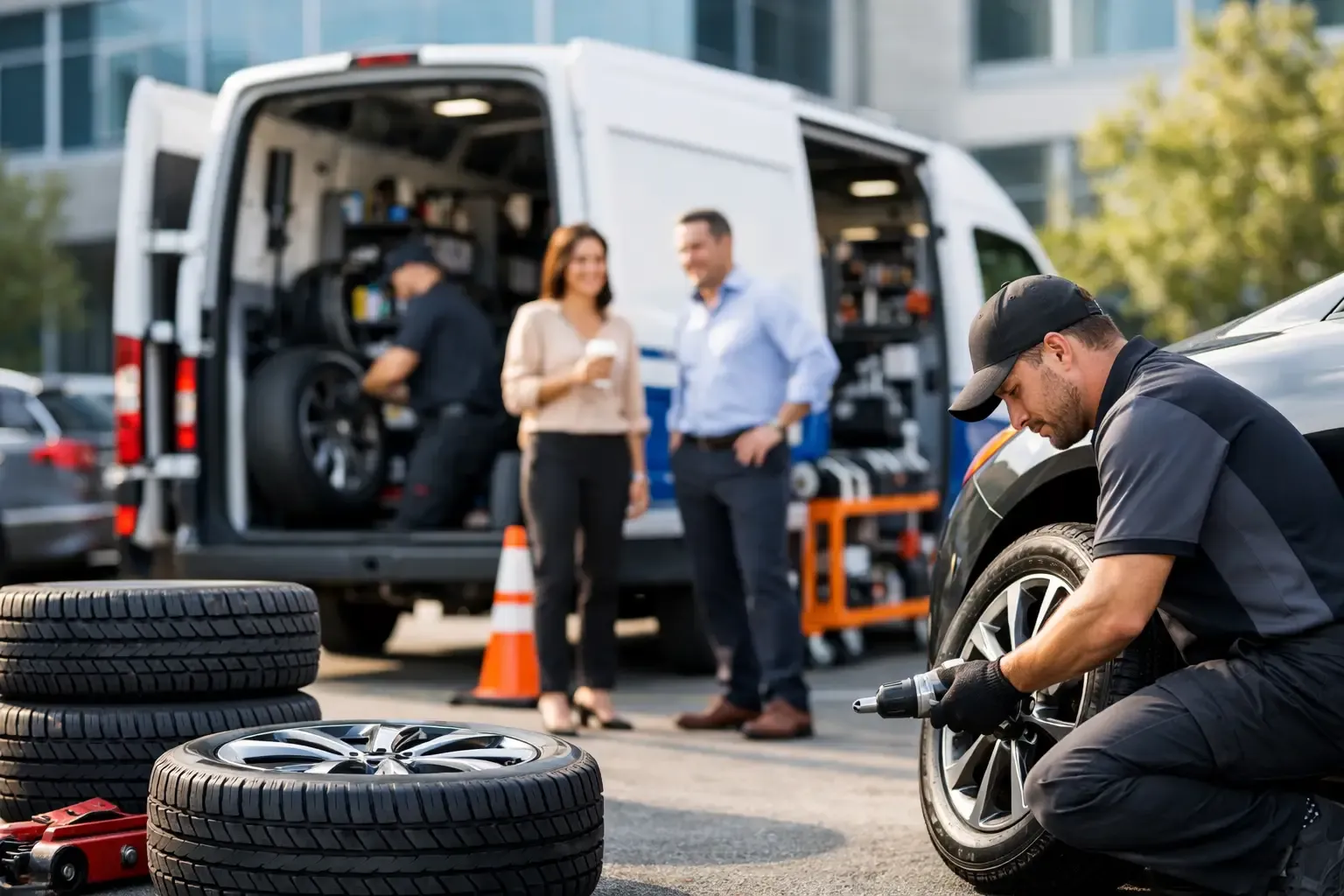
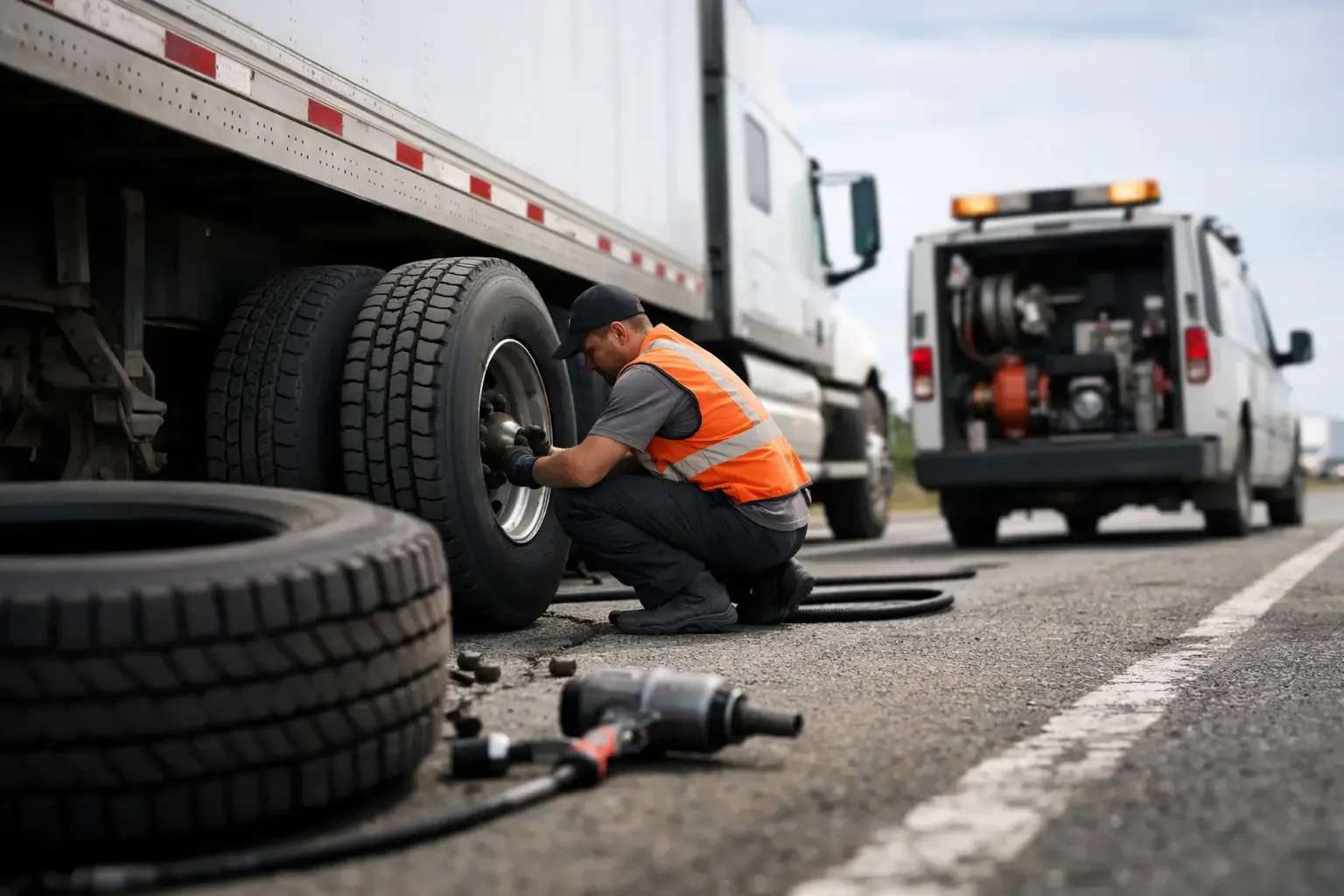
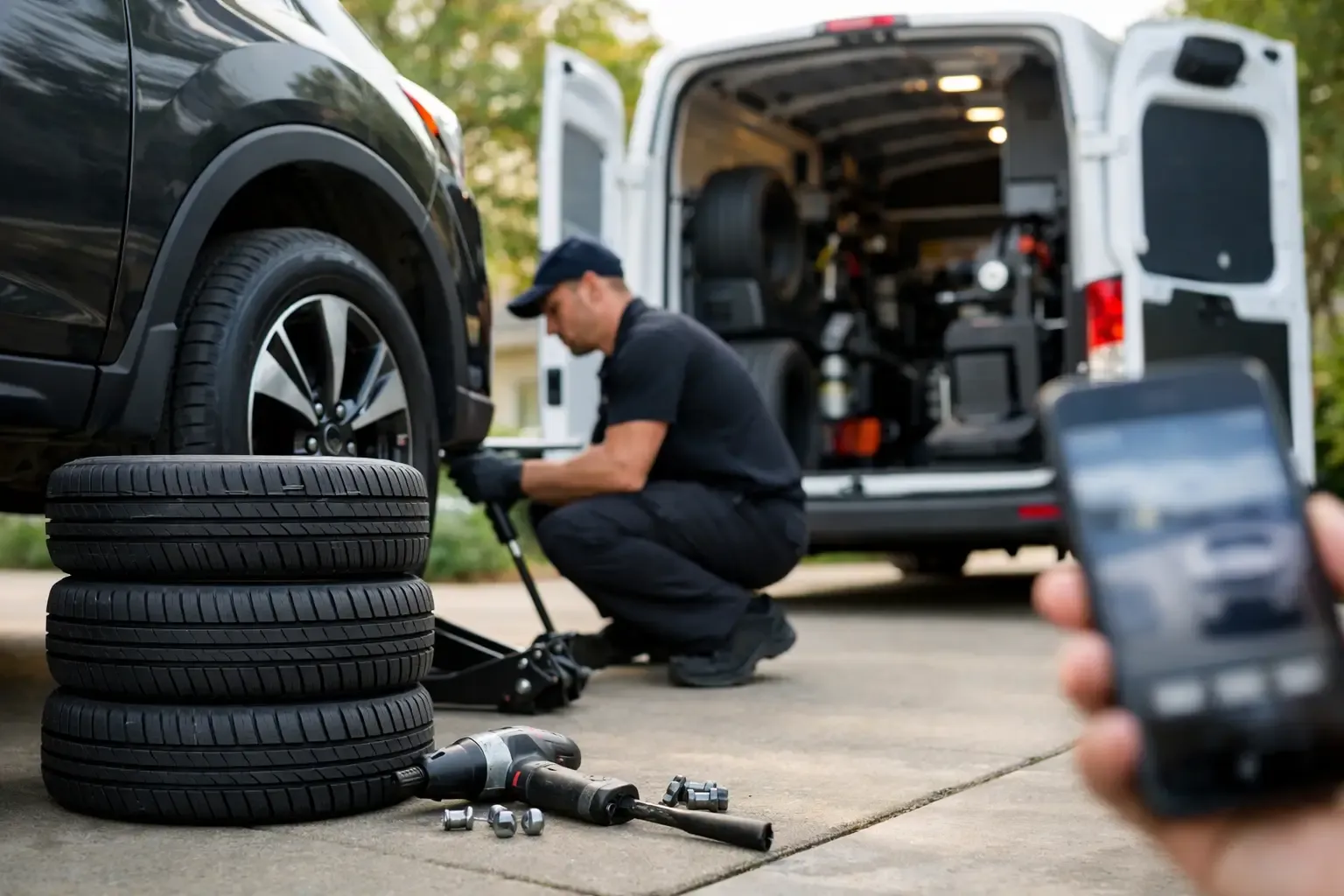
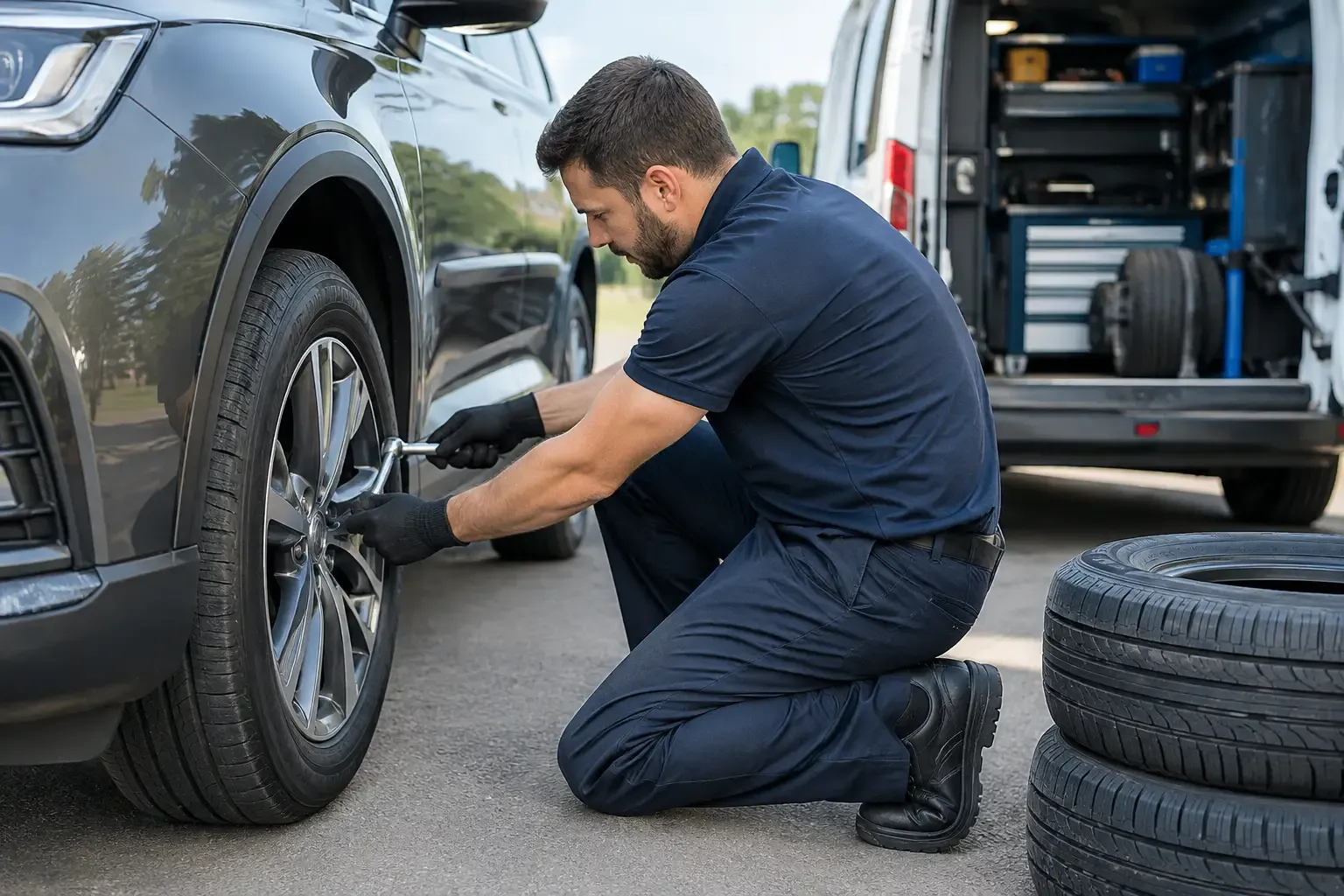
Mobile service is designed for the moments when a conventional tire store is the least convenient option. Instead of removing the wheel yourself, loading it into another vehicle, or waiting for a tow, a trained technician can assess the problem at your location.
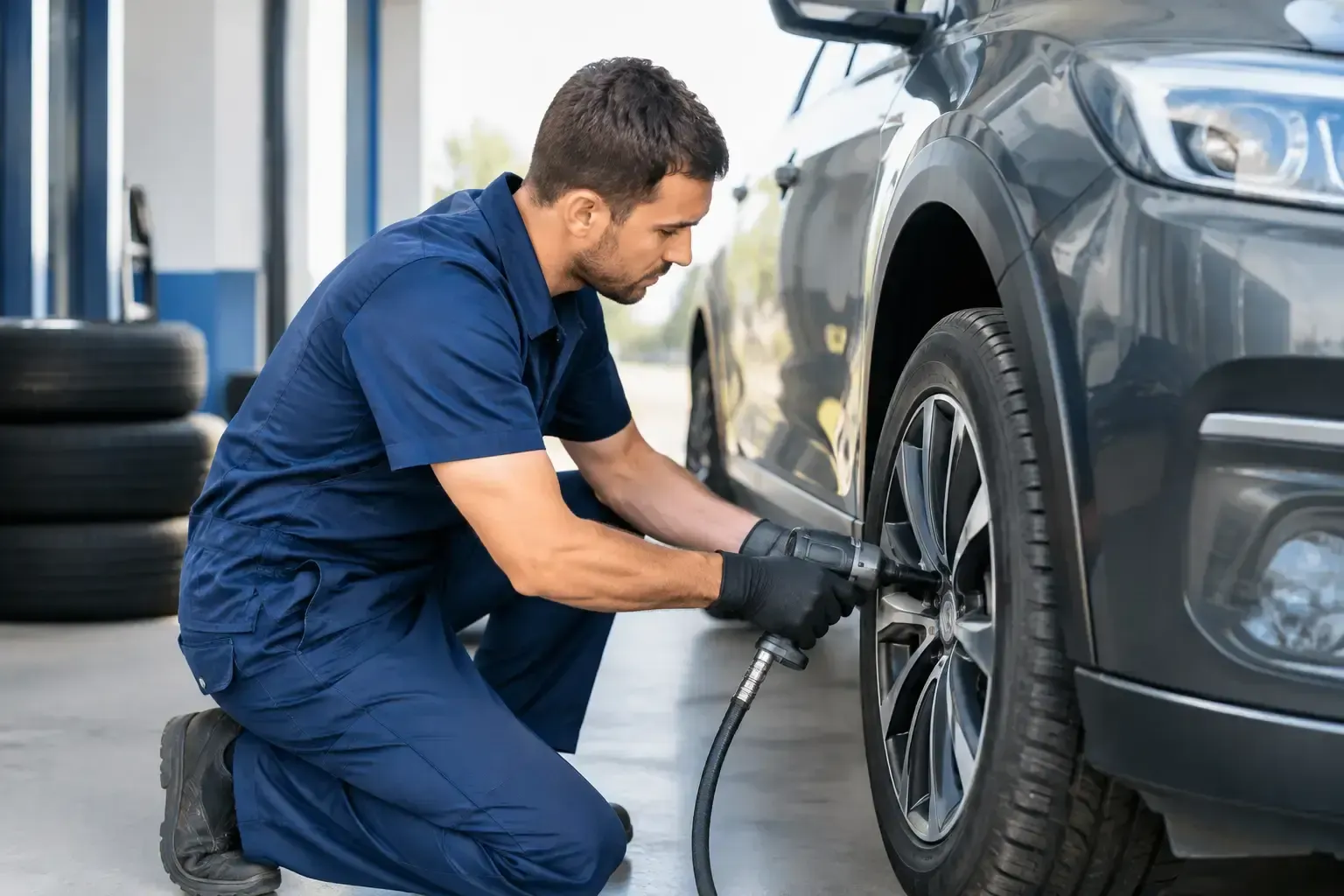
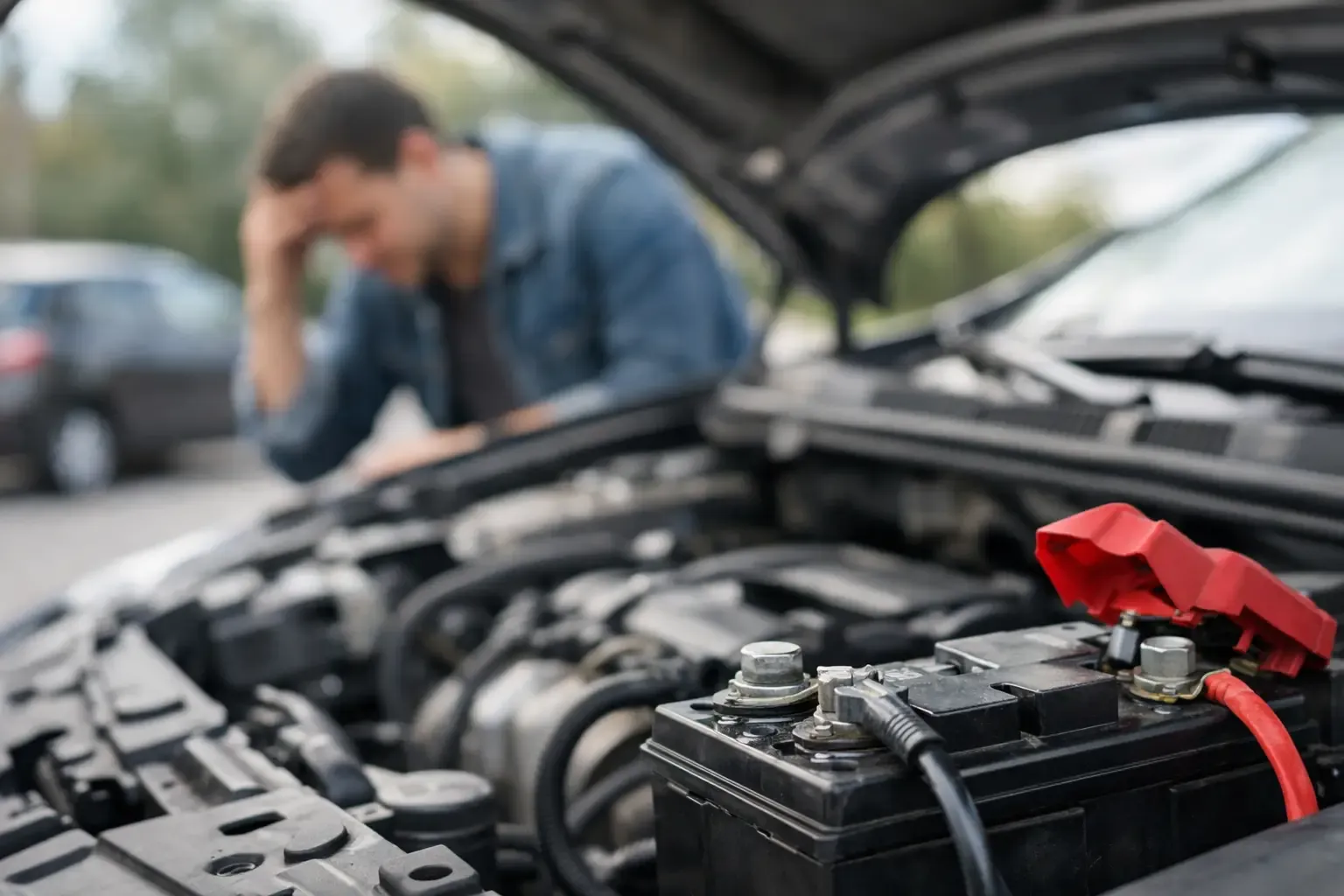
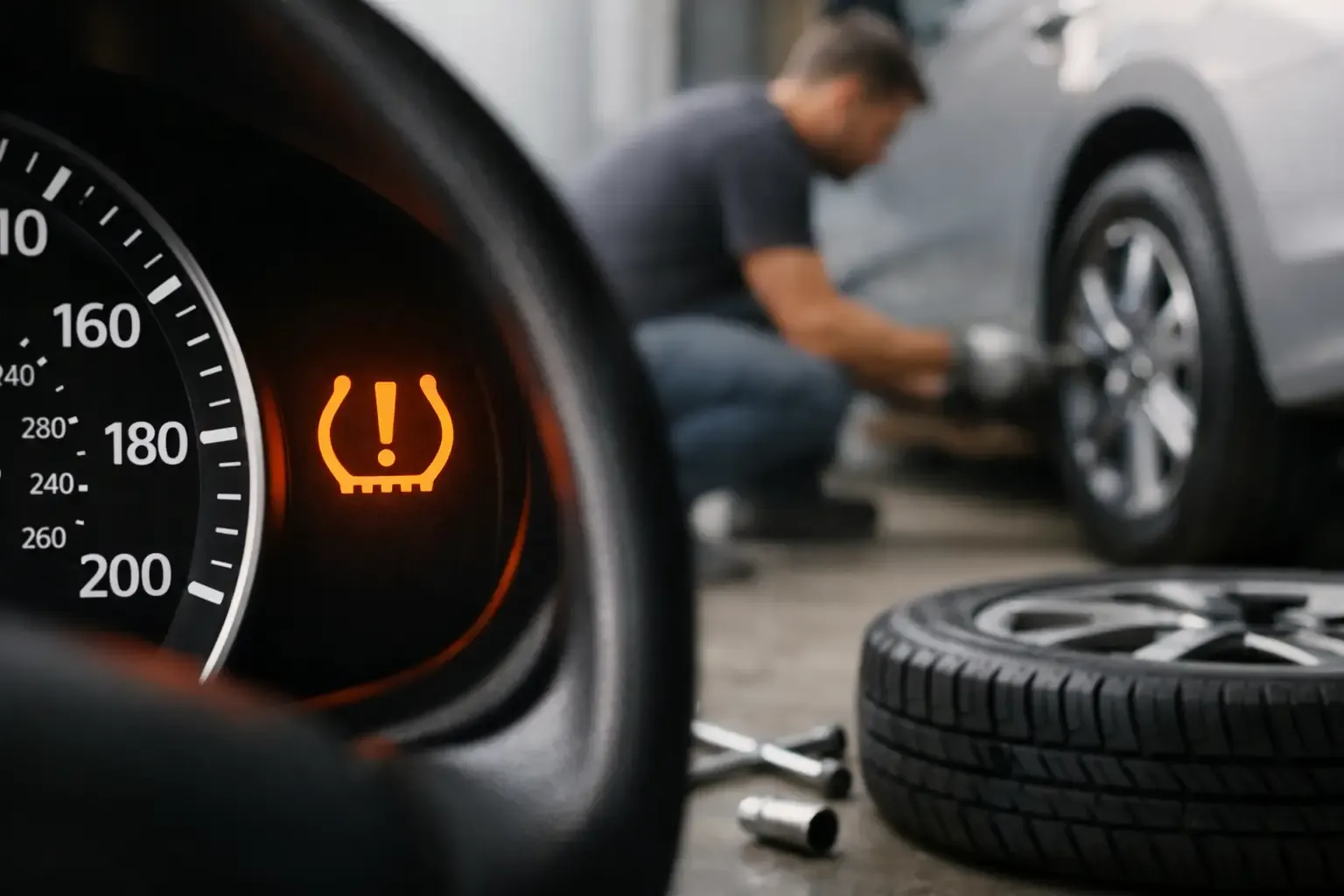
Depending on the tire condition and available service, on-site support may include puncture repair, spare tire installation, replacement tire installation, tire balancing, and TPMS reset procedures. If a dead battery or another roadside issue is part of the problem, it may also be possible to address that during the same visit.
The best experience starts with clear information. When scheduling service, share the vehicle year, make, model, tire size if available, your exact location, and whether the tire is completely flat or still holding some air. Mention visible damage, such as a screw in the tread or a tire that came off the bead. These details help the technician arrive prepared and help avoid delays.
Elite Mobile Tire provides this type of practical, on-location support for drivers who need tire service without interrupting their entire schedule, and we are open 24/7, including weekends and overnight. The goal is straightforward: assess the tire correctly, explain the available options clearly, and get you safely back on the road or ready for the next step.
Can You Change the Tire Yourself?
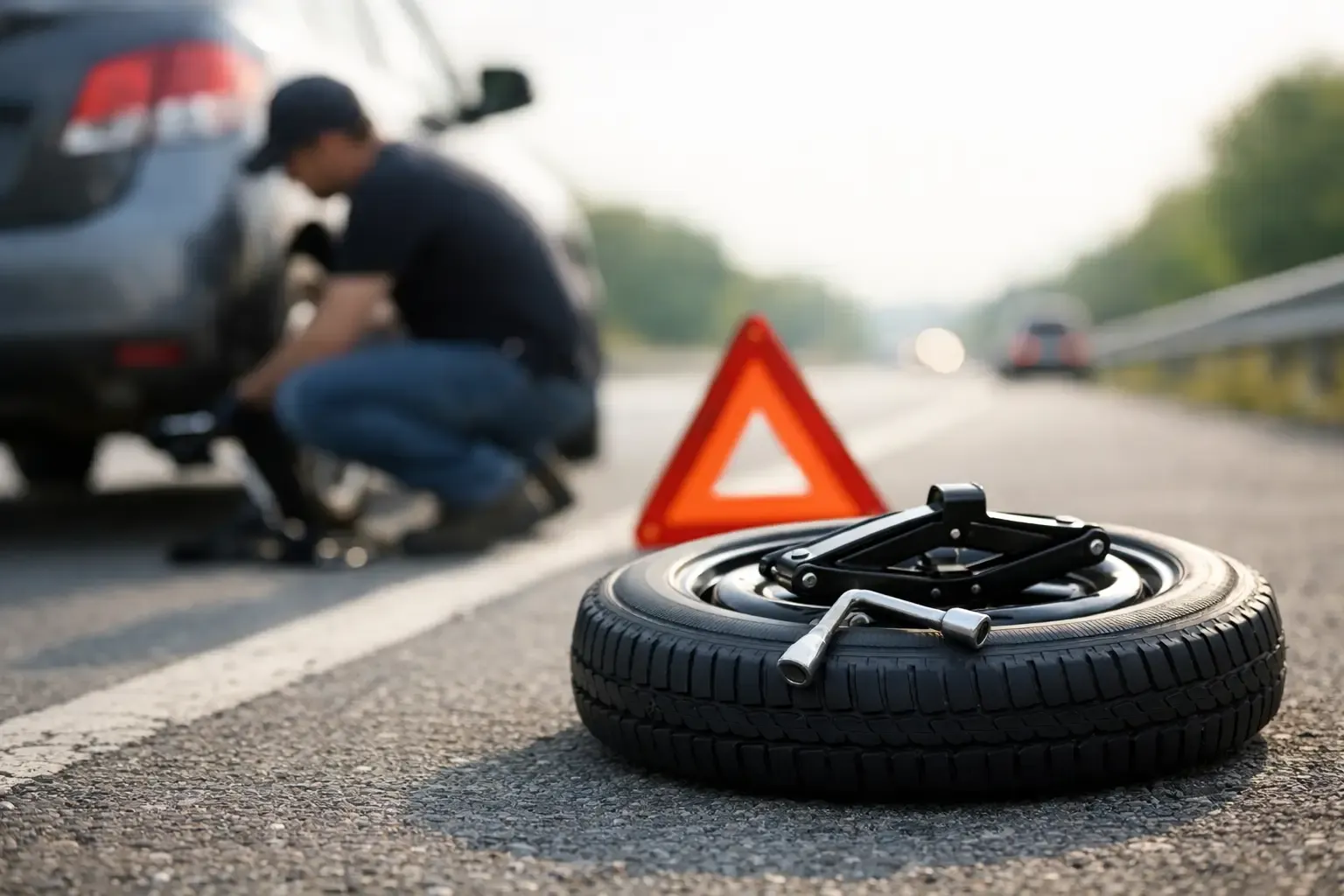
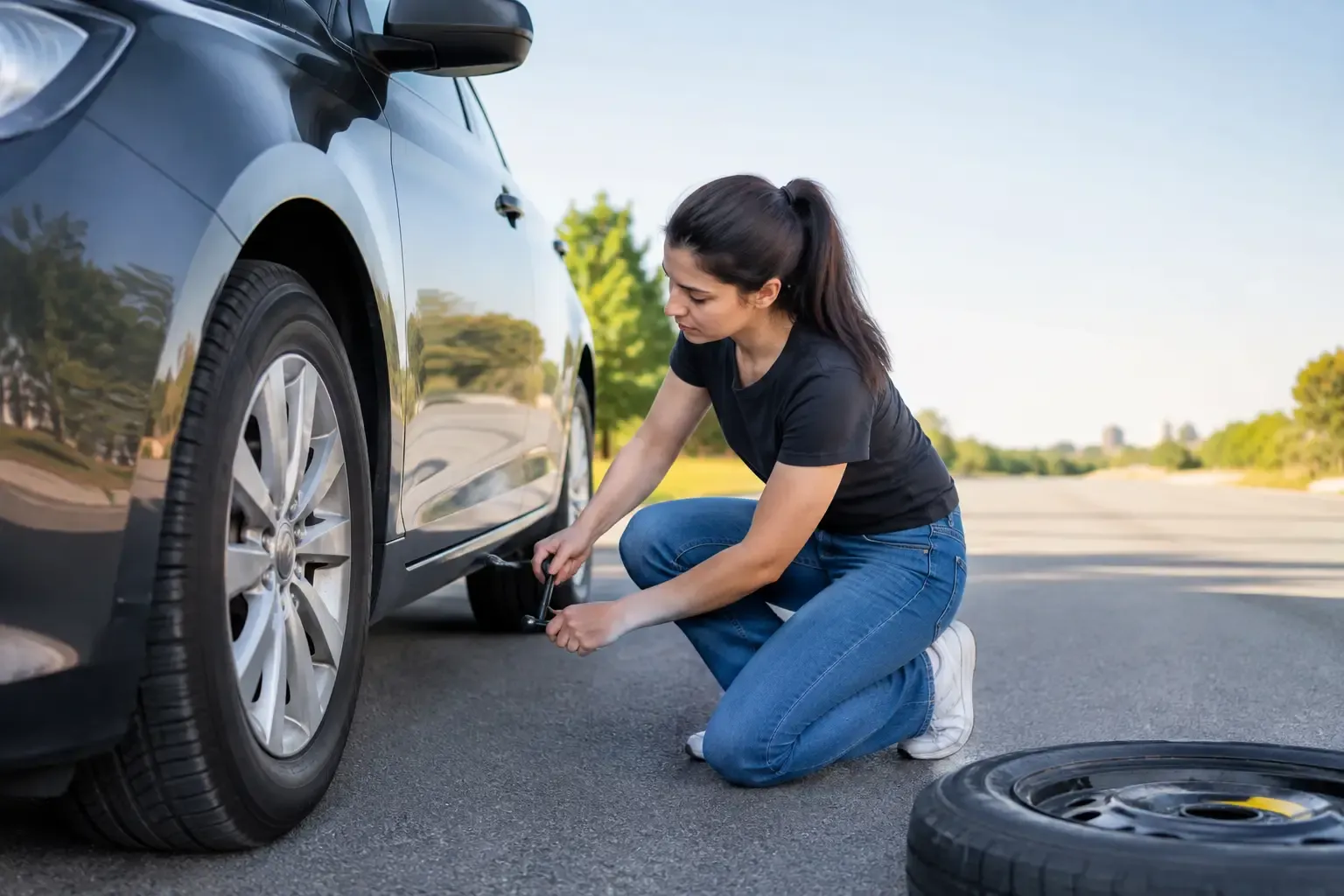
If you have a properly inflated spare, the correct tools, a stable level surface, and you are away from traffic, changing a tire yourself may be reasonable. Your vehicle owner's manual will show the approved jack points and spare tire instructions. Never place any part of your body under a vehicle supported only by a jack.
However, roadside tire changes have real limitations. Lug nuts may be overtightened, a locking lug key may be missing, the spare may be low on air, or the vehicle may be parked on soft ground or an unsafe shoulder. Some newer vehicles do not include a spare tire at all. In those situations, forcing the job can create more risk than value.
It also depends on the cause of the flat. Installing a spare gets the vehicle moving, but it does not tell you whether the original tire is repairable, whether the wheel was damaged, or whether another tire is also underinflated. A professional inspection gives you a more reliable answer.
Preventing the Next Flat
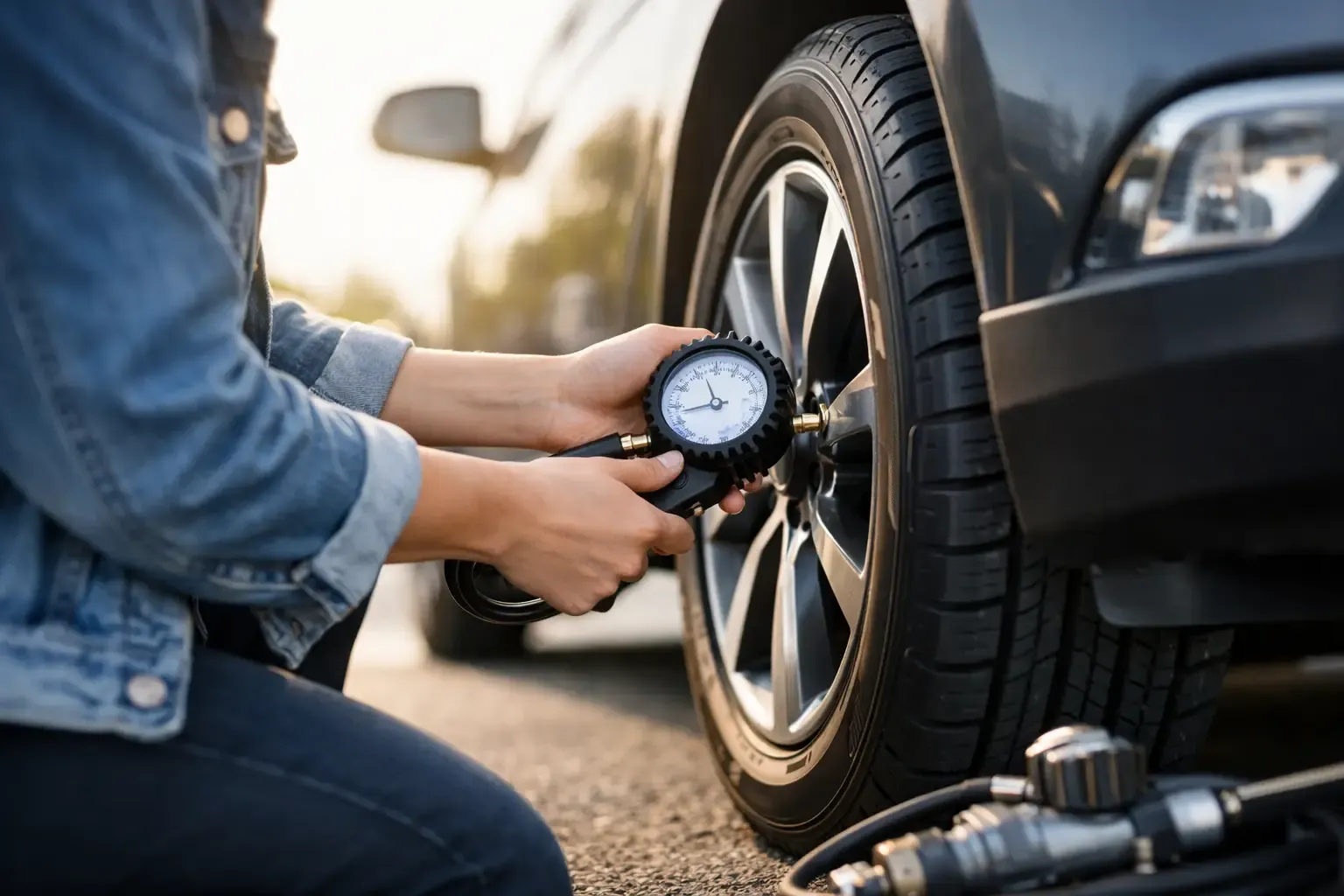
Road hazards cannot always be avoided, but regular tire care reduces surprises. Check tire pressure at least once a month and before longer trips, using the pressure listed on the driver's door placard rather than the number molded on the tire sidewall. Pressure changes with temperature, which is especially relevant during Ohio's seasonal swings.
Pay attention to vibration, pulling, uneven tread wear, and repeated pressure loss. These symptoms can point to a slow leak, alignment concern, wheel damage, or a tire nearing the end of its useful life. A quick check before the problem becomes urgent is usually easier to schedule and safer to address.
Keep your spare, jack, lug wrench, and locking lug key in their proper places. If your vehicle has a compact spare, include it in periodic pressure checks. A spare that is flat when you need it offers little help.
The next time a tire problem interrupts your plans, give yourself permission to stop and handle it safely. A calm decision, an accurate assessment, and help brought to your location can turn a stressful roadside moment into a manageable part of the day.
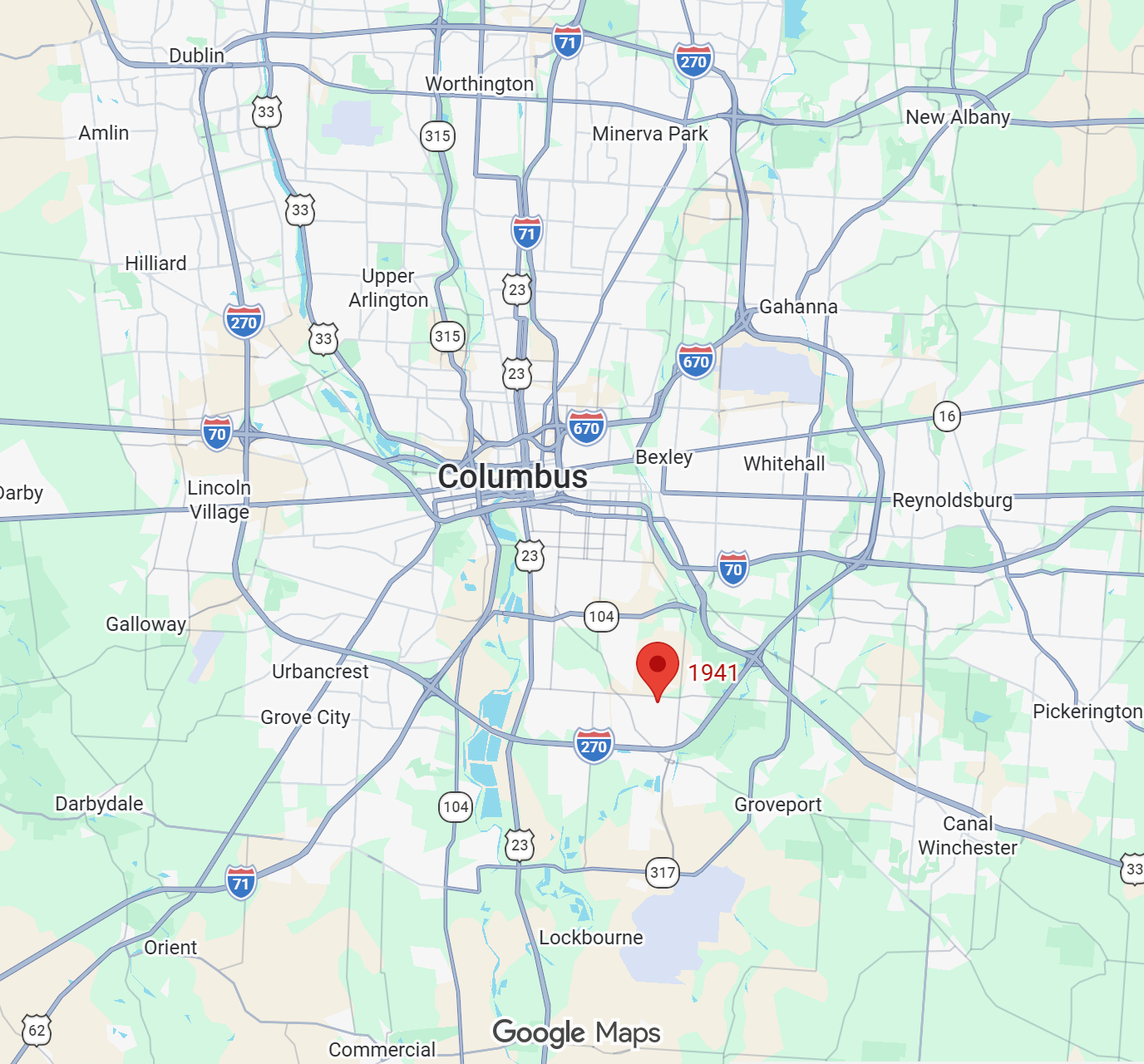
Ready for a new set? Elite Mobile Tire is open 24/7 and installs 2 or 4 new tires right in your driveway or parking lot anywhere around Columbus, Obetz, Groveport, Grove City, and Reynoldsburg. Financing is available through Afterpay and Acima with up to 24-month payment plans. Call 614-344-5010 or visit elitemobiletire.com to book.