
Quick Summary
Labeling tires for seasonal rotation means marking each tire with its vehicle position code (FL, FR, RL, RR) on the sidewall before it comes off the car, so it goes back on the same corner next season. Add the mileage and date, and use a paint-based tire marker that survives months in storage. A two-part mark showing the last position and intended next position keeps your rotation pattern intact.
- Write the position code on the sidewall, not the tread, away from the valve stem.
- A paint-based white or silver tire marker outlasts chalk and permanent marker.
- Front-wheel drive moves front tires to the rear, crossing sides.
- Directional tires stay on their side and only swap front to rear.
- Record position, odometer reading, date and any damage for each tire.
Why Labeling Tires Before a Seasonal Swap Saves Money
Labeling tires for seasonal rotation means marking each tire with its vehicle position before it comes off the car, so it goes back on the same corner next season. Skipped labels often lead to mismatched tread and tires replaced sooner than necessary. A simple code written on the sidewall takes two minutes and protects a set that cost you real money.
What Happens When a Tire Goes Back on the Wrong Corner
Tires wear into a pattern. The front left of a front-wheel-drive car scrubs differently than the rear right, and that wear pattern is baked into the rubber.
Directional tires make it worse. Mount one backwards and it pushes water the wrong way. Keeping track of positions also matters when it is time to buy: many manufacturers recommend replacing tires in pairs on the same axle, with new tires on the rear.
Tire Position Codes Explained: FL, FR, RL and RR
Tire position codes are four short tags that name each corner of the car: FL for front left, FR for front right, RL for rear left, and RR for rear right. Write the code on the tire and you always know where it belongs.
Here's the full set of codes:
Code | Position | Notes
FL | Front left | Driver's side front on most US vehicles
FR | Front right | Passenger side front
RL | Rear left | Driver's side rear
RR | Rear right | Passenger side rear
Recording Each Tire's Last Vehicle Position
Write down more than the code. Note the mileage at removal and the date. A cheap notebook or a note on your phone works fine.
Track these three things per tire:
- Position code (FL, FR, RL, RR)
- Odometer reading at removal
- Date removed
That record becomes your rotation history. Next season you know which tire is oldest and which corner it came from.
Step-by-Step: How to Label Tires for Seasonal Rotation
Here is a practical process you can follow when you want to keep track of a seasonal set.
- Park on level ground and loosen the lug nuts slightly before jacking.
- Lift the vehicle and remove all four wheels.
- Clean the sidewall area you plan to mark with a dry rag.
- Write the position code on the sidewall with your chosen marker.
- Add the mileage and date on a second small mark or in your log.
- Let the mark dry fully before stacking or storing the tire.
- Photograph all four labeled tires as a backup record.
Choosing a Marking Method: Chalk, Grease Pencil or Marker
Chalk wipes off fast. It's fine for a same-day swap but poor for months in storage. A grease pencil holds better but can smear in heat. A white or silver tire marker gives the cleanest, longest-lasting result on black rubber.
Match the tool to the job:
- Chalk: quick swaps only, reapply often
- Grease pencil: short storage, indoor only
- White or silver tire marker: best for seasonal storage
Where to Place the Mark So It Stays Readable
Put the mark on the sidewall, not the tread. Tread marks vanish as the tire wears. Pick a spot away from the valve stem so a TPMS check doesn't rub it off.
Keep the mark small and discreet. A tidy code near the rim edge reads clearly without looking sloppy. Avoid the bead area, where mounting equipment can scuff it.
Picking the Right Tire Marker for the Job
A good tire marker is a paint pen made for rubber, not a Sharpie. Permanent marker fades on a tire in weeks. A paint-based tire marker bonds to the sidewall and survives a full season.
What to look for:
- Paint-based, not dye-based
- White or silver for contrast on black rubber
- Fine or medium tip for small, clean codes
Watch out: cheap markers bleed into the rubber and turn into a blurry smudge. Test on an old tire first if you're unsure.
The Proper Tire Rotation Sequence for Your Drivetrain
The proper tire rotation sequence depends on your drivetrain, and your labels only pay off if the pattern matches the car. A position code tells you where a tire came from; the rotation pattern tells you where it goes next.
Here is the pattern most shops follow. Picture the car from above, with FL and FR at the top of the page and RL and RR at the bottom.
Drivetrain | Front tires move to | Rear tires move to
Front-wheel drive | Rear, crossing sides (FL to RR, FR to RL) | Straight forward (RL to FL, RR to FR)
Rear-wheel drive | Straight back (FL to RL, FR to RR) | Front, crossing sides (RL to FR, RR to FL)
All-wheel drive | Rear, crossing sides | Straight forward
Directional tires | Stay on their side, front to rear only | Stay on their side, rear to front only
A few rules sit on top of that table:
- Directional tires have an arrow on the sidewall. They can only roll one way, so they never cross sides. Swap front to rear on the same side and keep the arrow pointing forward.
- Staggered-size setups (wider rear tires, common on some performance cars) cannot rotate front to rear at all. Those tires stay on their axle, and your labels should note front versus rear rather than a full corner code.
- Many manufacturers recommend replacing tires in pairs on the same axle, with the new pair on the rear. If your labels show one corner worn well below its pair, that is the moment to plan a pair or a full set rather than rotate a bad tire into a better spot.
How Your Labels Map to the Next Position
This is the part most guides skip. A label that only says where a tire was last season does not tell you where it should go next.
Keep a simple paper or phone log with the same codes.
AWD owners should pay closest attention. For a deeper walkthrough of rotation timing, see our guide on how often to rotate your tires.
Seasonal Tire Storage That Keeps Labels and Rubber Intact
Storage is where labels earn their keep, but only if the mark survives months on a shelf. The goal is a label you can still read in spring and a tire that has not picked up flat spots, cracks, or residue from whatever you wrote with.
Mark the Tire or the Rim?
Mark the sidewall, not the tread, and not the painted face of an alloy wheel. Tread marks wear away, and paint pens and grease pencils can stain or dull a finished rim.
Clean the spot with a dry rag before you write. Dust and road film stop paint from bonding, and a mark on a dirty sidewall flakes off in storage.
Which Marking Materials Are Safe for Storage
Match the tool to how long the tire sits:
- Chalk: fine for a same-day swap, but it wipes off in weeks. Not for seasonal storage.
- Grease pencil: holds on indoor shelves but can smear in heat and may leave a faint film.
- White or silver tire marker (paint-based): the best choice for a full season. It bonds to rubber and stays readable.
Watch out: a standard permanent marker fades on a tire within weeks and is not a substitute for a paint-based tire marker.
Keeping Multiple Sets and Vehicles Straight
This is the gap most guides leave open. If you own two cars, or a summer set and a winter set, a single position code is not enough. Build a three-part label:
- Vehicle tag, a short name or plate fragment, such as CIVIC or the last four of the plate.
- Last position, FL, FR, RL, or RR.
- Intended next position, an arrow or second code, such as FL > RR.
Keep a matching log with the odometer reading and date for each tire. That log is your rotation history, and it tells you which tire is oldest and which corner it came from when you open the bags in spring.
Storage Rules That Protect the Label and the Rubber
- Bag or cover tires to block dust and UV, which fade both the mark and the rubber.
- Keep them off bare concrete if you can; a pallet or shelf works.
- Store in a cool, dark spot away from electric motors and other ozone sources.
Small garages make this tricky. Our guides on winter tire storage for a small garage and whether storage bags beat covers cover rack, dolly, and bag options in detail.
Safety Checks Before You Reinstall Stored Tires
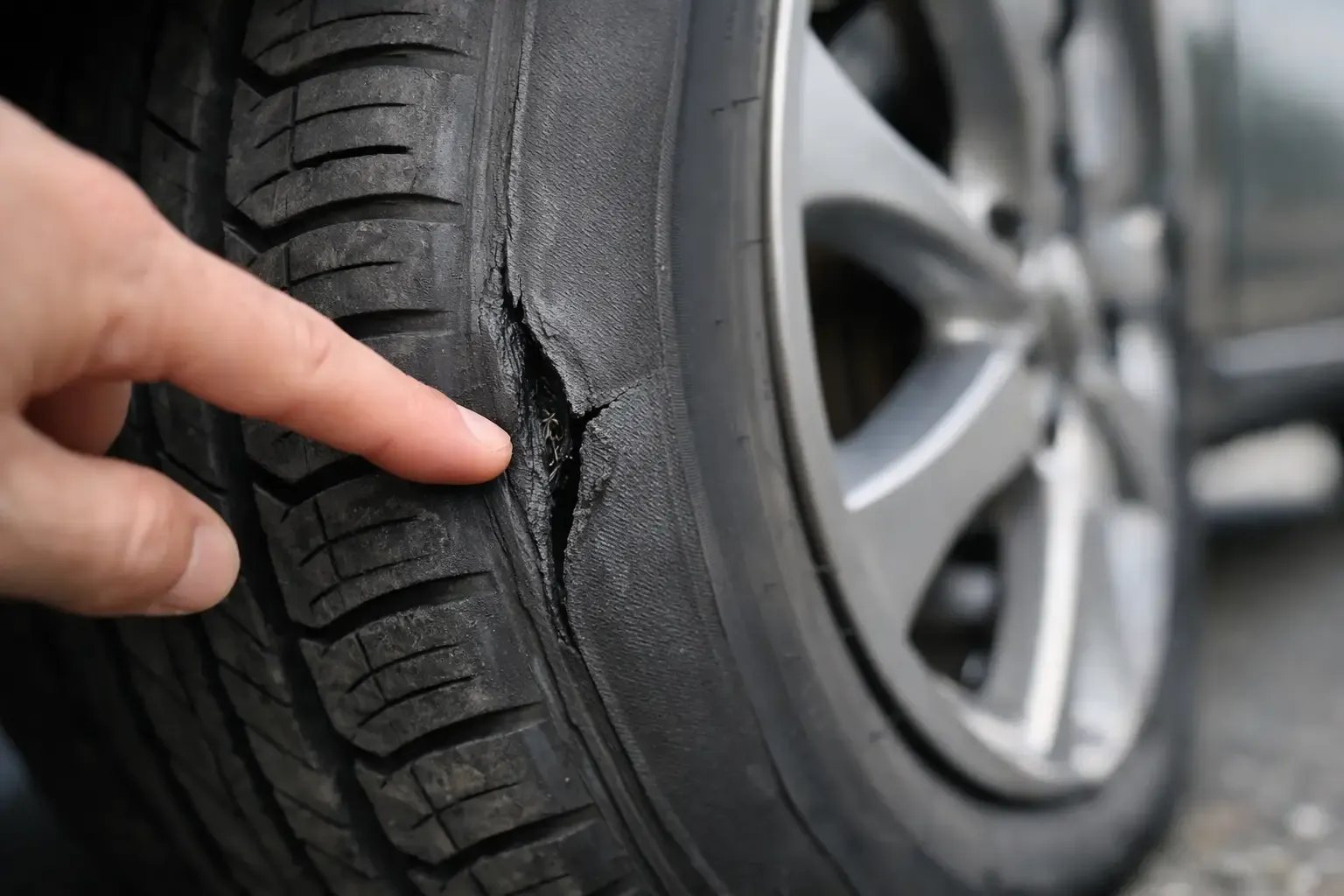
Before a stored tire goes back on, inspect it. Run your hand along the tread for cuts or bulges. Check the sidewall for cracks. Look for uneven wear that suggests an alignment issue worth having a repair shop check.
Then measure tread depth. If one tire is worn well below its pair, don't force it back into service. Our guide on whether to replace two tires or four walks through that decision.
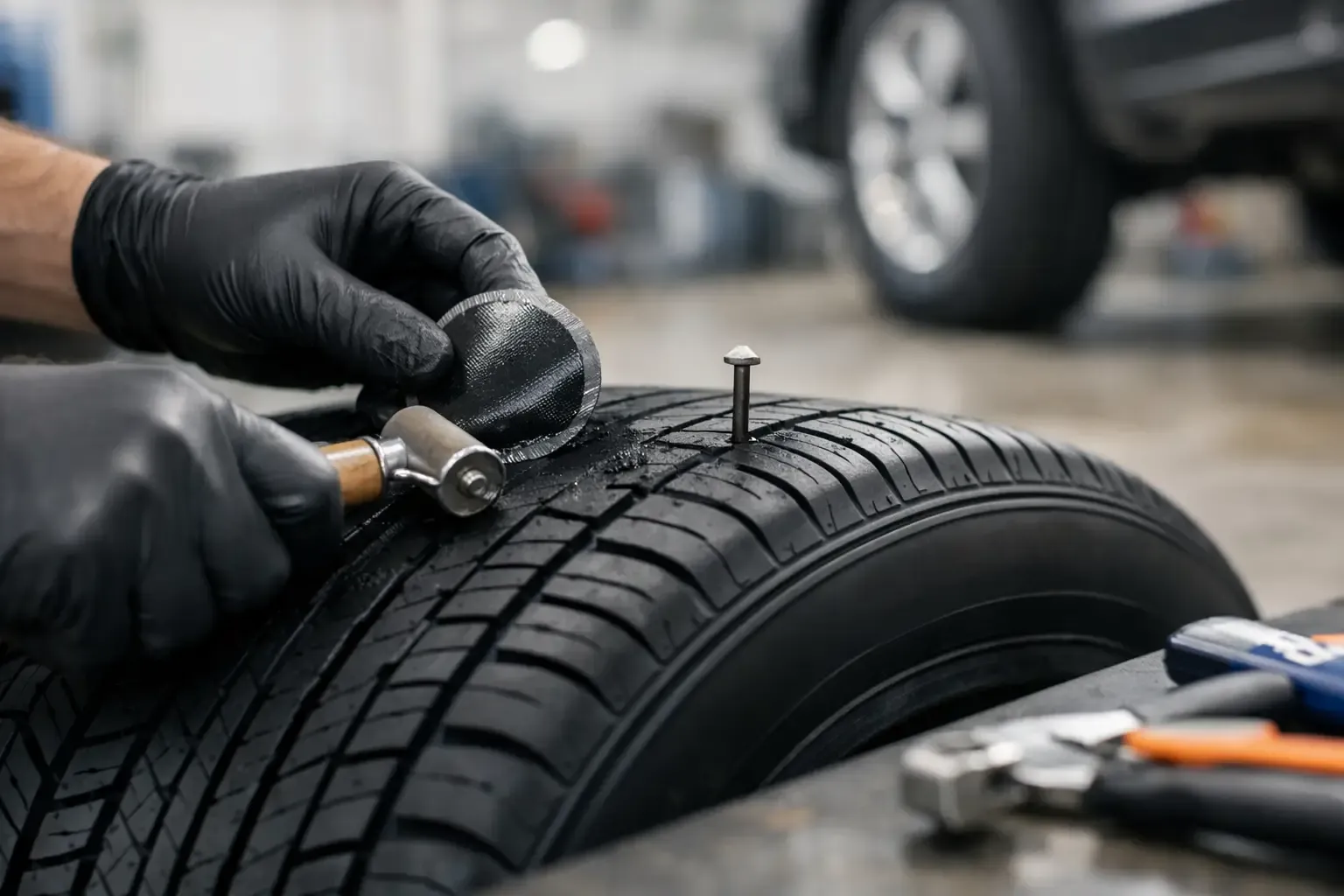
A common mistake is skipping the other three tires. Checking all four tires is good practice because a stored set can hide a slow leak or a damaged sidewall. If a stored tire fails inspection, that's the moment to plan a full set rather than patch one corner.
Book a Full Set Installed Where You Park
Labeling works best when the whole set is healthy and matched. If your inspection turns up a worn pair or a failed tire, don't wrestle with jack stands in a Columbus driveway.
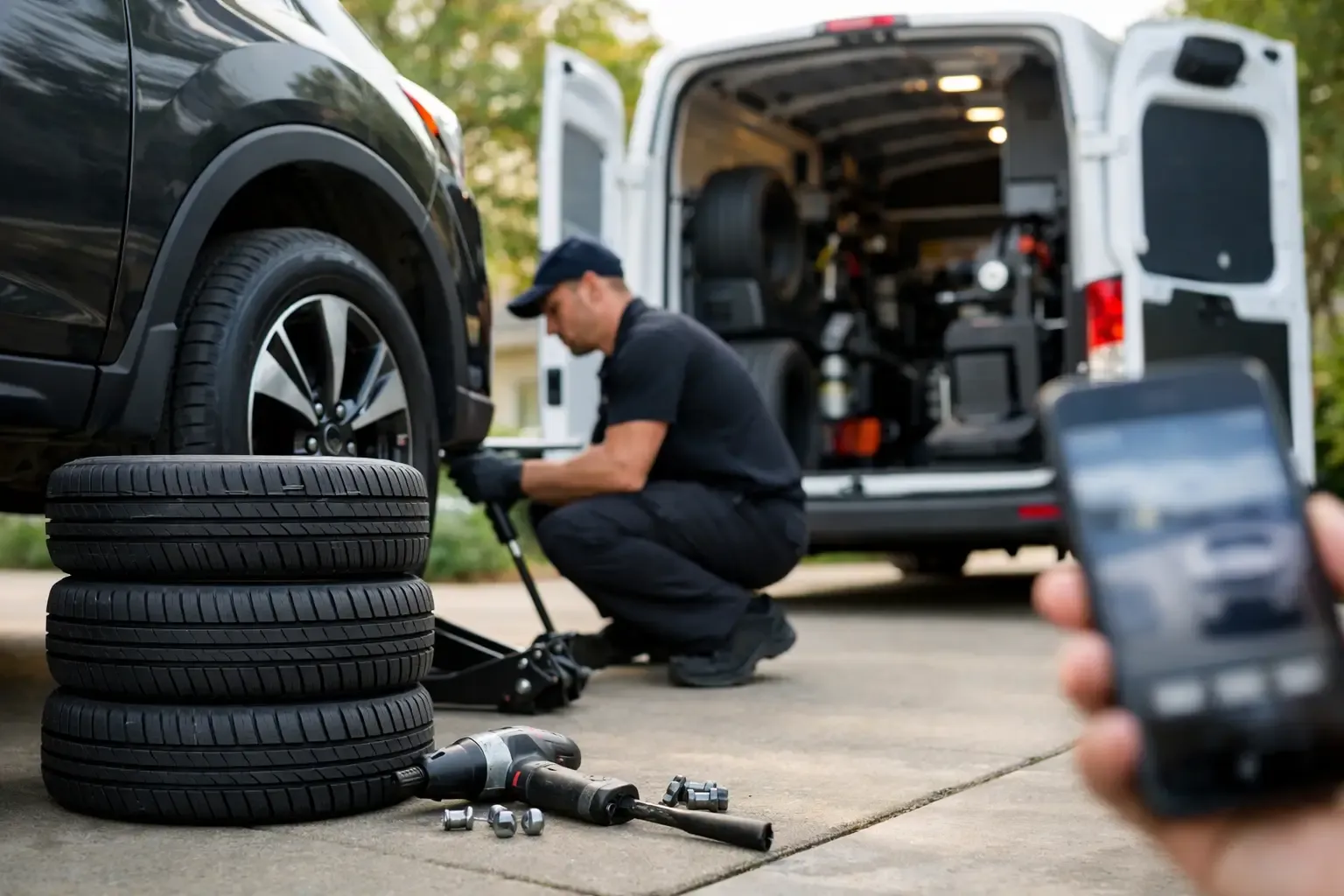
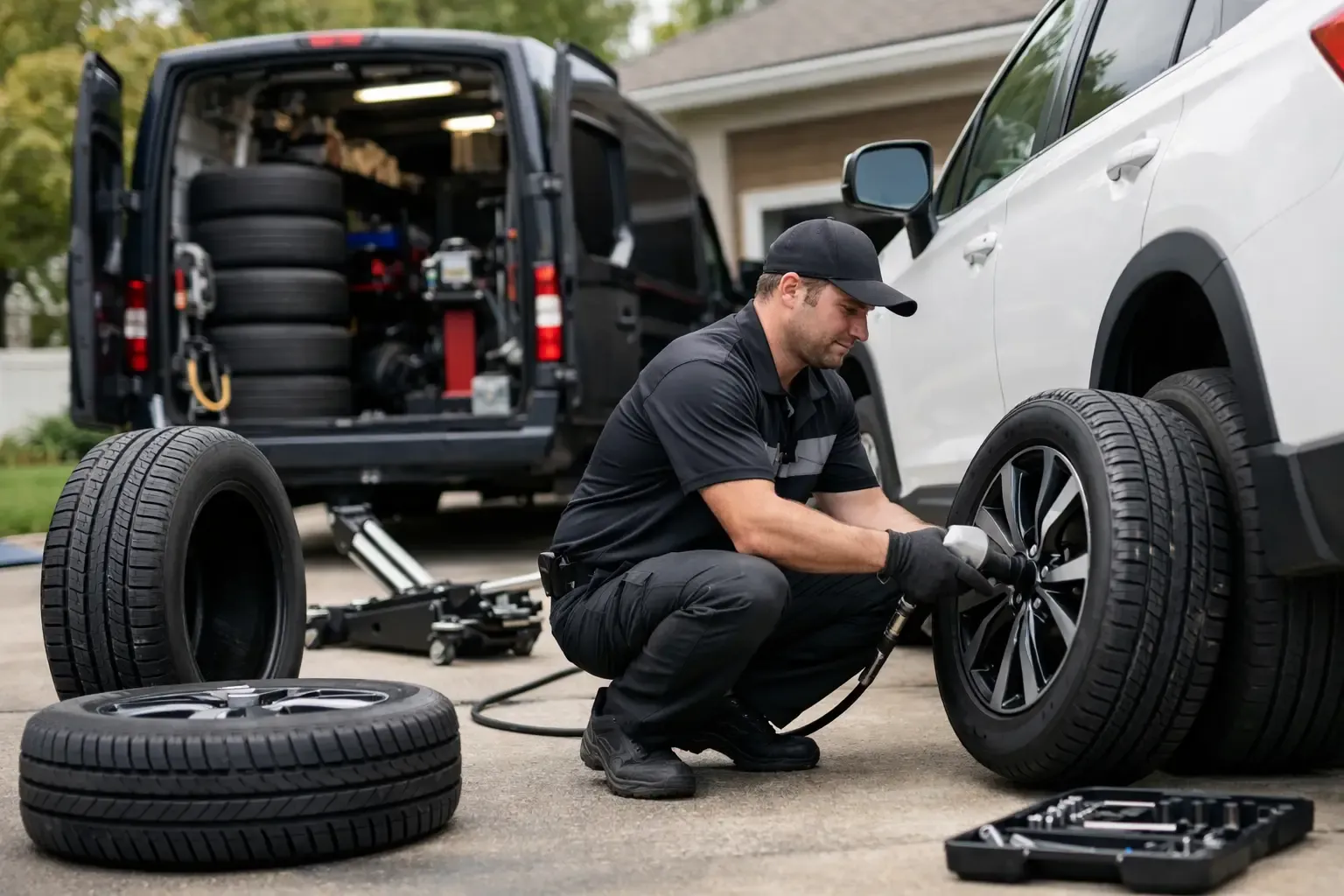
Elite Mobile Tire installs two or four tires at your home, office, or job site across Columbus, Obetz, Groveport, Canal Winchester, Reynoldsburg, and the I-270 outerbelt, and we service customers 24/7, including weekends and overnight. We handle passenger cars, pickups, SUVs, semi trucks and commercial trucks, and RVs and campers. Our techs check all four tires on every job, not just the one we came for. Mobile tire balancing is around $50 per tire. Financing through Afterpay and Acima offers up to 24-month plans if a full set is on the table.
Book a same-day or scheduled visit through our Columbus tire installation service. Call 614-344-5010 to get a quote and lock in a time that fits your schedule.
Replacing a full set is a real decision, and getting the timing wrong costs you twice.
Frequently Asked Questions
What letters or symbols should I use to mark tire positions?
Use the four standard tire position codes: FL for front left, FR for front right, RL for rear left and RR for rear right. Write them the same way every time so you never have to decode your own handwriting a season later. If you run two sets, add a second tag such as W for winter or S for summer, so a stored tire reads W-FL instead of just FL. Keep the code short and write it large enough to read from standing height.
Can I use tire chalk or a tire marker to label tires?
Both work, but they last differently. Chalk wipes off with rain, road spray or a damp garage floor, so it suits a quick swap you will finish the same day. A white or silver tire marker or grease pencil holds up through a full seasonal rotation and months in storage. Write on the sidewall, not the tread, and avoid the bead area where the tire seats against the rim. Snap a phone photo of all four codes as a backup record.
Should I rotate tires when I switch between seasonal sets?
Yes. Many manufacturers recommend rotating at every seasonal swap because it evens out wear across all four tires. Follow the proper tire rotation sequence for your drivetrain, then record the new position on each tire before it goes back on. On many all-wheel-drive vehicles, tread depth needs to stay closely matched across all four, so rotating on schedule protects the drivetrain as much as the tires.
How should I store labeled tires between seasons?
Clean them, let them dry fully, then store them in a cool, dark, dry spot away from ozone sources like electric motors and fuel. Stack tires flat or hang them, and keep them off bare concrete if your storage area stays damp. Make sure the position code faces outward so you can read it without unloading the stack. Before reinstall, check each tire for cracks, embedded objects and tread depth.
Ready for a new set? Elite Mobile Tire is open 24/7 and installs 2 or 4 new tires right in your driveway or parking lot anywhere around Columbus, Obetz, Groveport, Grove City, and Reynoldsburg. Financing is available through Afterpay and Acima with up to 24-month payment plans. Call 614-344-5010 or visit elitemobiletire.com to book.