
A delivery van parked with a flat tire is not just a maintenance issue. It can mean a missed route, a late customer, an idle employee, and a schedule that has to be rebuilt before noon. For fleet managers, the fleet tire service vs in-house decision comes down to one question: which approach keeps vehicles safe, available, and productive with the least disruption?
There is no one-size-fits-all answer. An in-house program can provide direct oversight when a business has the right staff, tools, space, and vehicle volume. Mobile fleet tire service can reduce downtime and remove the burden of managing tire work internally. The right choice depends on your operation, service expectations, and the real cost of taking vehicles out of service.
What In-House Fleet Tire Maintenance Requires
In-house tire maintenance means your company handles inspections, repairs, replacements, rotations, balancing, and related tire tasks with its own employees. For a large operation with a dedicated maintenance facility, this can create a sense of control. A manager can set inspection schedules, prioritize vehicles, and keep work within the organization.
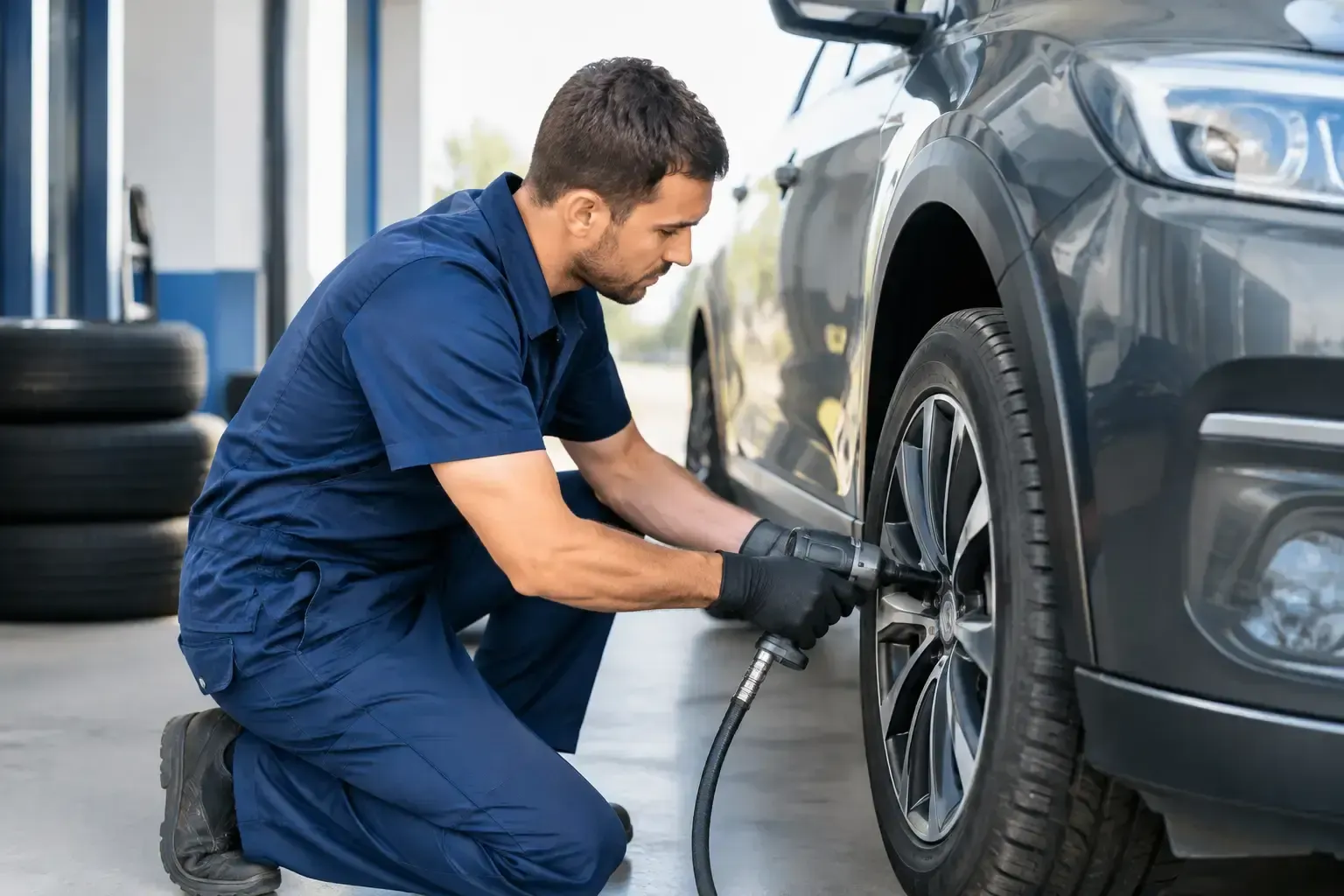
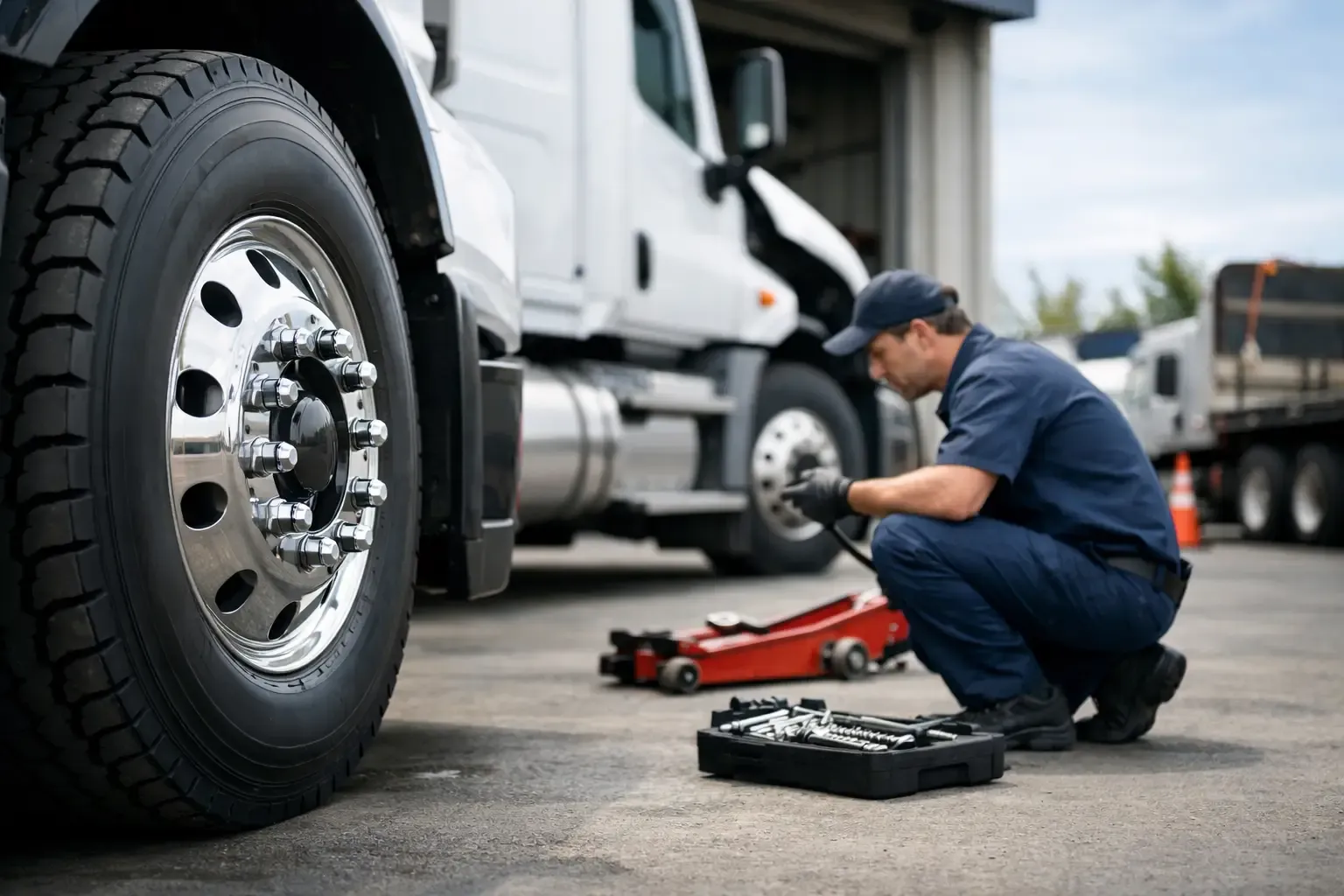
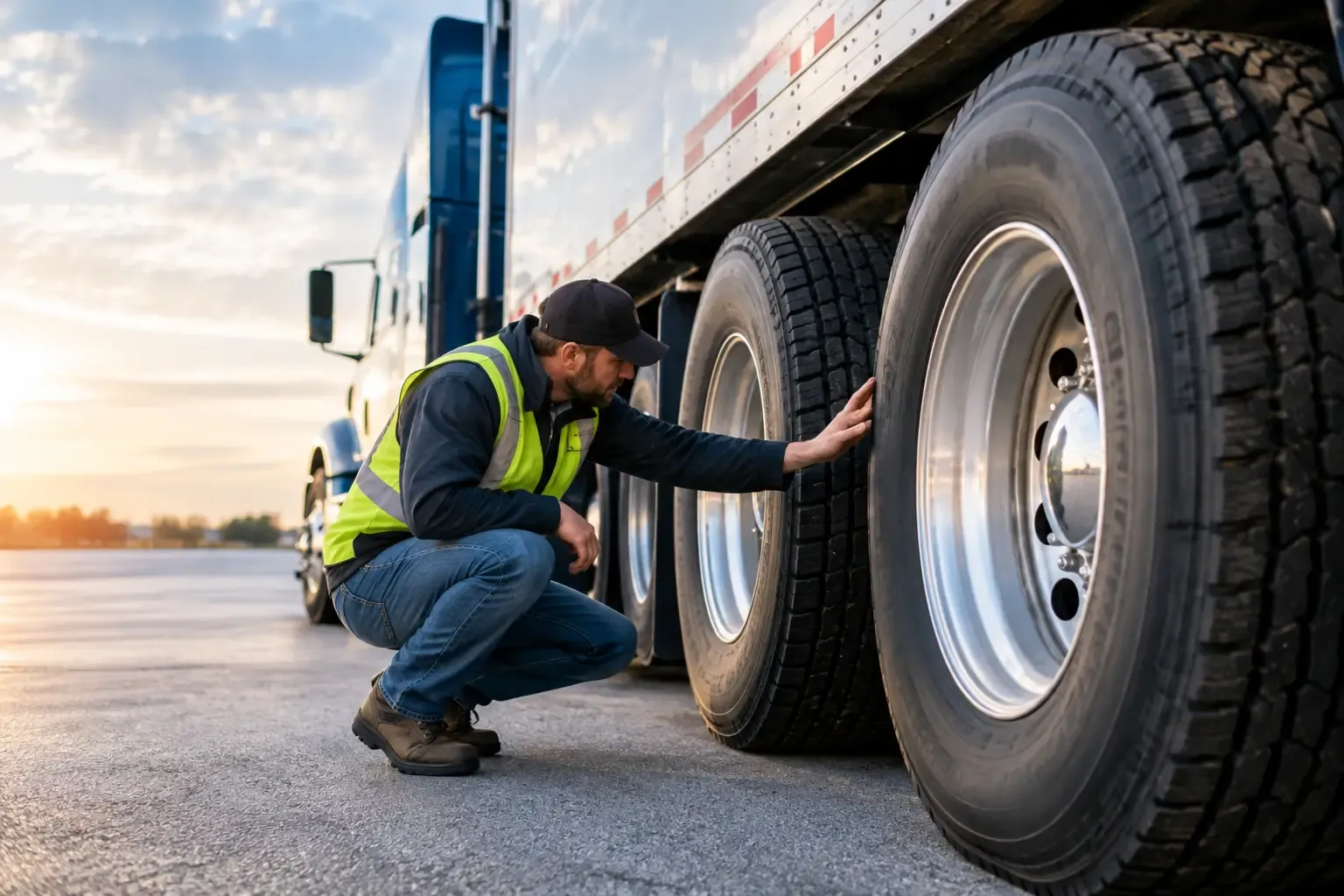
That control comes with responsibilities that are easy to underestimate. Tire work requires trained technicians, proper lifting equipment, torque tools, tire-changing and balancing machines, inventory management, disposal processes, and a safe work area. Your team also needs a reliable process for tracking tread depth, tire pressure, uneven wear, repair history, and replacement intervals.
If those pieces are already in place, in-house service may be practical. This is often true for fleets with many vehicles returning to one central yard every day, a full-time maintenance team, and enough volume to keep technicians and equipment consistently busy.
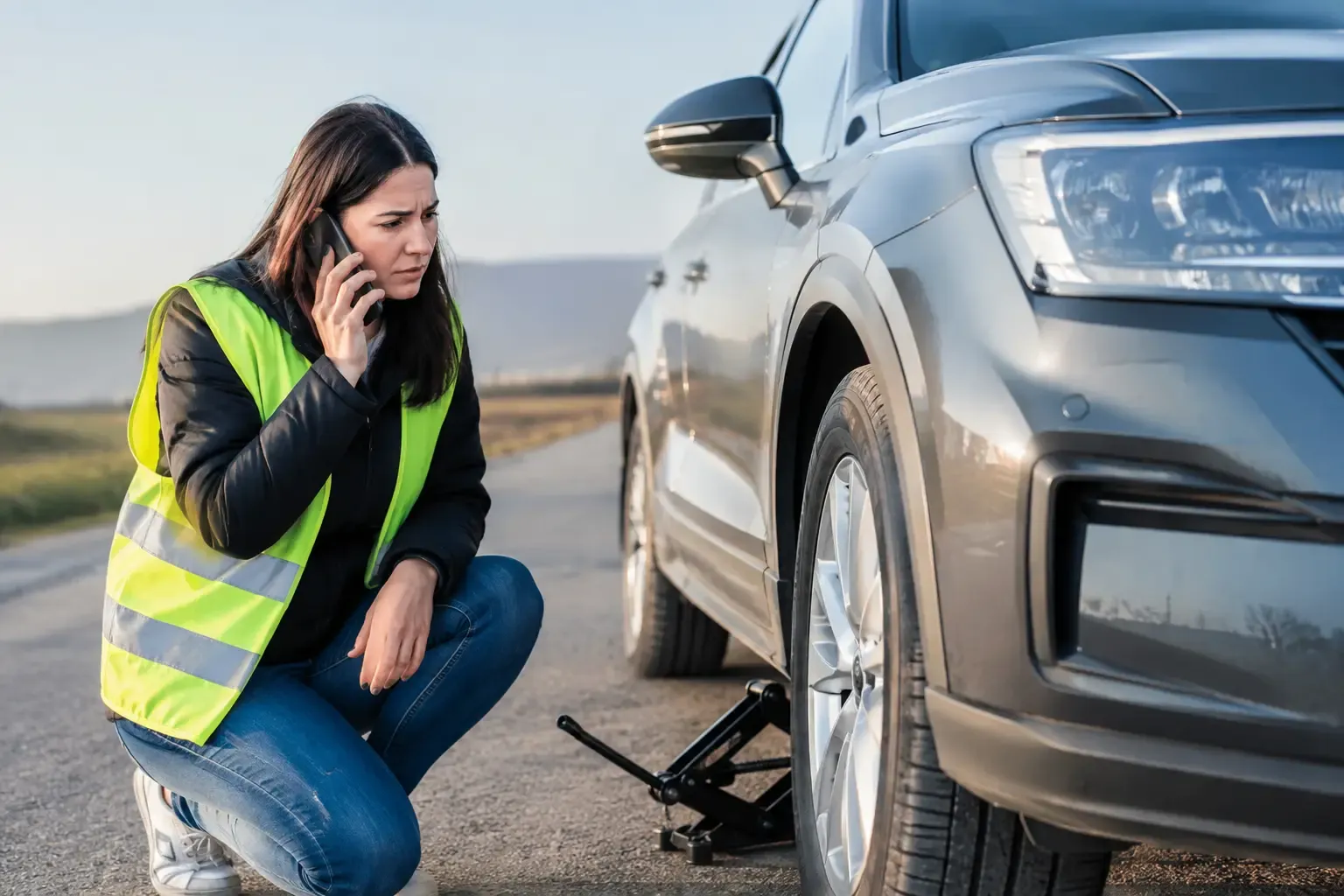
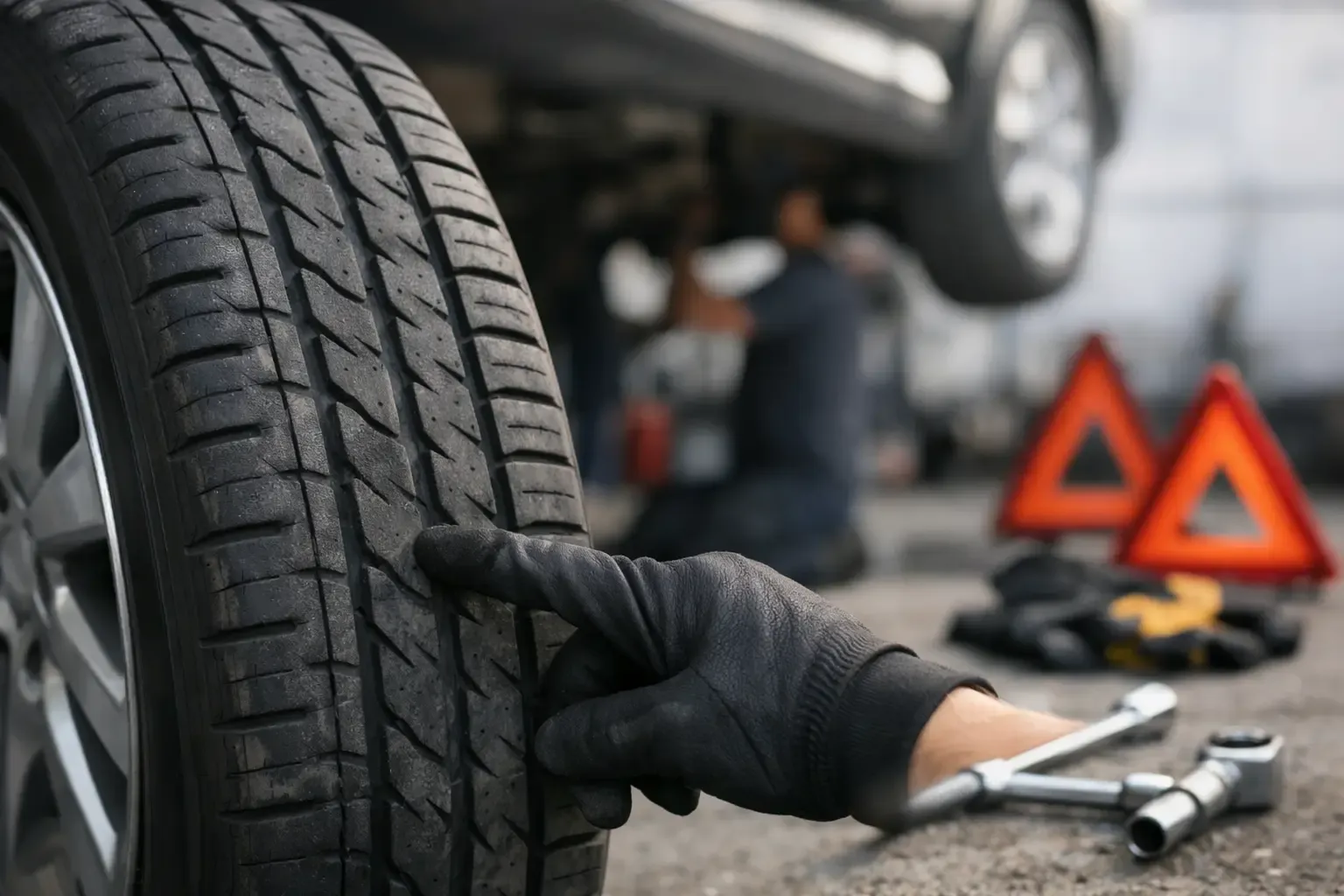
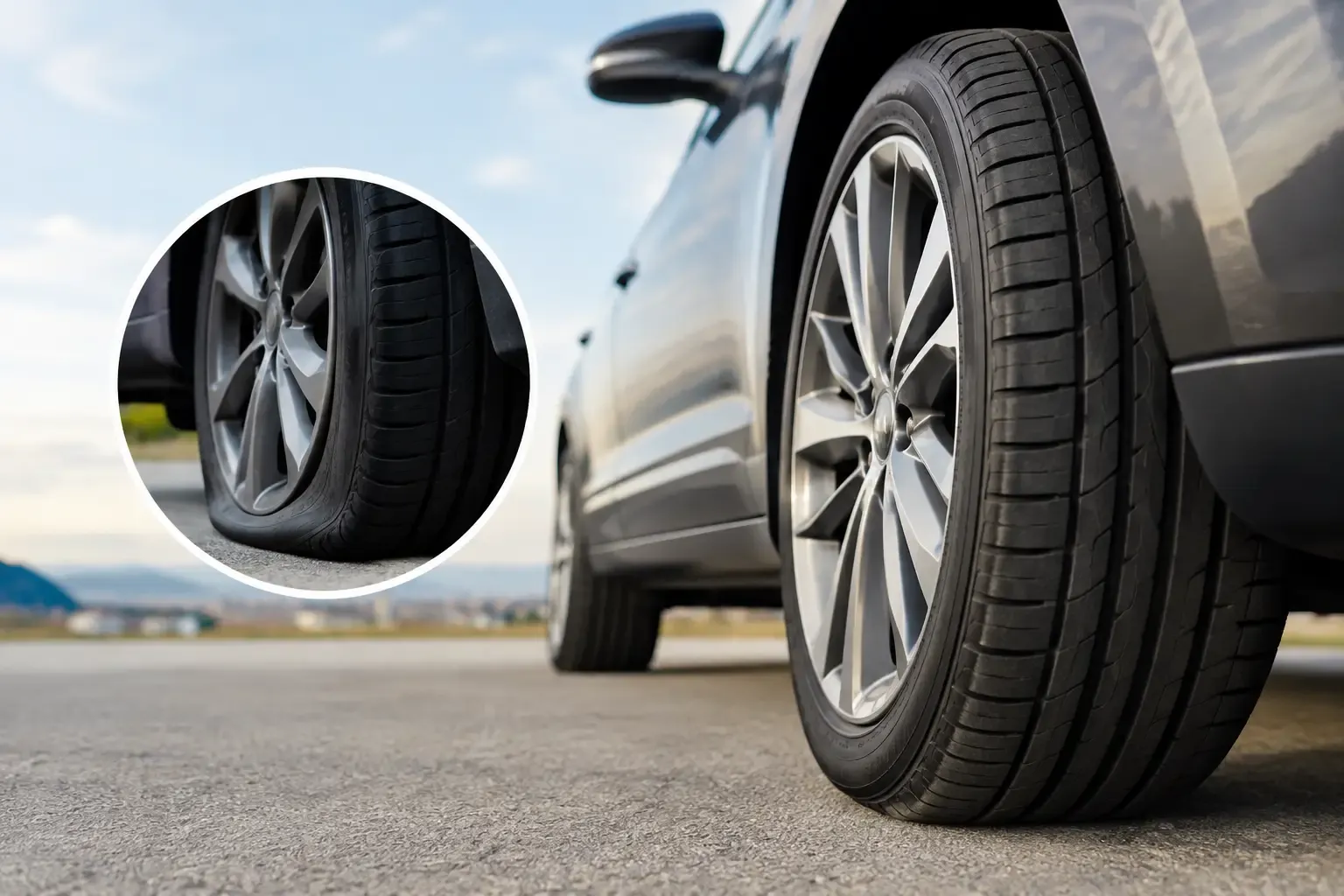
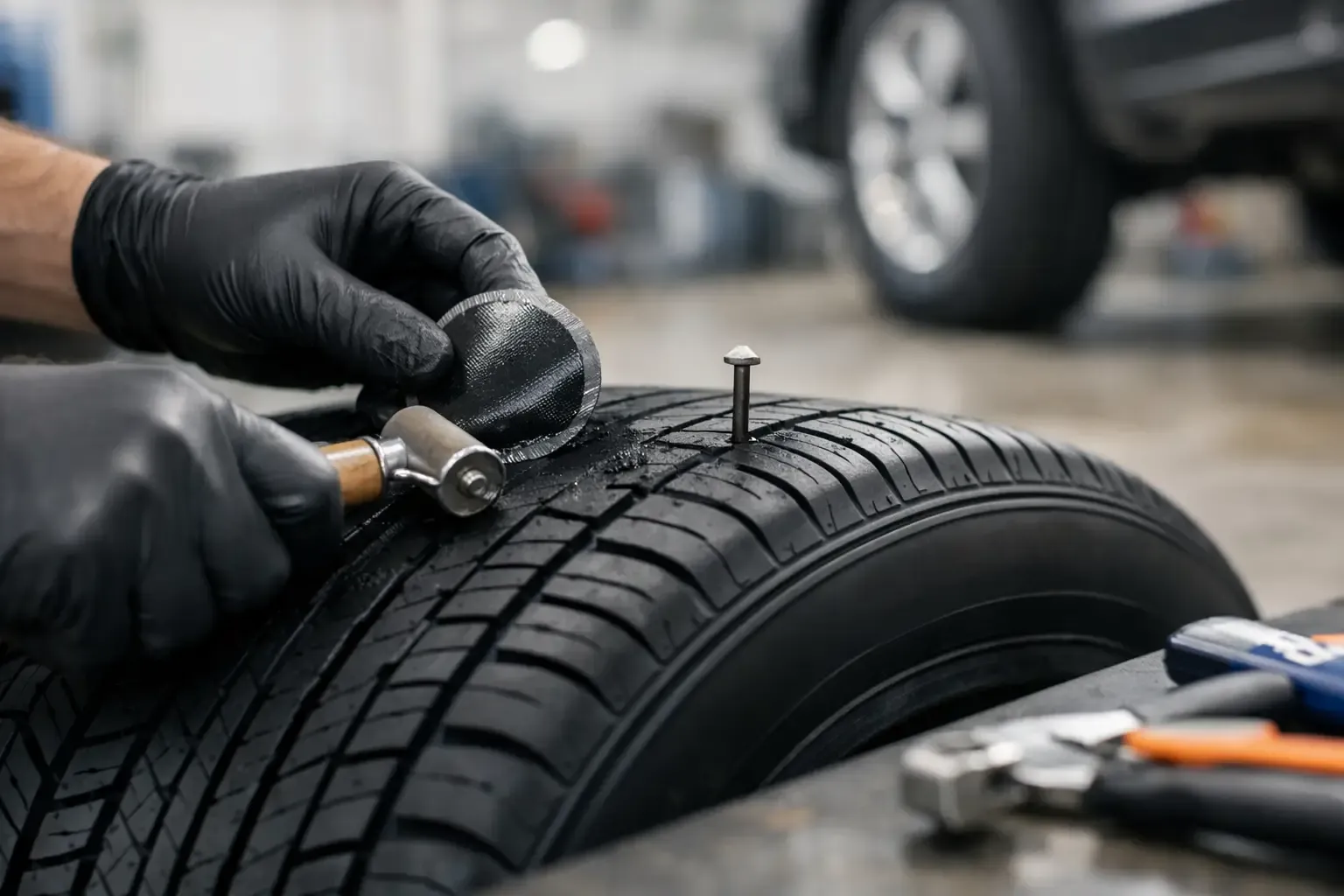
The challenge is that tire problems do not always happen at the yard. A service vehicle can pick up a nail at a job site, a delivery truck can lose pressure between stops, and a driver can discover a damaged tire before a morning route. When internal staff must leave their regular work to respond, the business can lose time in more than one place.
Fleet Tire Service vs In-House: The Core Differences
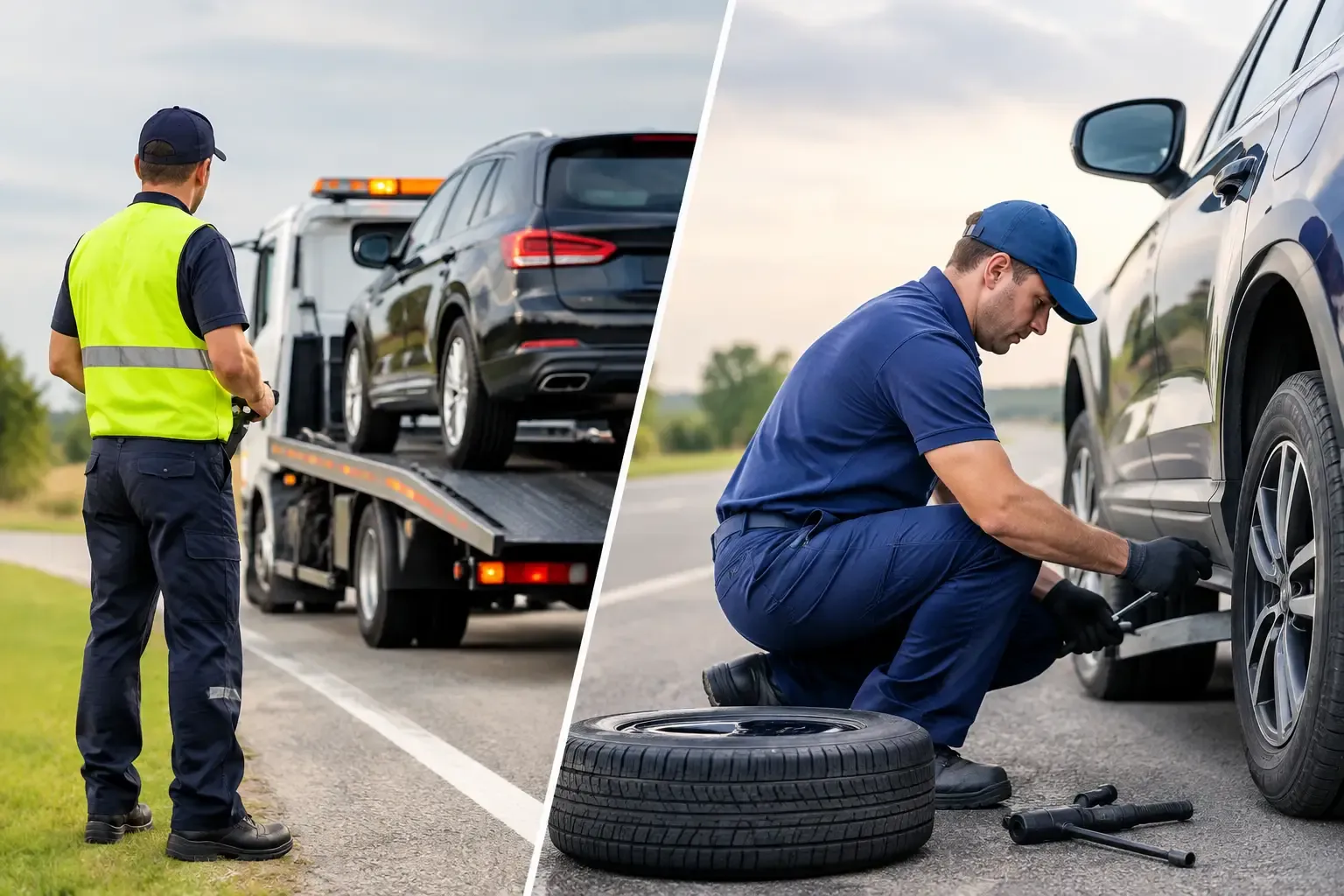
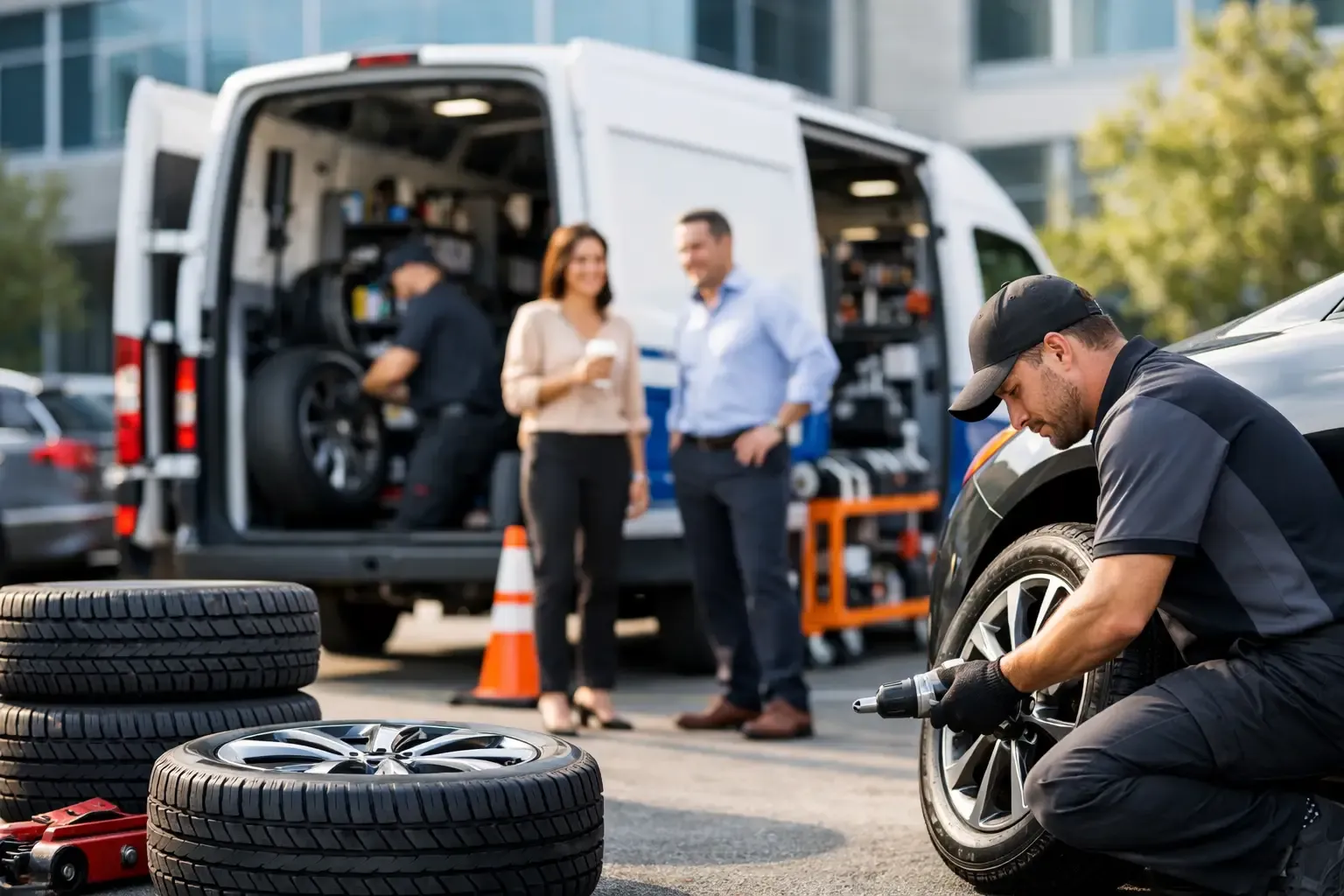
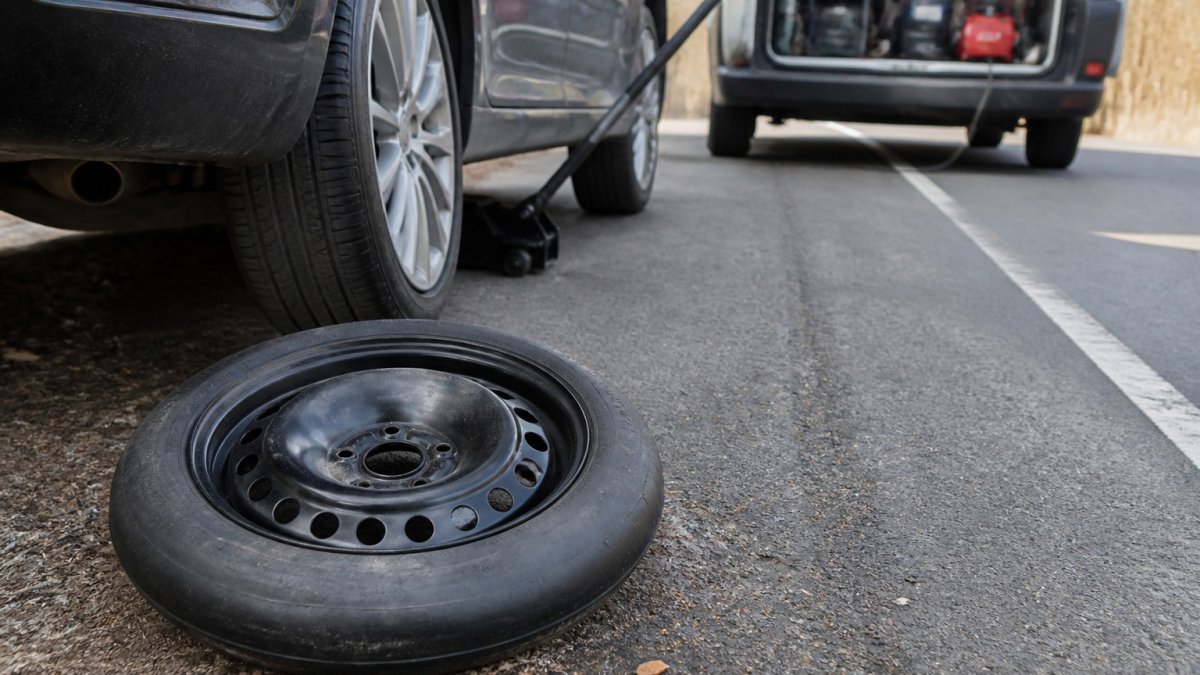
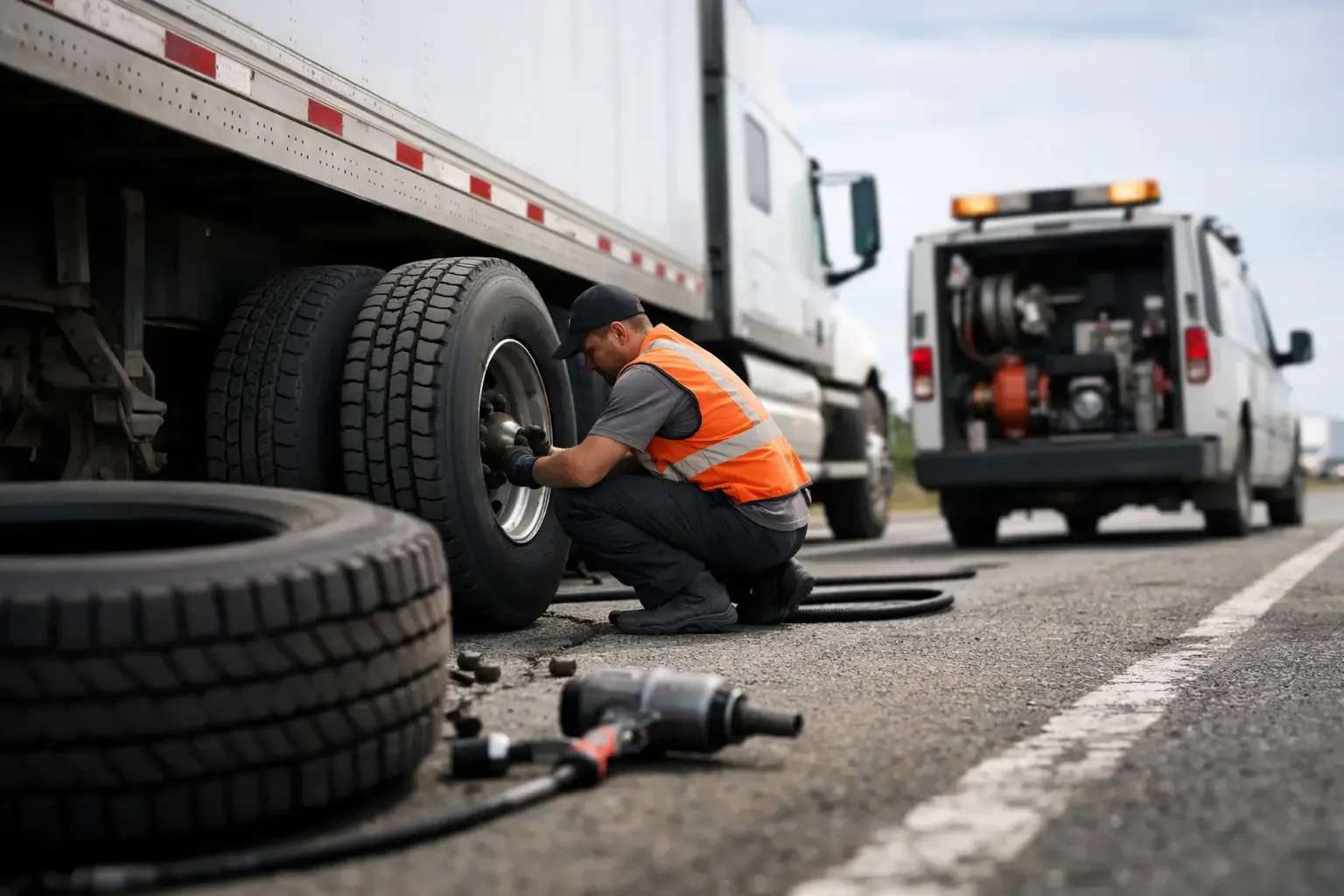
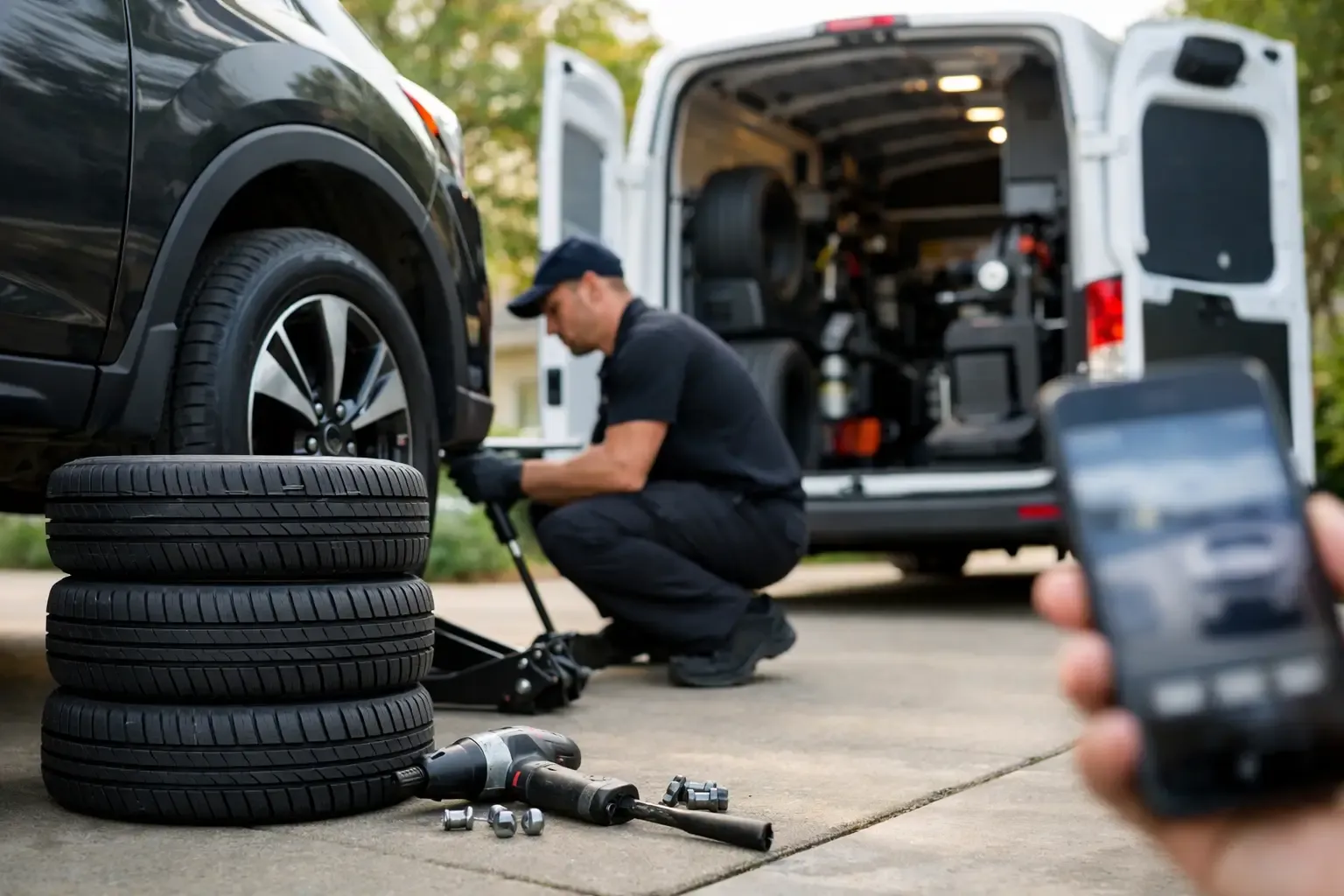
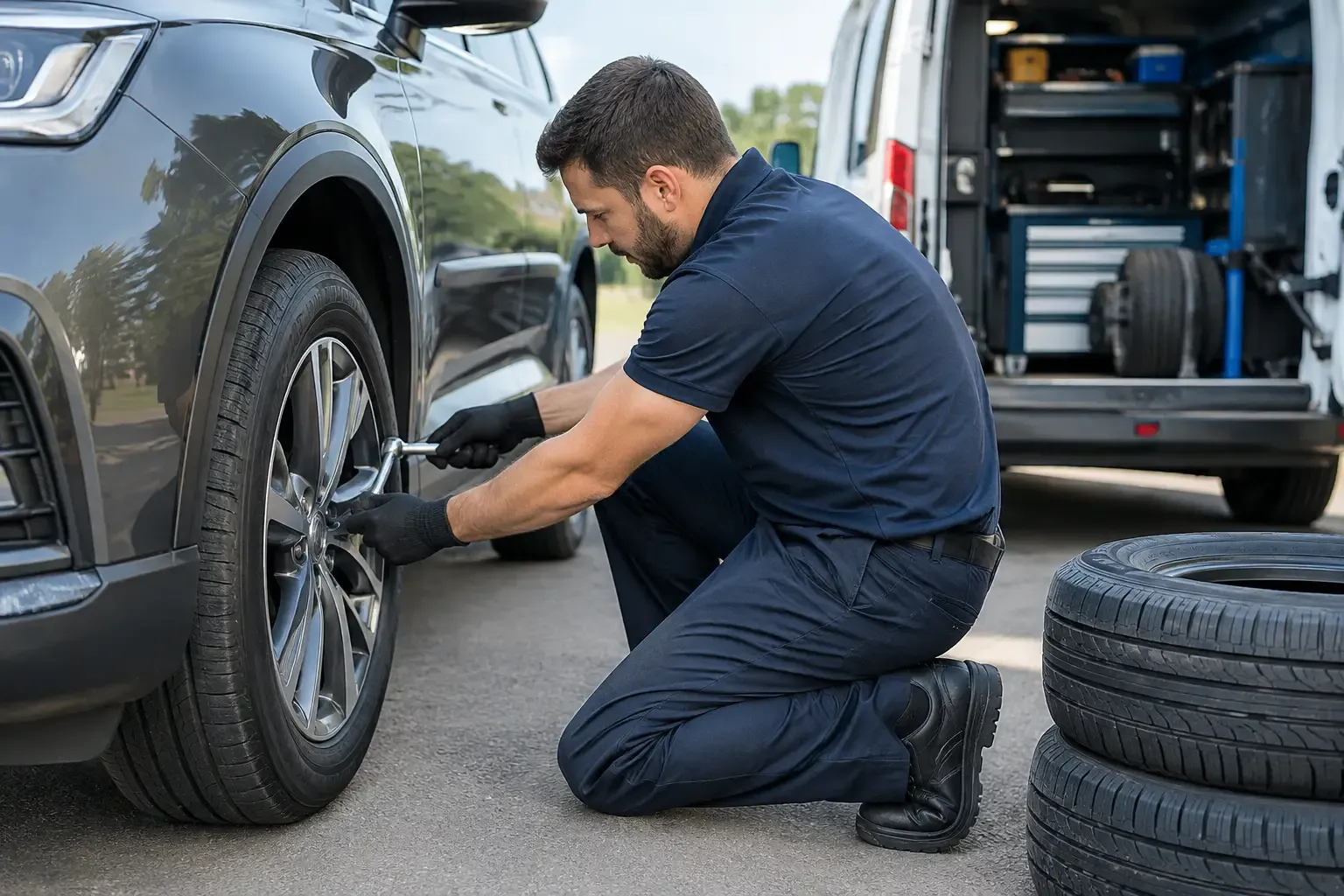
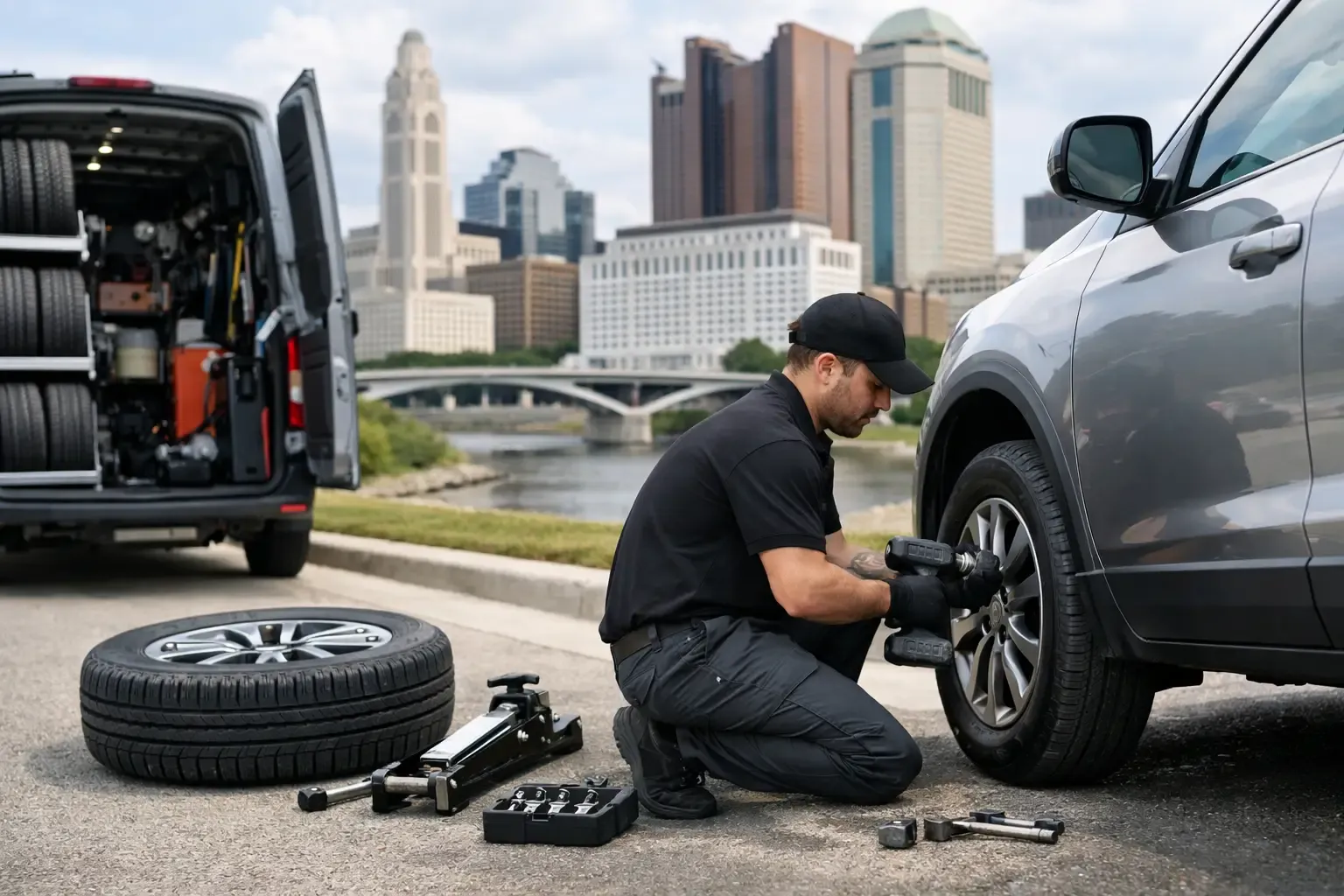
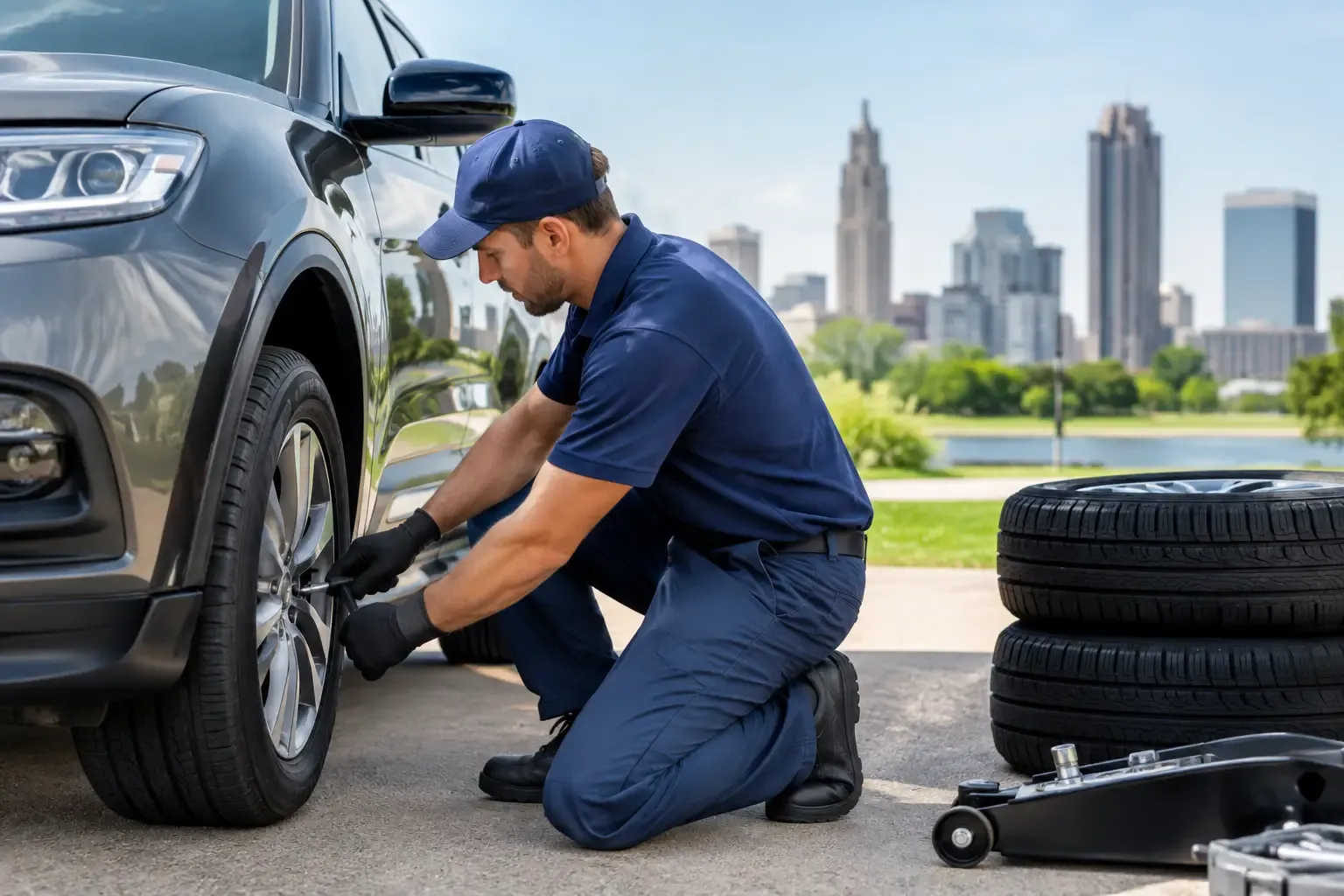
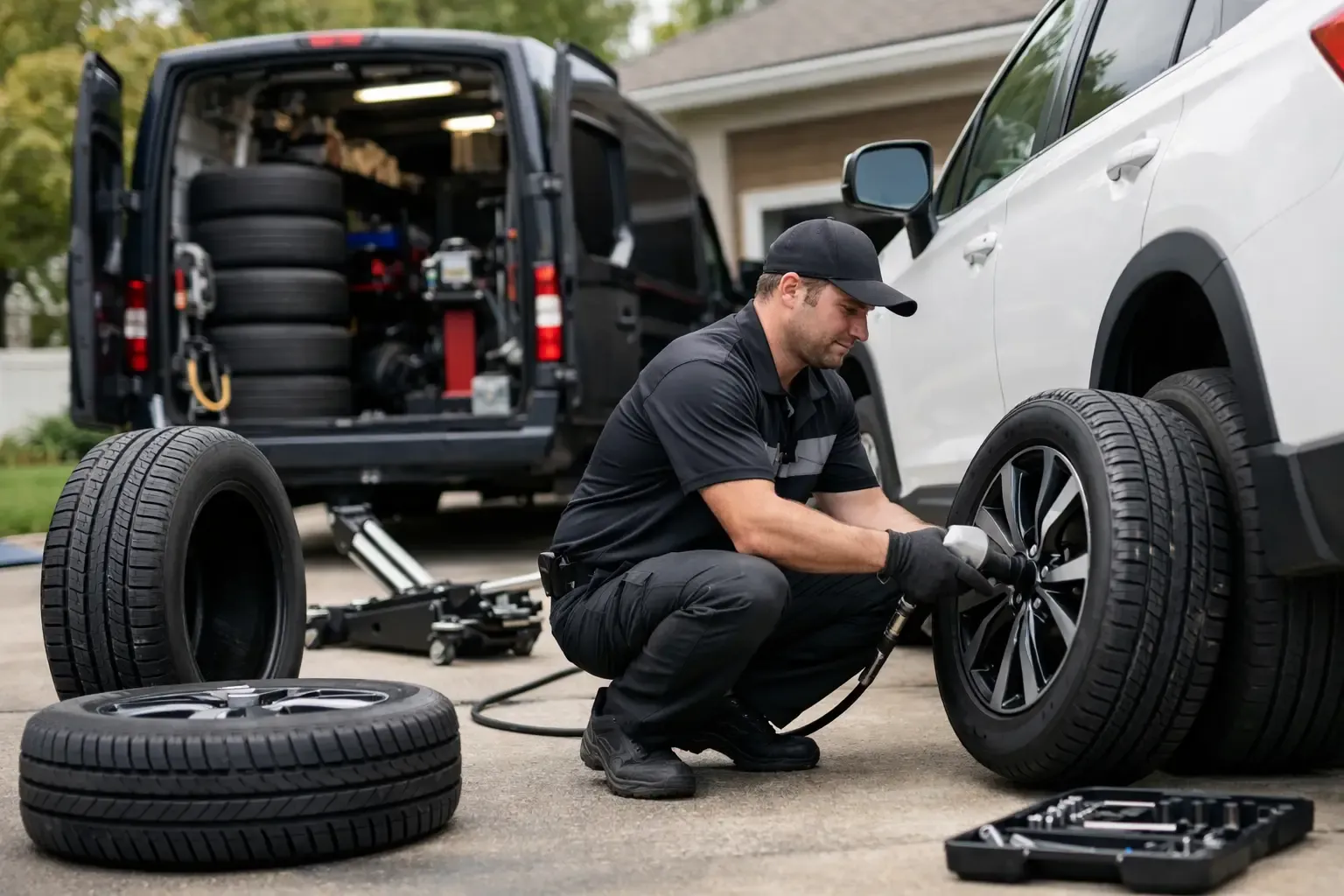
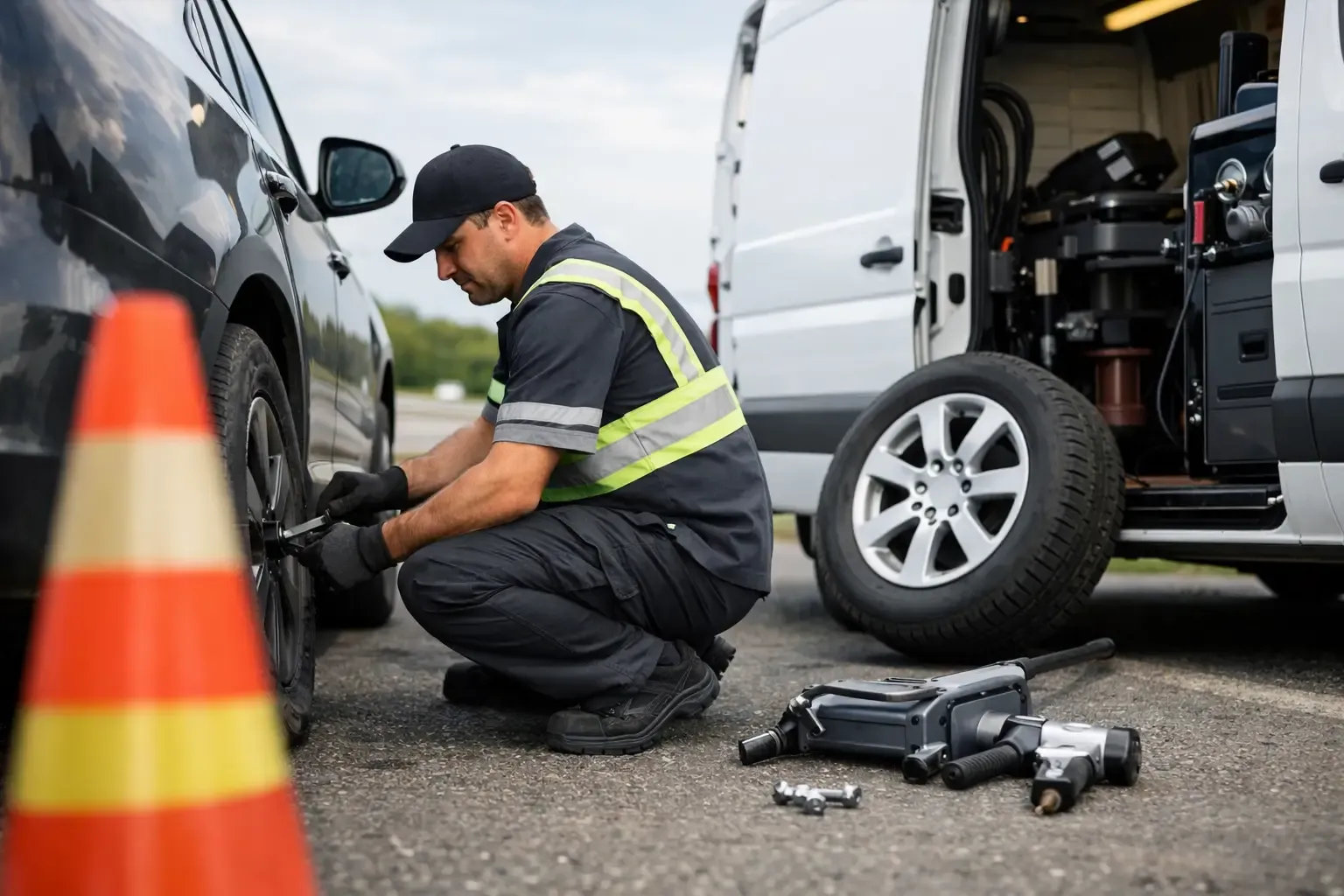
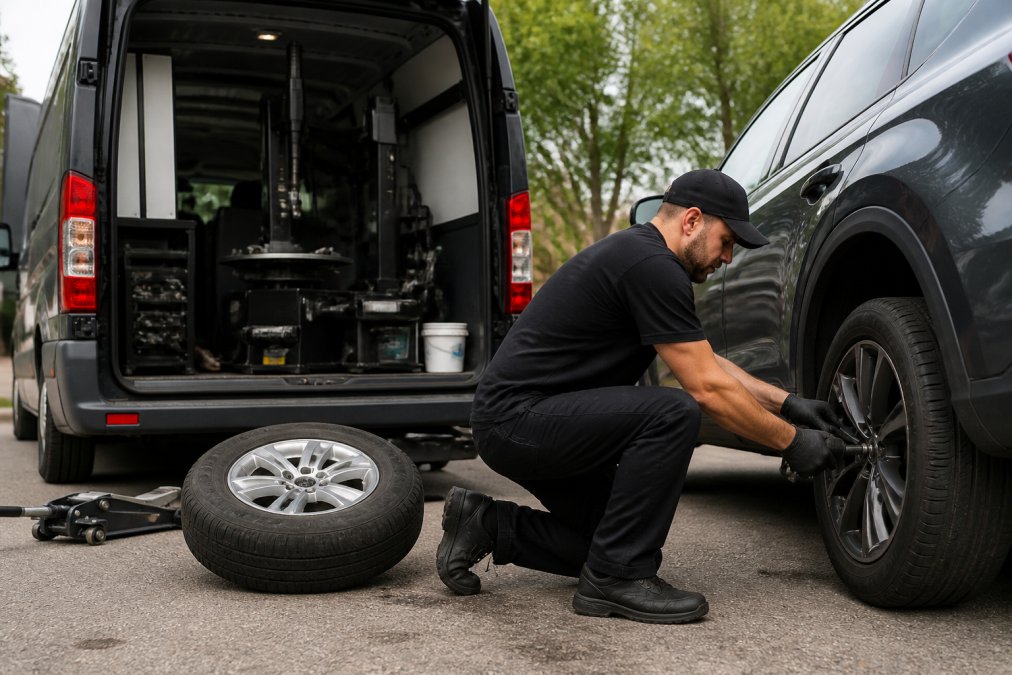
Mobile fleet tire service shifts much of the hands-on work to an outside provider that comes to the vehicle. Instead of sending a driver to a tire shop or bringing a disabled vehicle back to your facility, trained technicians can complete eligible tire work at your business location, a job site, or roadside when conditions allow.
The most meaningful difference is not simply who mounts the tire. It is where downtime occurs and who manages the work behind the repair or replacement.
Cost Is More Than the Price of a Tire
An in-house model can appear less expensive because labor is already on payroll and equipment may already be owned. But the full cost includes technician training, payroll allocation, tools, equipment maintenance, space, inventory carrying costs, and the administrative time needed to manage tire records and purchasing.
There is also the cost of interrupted work. If an employee leaves a route, waits at a shop, or drives across town for a tire issue, that lost time affects payroll and customer commitments. A mobile provider may have a higher visible service cost for a specific visit, but it can lower the hidden cost of downtime by bringing the work to the vehicle.
For smaller fleets, purchasing and maintaining professional tire equipment may not make financial sense. For larger fleets, the calculation depends on how frequently tire work is needed and whether the internal shop has enough capacity to handle it without delaying other maintenance.
Uptime Often Decides the Issue
Fleet vehicles make money when they are moving, serving customers, or ready for the next assignment. Sending vehicles off-site for routine tire service can create avoidable gaps in the schedule, especially when the vehicle is needed during regular business hours.
Mobile service can be scheduled around operations. A van can receive new tires while parked at the office. A work truck can have a flat repaired before it becomes a tow situation. For businesses that cannot afford to pull multiple vehicles from the road at once, on-site service can protect daily productivity.
In-house service can also support uptime when the fleet returns to a central location and the maintenance department has available labor. The issue is capacity. If your technicians are already handling brakes, oil changes, diagnostics, or unexpected repairs, tire work may wait longer than planned.
Safety Depends on Process, Not Just Ownership
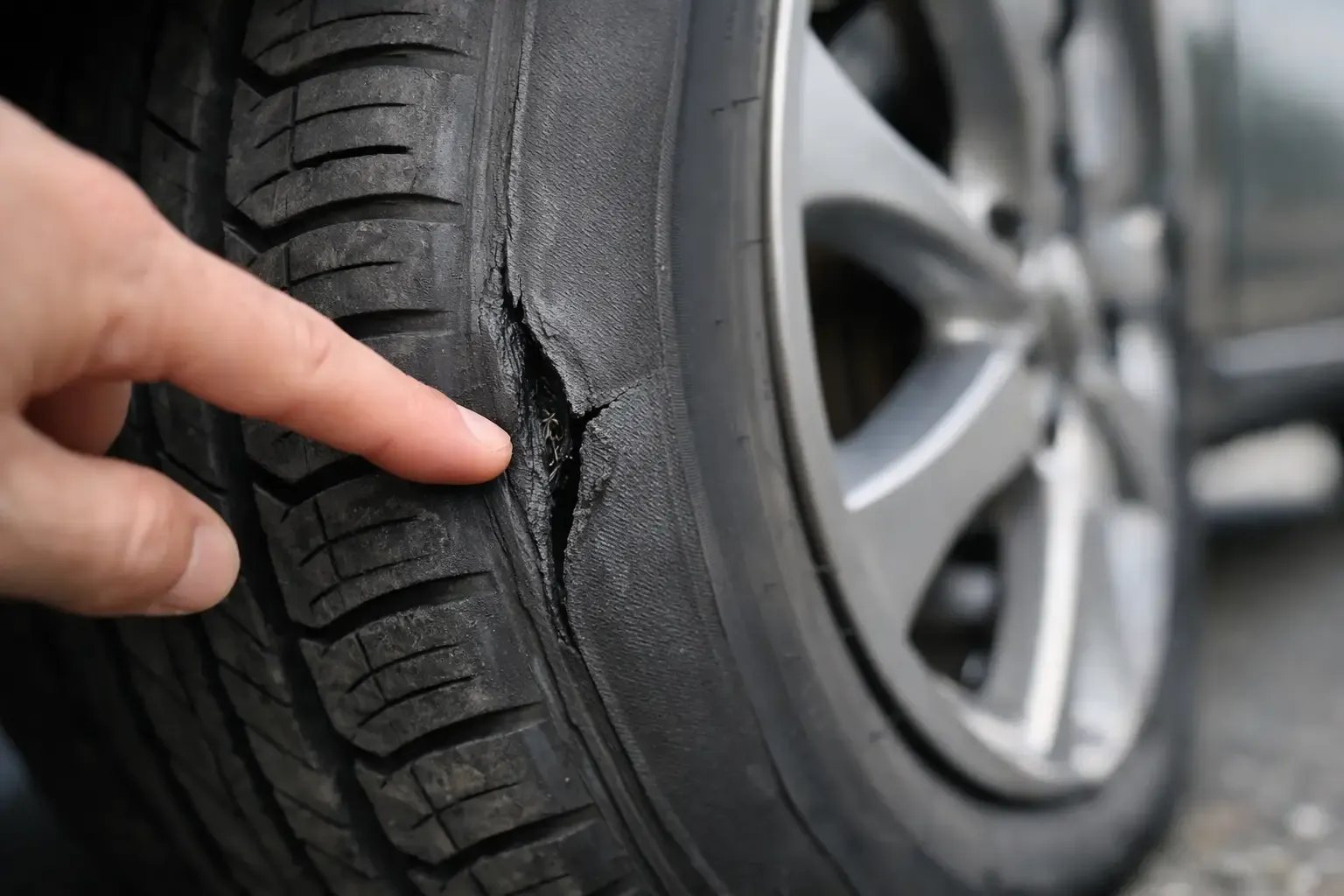
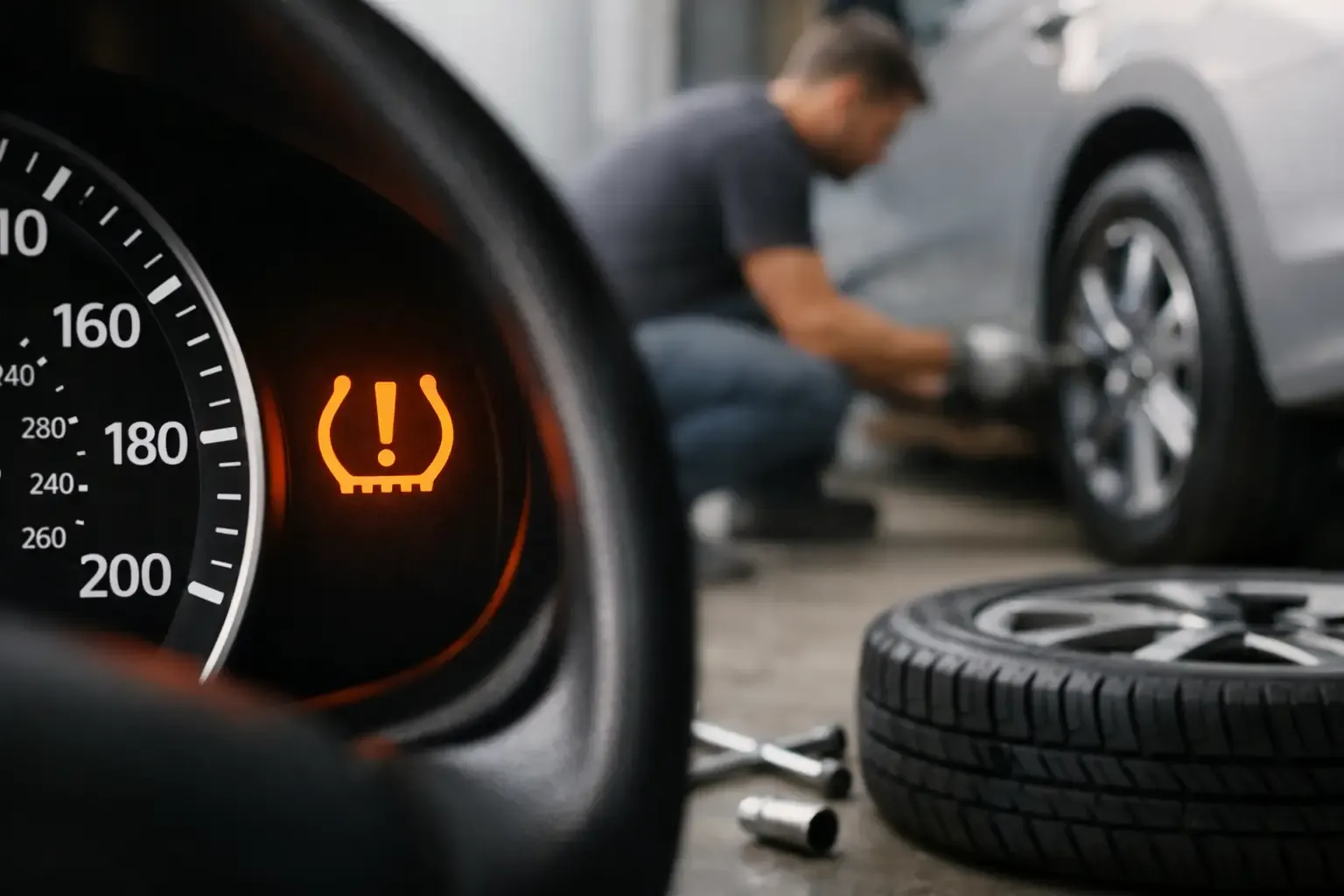
Whether work is performed internally or by a service provider, tire safety needs a consistent process. Tires should be inspected for pressure loss, punctures, sidewall damage, irregular wear, low tread, and signs of alignment or suspension concerns. Wheel fasteners must be tightened to manufacturer specifications, and TPMS alerts should be addressed rather than ignored.
A strong mobile service provider brings trained technicians, proper equipment, and a documented approach to tire work at the vehicle's location. An effective in-house program does the same, but only if training and quality checks are maintained over time.
The key question is not, "Can our team change a tire?" It is, "Can we perform the work safely and consistently across every vehicle, every shift, and every location?"
Control Can Be Shared Without Being Lost
Some fleet managers hesitate to outsource tire service because they do not want to lose control over maintenance decisions. That concern is understandable. Tires affect operating costs, driver safety, route reliability, and vehicle availability.
However, mobile fleet service does not have to mean giving up oversight. A well-managed partnership can let your business establish approval limits, preferred tire specifications, service hours, inspection intervals, and communication procedures. Your team remains responsible for standards while the provider handles the field labor and response.
This hybrid approach is common for fleets that want predictable maintenance without expanding their internal shop workload. Your staff can continue daily inspections and basic reporting while a mobile tire team handles repairs, replacements, balancing, and urgent service needs.
When In-House Service Makes Sense
An internal tire program is often a strong fit when your business has a large, centralized fleet and a fully equipped maintenance operation. It can be especially effective when vehicles return to the same facility nightly, trained technicians are available, and tire work occurs frequently enough to justify dedicated equipment and inventory.
It may also make sense when vehicles have specialized requirements that demand ongoing, hands-on familiarity from an internal maintenance team. Even then, many businesses use mobile support as a backup for roadside issues, peak workload periods, or vehicles working away from the main yard.
In-house service becomes less attractive when technicians are stretched thin, vehicles operate across the Columbus area, or drivers regularly lose productive time traveling to tire appointments. A program that looks efficient inside the shop can become expensive once off-site delays are included.
When Mobile Fleet Tire Service Is the Better Fit
Mobile fleet tire service is designed for businesses that need tire work completed where their vehicles are parked or operating. It is particularly useful for contractors, delivery teams, property service companies, sales fleets, and local service businesses that depend on reliable vehicles throughout the day.
It can also simplify routine maintenance. Rather than coordinating several drivers to visit a tire shop, a fleet manager can schedule service at one location. That means fewer scheduling conflicts, less employee downtime, and a clearer plan for keeping vehicles road-ready.
For urgent problems, the value is even more direct, and Elite Mobile Tire is open 24/7, including weekends and overnight. A prompt response to a flat, damaged tire, or spare tire need can help prevent a manageable issue from turning into a missed day of work. Elite Mobile Tire provides on-location fleet support for businesses that need professional tire service without adding another trip to the schedule.
Build a Decision Around Your Actual Downtime
Before choosing between outside service and internal maintenance, review the past few months of tire-related disruptions. Track how often vehicles were pulled from service, how many labor hours were lost, how often technicians were interrupted, and whether drivers had to wait for help. These numbers reveal more than the purchase price of a tire ever will.
Also consider where your vehicles spend most of their time. A fleet parked at one facility each night has different needs than vehicles spread across customer sites, neighborhoods, and job locations. Your service model should reflect how your fleet actually works, not how you wish it worked.
The best tire plan is the one that gives drivers clear support, keeps maintenance from becoming a scheduling problem, and helps every vehicle leave the lot ready for the road.
Ready for a new set? Elite Mobile Tire is open 24/7 and installs 2 or 4 new tires right in your driveway or parking lot anywhere around Columbus, Obetz, Groveport, Grove City, and Reynoldsburg. Financing is available through Afterpay and Acima with up to 24-month payment plans. Call 614-344-5010 or visit elitemobiletire.com to book.