
Quick Summary
Tire markers are temporary identification marks for labeling tires, such as recording which tire sits on which corner during rotations. Decorative tire lettering is for appearance and is a different product. Choose a basic marker for labeling, and check the product label for its stated surfaces before use.
Tire markers are not the same as tire lettering. Before you buy anything, decide whether you need a temporary identification mark that holds up through rotations or a decorative look for the sidewall. Those are two different products, and picking the wrong one wastes money. This guide focuses on what works for labeling, with a note on when decorative lettering is the better fit.
Tire Markers vs. Decorative Tire Lettering: Which Do You Need?
Tire markers and decorative lettering are built for different jobs. Labeling tires means putting a mark on the sidewall or tread so you can tell one tire from another later.
Choose a basic marker if you need to:
- Track which tire sits on which corner during rotations
- Label a set before storing it for the season
- Mark a tire for wear tracking or warranty records
Choose decorative lettering if you want the sidewall to look a certain way. Those products tend to focus on color range, tip shape and visual finish. Many manufacturers recommend checking the product's listed surfaces and temperature range before use, so read the label first.
Top Tire Marker Options for Labeling Tires
Labeling works best with a marker that writes clearly on rubber and resists smudging. The products below are listed for tire use based on their retailer descriptions.
Tire Marker Set (Walmart category listing)
- Best for: DIY users who want a set that covers tires and other listed surfaces
- Pros: Listed for rubber, metal, glass and plastic; lists tire lettering as an intended use
- Cons: The listing does not name a manufacturer or give detailed marker specifications
Tire Paint Pens (Tire Stickers)
- Best for: Vehicle owners who want to color existing tire letters
- Pros: Made for tire lettering and sold by a specialist retailer
- Cons: Pen color and capacity are not stated, and paint life is not given
White Tire Paint Marker, 4-Pack (Walmart)
- Best for: Drivers who want several white markers for a multi-tire labeling job
- Pros: Four-pack format
- Cons: No price, and no verified durability period
The options below are listed for tire use, with what each is best for and its main trade-off.
Product | Best for | Key limit
Tire Marker Set (Walmart) | DIY users wanting a multi-surface set | No manufacturer or marker specs given
Tire Paint Pens (Tire Stickers) | Color-touching up existing tire letters | Pen color, capacity and paint life not stated
White Tire Paint Marker, 4-Pack (Walmart) | Labeling several tires at once | No price or durability period listed
Best Tire Paint Pen Choices for Durable Marks
Paint pens are built for cosmetic lettering, so their tips and ink are formulated for appearance on a clean sidewall. Test a mark on one tire before labeling a full set.
Water-Proof Tire Paint Pen, 10 ml
- Best for: DIY car or motorcycle tire-lettering projects
- Pros: 10 ml capacity is stated
- Cons: No price shown, and no test details are given for the durability claims
ProtectDIP White Tire Paint Pen
- Best for: Drivers adding white lettering to car or motorcycle tires
- Pros: Reversible tip; the listing says one pen covers four tires
- Cons: The listing does not say how long the lettering lasts
Muscle Tire Lettering Tire Ink Paint Pens
- Best for: Drivers who want a race-inspired look rather than a plain label
- Pros: Sold by a tire-lettering specialist; specifically described as a paint pen
- Cons: No price or pen specifications
What actually determines whether a paint mark lasts
Paint-pen longevity on a tire sidewall comes down to four things, and none of them are fully answered by a product listing:
- Surface prep. Sidewalls carry mold release compound, road film, and silicone-based tire dressings. Paint bonds to the dressing, not the rubber, and flakes off in sheets. Wipe the area with isopropyl alcohol and let it dry completely before applying.
- Coats, not thickness. Two or three thin coats bond better than one heavy coat, which skins over and peels. Let each coat flash off per the label before adding the next.
- Flex and abrasion. Sidewalls flex every revolution and scuff against curbs. A mark placed low near the bead sees more flex than one placed higher on the sidewall.
- UV and washing. Touchless car washes and strong detergents strip paint faster than rain. A mark that survives a month of rain may still fade after a few wash cycles.
Watch out: paint pens are intended for sidewalls only. Never apply paint to the tread or anywhere near the bead seat or braking surfaces, because dried paint can affect seating and balance. Check the product label for its stated surfaces and temperature range before use.
Removing paint marks and avoiding residue
Most paint-pen marks can be removed with isopropyl alcohol or a dedicated adhesive remover while they are still relatively fresh; cured paint may need a plastic scraper and more patience. A common pattern is that white and light-colored paints leave a faint ghost in the rubber's texture even after removal, especially on porous or aged sidewalls. If you are marking tires you plan to sell or return, test removal on an inconspicuous spot first.
Matching the pen to the job
If your goal is inventory or rotation labels, prioritize a fine, consistent line and easy removal over color range. If your goal is decorative lettering, prioritize color opacity, tip shape, and the number of coats the pen can deliver. Either way, buy one pen first, test it on a scrap tire or an inconspicuous spot, and only then commit to a multi-pack.
Tire Marker Crayons for Work and Identification Tasks
Wax crayons are a practical choice when you need to mark tires quickly, especially in a shop or on a work truck. They trade fine detail for speed and are generally easier to write with on dirty or wet rubber.
White Tire Marking Crayons, 12-Pack
- Best for: Identifying or marking tires for work tasks, not decorative lettering
- Pros: Twelve crayons per pack; the listing says they work on wet and dry surfaces; the wax format suits marking over fine lettering
- Cons: No price, and removal from tires is not described
Best for fleets and work trucks: Crayons make sense when you mark many tires in a short time. Test one before you commit to a full pack.
How to Mark Tires for Rotation and Track Wear
Marking tires before rotation lets you see how each tire wears over time. Many manufacturers recommend rotating tires at regular intervals, so check your owner's manual for the schedule for your vehicle. The goal is a mark that stays legible for months but can be removed cleanly when the tire is sold or scrapped.
Preparation that makes the mark last
Most marking failures are prep failures. Sidewalls collect mold release compound from manufacturing, road grime, and silicone from tire dressings, and ink or paint will not bond to any of them.
- Clean the sidewall. Scrub the marking area with a stiff brush and a mild detergent, then wipe with isopropyl alcohol. Skip the tire dressing for a few days before marking.
- Let it dry completely. Moisture trapped under paint or ink causes poor adhesion and smearing. Give the sidewall time to dry in the shade rather than in direct sun.
- Test on an inconspicuous spot. Mark a small area near the bead first and check it after a day. If it smears or flakes, switch products before labeling the full set.
- Apply thin coats. Two thin coats beat one heavy coat. Let each coat flash off per the label.
What to write and where
Pick a simple position code: LF, RF, LR, and RR for left front, right front, left rear, and right rear. Add the date and mileage when the tire was mounted so you can compare wear at each rotation.
Watch out: mark the sidewall only. Never write on the tread or near the bead seat, and keep paint and ink away from braking surfaces. Check the product label for its stated surfaces before use.
Reading the marks at each rotation
At each rotation, compare the marks and the tread depth across all four tires. Uneven wear on one corner often points to alignment, inflation, or a worn suspension component, and it frequently shows up on the other three tires too. That is why our techs check all four tires on every job, not just the one we came for. If one tire is significantly more worn than the others, many manufacturers recommend replacing tires in pairs on the same axle, with the new tires going on the rear axle for stability. On many AWD vehicles, all four tires need to be matched in tread depth to avoid drivetrain strain, so a single worn tire can mean replacing the set.
Removing marks when you are done
Wax crayon marks usually wipe off with a mild detergent or isopropyl alcohol. Paint and ink may need an adhesive remover and a plastic scraper, and light colors can leave a faint ghost in the rubber's texture.
If marking your tires turns up uneven wear or a tire that is close to the wear bars, it may be time for a new set rather than another rotation.
Storing Marked Tires and Choosing a Storage Marker
Seasonal tires need clear labels so each set returns to the right corner. Mark each tire before you store it, and use a marker that stays legible after months in a garage or storage unit.
Tips for storage:
- Store tires in a cool, dry place away from direct sunlight and ozone sources such as electric motors
- Keep the position code visible on the outside of the stored tire
- Use a marker that dries fast and resists scuffing
If you want the full method for labeling seasonal sets, read our guide on how to label tires for seasonal rotation.
Booking a Full Set of Tires at Your Location in Columbus
If you are marking tires because it is time to replace them, consider replacing the set rather than a single tire.
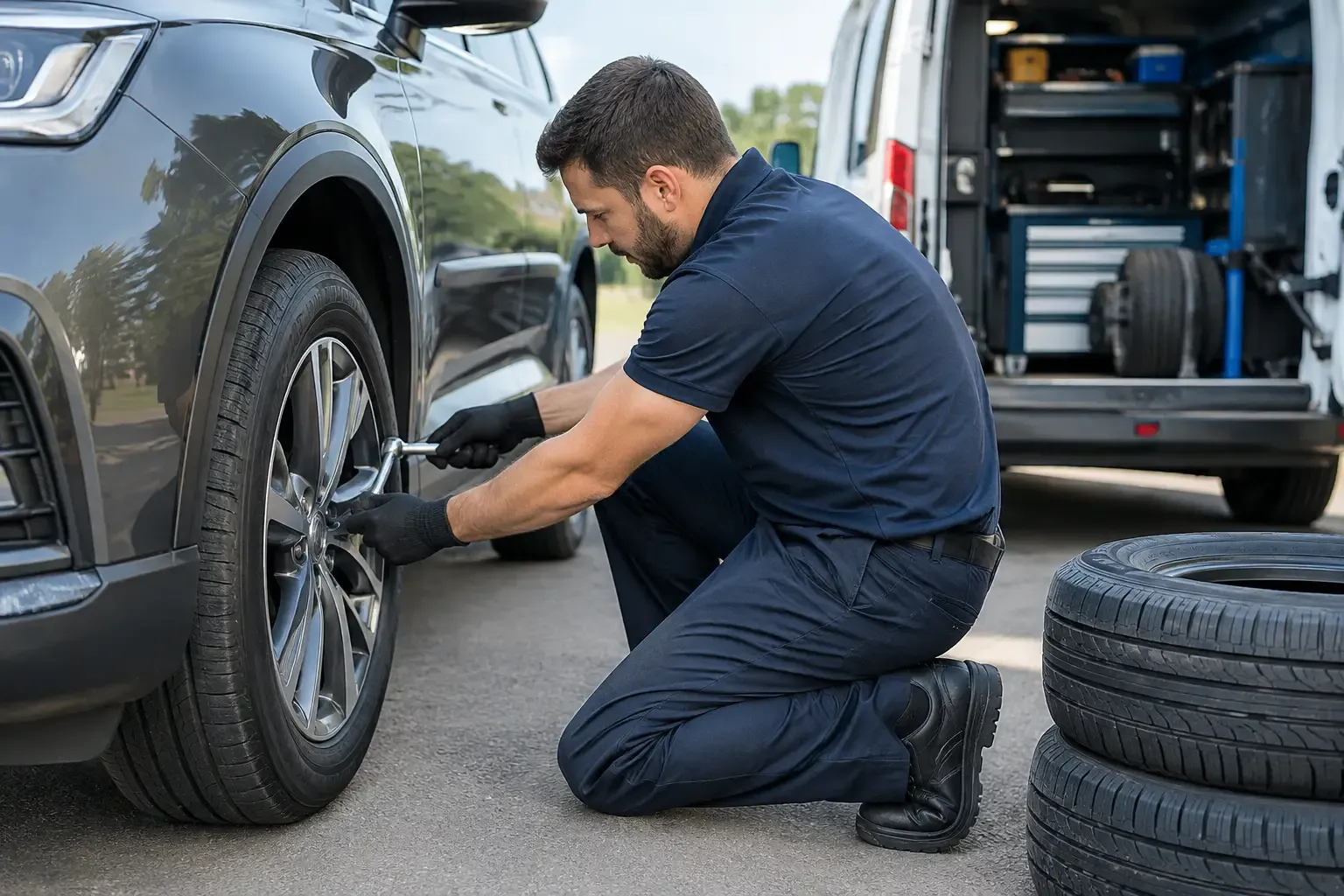
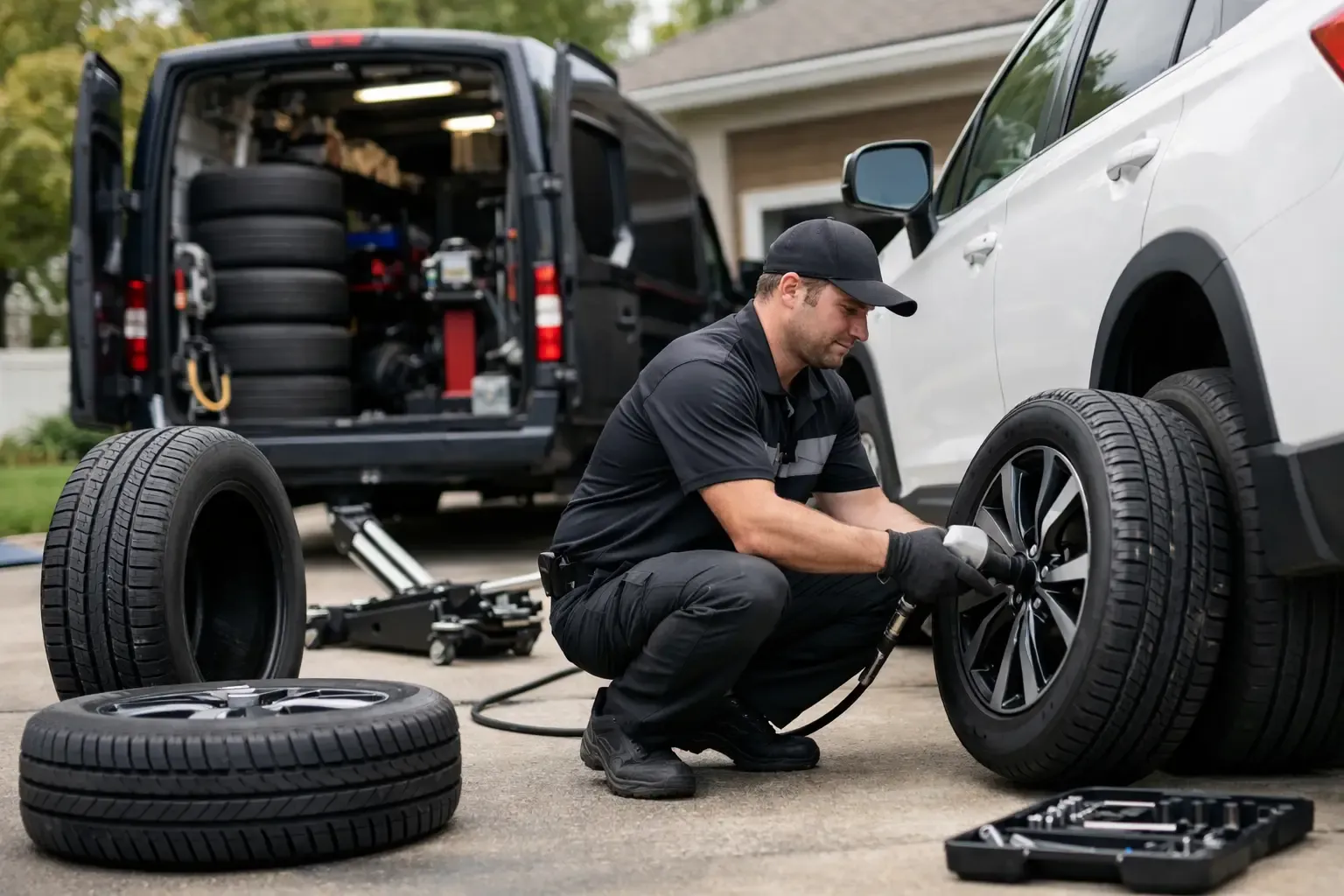
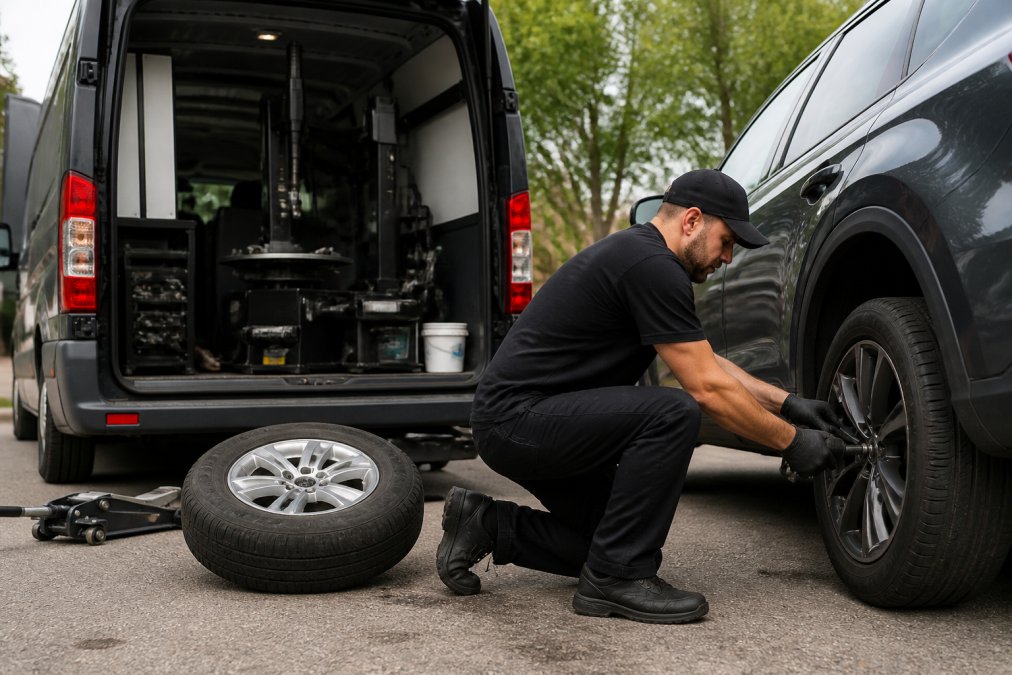
Elite Mobile Tire comes to your home, office or job site in Columbus, Obetz, Groveport, Canal Winchester, Reynoldsburg, Grove City and nearby towns.
Ready to book? Call 614-344-5010 or schedule at elitemobiletire.com. We are open 24/7, including weekends and overnight, so pick whatever time works for you.
Frequently Asked Questions
What can I use to mark my car tires?
Most people use a white paint pen made for tire lettering, a wax marking crayon, or a permanent paint marker labeled for rubber. Tire paint pens are a common choice for rubber surfaces. Wax crayons work well for temporary identification and are easier to wipe off later. Standard office markers and Sharpies are not reliable on tire rubber, since they can fade quickly and rub off. If you plan to mark tires for rotation or storage, test your marker on an old tire first and check that it stays legible after a few days of driving or exposure to moisture.
Do tire markers work?
Yes, tire markers work well when you choose one designed for rubber and apply it correctly. Tire paint pens leave visible marks that hold up to normal driving and weather, while wax crayons are better for short-term labeling. Results depend on surface cleanliness, temperature, and how long the ink has to dry. Clean the sidewall with a dry cloth or mild soap before marking, let the ink cure fully, and avoid high-pressure washing right after application. Many manufacturers recommend allowing the paint to dry for several hours before driving on the marked tire.
How do you remove tire marker paint from rubber?
Removal depends on the marker type. Wax crayon marks usually wipe off with a dry cloth or a mild degreaser. Paint pen marks are harder to remove and may need a rubber-safe cleaner or a gentle solvent applied with a soft cloth. Test any solvent on a hidden spot first, since some cleaners can dry out or discolor rubber. Avoid abrasive pads that can damage the sidewall. If you are unsure how to remove a mark, call Elite Mobile Tire at 614-344-5010 and we can advise you on the safest approach for your tires.
Ready for a new set? Elite Mobile Tire is open 24/7 and installs 2 or 4 new tires right in your driveway or parking lot anywhere around Columbus, Obetz, Groveport, Grove City, and Reynoldsburg. Financing is available through Afterpay and Acima with up to 24-month payment plans. Call 614-344-5010 or visit elitemobiletire.com to book.